Author: Citizen Journalist

  • Government Should Intervene To Curb Corruption In Rural Areas

    Government Should Intervene To Curb Corruption In Rural Areas

    Transparency International Zimbabwe (TI-Z) a non-partisan, systems oriented local chapter of the international movement in the fight against corruption is deeply disturbed by reports on alleged corruption in rural areas in which political leaders exacerbate the suffering of the most vulnerable people living in rural communities.

    It has come to TI-Z attention that most people in Tsholotsho are not accessing the government’s Grain Loan Scheme. The Grain Loan scheme is a social safety net which was introduced by the government to assist villagers in need of grain. However that seems to have fallen on the wayside as councillors and local leaders who are politicians loyal to their parties are accused of selecting beneficiaries along party lines.

    A survey conducted by TI-Z revealed that villagers were being asked to pay up to US$3 the transportation of grain. Only a few were being chosen to benefit from this scheme despite the fact that they all had paid money for the transportation of the grain from Bulawayo to Tsholotsho. Upon further inquiry it emerged that councillors were choosing people who are loyal to their political parties. TI-Z also learnt that few people were benefitting from the scheme because powerful political figures and ministers are accused of diverting grain and agricultural inputs such as fertiliser meant to benefit communities of Tsholotsho to other nearby constituencies. Villagers further allege that a minister (name supplied) was taking grain from Tsholotsho and giving it to people of nearby constituency leaving the people of Tsholotsho helpless.

    The Basic Education Assistance Module (BEAM) facility is another social safety net which is being abused by local community leaders. Respondents visited by TI-Z accused headmasters and traditional leaders for abusing the facility meant to benefit everyone in the community. Rural communities such as Tsholotsho and Lupane are more vulnerable to the corruption risks than the urban community as a result of a multiplicity of factors. Rural communities depend on the government and Non-Governmental Organisation (NGO for food aid and school fees support for the vulnerable groups of society.

    TI-Z strongly believes there is need for the government through the Zimbabwe Anti-Corruption Commission to intervene and investigate alleged corrupt activities in rural areas. Parliamentarians and representatives should pay attention to these reports because their constituencies are suffering while they are living lavishly in urban areas. The trend has been that most parliamentarians neglect the people they represent and only re-surface during election periods. The electorate should choose leaders who uphold principles of transparency, accountability and integrity.

    This has been a submission by Transparency International Zimbabwe.
    You can connect with Transparency International Zimbabwe via the following: http://www.tizim.org/, http://twitter.com/transparencyzim, http://www.facebook.com/pages/Transparency-International-Zimbabwe-TI-Z/168077246536817.
    You too can become a Citizen Journalist by submitting your story here: Citizen Journalism by Living Zimbabwe
    The views expressed in the article are those of the author and not necessarily Living Zimbabwe.

  • Justice Is Blind

    Justice Is Blind

    My mind goes back to the year Zimbabweans last took it to the ballots, 2008. Arguably, the most storied year “my” people have had to endure.This writer’s idea of life hinges on two elements, enjoy or endure. After the first bout which saw a clear turn on the political tide, since independence, however, the result was said to be indecisive. A re-run was calendered 27 days after the last hour of the polls, and all hell broke loose.

    I remember remembering my history lessons on the French Revolution; Danton, Marat and Robespiere unleashed a “reign of terror” on their political opponents in 1793-1794, the sympathisers of the Bourbon monarch. I had thought these days were long gone or archived as “bygones” as they brought nothing but misery on the hoi polloi. Similarly, and sadly, 8 years after we graced the second millenium I was awed to see such primitive bickering for electorate’s favours in my own backyard-Zimbabwe.

    Innocent and defenceless citizens were massacred by their own neighbours or kinfolk if they were somehow alleged to be affiliated to the MDC, the opposition, which had proved to be a tougher contender to the revolutionary and geriatric incumbent.I expected the so-called “long arm of the law” to take its stand and bring those who had orcheastrated the “injustices” to book, but everyone acted as nothing had happened. Thats when I start questioning the justice system in my motherland, the place I call home.

    The debacle which ensured saw uncalculated risks being taken, compromises agreed to to form a government of national unity which ridiculously epitomised the fact that the biggest losers in a plebiscite is the electorate. As if it wasn’t enough Zimbabwe saw obsolete ministries like the one led by 3 ministers put in place, the Organ for National Healing and Reconciliation. I seriously thought my country’s leaders needed shots of whisky each for this madness. Expecting a mere sorry from a government official for my cattle stolen, body parts dismembered, kinfolks murdered, and property vandalised is not only ludicrous, but insane.

    As the shona say, “kugona ngozi kuiripa”. This writer thinks pertrators and orchestrators of this unjustifiable and primitive system which forces political coherence must pay. Please give democracy and justice a chance because at the moment it is blind.

    This has been a submission by James Chiwoko.
    You too can become a Citizen Journalist by submitting your story here: Citizen Journalism by Living Zimbabwe
    The views expressed in the article are those of the author and not necessarily Living Zimbabwe.

  • We Seriously Went Wrong Somewhere

    We Seriously Went Wrong Somewhere

    Three Zimbabweans were arrested for the murder of former boxing world champion Corrie Sanders. Yes Zimbabweans are making the headlines. Very sad if you think of the potential we thought we had. The effects of such headlines tell a story. The three don’t know what they have actually done. Locals who have always been angry are having ideas.

    Those who are having challenges with getting by, those who got laid off for being drunk at work, those who lost jobs because a Zimbabwean showed the right attributes for a job, those who are angry because white people had it easy, those who expected open doors without knocking and those who just booze for life.

    They are coming after a family that is also struggling and working 9hours a day. They are going to kill and destroy all little they have.

    Growing up my mum always told me, “usaise makumbo pamasofa kumba kwevanhu“, (don’t sit on or put, your legs on top of the couch when you have visited people). How can people forget where they come from and pick the worst habits in foreign lands and become the best at it. Even getting caught. Its disgusting. For such stupidity innocent people are going to pay. For every action there is a reaction. The cowards will be in jail while those out side will wish they had been arrested. Wherever we are, we represent our people. We can embrass them or make them proud.

    This has been a submission by Rodney K. written in South Africa.
    You too can become a Citizen Journalist by submitting your story here: Citizen Journalism by Living Zimbabwe
    The views expressed in the article are those of the author and not necessarily Living Zimbabwe.

  • 30 Seconds After – Mugabe’s Motorcade Motorcycle Crash

    30 Seconds After – Mugabe’s Motorcade Motorcycle Crash

    I am one of those people who believe that caring and emotions are definate indicators of being human. Lack of the above makes you any other. While I almost respect RG, I also have my issues with his 80% none human attributes. It is my personal opinion that for the last 32 years this guy has no clue what it is to be Zimbabwean today. You do not need to be informed every minute while you are in your little heaven, experiencing the ups and downs with your people makes you human.

    As for the accident a few days ago, I find myself asking what was going through the minds of

    1. the President, if he was there
    2. the other bikers
    3. the rest of the entourage and the people, witnesses or bystanders thirty seconds later

    Categorically,

    1. I never saw a thing and seriously thinks, “who drives into the back of a lorry mfana angware next time (he should watch out next time)”
    2. if I stop I will be fired or be a victim of an ‘accident’
    3. Sorry, Tiripabasa. Aenda uyu. (we are at work and he is gone).
    4. Ko zvavamusiya achitsva? (how can they leave him to die).

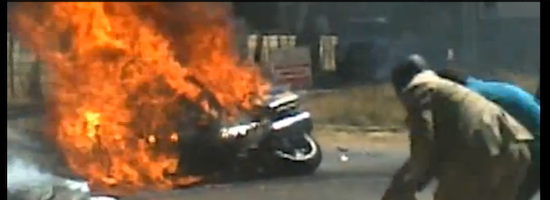
    The burning man represents the real Zimbabweans and where we are 30 seconds later.

    This has been a submission by Rodney Chenge Katsidzira.
    You too can become a Citizen Journalist by submitting your story here: Citizen Journalism by Living Zimbabwe  
    The views expressed in the article are those of the author and not necessarily Living Zimbabwe.

  • Four Young Zimbabweans Up For Prestigious International Honours

    Four Young Zimbabweans Up For Prestigious International Honours

    Four young Zimbabweans from different facets of life are up for a prestigious international honour under the 2012 Junior Chamber International (JCI) Ten Outstanding Young Persons of the World Program (TOYP). Tendai Wenyika, a political activist and Deputy President of the Pan Africa Youth Organisation, humanitarian and Harvard student Dalumuzi Mhlanga, Journalist Brian Hungwe and Businessman-cum-musician Tawanda Mutyebere are amongst the final 20 contestants in the global program, which identifies and honours ten young people from across the globe in various categories.

    Announcing the achievement, 2012 JCI Zimbabwe National President Mr Spicer Munjeri, whose organisation identified the honourees at national level called upon the general public to support the young achievers through on line voting, which will partly contribute to the selection of the final 10.

    “In celebrating the thirtieth anniversary of the JCI TOYP program which started in 1983, JCI has this year opened up an opportunity for the general public to contribute to the selection of the final ten by voting through Facebook. As a nation, lets show support for these young people creating positive change by voting through this platform”, said Munjeri.

    Munjeri added that the to have 4 Zimbabweans amongst the 20 finalists is a huge vote of approval for the impressive work young Zimbabweans are doing, and deserved national support.

    “Their individual achievements deserve the recognition they have received”, he said

    Wenyika, who was nominated in the Political/Government of Legal Affairs Category, became the first female student to be elected President of a Students Representative Committee (SRC) at a Zimbabwean University. She went on to serve on the Zimbabwe Youth Council Board before getting involved with the Pan African Youth Union (PYU) where she oversees PYU programs across the entire South African region, fighting for active participation by young people in their countries. She has also taken part in several grassroots peace missions in many African countries and is an inspiration to young female politicians in the country and region.

    Mutyebere, nominated for Personal Improvement and/or Accomplishment, rose from being a humble baker at the age of 23, to become one of the country’s most recognised entrepreneurs, at the helm of the Slice fast food outlets that include the hugely popular Chicken Slice brand. Mutyebere’s business’ community involvement sets a strong example for both employees and business leaders that community action provides a sense of self-worth and unity within a corporate culture.

    Mhlanga was recognised for mobilizing youth to be socially responsible citizens who address community needs through leadership, internships and service through an organisation he founded in Bulawayo, Lead Us Today. While studying in Swaziland, Mhlanga had also formed Career Support Initiative which helped young people make informed early career choices through holding Career Fares.

    Brian Hungwe’s work as a Journalist has seen him travel around war-torn zones in Africa, covering instances of human rights violations, violence and thefts despite incurring backlash from African authorities and risking his life. He carries an inspiring commitment to his work, going beyond his professional boundaries and using values and morals to direct his path.

    Both Hungwe and Mhlanga were nominated in the Humanitarian and/Voluntary Leadership category.

    The JCI TOYP is an annual international program that selects 10 outstanding young people under 40 who live the JCI Mission in extraordinary ways. It highlights the accomplishments of these young active citizens in a variety of fields, inspiring young people across the world to be better and realize our full potential as active citizens. The honourees motivate their peers to seek excellence and serve others. Their stories of discovery, determination and ingenuity inspire young people to be better leaders and create better societies.

    Previous winners in the competition from Zimbabwe include Charlene Hewat (Environment Africa), Strive Masiyiwa (Econet), Advocate Sabelo Sibanda (School of African Awareness) and Betty Hazviperi Makoni (Girl Child Network).

    JCI is a membership-based non-profit organization of 200,000 young people ages 18 to 40 in 5,000 communities and more than 100 countries around the world. Its members share the belief that in order to create lasting positive change, they must improve themselves and the world around us. They seek targeted solutions to the unique problems in our communities to build a better world, creating global impact.

    Top20Honourees

    This has been a submission by Lloyd Ngwenya. You can connect with Lloyd Ngwenya via the following: , , http://www.facebook.com/xoduster. You too can become a Citizen Journalist by submitting your story here: Citizen Journalism by Living Zimbabwe.


  • Meet The Miss Black Africa UK 2012 Semi-Finalist: Elizabeth Mbofana

    Meet The Miss Black Africa UK 2012 Semi-Finalist: Elizabeth Mbofana

    My name is Elizabeth Mbofana, I was born in Zimbabwe. At the age of 4 I moved to the UK and have lived here all my life. I am 18 years of age and have joined a Beauty Pageant called Miss Black Africa, this pageant is about finding a lady that is committed to taking the role of being an ambassador for young Africans in the UK and also helping less privileged children. I would like to become Miss Black Africa as I have a passion for children and I am committed and willing to take that role of helping other children who are in need.

    I entered Miss Black Africa back in May in order to make a change to the less privileged and become a role model to our youth, we started as 643 girls and got down to 43 which made the semi-finals, in order to get in to the finals I need the public’s vote,

    For all the Zimbabweans out there I need your support!!

    How to Vote :

    Please Click on Link below then click on stars under my name Elizabeth. All Things are Possible with your Vote. Thank you in Advance, remember you can re-vote as many times as you like

    This has been a submission by Elizabeth Mbofana.
    You can connect with Elizabeth Mbofana via the following:
    You too can become a Citizen Journalist by submitting your story here: Citizen Journalism by Living Zimbabwe.
  • Zim Names (Part 1)

    Zim Names (Part 1)

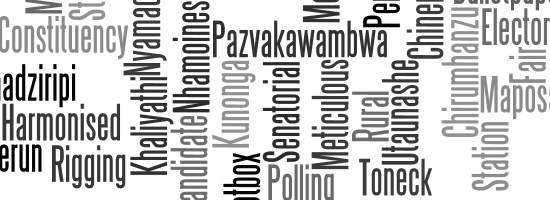
    You have probably heard the story : some of the names of babies born in local clinics and hospitals after the 2008 “harmonised” Zimbabwean elections-

    Runoff Moyo
    Senatorial Chirumhanzu
    Candidate Pote
    Independant Maposa
    Rigging Hamadziripi
    Electoral Commission Ndlovu
    Foreign Observer Chimunda
    Neck Toneck Nyamadzawo
    Sadhaki Sibanda
    Heavyweight Utaunashe
    Percentage Ndlondlo
    Released Results Matongo
    Meticulous Verification Chinengundu
    Free & Fair Pazvakawambwa (Twins)
    Rerun Mombeshora
    Rural Stronghold Khaliyathi
    Constituency Madison
    Polling Station Nhamoinesu
    Ballotbox & Ballotpaper Kunonga (Twins)
    Harmonised Chitanda

    And…..Parliament Nyathi!

    My fascination with Zimbabwean names dates back, some two decades, to my first university vacation job as a personnel records clerk at Monarch Products, a Bulawayo household and travel goods manufacturer. Perhaps I should change this to a fascination with the way ‘indigenous’ Zimbabweans name their children in English. To be sure, this intriguing tendency is not exclusive to Zimbos. Happy Sindane is, after all, a South African. But who else in the world gives their children names such as Passmore, Scholastic, Promotion, Lovemore, Godknows, Promise, Knowledge, Moreblessings, Trademan, Bornfirst , Boniface, Takesure and many other suchlike gems?

    I landed myself the princely vacation job because Monarch Products (part of the Treger Group of Companies) was, for the first time, computerising its personnel records. The first part of the job consisted of trawling through each employee’s personnel file for copies of birth and death certificates, note entries, and any evidence of family changes in the employee’s life and then updating the official record cards which for some reason had not been done for the previous decade or so. Once updated the card would then be passed on to some data capture clerk for the computerisation process. My part, in other words was painstaking and extremely boring. That is until I stumbled upon some of the most amazing examples of interesting names and decided to keep a toll and further amuse myself by working out the story behind each of the gems.

    Anyone meeting Promotion Ncube today (perhaps now some hot-shot lawyer, teacher, soldier or one of Zimbabwe’s millions of refugees) would not know that in 1981, a month before his birth, his father- a leading hand in Monarch’s Travel Goods division- was promoted to first line supervisor! Old man Treger himself, probably late now, may not have known that at least three of his employees named their children “Treger” in appreciation of continued employment. Or perhaps even in some sycophantic search for that elusive promotion!

    But my fascination goes back even further- to childhood days. I had a brother ,now late, called Bigboy , who has a son called Agreement. I attended Primary school with three boys, Sunrise, Sunshine and Sunset, the children of a neighbouring school headmaster. Or- as they were affectionately known- Rise, Shine and Set. (Incidentally, their three sisters were Ntombikayise, Ntombikanina and Ntombiyelizwe- literally father’s girl, mother’s girl and the nation’s girl, respectively).

    At about the same period, a village bully named Ambulance Ncube, five years older but two grades behind me, terrorised the whole school. One day I forgot to bring his “order” of cooked peanuts and he fractured my elbow with a knobkerrie. Our freedom from Ambulance’s tyranny only came when he ran away (from the pressures of yet another repeated lower primary school academic year!) to Geneva (as Zambia was popularly known after the 1975 Geneva Conference on Rhodesia) to “join the liberation struggle”. But that was not before my older brother Sibangilizwe, and an uncle, Smile Moyo, cornered and thrashed him until his own arm was broken! (Sibangilizwe, incidentally, means “we are fighting for the country” in siNdebele. A very nice name to present at a pre-independence Rhodesian Army roadblock, as my brother frequently found out!)

    – Babusi Sibanda . Johannesburg, 2008

    Babusi Sibanda. Mobile : +27721969188 E-mail: kwizeen@gmail.com
    Zimbabwean born, South African, freelance writer and columnist .
    Has had numerous articles published in a variety of publications in the last 25 years including The Chronicle (Bulawayo), The Sunday News (Bulawayo), Moto, Parade, The Cape Times, Food & Home, Rootz, Femina, African Decisions, Mercedes , Mail & Guardian and others.

    Member of SAFREA (Southern African Freelancers Association). Visit us at www.safrea.co.za

    This has been a submission by Babusi Sibanda.
    You can connect with Babusi Sibanda via the following: http://www.safrea.co.za, , .
    You too can become a Citizen Journalist by submitting your story here: Citizen Journalism by Living Zimbabwe.
  • 25 Random Things I love about Zimbabwe

    1. We have the best climate in the world- ask anyone. Harare in particular is wonderful, but the whole of Zim is pretty lovely. No, I am not biased.

    2. We are really nice people. When you sit in a kombi (public transport), you can pour out your troubles and everyone will listen, perhaps laugh, usually have a kind word to say- no matter how pressing their own problems are. Strangers also smile and say hello. I love that.(Australians are nice too, incidentally).

    3. We are peace-loving. After all the troubles we have been through in the last ten years… Well, anything could have happened. That stuff happens in other African countries. Not to minimize the cases that have been in the world media so much, but we never thought to turn to arms to make our point.

    4. We know how to have fun. In the old days (pre-financial trouble), Christmas was a good excuse to party all night- with the whole neighbourhood. We know how to laugh, no matter what’s going on around us. I think Zimbabwean jokes are among the best in the world. Maybe it’s the weather, but anyone can have fun, at any time- and we do.

    5. We endure. I admire the businesspeople who’ve stayed, and stayed in business, in spite of how tough things have been. I love walking into the shops and seeing products made in Zimbabwe. I love seeing people “making a plan”- people who lost their jobs five years ago just finding a new way to stay in the game. I love that most Zimbabweans don’t sit around waiting for a handout, no matter how hopeless the situation seems. I love that we are a hopeful lot.

    6. I love that I don’t have to worry about the food I eat. Since just about everything we eat is organic, I don’t have to wonder if I’m getting cancer from my food… Or worry about being morbidly obese because of a reliance on takeaway food.

    7. I love that no matter what the stresses we live under look like to the outside world, we still live a relatively stress-free life. Our lives are real. When we are stressed out, it’s because we have no food in the house, or because we are sick. It’s not because we want that fancy new car, or because of credit card debt. Levity aside, the incidence of so-called lifestyle diseases is low, and as a result we are healthier even into our old age.

    8. I love the importance we place on extended family. One is never alone here. In times of trouble, there is always someone to turn to… And one in turn looks after others. I love that I will raise my children in community.

    9. I love the importance we place on respect for elders. I think it’s a good basis for stability in society. I love, too, knowing that I will not be placed in an old age home for the convenience of my family, because that’s not how we do things here.

    10. I love the way the rainy season comes. I love the way the dry heat builds up until it is almost unbearable, but then if you watch, every day you see storm clouds growing on the horizon… And then the first rains come with their drama- huge storm clouds, lightning, wind and the wonderful scent of rain mingling with dust… And then the storms that come at lunchtime and when you are about to leave the office after work, just to drench you. And then everything becomes green again, and it’s like the whole world is sighing with happy relief.

    11. I love seeing the farmers work in the fields. I love going up to Honde Valley in Nyanga, the way the road winds until you are sick with vertigo, and yet you are gasping with amazement because each turn reveals some pretty, secret, lush valley… I love standing on the mountainside where home is, and looking across to the tea estates near the border with Mozambique. I love getting up really early, on those tear-inducingly cold mornings in Honde Valley, when you see woodsmoke from a dozen fires drifting upwards to mingle with the mist.

    12. I love walking through the rain forest at Victoria Falls, getting drenched, and feeling like a child again… And then coming to a sudden clearing in the “jungle”, and there is the magnificent, me-shrinking majesty of the Falls. And all the other things- the hotels in Vic Falls and the excitement of being on holiday and ordering breakfast, the not-too-resorty “resortiness” of Vic Falls, the crocodile farm, watching the hippos swim at A’Zambezi River Lodge…

    13. I love taking road trips here, and taking in the vast expanses of savanna… I love how beautiful the countryside is, and how the space gives one a feeling of freedom. I love that even in the city, I don’t feel cramped. I love that one can own a few acres of open land even in the city.

    14. I love the pace of life here. Not even in the so-called fast-paced Harare is life truly fast-paced. I love that one still has time to stand and stare, and that work is never really frenetic.

    15. I love that we don’t really have crime here. Not compared with other countries, I mean. And when there is crime, it’s hardly ever violent. The incidents are so isolated that this is the exception, rather than the rule. I love that you can walk around during the day without worrying about someone pulling a gun on you. I love that you can drive around without being certain that someone will try to hijack you.

    16. I love how patriotic we get around sport- but usually only when our teams are winning. I remember going to a soccer match in Harare, and failing to get in because the stadium was packed. And how everyone was singing, and the feeling of pride in being Zimbabwean. I suppose this happens in other countries too… (grudgingly).. I love, too, going to watch cricket, whether at Harare Sports Club, or Queens in Bulawayo. The weather is always wonderful when cricket is on, and the atmosphere is fantastic.

    17. I love how Zimbabweans think a party- or fun- is synonymous with a braai (barbeque)

    18. I love the little places there are? were? in Harare, informal eating places like KwaMereki and Cresta Mbare, where one could get an excellent Zimbabwean meal- excellent value for your money. I love that one got to know about these places by word of mouth, and that everyone seemed to go to these places… So you would meet your friends and associates there. And that a lot of office workers would drive there at lunchtime, rather than to some fancy takeaway place… And the service at these places would be the envy of any catering business. And gradually the service would get personal, too, as you became a regular. I love that you never had to worry about the hygiene, because the hosts were at pains to make sure everything was perfect- just like home. I hope these places survive.

    19. I love township life. I love how when you play your radio, it’s so that the neighbours at the end of the line can hear every word. I love that everyone knows when you have bought a new fridge- even those who live ten roads down. I love that every home has a fruit tree in the front yard- and if you don’t have one, you can steal your neighbour’s fruit- doing them a favour, because otherwise the neighbourhood kids will. I love the fact that you can borrow a cup of sugar from your neighbour, or a teaspoon of salt- unless they started a rumor about you ten years ago, in which case you would rather go to the people two roads away. I love the general exodus to any cleared space as soon as the rains begin, to plant maize (corn), which you can be sure we’ll be eating like mad for four months.

    20. I love how we exaggerate. I love that nothing is small, especially when you tell a story. I love that everyone is a storyteller- you only have to watch a Zimbabwean, any Zimbabwean, for two minutes as they relate something, to know that. The gestures are huge, the voice is raised, and there is a great deal of poetic licence.

    21. I love that I can joke with policemen. I call them “chef” or “officer”, and watch them puff up with pride when I do. I love Zimbabwean in-jokes like that, the words and phrases that I can use to any Zimbawean that convey a wealth of meaning- words and phrases like “berial cheques”, “demonize”, Diaspora, and “under curatorship”. I love how we are about community, and every experience becomes a shared “Zimbabwean” thing.

    22. I don’t know how many of these things are particularly, or originally, Zimbabwean, but I love: Mazoe Orange, Buttercup Margarine, Sun Jam, Willards Custard, Colcom Cambridge Pork Sausages, Chimombe…. Zimbabweans will know what I mean. I love that we get homesick when we think about such things when we are far away.

    23. I love how public transport is never full here. There is always room for one more person on the bus or Kombi. I love (strangely enough) the “chicken” buses that take you to the rural areas, no longer with squawking chickens, but with squealing babies and sweating mothers, with blaring music and a shouting conductor, and a household’s complement of furniture on the roof. I also love how the informal bus stops gain a name that everyone knows them by- pa chibage (“by the mealies”, referring to where someone is selling roasted maize/ corn); pa ma gum tree (at the gum trees), pa musika (at the market), ekhoneni (at the corner), e mapostorini (where members of the Apostolic Faith meet or sell their wares). I love that the name may last even though landmarks change.

    24. I love the music… From the endlessly-repeated riffs and plaintive sound of the lead guitar in sungura, to the sort of Afro-jazz sound of Oliver Mtukudzi, to the vernacular choral music we sing at the Anglican church, that has the ability to move me so…

    25. I love how Zimbabweans in the Diaspora long for home. It must mean that there is something particularly special about this sort of teapot-shaped piece of earth.

    This has been a submission by shonatiger.
    You can connect with shonatiger via the following: http://shonatiger.blogspot.com, http://twitter.com/shonatiger.
    You too can become a Citizen Journalist by submitting your story here: Citizen Journalism by Living Zimbabwe.

  • The Incredible Potential of Our People And Our Exciting Future

    Zimbabwe has the most incredible people. We are a nation of naturally born entrepreneurs who have a deeply engrained “never give up attitude”. You see business happening on Every corner . The majority of people you speak to are filled with optimism about our exciting future. As we work with more and more entrepreneurs we see a strong spirit of hope, enthusiasm, excitement and passion coming out of each person we connect with and this is the nature of our people.

    Yes we face challenges but all countries face challenges. We all need to stop pointing fingers, work with what we do have and build our future. Our trials make us stronger and teach us to become more creative.

    We are in for an exciting and interesting future and I’m so proud to be a Zimbabwean 🙂

    This has been a submission by Sally Palmer at Sabrebusinessworld. If you have something to share, you too can become a Citizen Journalist by submitting your story here: Citizen Journalism by Living Zimbabwe.

  • Stop the Carnage on our Roads

    Stop the Carnage on our Roads

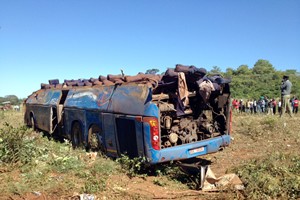
    It is quite disturbing that there is so much carnage on our roads. Lives are being snuffed out because of carelessness and greed. We need to lobby for the transport operators association and the owners of buses to be held responsible – as in actually going to jail not just paying for the funerals.

    That way they will make sure their drivers are experienced, responsible and up to date with all their certifications. The authorities (whoever they are) also need to implement stiffer penalties for vehicles that are not road worthy.

    The corruption in Zimbabwe is killing us and our children. What is more imporant than the lives of our fellow human beings?

    Have we lost respect for the value of life so much so that profits and targets are more important? Nothing tangible or within this world is worth the expense of human life.

    Horror Crash

    This has been a submission by Saddened Angry Mother. If you have something to share, you too can become a Citizen Journalist by submitting your story here: Citizen Journalism by Living Zimbabwe.