Author: Citizen Journalist

  • Showing the True Face of Zimbabwe and Africa

    Showing the True Face of Zimbabwe and Africa

    I visited the continent of Africa for the first time in 1993, and like most Americans of my generation, I arrived with a mind filled with misconceptions. I’d grown up being bombarded by the distorted cinematic portrayals (most notably the Tarzan movies, which weren’t even filmed in Africa, but in Mexico), popular media focus on the continent’s problems, National Geographic magazine with its exotic animals and people, and a lack of content in the world history courses I’d taken up to that time. Africa, ‘the Dark Continent’, was terra incognita in my mind – a monolithic place of poverty and war. Even the so-called Africa Hands at the State Department where I worked at the time, tended to refer to ‘Africa’ as if it was somehow a single state rather than a diverse collection of cultures and people.

    My first African ‘home’ was Sierra Leone, where I lived for three years while I was assigned to the American Embassy in Freetown. The country was in the throes of a violent civil war and ruled by a military dictatorship. Despite these conditions, though, I quickly discovered that it was far from a total lost cause. In the first place, the country, as small as it was, was amazingly diverse. Sure, there was violence, hunger, disease, poverty, and corruption. But, there was also resilience, love, laughter, and a desire to live a better life. The terrain wasn’t the steaming jungles of the Tarzan films. There were mountains, plains, and forests. Driving through some of the villages in the northwest region of Sierra Leone reminded me of some of Georgia or Alabama’s back country roads.

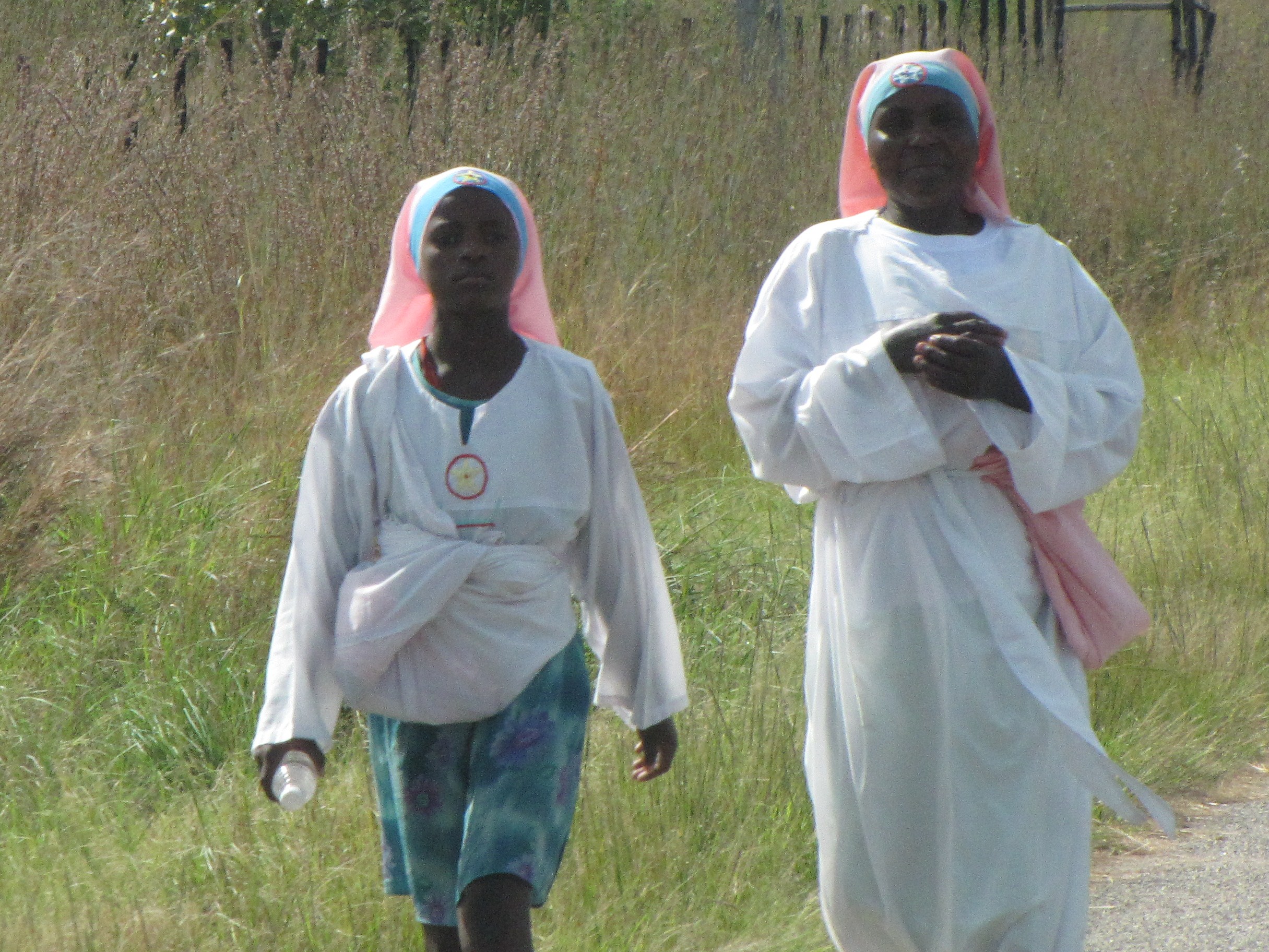
    I’ve been an avid photographer since my teens, but I didn’t take my camera with me to Sierra Leone in 1993 – much to my regret. I would love to have been able to document my travels throughout the country. I got that chance decades later. In 2009, the State Department assigned me to Zimbabwe, another country in turmoil. There was no war, but disease, political violence, and economic instability affected most of the country’s population. I’d only been in southern Africa once before – I visited Johannesburg, South Africa in 1994 right after the end of apartheid – and only for a few days. So, I was unprepared for Zimbabwe. The briefings had led me to expect gun-wielding soldiers on every street corner and children with swollen bellies playing in sewage. The country had – and still has – its problems, but nothing like that. I found that you could walk the streets of Harare or Bulawayo and not even be aware of the political or human rights problems. They were still there, but existing alongside positive things as well – things that seldom found their way into the international media coverage of the country.

    I traveled the length and breadth of Zimbabwe during my three-year stay; always with my camera handy. I was determined to document the many faces of the country. Since other media were doing a good job of documenting the negative, though, I emphasized the other side of the coin. Smiling faces, fantastic landscapes, diverse wildlife – all showing Zimbabwe’s potential, if only its leadership would focus more on developing true economic security for the population. I’ve been a freelance writer and photographer for decades, and while I lived there, I did a number of articles on Zimbabwe’s tourism potential, but I wanted to do more. I wanted to show the world that Africa is not a ‘single’ place, but like the world’s other continents, a place of immense diversity. A place that has both good and bad, beauty and ugliness. I’ve done two photo-journals focusing on Zimbabwe: African Places: A Photographic Journey Through Zimbabwe and southern Africa, which I published in June 2012, a few months before I returned to the United States to retire from government service. My most recent, A Portrait of Africa, was published in January 2014, and while it includes photos from other areas (Senegal, Cameroon, South Africa, and Tanzania), as with the first book, the bulk of the photos were taken during my travels throughout Zimbabwe.

    It is my wish that those reading A Portrait of Africa, whether African or non-African, will come away with an enhanced appreciation of the diversity and potential of the continent that is the birthplace of humanity – that they will be able to see beyond the popular images to the reality that lies just beneath the skin. What I hope everyone reading this book will see is that there is still hope – hope for the African continent, hope for Zimbabwe, and hope for us all.
    IMG_0424

    This has been a submission by Charles Ray.
    You can connect with Charles via the following: http://charlesaray.blogspot.com, http://twitter.com/charlieray45, http://www.facebook.com/CharlieRay45.
    You too can become a Citizen Journalist by submitting your story here: Citizen Journalism by Living Zimbabwe
    The views expressed in the article are those of the author and not necessarily Living Zimbabwe.
  • Living and Learning in Zimbabwe: The Power of a Smile

    Living and Learning in Zimbabwe: The Power of a Smile

    I spent from June – December of 2013 living, learning, and working in Nkayi, Zimbabwe as a World Vision Canada Intern. I was asked by Living Zimbabwe to write a piece with some helpful hints for people traveling to Zimbabwe. I have tried my best to avoid the typical travel advice of “boil your water” and “ladies should wear skirts” and “don’t walk around outside in the dark alone”, because while those are great tips, they don’t mean anything. I’ve tried to make my advice meaningful; something that maybe you won’t read in the Lonely Planet book or hear from your Travel Health Clinic.

    1. Actually visit with the locals. I’m not talking about going, greeting them, and taking some pictures of their living spaces. Pictures are important, and absolutely, take them. But talk, and even more importantly, listen, to the locals. You can learn a lot from reading newspapers and browsing websites, but you can learn even more from listening to stories of people who live very different lives than most of us in North America do.
    2. Visit rural areas. Bulawayo and Harare are beautiful, and they have stories to tell… but sometimes the cities have somewhat of a North American feel to them. The rural areas are where you really get the feeling of what is means to be in Zimbabwe.
    3. Take part in some of the parts of daily Zimbabwean life. Carry water on your head so that you can begin to understand how a Zimbabwean women spends anywhere from 15 minutes to 2 hours of her day, and take a bucket shower so that you can appreciate the excessive amount of water that we have in North America, and use a blair-latrine so that you can be thankful that we have that money to put towards luxurious items such as flush-toilets.
    4. Learn to cook sadza (or if you’re like me and you can’t cook, at least watch in amazement as a Zimbabwean woman cooks it). I asked a coworker one evening how to make it, and she couldn’t tell me exactly; she didn’t know the measurements. It is an art of “some more mielie-meal”, “a little more water”, “a liiiittttle more mielie-meal”, and eventually, “a pinch of salt”.
    5. Watch football (soccer). I don’t mean on the television from inside your room, or even a “big-ticket” game at the outdoor pitch in one of the big cities. I mean put on a hat, and go watch locals play. If some of these kids had the same resources that David Beckham did, they would be better than Beckham was at his peak.
    6. Need a tour guide? Ask a local! Sure, Victoria Falls has boards of information everywhere, but like turning a book into a movie, sometimes really important and/or interesting pieces get left out. The locals will know all sorts of information, and probably be honored that you would ask them to guide you.
    7. Get in there! In North America, we are sometimes very shy about dancing with strangers because we don’t want to look “silly”, or we won’t try speaking another language because we will be laughed at. I looked silly, and I was laughed at… but it is a part of the experience!
    8. Accept all gifts. Zimbabweans understand that life is about relationships, and stronger than their desire to feed their own family tomorrow, is their desire to be hospitable and engage in fellowship with new friends today.
    9. Take time to feel. There is something about the sunset and the stars during the evening, after a day of hearing about the hardships one minute, but seeing the dancing and laughing the next.
    10. Be prepared to change. Zimbabwe changed my views on faith, materialism, the power of a smile, and so much more. I promise it will do the same for you.

    This has been a submission by Sherrie-Lee R. Chiarot. You can connect with Sherrie-Lee via the following: , https://twitter.com/sleerose, . You too can become a Citizen Journalist by submitting your story here: Citizen Journalism by Living Zimbabwe The views expressed in the article are those of the author and not necessarily Living Zimbabwe.
  • Shock & Dismay At Zimbabwe Elections By A First Time Voter

    Shock & Dismay At Zimbabwe Elections By A First Time Voter

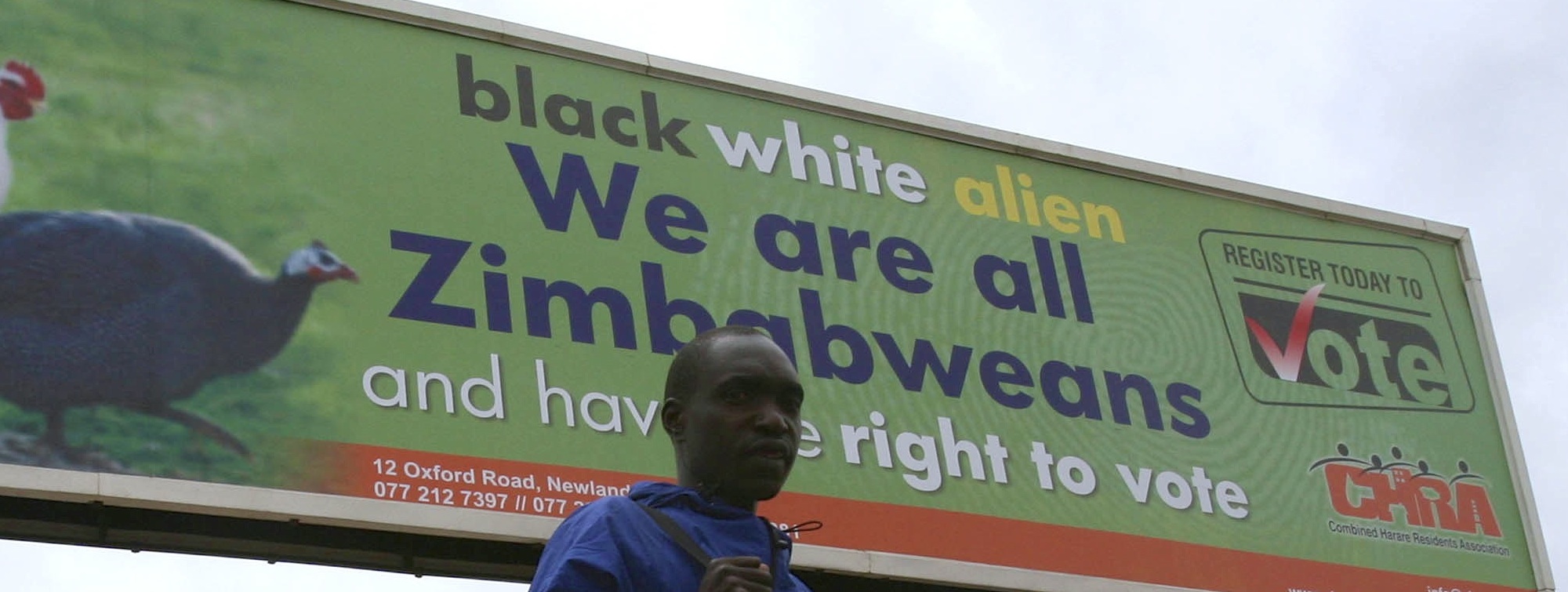
    I am a first time voter, 25 and a recent graduate. I studied Chemical Engineering and am a proud holder of a degree. But in this country i am just one of many, educated but cannot find a job in this broken system. My call to action was a Sunday Mail headline which claimed only 17% is unemployed. I mean that had me angry and I knew then I had to vote for change. The feeling was shared by almost everyone I knew. Enough was enough Zanu PF needed a break, the 89 year old leader needed to retire.

    Post result shock and disappointment is what I have at the moment. We all know who really won the election, we all know who rescued the economy. We are not dumb we know our country was headed in the right direction. We where robbed. Zanu PF are thieves who overdid it. And, they took a 2/3 majority so as to implement more oppressive statutes as they and ONLY they plunder the resources of Zimbabwe. There are no celebrations, only mourning. We are mourning the death of any hope we had of a better Zimbabwe.

    This has been a submission an anonymous contributor
    You too can become a Citizen Journalist by submitting your story here: Citizen Journalism by Living Zimbabwe
    The views expressed in the article are those of the author and not necessarily Living Zimbabwe.
  • Widespread Human Rights Violations Threaten Elections in Zimbabwe

    FULL REPORT:

    PRESS STATEMENT

    With just weeks to go before a watershed election, a political atmosphere of intimidation and violence has taken hold in Zimbabwe. Rather than promoting an environment in which civic participation and political tolerance are encouraged, the government of Zimbabwe has engaged in a systematic crackdown on civil society and the human rights community, including arbitrary detention of activists and opposition supporters, and widespread violations against freedom of expression and access to information.

    These are the findings of a report released today by the Robert F. Kennedy Center for Justice and Human Rights (RFK Center) entitled, “A Promise in Peril: How Widespread Rights Violations Undermine Zimbabwe’s Elections.” The report comes one month before Zimbabwe’s July 31 election, and presents findings that were collected during an international delegation organized by the RFK Center in March 2013.

    “The routine intimidation, harassment, and arbitrary criminal prosecutions of human rights defenders, lawyers, and political activists in Zimbabwe threaten the rights of all citizens to participate freely in public affairs,” said Kerry Kennedy, President of the RFK Center. “With an election upcoming, the government must ensure an electoral environment that is consistent with international standards.”

    “These ongoing human rights violations set the stage for the type of violence and chaos that has marred past elections in Zimbabwe. State authorities have engaged in a pattern of suppression that specifically targets groups engaged in voter registration, education, and mobilization initiatives,” said Santiago A. Canton, Director of RFK Partners for Human Rights. “This behavior is unacceptable and represents clear breaches of domestic and international law.”

    In the report, the RFK Center urges the government of Zimbabwe—which is largely dominated by President Robert Mugabe and the Zimbabwe African National Union–Patriotic Front—to immediately cease the continued harassment, intimidation, and violence perpetrated against civic actors. The report also encourages the government to respect international legal conventions to which Zimbabwe is a party or state signatory, including the Universal Declaration of Human Rights, the International Covenant on Civil and Political Rights, the African Charter on Human and People’s Rights, and the Declaration of Principles of Freedom of Expression in Africa.

    This has been a submission by Jeffrey Smith.
    You can connect with Jeffrey Smith via the following:
    You too can become a Citizen Journalist by submitting your story here: Citizen Journalism by Living Zimbabwe
    The views expressed in the article are those of the author and not necessarily Living Zimbabwe.
  • Anonymous Africa – Our End Game For Zimbabwe & Africa (@zim4thewin)

    Anonymous Africa – Our End Game For Zimbabwe & Africa (@zim4thewin)

    Greetings and Salutations fellow Africans and Earthlings.

    We are Anonymous Africa and we were asked to write a short blog explaining our motivations. By now you may have noticed some of our ops hitting Southern Africa. We hope you like our work. We would like to thank you for the overwhelming support you are giving us.

    So far our targets have included:

    • IOL – A partly South African government owned media publication that pushed pro-Mugabe propaganda – www.iol.co.za
    • ZANU-PF – The website for the completely corrupt ruling party in Zimbabwe – www.zanupf.org.zw
    • Zimbabwean Herald – The ZANU-PF owned puppet media publication – www.herald.co.zw
    • ZIMRA – The Zimbabwe Revenue Service, the Zim tax collectors – www.zimra.co.zw
    • ZIM MOD – The Zimbabwe Ministry of Defence – www.mod.gov.zw
    • ANC – The corrupt ruling political party in South Africa that supports Mugabe – www.anc.org.za

    Why are we upset?

    TWe believe most of Africa’s modern day problems stem from corrupt and evil leaders that have sold the people out (mostly to corrupt private commercial interests). Much of Africa has entered a cycle of corruption and we believe we are the generation to start breaking up that cycle. Not only can the youth of Africa change Africa. They have to.

    Who are we?

    The Hacker Manifesto best describes who we are:

    “This is our world now… the world of the electron and the switch, the beauty of the baud. We make use of a service already existing without paying for what could be dirt-cheap if it wasn’t run by profiteering gluttons, and you call us criminals. We explore… and you call us criminals. We seek after knowledge… and you call us criminals. We exist without skin color, without nationality, without religious bias… and you call us criminals. You build atomic bombs, you wage wars, you murder, cheat, and lie to us and try to make us believe it’s for our own good, yet we’re the criminals.”

    We are a tight collective of hackers and coders. Some of our members have been part of anonymous since their origins in the Scientology protests. We have been involved in previous ops from around the world including and not limited to, South America, South East Asia and Europe.

    What are we doing?

    Following what happening in the Middle East we are hoping to help start the launch of the African spring. We believe that the Internet is the last place that free speech truly exists. We hope to use whatever skills and abilities we have to bring as much attention to the crimes and corruptions of our African leaders.

    What do we have planned for the future?

    We have many non-violent forms of electronic protest planned. We also hope in the near future to release an African specific version of wikileaks where Africans can expose corruption without fear.

    This has been a submission by Anonymous Africa.
    You can connect with Anonymous Africa via the following: .
    You too can become a Citizen Journalist by submitting your story here: Citizen Journalism by Living Zimbabwe
    The views expressed in the article are those of the author and not necessarily Living Zimbabwe.

  • Fashion Trends in Zimbabwe

    Fashion Trends in Zimbabwe

    For a while I thought setting a fashion trend in a country like Zimbabwe was easy…it’s not. Setting a trend requires innovation and taste. The question is how does a thing become the in thing. Who approves trends? Who decides?

    Zimbabwe has seen the jelly pumps, colour blocking, Rihanna hairstyle, skinny jeans as top trends that caught on like wildfire in the past few years. The challenge with Zim Fashion trends is that nobody is daring enough to be the ultimate trendsetter. Everybody is following trends some of which are outdated or too popular. On the international scene tastemakers who set the trends already know what you will be wearing in 2015. Their trend forecast is always 2 years ahead of Zimbabwe, literally.

    Thank’s to Ftv and fashion magazines some of us are not always left behind. The process of introducing trends all the way from Milan’s haute couture runway to the high street fashion of Harare through the whole supply chain is very long. Who has patience for that? This is when you find a typical Zim fashionista ordering straight from the European countries or getting the style custom made locally.

    To spot trends one should look at the colour, cut, textile and length of a garment. The secret to keeping up with trends is looking at glossies, fashion shows, blogs and fashion related television programmes. That is where all the fresh trends are born. To stay on top of the game always get in with the new and out with the old. That is the trend rule . Nonetheless, if you are or want to be a true trendsetter none of this should matter because you are an innovator. You do the opposite. You DON’T follow trends and the streets are your runway.

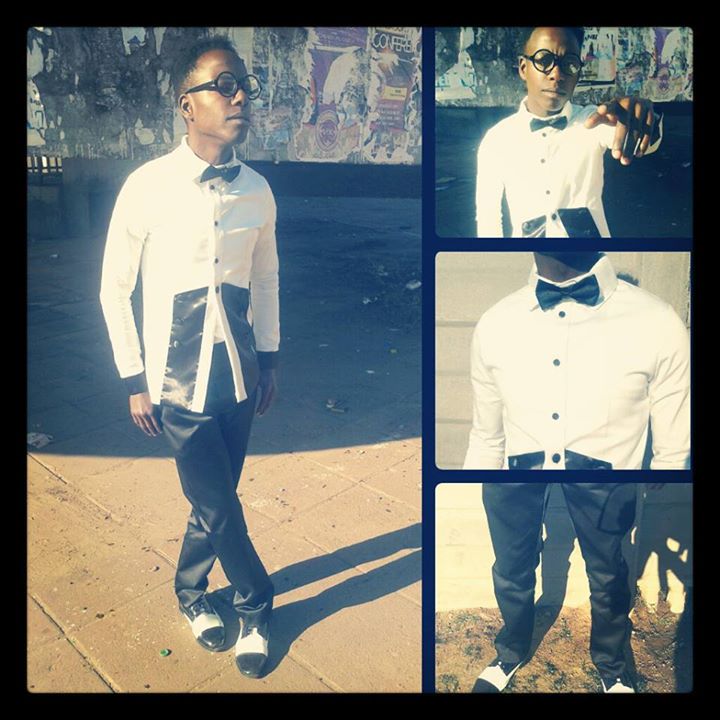
    Chose, one of Harare's fashion forward fashionistas

    This has been a submission by Beryl Kanyowa.
    You can connect with Beryl Kanyowa via the following: , , .
    You too can become a Citizen Journalist by submitting your story here: Citizen Journalism by Living Zimbabwe
    The views expressed in the article are those of the author and not necessarily Living Zimbabwe.
  • Indigenous Proverbs: Something We Need To Preserve For The Future Zimbabwe

    Indigenous Proverbs: Something We Need To Preserve For The Future Zimbabwe

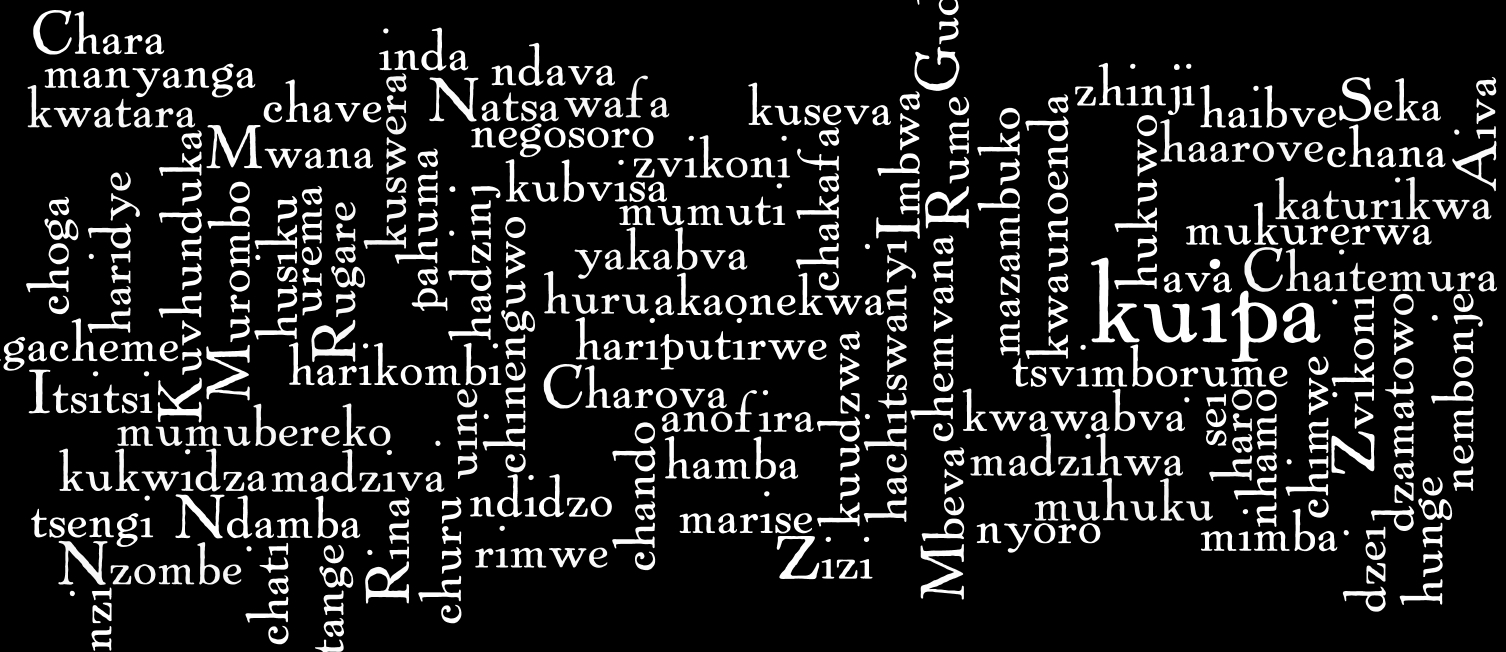
    Its really sad that we (Zimbabweans), have reduced the importance of our indigenous proverbs to something we need to cram in order to pass our Ordinary and Advanced level exams. As a result most people don’t pass these exams and end up relying on the domestic aide from kumusha to help their children to do their Shona (i don’t know about Ndebele) homework. Like all other proverbs, our indigenous proverbs are rich sources of wisdom that are very much applicable in our day to day living. Not only are these proverbs relevant to our day to day living,they are easy to understand (no need to crack your head), which is not much of a shocker because they were created for us. Its a pity that my Ndebele speaking is really bad,but I gathered a number of Shona proverbs to jog memories. I also put a link at the end of the article,for those who want to acquaint themselves with the meanings of these and other Shona proverbs and for those who might want to help their kids with their Shona homework every once in a while :D.

    1. Nzombe huru yakabva mukurerwa.
    2. Ndamba kuudzwa akaonekwa nembonje pahuma.
    3. Gudo kuipa kuipa haro asi haridye chakafa choga.
    4. Rina manyanga hariputirwe.
    5. Imbwa nyoro ndidzo tsengi dzamatowo.
    6. Zvikoni zvikoni mimba haibve negosoro.
    7. Aiva madziva ava mazambuko.
    8. Chaitemura chave kuseva.
    9. Kuvhunduka chati kwatara hunge uine katurikwa.
    10. Seka urema wafa.
    11. Zizi kuswera muhuku hunzi ndava hukuwo.
    12. Itsitsi dzei tsvimborume kubvisa chana chemvana madzihwa?
    13. Charova sei chando kukwidza hamba mumuti?
    14. Natsa kwawabva kwaunoenda husiku.
    15. Murombo haarove chinenguwo.
    16. Mbeva zhinji hadzinj marise.
    17. Rume rimwe harikombi churu.
    18. Chara chimwe hachitswanyi inda.
    19. Rugare tange nhamo.
    20. Mwana asingacheme anofira mumubereko.

    For meanings to these and other proverbs check out I believe that our languages are important in defining who we are as Zimbabweans..lets embrace them…lets preserve them..lets be Zimbabwean. NMN

    This has been a submission by Nyasha Mukai Nyakunu.
    You can connect with Nyasha Mukai Nyakunu via the following: , .
    You too can become a Citizen Journalist by submitting your story here: Citizen Journalism by Living Zimbabwe
    The views expressed in the article are those of the author and not necessarily Living Zimbabwe.

  • Extensive NGO Consultation Key To Sustainable Development In Zimbabwe

    Extensive NGO Consultation Key To Sustainable Development In Zimbabwe

    Last week, l visited my mother in the country side, Zvishavane communal areas and l was privileged to witness a gathering in which one of the many non governmental organisation, the Australia aid was giving money to rural people which they were supposed to use to buy livestock thereby alleviating poverty. But, what l personally observed prove otherwise .

    Firstly,  people are shared my observation, it is important to highlight that in rural areas in Zimbabwe the majority of people are living below the poverty datum line. More interesting, is the fact that the majority of people relied on the agrarian economy of the country and hence they need livestock and seed in order for them to cultivate their pieces of land. I’m quiet convinced that the Australia Aid put this into cognisance, hence prioritising the provision of funds to people to purchase livestock.

    But, here is what the workers in that organisation failed to put into consideration in order to achieve community-oriented development. Firstly, you can not give a person who can not afford to buy sugar a sum of $US160.00 because he/she will use that money to buy other basic commodities like sugar, rice etc and this is exactly what is happening in Zvishavane. Secondly, a mechanism to ensure that the money is used to achieve the intended goal must be in place to ensure transparency and accountability and this is not happening in this community. So for a community-oriented development all of the aforementioned issues must be put into consideration

    This has been a submission by Musavengana Hove.
    You can connect with Musavengana Hove via the following: http://www.soldierjournalist.blogspot.com
    You too can become a Citizen Journalist by submitting your story here: Citizen Journalism by Living Zimbabwe
    The views expressed in the article are those of the author and not necessarily Living Zimbabwe.
  • My Late Father Would Vote Zanu (PF) Today

    My Late Father Would Vote Zanu (PF) Today

    “Kays” as they called him was son to a Gushungo who migrated from Serima and my gogo a Muturikwa whose parents possibly migrated from Mrehwa. He was born in 1945, across the river from Prime Minister’s home. Surprisingly that is as far as their similarities go because had he been alive, he would not vote for MDC-T today. This man who forever will be revered as a hero in my memory was disabled. It was not an inborn disability, but something happened to his right lower leg when he was young. Up to the day he died, he had not been able to discuss with me nor my siblings regards to what really happened. All I know is that it was a fire accident.

    Kays believed in the revolutionary movement’s focus on policies that improve lives of the common man. He would always urge Zanu (PF) to go back to roots to emphasise on such policies to lure lost votes. “It will be a walkover on these directionless boys” he argued with me on his deathbed at Parerinyatwa. He belonged to a generation who had wanted to participate in liberation struggle but failed because of various reasons. They mobilised students, recruits, provided clothes and other support. Such a class faced wrath of Smith regime accused of being lifeblood to the comrades and withholding information. These professionals played their part but never clamoured for recognition to date.

    Education

    After completing Standard 6 (Form 2) he trained as a teacher at Wadilove Mission (Marondera) in 1972 where he met my mother who was from Bumburwi. He stayed in the same profession till his end in 2009. Through correspondence he attained O levels , Grad CE and later BA Hons. As a primary school teacher working in rural areas, he knew that the only way societies can improve is through education. He worked hard through disability to send his children to get descent education. Free education policy of the 1990s produced a Zimbabwe which is rated to have above average literacy world over. Kays although an executive, believed that militants in ZIMTA led to the first teachers’ strike in 1990 and had no care for teachers or students welfare at all. Post 1990 period saw introduction of school fees and cases started appearing of children dropping out or being unable to write exams because of lack of funds. He always felt that IMF demands for government to slash social services bill (ESAP) was a way of West getting even with Mugabe.

    Health

    The fire accident deformed his right leg such that his toes turned towards the heel to form a round like foot developing into a very thin sheen up the leg. So to speak he stepped on the top of his foot. That leg became shorter. At times he used clutches until Jairos Jiri organised a special shoe for him. From Bata shops, he would buy a pair of size 11 but only use the left one. That special shoe could only be repaired but he could not buy a new one. Courtesy of Mugabe’s health policy, more disadvantaged people like him during years after independence could always be treated for free regardless of medical needs. UK has maintained a similar socialist health policy to date. The number of health clinics opened country wide, more medical professionals training, building of toilets in rural areas, access to clean water all pointed to a caring leader in Mugabe.

    The Land Question

    Just like many, he was frustrated that the Lancaster House Agreement put land redistribution on hold for 10 years. Worse still after that period, Mugabe was frustrated into being unable to fulfil pre-war time period promises to resettle masses from reserves as apportioned by Land Apportionment Act 1930. When farm invasions started in 2000, all Kays said was “Commercial Farmers’ Union have shot themselves in the foot.” CFU never thought farms could be taken away from them. White farmers believed in the Courts which continued to make decisions against land redistribution. To date land redistribution has continued and although chaotic, people’s lives have been changed.

    Legacy

    Zanu (PF) legacy is open to interpretation but Kays would always look beyond negatives. He believed that “honourable” is the best way regard Mugabe. A Politburo Member recently summarized Zanu (PF) legacy to me as “Land, Empowerment, Development creation, Sustained support for farmers and reform to mining sector” .Even after formation of GNU, the revolutionary party pulled indigenization policy which in theory seeks to put control of economy in the hands of locals. The mining sector has also been opened up to allow local ownership. I do not see MDC-T pulling out any of the landmark policies to convince voters. This is the reason why penetration to the rural areas has been sketchy for Harvest House arrogant overrated under-achievers.

    Vote Rigging

    Kays was appointed acting headmaster closer to his home in 1985 but by then he was already involved in running elections. He would later work as presiding officer in charge of polling centers Talk of Zanu (PF) vote rigging was doing rounds by 1990 elections. Edgar Tekere gave Mugabe a run for his cash and many expected a surprise. Results later indicated that “Two-Boy” Tekere actually lost dismally. I put it to him then about vote rigging and to the day he died, he maintained the answer he gave me 19 years before. He explained the system to me, how each candidate’s representatives verify boxes before they are sealed and sign to agree authenticity. The same happens when opening the boxes and counting the ballots. He believed that in the system run by Mudede, there is no way any rigging can happen. He reminded me that rigging could affect Mugabe as well and as such the system had to be water tight. I believed him and still can argue that it is possible Zanu (PF) has never rigged elections to this day.

    Enemy No. 1

    Landmark policies as he viewed them are a good enough weapon to win any elections. Zanu (PF) is presenting voters to MDCs on a platter, credit to enemy No1 -violence. There is no need for violence because in a “free and fair” conducted poll, Kays in his grave still argues that “Zvimba” can claim the gong. Use of force blinds folds people from looking at facts on the ground. By forcing people not to vote for other parties or for Zanu (PF), proponents of violence will be confessing to a weakness in policy. This frustrated Kays so much because he believed that Mugabe has over the years built a case to uplift generations in Zimbabwe. During 2008 elections people voted for anything other than Zanu (PF).They don’t even know their MPs’ names to date. This hatred is an offspring of violence. Kays was not sure if violence is official policy at Zanu (PF) but believed that strategists may as well accept that as much as countering MDCs, they have to plot against violence. It is a corroding the party from within and only Mugabe can stamp his foot on this. No matter how much people bleed, get houses burnt or bury the dead, days are gone that force will bring in votes.

    Die Hard

    By mid-2009 aged 64 he had not been admitted to hospital in 50 years but complained of shortness of breath, later turned out to be Pulmonary Embolism. His veins and arteries were developing blood clots caused by a violent form of Pancreatic Cancer. The deformed leg soon developed Gangrene. Six weeks later Vascular Surgeons in Harare recommended amputation of the affected leg but ended up cutting off both legs and the right arm. Gangrene had spread over all those parts. He never woke up from the operating table. 10 days before his death I implied to him that shortages in hospital supplies required for his treatment were as a result of his irresponsible vote for Zanu (PF). Even though knowing that with Stage 4 Cancer, his chances of survival were below 20%, at a moment when walls of his heart were weakening due to excessive use of Morphine, he reassured me that Mugabe had not yet finished the job he started. He refused to condemn the beloved party he regarded as saviour of the masses. He argued that GNU would allow Mugabe to focus on people again.

    True to that word, I think Mugabe is back. Just open your eyes to what Kays called “Landmark Policies” and you can witness people’s lives changing.

    R.I.P my idol because your institution par excellence may still be in the game.

    This has been a submission by kelvin Mupungu.
    You can connect with kelvin Mupungu via the following:  http://www.twitter.com/mtkelvin
    You too can become a Citizen Journalist by submitting your story here: Citizen Journalism by Living Zimbabwe
    The views expressed in the article are those of the author and not necessarily Living Zimbabwe.
  • 10 Years After Henry Olonga & Andy Flower’s Black Armband Protest, Zimbabwe Is Still Mourning The Death of Democracy

    10 Years After Henry Olonga & Andy Flower’s Black Armband Protest, Zimbabwe Is Still Mourning The Death of Democracy

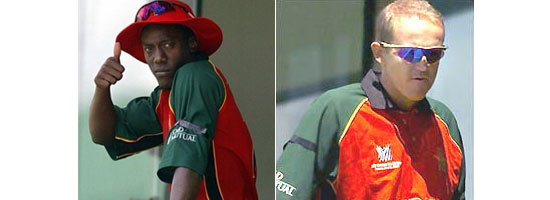
    The world on Thursday commemorated former Zimbabwe cricket captain Andrew Flower and the first black cricketer to play for Zimbabwe, Henry Olonga’s Black armband protest against the death of democracy in Zimbabwe. On the 10th of February 2003, when Zimbabwe, co-hosting the cricket world cup with South Africa and Kenya were preparing for their match with Namibia on an overcast day at Harare Sports Club, two of their influential players, wicket-keeper Andy Flower and fast bowler Olonga took to the field wearing black armbands in a show of no confidence against Mugabe’s ZANU-PF regime.

    At the time, Zimbabwe was going through a bad patch both economically and politically, a patch that would last for the entire first decade of the new millennium. Mugabe’s ZANU-PF, led by weapon-totting war veterans were terrorizing white farmers, or the few that were left, invading all the white owned farms across the country. The chaotic and highly racist land-redistribution program, meant to address the injustices of the past when the British settlers took over the land belonging to the indigenous people, was highly condemned and deemed unconstitutional by the courts. The land reform triggered an economic melt-down for the once prosperous bread basket of the region. The program in itself was a gross violation of human rights and to this day, the perpetrators of that dark period are still to be brought to book.

    White farmers were given ultimatums to leave their properties within days. Some did not even get the chance to pack before the ZANU-PF youths invaded their land, burning some alive, some shot in front of their children and wives whilst some who resisted were arrested and tortured in the police cells. Property rights of these farmers were violated and these invasions were only targeted against white farmers, making the whole program wholly racist. White farmers were accused of supporting the new opposition party, the Movement for Democratic Change (MDC) and to drum up support for the black majority who owned barely a quarter of the total agricultural land in their country, Robert Mugabe and his ZANU-PF went on a massive farm invasion spree that brought the country to its knees.

    Zimbabwe, a once stable and industrial power-house second only to South Africa in the region started falling dismally. The West condemned events that were happening in Zimbabwe. In the elections that were held in 2001 and 2002 for parliament and the presidential election respectively, there were massive irregularities and vote rigging that cost Morgan Tsvangirai’s MDC victory in the elections. Political activists were arrested and killed whilst the rule of law was ignored making Zimbabwe’s elections a farce and thus triggering the death of democracy, or the lack thereof.

    Speaking on BBC5 radio on Thursday, Andy Flower, the current director of the England cricket team, revealed what triggered the events of that fateful day. Back at the time, it was almost a taboo for one to go against the Robert Mugabe regime as you would most likely disappear or rot in jail. After seeing the death of the agricultural sector with former white-owned farms being reduced to nothing but a typical African savanna, Flower was prompted by a former friend who had lost his farm to take a stand. With Zimbabwe hosting the cricket world cup, all eyes were on Zimbabwe and that was more than a platform for him and Olonga to show and reveal to the world the death of democracy in Zimbabwe.

    Flower spoke to Henry Olonga, who shared the new ball then with Heath Streak, as he wanted the protest to be led by two people of different races, one white and one black. That brought the balance to the protest, as it brought two men, one black and white, who shared the same views and who were also suffering from the Mugabe regime. One man who was in the thick of things with the plans for the protest was Senator David Coltart, the current minister of Education, Sports and Culture, who was then a human rights lawyer. The plans for the black armband protest were only known to the three and those in the background with the whole of the Zimbabwe cricket team unaware until the day of the match against Namibia.

    It was only until moments before the match when the two issued out their statement to the media. The media statement contained, ”We believe that if we remain silent that will be taken as a sign that either we do not care or we condone what is happening in Zimbabwe. We believe that it is important to stand up for what is right. In doing so we are making a silent plea to those responsible to stop the abuse of human rights in Zimbabwe.”

    Recalling on those events ten years ago, both Flower and Olonga have no regrets of their actions. What they did ten years ago was a brave and noble thing, facing and exposing the monster when everyone was scared and just looking at events in Zimbabwe from a spectator’s view. Olonga and Flower stood up for the voiceless, the oppressed and for all the people of Zimbabwe. They put everything before them considering that such an act in itself was next to committing high treason. Three weeks after the cricket world cup, Henry Olonga received death threats and relocated to England, where Andy Flower also fled to and continued with his cricketing career.

    Henry_Olonga_Andy_Flower_Armbands_2003

    In Zimbabwe then, as it is now, democracy is still six feet under. Elections are still a farce and human rights violations are still an everyday experience. State-sponsored violence and target based violence are still the biggest cancer in Zimbabwe and something that will continue in this country unless we change and head towards democracy. So many people have died, lost their possessions and fled Zimbabwe because of what they believed in. We have come through a long way since the two led the way on that cricket ground those many years ago.

    Whilst some might say that Olonga was used by the whites to get back at the ZANU-PF regime for their lost possessions, the truth is that Olonga represented all the black people in Zimbabwe that were suffering from the chaotic regime of Robert Mugabe. It is not only the whites that lost out when their farms were taken but the whole country. Zimbabwe is an agro based economy that depended on agriculture to support its economy and with the death of that sector of the economy, everyone suffered. The thousands of farm workers lost their jobs, the country lost revenues from the agricultural exports and in return the country’s economy fell.

    Politically such a move isolated Zimbabwe. Western nations put Zimbabwe on sanctions and everyone was affected as Zimbabwe was reduced from the bread basket of the region to the begging bowl of the world. As we remember the Black Armband revolt of ten years ago, we acknowledge the efforts of these two who put themselves on the line for the rights of the millions of Zimbabweans. That act was more than a stroll onto the pitch of the Harare Sports Club, it was great courage and bravery considering that the man they were revolting against lived and still do, next door at the State house, a stone’s throw from Zimbabwe’s home of cricket. Was that revolt enough? Zimbabweans only hope that the elections penciled for this year will complete the dream that Henry Olonga, Andy Flower, MDC activists and other democratic activists started.

    David Hwangwa is a Human Rights Activist and Polical Commentator

    This has been a submission by David Hwangwa .
    You can connect with David Hwangwa via the following: http://davidhwangwa.blogspot.com/.
    You too can become a Citizen Journalist by submitting your story here: Citizen Journalism by Living Zimbabwe
    The views expressed in the article are those of the author and not necessarily Living Zimbabwe.