Tag: zimbabwe

  • Zim Names (Part 2)

    Zim Names (Part 2)

    At home, Zifudlana (meaning little streams in siNdebele) Ndlovu, the man who helped herd our cattle, and taught me most of what I know about the bush, had his first born daughter named Surrender! There are numerous other examples. One of my abiding childhood memories is of a cousin (Given Maphosa) , chasing us around the cattle kraal while we taunted him with a newly learnt Salvation Army Sunday school chorus “ My sins are for-given…. Are yourrrrrrs? Aaaare yourrrrrs?”

    For some odd reason the country’s footballing world seems to attract more than its fair share of interestingly named players. I remember Doubt Sithole’s blistering right wing runs (for Bulawayo’s Highlanders FC, in the late 70s). The National team in the early 80s boasted Shakeman Tauro, Friday Phiri, Sunday Marimo. All in one team! And these were not nicknames. We are not talking about the likes of Sugar Muguyo here. The latter, whose real name was Ebson, together with Onias Musana were well known Zimbabwean expatriates in the South African soccer scene of the late 70s. The number of interesting names in one team has never been bettered although we have had people like Boy Ndlovu, Mercedes “Rambo” Sibanda in the mid to late 80s.

    In the last few years we have also seen the likes of Pressmore Moyo (former under 17 player) Master Masuku (AmaZulu) and Pope Moyo (who kept goals for Highlanders) to name a few. A recent Zimbabwean national team headed for the 2006 Africa Cup of Nations in Egypt with a squad that included Gift Mudzadzi, Energy Murambadoro, Method Mwanjali, and Honour Gombani.

    After Kirsty Coventry sensationally bagged Zimbabwe’s 3 swimming gold medals in the 2004 Olympics (and was, rather disingenuously, feted by Robert Mugabe) a hilarious e-mail did the rounds among Zimbabweans all over the world. It listed some of the names, purportedly garnered from Zimbabwean maternity wards, in the weeks after Kirsty’s feats, that parents gave to their newborns. These included Freestyle Madongo, Goldengirl Mazorodze, Threemedals Sibanda, Backstroke Karimanzira and yes, why not, ….Kestricoventry Munyoro

    The more refined “sports” are not exempt. Zimbabwe’s entrant in the 2005 M-Net face of Africa Finals has the name Greatmore Chatya. A few years ago, after an earthquake rocked part of Zimbabwe and Mozambique another e-mail doing the rounds referred to nurses from Harare’s Ambuya Nehanda maternity home announcing that names of newborns discharged the next day included: Shakes Dube, Vibration Kunonga, Tremble Magwaya, Tremor Dangare, Tectonic Muzondiwa, Kudengenyeka Charovachii, Richter Sibanda and Earthquake Maposa. The e-mail was probably a joke but it could only have been a Zimbabwean joke!

    Babusi Sibanda. Mobile : +27721969188 E-mail: kwizeen@gmail.com
    Zimbabwean born, South African, freelance writer and columnist .
    Has had numerous articles published in a variety of publications in the last 25 years including The Chronicle (Bulawayo), The Sunday News (Bulawayo), Moto, Parade, The Cape Times, Food & Home, Rootz, Femina, African Decisions, Mercedes , Mail & Guardian and others.

    This has been a submission by Babusi Sibanda.
    You can connect with Babusi Sibanda via the following: http://www.safrea.co.za, , .
    You too can become a Citizen Journalist by submitting your story here: Citizen Journalism by Living Zimbabwe.
  • Zim Names (Part 1)

    Zim Names (Part 1)

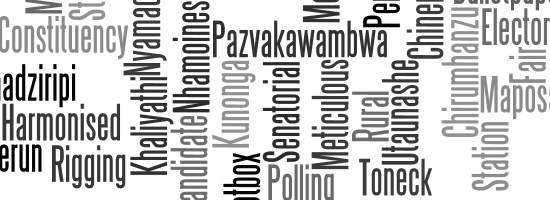
    You have probably heard the story : some of the names of babies born in local clinics and hospitals after the 2008 “harmonised” Zimbabwean elections-

    Runoff Moyo
    Senatorial Chirumhanzu
    Candidate Pote
    Independant Maposa
    Rigging Hamadziripi
    Electoral Commission Ndlovu
    Foreign Observer Chimunda
    Neck Toneck Nyamadzawo
    Sadhaki Sibanda
    Heavyweight Utaunashe
    Percentage Ndlondlo
    Released Results Matongo
    Meticulous Verification Chinengundu
    Free & Fair Pazvakawambwa (Twins)
    Rerun Mombeshora
    Rural Stronghold Khaliyathi
    Constituency Madison
    Polling Station Nhamoinesu
    Ballotbox & Ballotpaper Kunonga (Twins)
    Harmonised Chitanda

    And…..Parliament Nyathi!

    My fascination with Zimbabwean names dates back, some two decades, to my first university vacation job as a personnel records clerk at Monarch Products, a Bulawayo household and travel goods manufacturer. Perhaps I should change this to a fascination with the way ‘indigenous’ Zimbabweans name their children in English. To be sure, this intriguing tendency is not exclusive to Zimbos. Happy Sindane is, after all, a South African. But who else in the world gives their children names such as Passmore, Scholastic, Promotion, Lovemore, Godknows, Promise, Knowledge, Moreblessings, Trademan, Bornfirst , Boniface, Takesure and many other suchlike gems?

    I landed myself the princely vacation job because Monarch Products (part of the Treger Group of Companies) was, for the first time, computerising its personnel records. The first part of the job consisted of trawling through each employee’s personnel file for copies of birth and death certificates, note entries, and any evidence of family changes in the employee’s life and then updating the official record cards which for some reason had not been done for the previous decade or so. Once updated the card would then be passed on to some data capture clerk for the computerisation process. My part, in other words was painstaking and extremely boring. That is until I stumbled upon some of the most amazing examples of interesting names and decided to keep a toll and further amuse myself by working out the story behind each of the gems.

    Anyone meeting Promotion Ncube today (perhaps now some hot-shot lawyer, teacher, soldier or one of Zimbabwe’s millions of refugees) would not know that in 1981, a month before his birth, his father- a leading hand in Monarch’s Travel Goods division- was promoted to first line supervisor! Old man Treger himself, probably late now, may not have known that at least three of his employees named their children “Treger” in appreciation of continued employment. Or perhaps even in some sycophantic search for that elusive promotion!

    But my fascination goes back even further- to childhood days. I had a brother ,now late, called Bigboy , who has a son called Agreement. I attended Primary school with three boys, Sunrise, Sunshine and Sunset, the children of a neighbouring school headmaster. Or- as they were affectionately known- Rise, Shine and Set. (Incidentally, their three sisters were Ntombikayise, Ntombikanina and Ntombiyelizwe- literally father’s girl, mother’s girl and the nation’s girl, respectively).

    At about the same period, a village bully named Ambulance Ncube, five years older but two grades behind me, terrorised the whole school. One day I forgot to bring his “order” of cooked peanuts and he fractured my elbow with a knobkerrie. Our freedom from Ambulance’s tyranny only came when he ran away (from the pressures of yet another repeated lower primary school academic year!) to Geneva (as Zambia was popularly known after the 1975 Geneva Conference on Rhodesia) to “join the liberation struggle”. But that was not before my older brother Sibangilizwe, and an uncle, Smile Moyo, cornered and thrashed him until his own arm was broken! (Sibangilizwe, incidentally, means “we are fighting for the country” in siNdebele. A very nice name to present at a pre-independence Rhodesian Army roadblock, as my brother frequently found out!)

    – Babusi Sibanda . Johannesburg, 2008

    Babusi Sibanda. Mobile : +27721969188 E-mail: kwizeen@gmail.com
    Zimbabwean born, South African, freelance writer and columnist .
    Has had numerous articles published in a variety of publications in the last 25 years including The Chronicle (Bulawayo), The Sunday News (Bulawayo), Moto, Parade, The Cape Times, Food & Home, Rootz, Femina, African Decisions, Mercedes , Mail & Guardian and others.

    Member of SAFREA (Southern African Freelancers Association). Visit us at www.safrea.co.za

    This has been a submission by Babusi Sibanda.
    You can connect with Babusi Sibanda via the following: http://www.safrea.co.za, , .
    You too can become a Citizen Journalist by submitting your story here: Citizen Journalism by Living Zimbabwe.

  • 25 Random Things I love about Zimbabwe

    1. We have the best climate in the world- ask anyone. Harare in particular is wonderful, but the whole of Zim is pretty lovely. No, I am not biased.

    2. We are really nice people. When you sit in a kombi (public transport), you can pour out your troubles and everyone will listen, perhaps laugh, usually have a kind word to say- no matter how pressing their own problems are. Strangers also smile and say hello. I love that.(Australians are nice too, incidentally).

    3. We are peace-loving. After all the troubles we have been through in the last ten years… Well, anything could have happened. That stuff happens in other African countries. Not to minimize the cases that have been in the world media so much, but we never thought to turn to arms to make our point.

    4. We know how to have fun. In the old days (pre-financial trouble), Christmas was a good excuse to party all night- with the whole neighbourhood. We know how to laugh, no matter what’s going on around us. I think Zimbabwean jokes are among the best in the world. Maybe it’s the weather, but anyone can have fun, at any time- and we do.

    5. We endure. I admire the businesspeople who’ve stayed, and stayed in business, in spite of how tough things have been. I love walking into the shops and seeing products made in Zimbabwe. I love seeing people “making a plan”- people who lost their jobs five years ago just finding a new way to stay in the game. I love that most Zimbabweans don’t sit around waiting for a handout, no matter how hopeless the situation seems. I love that we are a hopeful lot.

    6. I love that I don’t have to worry about the food I eat. Since just about everything we eat is organic, I don’t have to wonder if I’m getting cancer from my food… Or worry about being morbidly obese because of a reliance on takeaway food.

    7. I love that no matter what the stresses we live under look like to the outside world, we still live a relatively stress-free life. Our lives are real. When we are stressed out, it’s because we have no food in the house, or because we are sick. It’s not because we want that fancy new car, or because of credit card debt. Levity aside, the incidence of so-called lifestyle diseases is low, and as a result we are healthier even into our old age.

    8. I love the importance we place on extended family. One is never alone here. In times of trouble, there is always someone to turn to… And one in turn looks after others. I love that I will raise my children in community.

    9. I love the importance we place on respect for elders. I think it’s a good basis for stability in society. I love, too, knowing that I will not be placed in an old age home for the convenience of my family, because that’s not how we do things here.

    10. I love the way the rainy season comes. I love the way the dry heat builds up until it is almost unbearable, but then if you watch, every day you see storm clouds growing on the horizon… And then the first rains come with their drama- huge storm clouds, lightning, wind and the wonderful scent of rain mingling with dust… And then the storms that come at lunchtime and when you are about to leave the office after work, just to drench you. And then everything becomes green again, and it’s like the whole world is sighing with happy relief.

    11. I love seeing the farmers work in the fields. I love going up to Honde Valley in Nyanga, the way the road winds until you are sick with vertigo, and yet you are gasping with amazement because each turn reveals some pretty, secret, lush valley… I love standing on the mountainside where home is, and looking across to the tea estates near the border with Mozambique. I love getting up really early, on those tear-inducingly cold mornings in Honde Valley, when you see woodsmoke from a dozen fires drifting upwards to mingle with the mist.

    12. I love walking through the rain forest at Victoria Falls, getting drenched, and feeling like a child again… And then coming to a sudden clearing in the “jungle”, and there is the magnificent, me-shrinking majesty of the Falls. And all the other things- the hotels in Vic Falls and the excitement of being on holiday and ordering breakfast, the not-too-resorty “resortiness” of Vic Falls, the crocodile farm, watching the hippos swim at A’Zambezi River Lodge…

    13. I love taking road trips here, and taking in the vast expanses of savanna… I love how beautiful the countryside is, and how the space gives one a feeling of freedom. I love that even in the city, I don’t feel cramped. I love that one can own a few acres of open land even in the city.

    14. I love the pace of life here. Not even in the so-called fast-paced Harare is life truly fast-paced. I love that one still has time to stand and stare, and that work is never really frenetic.

    15. I love that we don’t really have crime here. Not compared with other countries, I mean. And when there is crime, it’s hardly ever violent. The incidents are so isolated that this is the exception, rather than the rule. I love that you can walk around during the day without worrying about someone pulling a gun on you. I love that you can drive around without being certain that someone will try to hijack you.

    16. I love how patriotic we get around sport- but usually only when our teams are winning. I remember going to a soccer match in Harare, and failing to get in because the stadium was packed. And how everyone was singing, and the feeling of pride in being Zimbabwean. I suppose this happens in other countries too… (grudgingly).. I love, too, going to watch cricket, whether at Harare Sports Club, or Queens in Bulawayo. The weather is always wonderful when cricket is on, and the atmosphere is fantastic.

    17. I love how Zimbabweans think a party- or fun- is synonymous with a braai (barbeque)

    18. I love the little places there are? were? in Harare, informal eating places like KwaMereki and Cresta Mbare, where one could get an excellent Zimbabwean meal- excellent value for your money. I love that one got to know about these places by word of mouth, and that everyone seemed to go to these places… So you would meet your friends and associates there. And that a lot of office workers would drive there at lunchtime, rather than to some fancy takeaway place… And the service at these places would be the envy of any catering business. And gradually the service would get personal, too, as you became a regular. I love that you never had to worry about the hygiene, because the hosts were at pains to make sure everything was perfect- just like home. I hope these places survive.

    19. I love township life. I love how when you play your radio, it’s so that the neighbours at the end of the line can hear every word. I love that everyone knows when you have bought a new fridge- even those who live ten roads down. I love that every home has a fruit tree in the front yard- and if you don’t have one, you can steal your neighbour’s fruit- doing them a favour, because otherwise the neighbourhood kids will. I love the fact that you can borrow a cup of sugar from your neighbour, or a teaspoon of salt- unless they started a rumor about you ten years ago, in which case you would rather go to the people two roads away. I love the general exodus to any cleared space as soon as the rains begin, to plant maize (corn), which you can be sure we’ll be eating like mad for four months.

    20. I love how we exaggerate. I love that nothing is small, especially when you tell a story. I love that everyone is a storyteller- you only have to watch a Zimbabwean, any Zimbabwean, for two minutes as they relate something, to know that. The gestures are huge, the voice is raised, and there is a great deal of poetic licence.

    21. I love that I can joke with policemen. I call them “chef” or “officer”, and watch them puff up with pride when I do. I love Zimbabwean in-jokes like that, the words and phrases that I can use to any Zimbawean that convey a wealth of meaning- words and phrases like “berial cheques”, “demonize”, Diaspora, and “under curatorship”. I love how we are about community, and every experience becomes a shared “Zimbabwean” thing.

    22. I don’t know how many of these things are particularly, or originally, Zimbabwean, but I love: Mazoe Orange, Buttercup Margarine, Sun Jam, Willards Custard, Colcom Cambridge Pork Sausages, Chimombe…. Zimbabweans will know what I mean. I love that we get homesick when we think about such things when we are far away.

    23. I love how public transport is never full here. There is always room for one more person on the bus or Kombi. I love (strangely enough) the “chicken” buses that take you to the rural areas, no longer with squawking chickens, but with squealing babies and sweating mothers, with blaring music and a shouting conductor, and a household’s complement of furniture on the roof. I also love how the informal bus stops gain a name that everyone knows them by- pa chibage (“by the mealies”, referring to where someone is selling roasted maize/ corn); pa ma gum tree (at the gum trees), pa musika (at the market), ekhoneni (at the corner), e mapostorini (where members of the Apostolic Faith meet or sell their wares). I love that the name may last even though landmarks change.

    24. I love the music… From the endlessly-repeated riffs and plaintive sound of the lead guitar in sungura, to the sort of Afro-jazz sound of Oliver Mtukudzi, to the vernacular choral music we sing at the Anglican church, that has the ability to move me so…

    25. I love how Zimbabweans in the Diaspora long for home. It must mean that there is something particularly special about this sort of teapot-shaped piece of earth.

    This has been a submission by shonatiger.
    You can connect with shonatiger via the following: http://shonatiger.blogspot.com, http://twitter.com/shonatiger.
    You too can become a Citizen Journalist by submitting your story here: Citizen Journalism by Living Zimbabwe.

  • Are We Going Down The Drain… Again? Part 2

    Are We Going Down The Drain… Again? Part 2

    Following on from – Are We Going Down The Drain… Again? Part 1:

    Then there is another monstrosity in the form of the Zimbabwe National Road Agency, ZINARA. One is often reminded of another miscreation, the National Oil Corporation of Zimbabwe (NOCZIM) which, despite the glaring reality that we are yet to strike oil, that was shoved down our throats only for it to manifest one of the most devastating fuel shortages this country has ever experienced.

    NOCZIM proved to be a blatant funnelling of state resources into the pockets of a handful of clever dicks. To this day, the culprits are yet to see the four walls of a prison cell as is expected of miscreants of this kind. Shock turned to desperation as very prominent politicians were dispatched to the mountains to seek divine intervention of a traditional kind.

    If the images of shoeless leaders witnessing pure diesel gushing from a rock awash in the blogosphere are any accurate, then it explains why Zimbabwe is in the mess it is in. But that is not the point. Another elaborate siphon of state funds has entered the fray, ZINARA, and the fact that it has been in operation for close to four years is cause for concern. Just the acronym itself should send shivers of trepidation.

    Anyone who has driven on the roads in Zimbabwe will tell you that they are arguably the worst. Let me drop any comparison because that would open a Pandora’s box. In some parts of the country, the roads have simply vanished, reclaimed by the advancing bush.

    A giraffe is claimed to have disappeared into one notorious drumhole. It is stuff of crisis proportions if highways are fraught with gulleys and are evidently disintegrating by the day. That fatalities are the norm on our roads should to surprise anyone.

    It then begs the question: what the heck is ZINARA doing?

    Time there was when the mere existence of a ministry dealing with roads and transport was enough to keep our roads in pristine condition. It then boggles the mind why an entity created for the purpose decides that their first act is to acquire new headquarters and a shiny fleet of vehicles for their ‘hard working’ executives? What has this got to do with fixing the roads? Get your hands dirty first to earn your keep, I say.

    The toll fees that we are levied on the highways should be going into the coffers of ZINARA to help fix the roads. Before we can even smell the bitumen, there now is a proposal on the table to increase the tolls so that they are ‘in line with those in the region.’ OR WHAT? Tell us where the money already collected is!

    The only time the public knew anything about the revenues from toll gates was when some more clever dicks employed the Zimbabwe Revenue Authority, ZIMRA, originally tasked with collecting the toll fees were caught with their hands in the till. They had managed to spirit away more than a million dollars by the time they were caught. A MILLION DOLLARS! How selfish can one get!

    Then we read in the press that ZINARA is blacklisting a number of local authorities for the abuse of something called called the Road Fund. Where is the accountability or transparency in all this? Why is it that all we hear does not directly translate into good roads that we are be paying for through levies and toll fees?

    Talking about toll fees, tell us, has the role of the Zimbabwe Republic Police, ZRP’s national traffic cops been amended to include the mandatory collection of another set of toll fees? Is it true that traffic police have each been given a daily target to collect from motorists? If that is the case, then one can explain why Zimbabwe arguably has the highest number of road blocks on the continent per kilometre of road, easily surpassing those of Mobutu Sese Seko’s era.

    That does not include those irritating bike cops who run the danger of being run over themselves. Never mind the fact that they are so blatantly corrupt, in a manner of speaking. How long shall they kill our economy while we stand aside and look? Surely?

    This has been a submission by Lenox Mhlanga. If you have something to share, you too can become a Citizen Journalist by submitting your story here: Citizen Journalism by Living Zimbabwe.

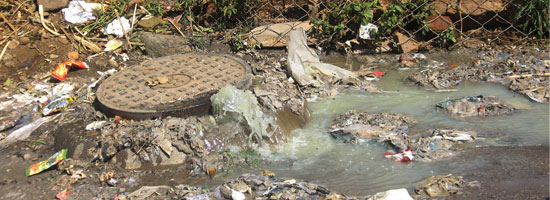
    Image courtesy of Sokwanele

  • Are We Going Down The Drain… Again? Part 1

    There are some of us who have entered 2012 with a sense of trepidation. They believe this is the year when a decadent earth will collapse into itself. I predicted the same for Zanu PF, but the earth? My bible says no one knows the day or the hour when the Son of Man will come. Meaning, make a living while the sun still shines.

    Don’t listen to those who are creating a multi-billion dollar industry out of scaring people. There even is a movie entitled “2012” that portrays the destruction of the world as we know it. It relives mankind’s worst fears…earthquakes, floods, fires, the works. But then I ask, what’s new? We already have fair share of death and destruction… most of it man made. We have seen it all.

    Mankind has become suicidal. We now swear by the motto “Live for today fas if there is no tomorrow.” Guess what? – to borrow Reserve Bank head honcho Gideon Gono’s favourite cliché – there is a tomorrow we all can look forward to. You might be flat broke today, yet tomorrow could be different. Just like the fingers on your hand, not all days are the same.The key is to have a deliberately positive attitude.

    There are a lot of things that we will never understand. If we knew all of life’s secrets, we would hasten the end of the world as we know it selfish beings that we are. We are so destructively selfish that we do not care about the consequences of our actions as long as we believe we are not on the receiving end.

    Take the fact that God has endowed Zimbabwe with unfathomable mineral wealth and a people who are supposed to be intelligent because, come to think of it, we run the world. Minerals that would easily take the country out of the rut it is in if the revenue found its way into the fiscus and not into someone venerated pocket.

    Yet the nation is robbed blind in broad daylight by people whose preoccupation is to ensure that we marvel at how rich they are. We watch them with awe as they claim that they were not born poor.

    There is nothing more treacherous than to personalise state resources with impunity and continue to perpetuate a crisis in order to pull wool over our eyes. We are in trouble as a country because there are those whose very existence is dependent on the status quo remaining as it is. They thrive on chaos.

    There are things happening that defy logic. Air Zimbabwe, a pale shadow of its former self, is kept gasping in the Intensive Care even when a basic grasp of elementary economics tells us that it should be shut down. It has gone way below the status of a chicken bus operation. The only consolation perhaps is that they don’t allow one to enter the cabin with chickens and goats like used to happen on some airlines in West Africa.

    Not that I don’t like goats and chickens. But there are depths that we cannot surely plumb if we claim to be more educated and intelligent than the next village idiot. We are tempted to believe that we are a country that celebrates mediocrity.

    Reports of the aircraft that transported the president to the African Union summit filling up with smoke before take-off should have sent alarm bells ringing in close security circles. If it were in Idi Amin’s time, those responsible would have been fed to the crocodiles.

    Worse still, the fact that engineers had to be lured from their lairs for a few pieces of silver to repair the plane reads like something out of a very dark comedy. I know of prominent people who have vowed never to fly Air Zimbabwe again even at gunpoint.

    It remains a mystery why none of their planes have ever dropped out of the sky. Is it because of the fact that it takes 120 people to service one Air Zimbabwe plane? I bet that some of those duties would be to blow cockroaches from the aircraft’s avionics if need be. Aren’t we just embarrassed that the South African Taxi Association has managed to, or is about to launch an airline of their own?

    This has been a submission by Lenox Mhlanga. If you have something to share, you too can become a Citizen Journalist by submitting your story here: Citizen Journalism by Living Zimbabwe.

  • Rethinking The Title Of Your Property In Zimbabwe

    Back in the infamous Zim dollar days, everyone wanted to put their property into company names. This way, the buyers avoided transfer fees and the sellers avoided paying capital gains tax. There were other reasons too, but these are probably too shady for a reputable agent such as myself to know about…

    It now seems that there are more disadvantages to owning a property in a company name than the financial advantages of transfer fee avoidance for your future, potential buyers. I have listed some of the points below, but by no means is the list comprehensive:

    1. The myth of not having to pay capital gains tax on the sale of a property owned by a company needs to be debunked as soon as possible. The sale of shares of any description is liable for a 20% capital gains tax. You may be able to find a clever account to perform some creative accounting to avoid the tax, but somewhere down the line these loop holes will be closed and you will be liable for the tax.

    2. If you are over 55 years old and the property you are selling is your principal primary residence (your home, in layman’s terms!), then you may apply to ZIMRA for Capital Gains Tax exemption. If the property is in your name, then it is much easier to explain to ZIMRA that it is in deed your home and you are eligible for the exemption. If it is in a company name, then there will be all sorts of questions and at the end of the day, you may not get the exemption, as a company can’t have a home, because although a company may be a legal entity: it does not need to sleep somewhere!!!!

    3. If the owner of the house was to die, the family would not have to pay death duties on the principal primary residence (yes, the home), but only if the property is in the deceased person’s name. If it is in a company name, the Master of the High Court will demand his pound of flesh, at the most vulnerable time in the grieving family’s life. The last thing you need is trying to find money for the death duties on your home when you have lost a loved one.

    4. There is the ever present fear of the 51% indigenisation bill. Personally, I don’t see this reaching as far a shelf companies which own houses, but then I am the eternal optimist and this is Zimbabwe, so anything goes, and generally the more unexpected the more likely the event will occur. (What a conundrum that is!)

    5. The last point, which comes to mind is the fact that most banks will not loan you money to buy a house in a company name, and so as a buyer you will still have to pay transfer fees to put the property in your name. This whole process thus defeats the reason for the company name and the proposed transfer fee avoidance. Banks are also reluctant to lend you money against a property in a company name. This is because ownership of the company can be transferred without it affecting the change of ownership on the title deeds.

    My advice therefore, is to put your own home in your personal name. If you buy and sell properties as investments then I don’t think it matters which way you choose as you will be selling it on. But remember even if you put it in a company name, you will probably still have to pay tax on the shares. The very best way to avoid this is by putting the property into a trust…I’ll explain this in the next blog!

    For more advice contact me at nicky@pageproperties.co.zw

    This has been a submission by Nicky Versfeld. If you have something to share, you too can become a Citizen Journalist by submitting your story here: Citizen Journalism by Living Zimbabwe.

  • Our Fiduciary Duty to YOU The Public

    Our what? Exactly! Who even understands big words like that? Not many, but it is my job to understand, and explain it to you so that you know what is expected of someone who presents themselves to you as an Estate Agent.

    Estate Agents in Zimbabwe are controlled by a very strict set of conduct rules that most of the public are completely unaware of.

    When one becomes registered as an Estate Agent in Zimbabwe, they have had to have had at least 3 years practical experience in the industry and pass a rigorous set of exams. The most important of which is Estate Agency Practice. This covers all the legal aspects of property sales and rentals, as well as an Estate Agent’s Duty to the Public.

    I have listed below, in English, not legalese, what you not only can expect, but must demand from your Estate Agent:

    1. An agent must put the interests of his client above his own at all times, and must treat the business dealings of his clients as well as he would treat his own, if not better. This means that you can and should demand confidentiality at all times from your agent. He should never try to purchase or lease your property himself, without having first made it very clear to you of his personal interest.

    Any Estate Agent is obliged to offer you advice and professional knowledge about the industry, regardless of whether you employ his services. (Much like a doctor is obliged to save lives even if they are not his patients!)

    2. Agents should not defame other agents, or treat them in a manner that is inconsistent with fairness, courtesy and professionalism.

    3. Agents should not tout, i.e. should not try to canvass for business by door to door calling. They should not approach you if your house is on the market and ask to sell it. So many people don’t realize this and an agent will call them and say, “I have a buyer for your house, please can I bring them around?” If the property is with another agent then you should tell the caller, that they must go through your appointed agent. Sellers can get themselves into all sorts of trouble when allowing a non mandated agent to sell their property as they will be liable for the mandated agent’s commission, even if that agent did not sell the property.

    4. Agents should not pose as buyers to illicit information from sellers or other agents.

    5. Money held in an agent’s trust account does not belong to the agent, and under NO circumstances is that agent allowed to use the money for the running of his business or personal expenses, (not even bank charges!) The agent should not move any money in the trust account out of the account without the written permission of the owner of that money. The number of cases that exist of agents “borrowing” money from the trust account and never repaying it, is quite frightening.

    The deposit paid for a rental property belongs to the tenant until the end of the lease, and at such time the money will either be returned to the tenant or used to repair the property and pay outstanding bills.

    At any stage that you have money in an Estate Agent’s trust account, you can and probably should ask to see a statement. All rental properties should have a monthly statement of their account forwarded to the owner and tenant, if the tenant requests it.

    If at any stage, you feel an agent is not fulfilling these obligations, you can report them to the Estate Agents Council, and the matter will be taken up by them. If you have been unfortunate enough to lose money from an Estate Agent’s Trust Account, the Estate Agents Council has a Compensation Fund, which all agents have to pay money to each year, so that the public can be reimbursed for their losses. Bet you didn’t know that…I am letting out all the secrets today, aren’t I?

    But remember, you have the right to expect the best from the person you are entrusting with your most valuable possessions, so don’t settle for less…

    Visit my website for more on property www.pageproperties.co.zw

    To read more articles like this visit my blog http://www.pageproperties.blogspot.com

    This has been a submission by Nicky Versfeld. If you have something to share, you too can become a Citizen Journalist by submitting your story here: Citizen Journalism by Living Zimbabwe.