So many Zimbabweans in the diaspora are working hard to support their families they left back home. There are a few who don’t necessarily send any sort of support to their families but feel compelled to because they know things are tough. Those who are supporting their families are finding it harder and harder to do so because of the global credit crunch. They are finding that their cost of living is increasing and they are also having to send more and more money home to meet their families needs.
As already mentioned, people are feeling the pinch as the cost of living rises significantly due to the global credit crunch and after taking care of the all the bills, credits cards, loans and so on that they need to attend to, there isn’t very much if any left over to send home. What is making it even harder now is the dollarization of the Zimbabwe currency. Yes, the dollarization of the currency and the introduction of foliwars (Foreign Exchange Licensed Warehouses and Shops) may have been a God send in that it has made food more readily available if you have the forex. On the other hand, it has pushed the prices of basic commodities and just about everything else meaning larger amounts of hard currency are needed to meet day to day needs.
A short number of years ago, you could manage to do a bit with a couple of hundred pound sterling or U.S. dollars but in this day in age that amount of money does not go very far. The need to send more money means having to work more. Some people are on the clock almost 24 hours a day for days on end doing what it takes to keep themselves and their families alive. Some have literally worked themselves to death – the irony.
When there is food available it is expensive, decent medical attention requires payment in foreign currency, some schools have even started setting their fees in U.S. dollars which after a near collapse of state run schools may put education further out of reach. The Zimbabwe dollar is becoming less of an accepted form of payment and the dollarization has put so much out of reach for so many people and may actually be killing Zimbabwe. The credit crunch isn’t helping diasporans who are trying to support loved ones. Not only Zimbabweans at home are suffering, those abroad are finding it more and more difficult to survive and help their families at the same time. This poses one question: is it really worth it being wherever they are in the world as opposed to being at home and trying to make ends meet there?
Coronavirus, COVID-19 has gripped the world and pretty much brought it to its knees. As of writing, there have been 1,203,923 confirmed cases, 64,795 deaths and 247,273 recovered. It has spread around the world quickly with some parts being hit a lot harder than others.
Zimbabwe has not been immune to the coronavirus scourge. As at 4 April 2020, there have been 9 confirmed cases and the unfortunate death of Zororo Makamba. There is no telling what the actual number of cases in the country is. A big question mark also hangs over Zimbabwe’s preparedness? Is enough testing being done (349 to date)? Will facilities cope with serious cases? Do frontline staff have adequate personal protective equipment? And the questions go on.
Governments around the world have taken measures such as closing borders and ordering their citizens to stay at home in an effort to slow the spread of the virus. Zimbabwe has followed suit with a 21-day lockdown which started on 30 March 2020.
This was an unwelcome move for many simply because not being able to go to work means not being able to make money to feed themselves and their families. In developed nations, working from home is something that is possible for many but Zimbabwe isn’t quite there yet.
With the lockdown in place, many people who are usually leading busy lives now find themselves with a lot of time on their hands.
Here are a few ideas on things to do during the lockdown. But first and foremost, stay home, stay safe, only go out only when you really need to and do all that you can to protect yourself, your family and your community.
Look at this time as an opportunity to somewhat reset and do those things that you want to do that you don’t have the time to do. This may mean being more intentional about where and what time is spent on. If you find yourself wondering how to spend that time, here are some suggestions:
Connect with family
Many of you will find yourselves at home with family and possibly spending more time than you have all spent together in a long time, if ever. This is a golden opportunity for families to get to know each other. Couples can get to know more about each other. Families with children can spend some quality time together and create good memories for all to remember.
Do also reach out to other family not living with you and friends to see how they are doing. If resources permit, connect with them via a video call.
Reset personal and professional goals
Take some time out to reflect and take stock of where you are in life and what you want to get out of it. If after this you feel like you need to reset your goals, do just that.
This exercise will include actions such as writing down your goals, pathways to achieving them, obstacles you may need to overcome and accountability.
Goal setting is not limited to personal development goals. If you are in business or thinking about getting into business, it could be business goals. Couples as well can get together and do some goal setting.
There are many reasons why it’s a good idea to keep learning. These include keeping your mind challenged and learning new things to improve your life. You can look at it as a self-development opportunity.
From a professional capacity, as you learn new skills or enhance your existing skills, you increase your value proposition. As you develop them and put them into practise, you will give people more of a reason to want to work with you.
Udemy, one of the best online learning platforms has over 250 free courses across a range of topics such as personal productivity, coding, public speaking and more available.
During this time of crisis, fear and anxiety about coronavirus and the situation it has created can be stressful and overwhelming. That said, it is important to pay particular attention to your mental and physical wellbeing. The mind, body and soul are all connected and all need attention.
Mind – it is very easy for your mental wellbeing (and that of those around you) to go into a downward spiral. It is important to be able to recognise that this may be happening and to take steps to support yourself. Things that you could do include acknowledging your feelings, talking to family and friends and limiting media intake.
Body – take good care of you body by eating a healthy, balanced diet. Stay active and exercise regularly. ASICS Studio: At Home Workouts is currently free and offers a range of exercises that can be done at home – get it on Google Play or on the App Store. Last but not least, make sure to get enough sleep.
Soul – maintain inner peace by doing things such as meditation, prayer, mindfulness or whatever it is you do to quiet your mind. Udemy has some free courses on meditation and mindfulness available.
Indulge in your hobby
If you have a hobby or hobbies, now is a good time to indulge yourself. Having a hobby has in benefits in that it takes you away from the day-to-day of life. Hobbies can help with reducing stress and developing your creative brain.
The above are some ideas on what you can do to pass the time and keep your sanity. We hope this helps you get through the lockdown and get out of it with renewed and rejuvenated.
Do you have any other suggestions on what to do during the lockdown? If so, leave a comment below.
The festive season has come and gone and with it, brought about an influx of diasporans returning home on holiday. For some, the visit was a long time coming and for others, it was part of a frequent commute home to visit family and friends.
Many of the visitors enjoyed their visit and throughout their time in Zimbabwe, they bombarded their Facebook friends and Twitter and Instagram followers with update after update. The updates included tales and photos of everything they were doing, all the wonderful people they were coming across and just good things are, just to name a few.
Most if not all of the diasporans have departed to get back to their lives in whatever part of the world they are now in. The rhetoric about their love for their short stay at home has continued but for some, it has changed to something else. What they saw and experienced when on the ground in Zimbabwe has given them a point of view different to what they were being feed by family, friends and the media.
As far as they are now concerned, Zimbabwe is ripe and they see opportunity for them to actually consider leaving the Diaspora to return home to make a life for themselves. For these people, they saw opportunities for business that they could set up after seeing possible gaps in the market for various products and services. For others, they saw opportunities to partner with established businesses to enhance product and/or service offerings.
Is this the case or were they being blinded by the ‘hepi hepi’ spending of the silly season and the cushion of spending money that they had spent months saving up for? Could the fantastical and sometimes reckless spending by the haves and some who are really have nots have given them false impressions of things being just fine?
The reality for those that are here is that things are tough! Yes, there are the select few who have managed to find a vein of money that has afforded them a very comfortable living. But, for the majority, people have had to become hardened to the conditions and do whatever it takes to try and make ends meet.
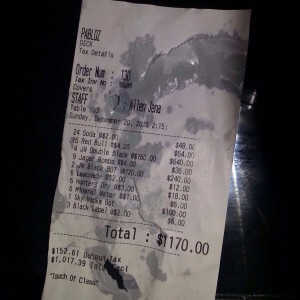
Zimbabwe is a difficult place at the moment and not everyone has the capacity to drink away $1,000+ in a few hours. The pressing issues are trying to cover food, accommodation, transportation costs, school fees, medical expenses and so on.
Yes, many of those who have fantasies of returning would be coming back with a wealth of skill and know-how in a number of areas and what they have to offer could be applied to the Zimbabwean context. Yes, things operate a little differently to the way that they do abroad. This is not to say that what they have acquired can’t be applied, may just need to be adapted so that it works well in Zimbabwe.
Question is, should they be encouraged to return if for some of those who are considering it, their decisions are based on what might have been a false portrayal by others?
This has been an interesting discussion point with varying opinions. We could write more but we’d love to hear your opinion. Share your thoughts by commenting below or if you have a lot more to say than just a comment, you could share your thoughts in an article/post (see here for details).
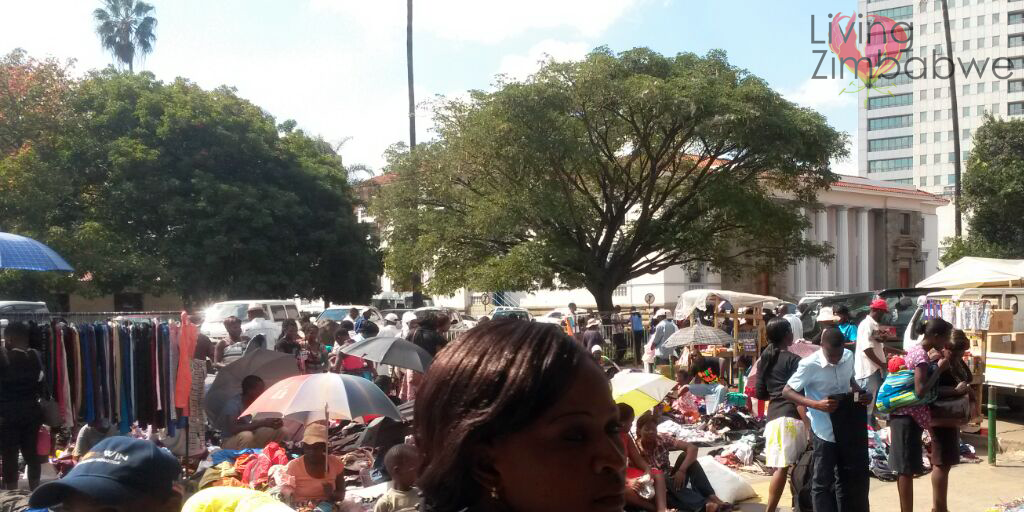
Vendors have for the longest, been part and parcel of the economic machine not only in Harare and other parts of Zimbabwe for that matter. They have been there on the roadside selling fruit and vegetable, they have been there darting in and out of traffic at robots selling airtime and other bits and pieces, they have been in car parks selling clothing out of the boots of their cars; and now they are really there, selling whatever it is that they think the public may want to get their hands on as they walk along the streets of the central business district.
In a number of instances, they can be seen as providing a service of convenience because you can get your airtime, a newspaper, chibage, tomatoes, clothing and so on without leaving the comfort of your car or if you are a pedestrian, you may not have to venture too far out of your way to get what you need.
However, the number of vendors on the streets has increased exponentially and this could be for a number of reasons with one of them possibly being the lack of gainful employment in the formal sector and people turing to the informal to make ends me.
Whatever the cause may be, the surge in their numbers has caused contention and the government has given them an ultimatum to move off the streets and set up shop in specially designated areas where they can ply their trade.
Truth be told, the surge in their numbers has in some cases caused a bit of nuisance because navigating some of the sidewalks in Harare becomes a bit of a challenge when they decide to set up shop there.
Without a doubt a significant amount of money is exchanged in this informal economy and the government looking to move them to designated areas, this creates an opportunity for them to collect tax revenue. That said, it is a little easier to see why the government may be so keen to see vendors move into ‘controlled’ areas – go here for details.
On the same token, clamping down on vendors may for them mean losing out on a revenue stream. If this was the only way in which they made ends meet then what do they do to feed themselves and their families?
Here is a bit of the reaction that people have had about the issue of vendors in days gone by:
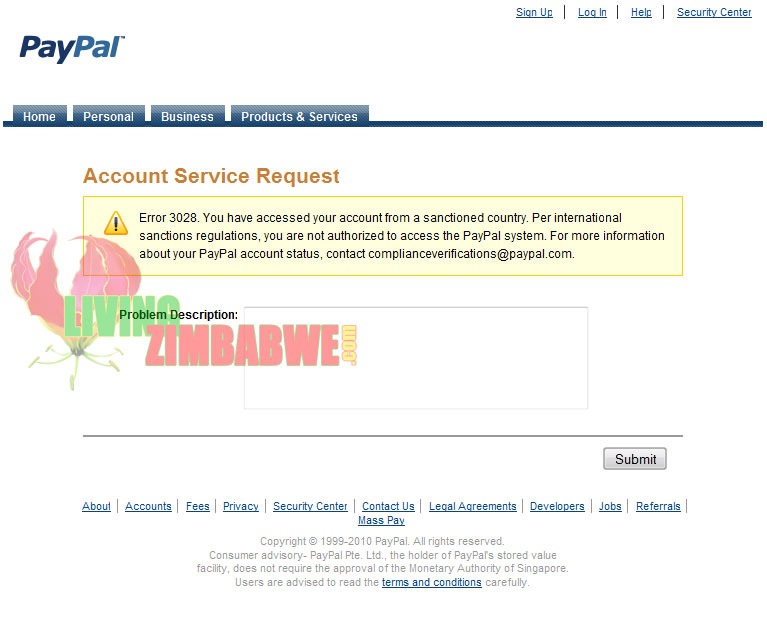
Over the last few days there has been a lot of hype about the announcement that PayPal would be made available to the people of Zimbabwe. Residents can now sign up for personal or business accounts There has been some debate as to why PayPal was not available in Zimbabwe before this point and the simple answer to that question is sanctions. As you can see from the screenshot below (from 2010), PayPal services could not be accessed due to (users) being in a sanctioned country.
The good news for those who really wanted to be able to use their services is that they can now do so without having to revert to weird and wonderful ways of circumventing the restrictions by using Payoneer cards and so on and so forth. The introduction of their services opens Zimbabwean consumers up to a world of online shopping. As a start, items can now be bought on eBay (PayPal’s parent company) with this functionality being extended to being able to pay for goods and services on a countless number of online stores and companies from around the world. The beauty of PayPal is the level of security it provides and that you can make payments to someone online without providing ’that’ particular website with your credit/debit card details.
However, as far as Zimbabwe is concerned, there are some limitations with the first being the unbanked. If you don’t have a bank account then the chances of you having a credit or debit card are slim to none and this is something that you need in order to have a PayPal account. A considerable chunk of the population don’t transact in the informal sector which would exclude them in creating an account.
The other side of the coin to providing an option for consumers to make payments is for merchants to be able to accept payments into their PayPal account. Businesses can open a business account which when you look at the signup screen says ‘for merchants who buy and sell online using their company name’. But, in the case of Zimbabwe, the ’sell online’ part of that statement will not apply. There are currently restrictions in place that do not allow for companies to take advantage of PayPal’s payment solutions; something that we confirmed with PayPal:
@LivingZimbabwe No, though we will be monitoring activity and feedback for future expansion of PayPal services ^AM
Despite the limitations for merchants, this can be seen as a step in the right direction in that international companies are now a little more open to setting up shop in Zimbabwe. But, as mentioned by a online commentator this move isn’t really in the best interest of Zimbabwean’s because it only serves to funnel money out of the country and doesn’t facilitate for payment inflows for local companies
In your own opinion, does PayPal really work for Zimbabwe?
I spent from June – December of 2013 living, learning, and working in Nkayi, Zimbabwe as a World Vision Canada Intern. I was asked by Living Zimbabwe to write a piece with some helpful hints for people traveling to Zimbabwe. I have tried my best to avoid the typical travel advice of “boil your water” and “ladies should wear skirts” and “don’t walk around outside in the dark alone”, because while those are great tips, they don’t mean anything. I’ve tried to make my advice meaningful; something that maybe you won’t read in the Lonely Planet book or hear from your Travel Health Clinic.
Actually visit with the locals. I’m not talking about going, greeting them, and taking some pictures of their living spaces. Pictures are important, and absolutely, take them. But talk, and even more importantly, listen, to the locals. You can learn a lot from reading newspapers and browsing websites, but you can learn even more from listening to stories of people who live very different lives than most of us in North America do.
Visit rural areas. Bulawayo and Harare are beautiful, and they have stories to tell… but sometimes the cities have somewhat of a North American feel to them. The rural areas are where you really get the feeling of what is means to be in Zimbabwe.
Take part in some of the parts of daily Zimbabwean life. Carry water on your head so that you can begin to understand how a Zimbabwean women spends anywhere from 15 minutes to 2 hours of her day, and take a bucket shower so that you can appreciate the excessive amount of water that we have in North America, and use a blair-latrine so that you can be thankful that we have that money to put towards luxurious items such as flush-toilets.
Learn to cook sadza (or if you’re like me and you can’t cook, at least watch in amazement as a Zimbabwean woman cooks it). I asked a coworker one evening how to make it, and she couldn’t tell me exactly; she didn’t know the measurements. It is an art of “some more mielie-meal”, “a little more water”, “a liiiittttle more mielie-meal”, and eventually, “a pinch of salt”.
Watch football (soccer). I don’t mean on the television from inside your room, or even a “big-ticket” game at the outdoor pitch in one of the big cities. I mean put on a hat, and go watch locals play. If some of these kids had the same resources that David Beckham did, they would be better than Beckham was at his peak.
Need a tour guide? Ask a local! Sure, Victoria Falls has boards of information everywhere, but like turning a book into a movie, sometimes really important and/or interesting pieces get left out. The locals will know all sorts of information, and probably be honored that you would ask them to guide you.
Get in there! In North America, we are sometimes very shy about dancing with strangers because we don’t want to look “silly”, or we won’t try speaking another language because we will be laughed at. I looked silly, and I was laughed at… but it is a part of the experience!
Accept all gifts. Zimbabweans understand that life is about relationships, and stronger than their desire to feed their own family tomorrow, is their desire to be hospitable and engage in fellowship with new friends today.
Take time to feel. There is something about the sunset and the stars during the evening, after a day of hearing about the hardships one minute, but seeing the dancing and laughing the next.
Be prepared to change. Zimbabwe changed my views on faith, materialism, the power of a smile, and so much more. I promise it will do the same for you.
This has been a submission by Sherrie-Lee R. Chiarot. You can connect with Sherrie-Lee via the following: , https://twitter.com/sleerose, . You too can become a Citizen Journalist by submitting your story here: Citizen Journalism by Living Zimbabwe The views expressed in the article are those of the author and not necessarily Living Zimbabwe.
The Reserve Bank of Zimbabwe governor, Dr. Gideon Gono once revealed that he had nightmares over the zeros he had slashed on the Zim dollar. Tales of the dreaded Zim dollar evoke several emotions amongst the people. The majority would not even want to hear even the slightest mention of the word whilst some of Harare’s dealers would jump with joy if it is to return in its weak state. The era of the Zim dollar in its last days, were the worst for the majority.
Since its inception after independence, the Zim dollar was a stable currency that was even at par with most of the world’s strongest currencies, at one time being of more value than the US dollar, one of the currencies currently being used as legal tender in the country. It was not until the late 1990s that the dollar started to slide when the Zim government was just starting with their poor domestic and foreign policies.
Fighting for regional dominance with South Africa, the Zim government entered our troops into the infamous DRC war despite being warned about its negative effects on the economy. Just to add to their poor policies, the government further gave out huge payments of ZW$50,000 each to the thousands of the veterans of the Second Chimurenga. This also had massive effects on the economy because we could not afford that at the time but once our government decides on a policy, they go ahead with it without considering the after effects of such moves. The Zim dollar started falling, foreign currency shortages were being reported and the sliding trend for Zimbabwe was just beginning. At the turn of the new millennium, such policies continued. The chaotic land redistribution, oppressive laws, Operation Murambatsvina, rigged elections and ofcourse continuous printing of the Zim dollar, all added to the further weakening of the currency.
Whilst the economists can go over their books and come with various reasons and formulas why we should not resort to the Zim dollar just yet, the average man on the street will just hit you with a blank NO. They have so many reasons why that currency should never come back.
In the last decade where the Zim dollar was the main currency, it cast a dark shadow over the general masses. How could it not be when the governor was printing money at will as if he was funding a mafia organisation? His new hobby was that of printing trillions, quadrillions and figures never heard of without even considering the plight of the masses.
It was a period where nothing was available in the shops. To those who had supplies and who were selling them, the mode of payment was the scarce forex even though it had not yet been legally approved by the government.
The most painful thing during the Zim dollar era was that of waiting in queues, even for things that were not even there. It was even more heartbreaking when that commodity you had been waiting for runs out whilst you were still in the line. We became so accustomed to waiting in lines that whenever you saw people standing in a queue you would immediately join them without even knowing what they were waiting for. One would almost be certain that whatever that thing was, you would probably need it. People would go to the shops as the whole family because things were rationed; 1 – 2 per person and a family of eight would probably require three people just to get enough supplies.
The Zim dollar era resulted in the country becoming almost idle. Industries closed, multi-national companies relocated to neighbouring countries and most local businesses were just operating at a loss. The unemployment rate rose to levels never heard of. People reluctantly left the country they loved so much for menial jobs outside. People had no options but to degrade themselves so as to feed their own families.
The government had no pity at all for the businesses during that time. With Gono printing his worthless Zim dollars at will, it meant that every time a new family of currencies was introduced, prices would rise as well. It was even painful seeing prices being increased whilst you were waiting by the till. To counter such practices, the government introduced the infamous price controls. This was the final nail in the coffin because this practice resulted in companies not producing anything because the price fixed by the government was just suicidal to their businesses. You could not blame the business people because you honestly cannot sell a product marked for example $5 and be told to sell it for a dollar. Anyone in his right senses would say no to that and it would be beneficial to that person to just stop producing that product. The biggest victims from this policy by the government were the masses because we got everything we want from the store and waking up one day being told that there is no bread, it is just an insult. At times, Zimbos we are just too tolerant.
The big shefs in government were living large at the time yet the masses were paying the price for their incompetent policies. People had to purchase goods where they were limited. Substandard goods became the order of the day. New terms were being coined by the suffering masses to portray their everyday life. People were now living on economics Zero-Zero-One where the one referred to the only meal of the day. The one meal was even necessitated by two factors; one it was because in that day and age, people could only manage to scavenge one meal per day because things were so hard. The other factor was that even though some people might have had the means to have more meals per day, the stumbling block was that there was nothing in the shops to buy. We are talking of a time where if you visited a relative, you would expect to return to your place without even being offered anything to eat. Visiting people was almost a burden because you would just inconvenience your host.
In the rural areas it was even worse. Visiting my grandmother I the village in December 2008 I almost cried. She had stacks of worthless Zim dollars that she was saving; dollars that were not even in circulation anymore. She told me that she was not even aware of what the new family of currencies was. The other factor was that she kept them because there was nothing to buy from the stores. It was even sad visiting people in the village. There was virtually no food to eat. The government had banned NGOs from operating in the country. They were the only ones that were giving people in the rural areas food supplies.
Things were so drastic that people were boiling mangoes to eat. It might sound weird to the urban folk but that was the situation on the ground. The situation in the rural areas was a little different from that in the city. We went to ChaChaCha growth point in Shurugwi to buy my old lady some supplies for Christmas. In some of the shops there was maize meal from South Africa that was written “Not for Consumption by People under 12years and those over 65years.” I was shocked because that is generally the average ages you will find in the rural areas. The sad part was that people were buying that very produce. I asked myself, is it ignorance or the mere fact that people were taking advantage of the rural folk. Some overzealous entrepreneurs were just taking advantage of the rural folk.
It was not only business people who were taking advantage of the masses. It started from the top. Gono and his cronies were printing gazillions of Zim dollars at will, fuelling the black market. It was hard waking up to go to work. You were never guaranteed that the price you paid for the kombi would be the same come 6 pm. No wonder the soldiers ran amock when shops were refusing the $10trillion notes. That was towards Christmas in 2008, government workers had been paid $30 trillion. Just those three notes that were not being accepted in shops. That was just taking our patience and tolerance to the limit. Not everyone had the means to forex then but the government never considered how the average man on the street was surviving. Yet you wonder why Zim remained at peace. Zimbos and their tolerance.
Now we see the state media journalists and Dr Gono echoing the same sentiments from the December 2011 ZANU PF Conference about bringing back the Zim dollar. Yes a country needs its own currency but at the present moment Zimbabwe is better off without its own currency. I am not an economist but I know that we are not yet ready for a return of the Zim dollar. Our industries are still recovering and hardly working at full capacity. Bring the Zim dollar right now is just tantamount to disaster. Maybe the ghosts of the slashed zeros are haunting our learned governor that he is under pressure to bring back the dollar. We all know that the governor does not really care. He is one man who purchased a Mercedes Brabus when the country was the majority of the population was languishing in poverty.
Well Dr. Gono and fellow Cdes from ZANU PF, we suffered so much under the Zim dollar we are not yet ready for the return of our fallen currency. Our economy is just starting to recover, can we please allow it to grow before the once mighty Zim dollar makes its inevitable return. Elections are just around the corner, now is not the time for the Zim dollar.
David T. Hwangwa is writing in his own capacity. He can be contacted on dhwangwa@gmail.com
This has been a submission by David Hwangwa. If you have something to share, you too can become a Citizen Journalist by submitting your story here: Citizen Journalism by Living Zimbabwe.
We collect information from you when you place an order, subscribe to our newsletter or fill out a form.
When ordering or registering on our site, as appropriate, you may be asked to enter your: name, e-mail address or mailing address. You may, however, visit our site anonymously.
What do we use your information for?
Any of the information we collect from you may be used in one of the following ways:
• To personalize your experience
(your information helps us to better respond to your individual needs)
• To process transactions
Your information, whether public or private, will not be sold, exchanged, transferred, or given to any other company for any reason whatsoever, without your consent, other than for the express purpose of delivering the purchased product or service requested.
• To administer a contest, promotion, survey or other site feature
• To send periodic emails
The email address you provide for order processing, will only be used to send you information and updates pertaining to your order.
How do we protect your information?
We implement a variety of security measures to maintain the safety of your personal information when you place an order or enter, submit, or access your personal information.
We offer the use of a secure server. All supplied sensitive/credit information is transmitted via Secure Socket Layer (SSL) technology and then encrypted into our Payment gateway providers database only to be accessible by those authorized with special access rights to such systems, and are required to?keep the information confidential.
After a transaction, your private information (credit cards, social security numbers, financials, etc.) will not be kept on file for more than 60 days.
Do we use cookies?
Yes (Cookies are small files that a site or its service provider transfers to your computers hard drive through your Web browser (if you allow) that enables the sites or service providers systems to recognize your browser and capture and remember certain information
We use cookies to compile aggregate data about site traffic and site interaction so that we can offer better site experiences and tools in the future.
Do we disclose any information to outside parties?
We do not sell, trade, or otherwise transfer to outside parties your personally identifiable information. This does not include trusted third parties who assist us in operating our website, conducting our business, or servicing you, so long as those parties agree to keep this information confidential. We may also release your information when we believe release is appropriate to comply with the law, enforce our site policies, or protect ours or others rights, property, or safety. However, non-personally identifiable visitor information may be provided to other parties for marketing, advertising, or other uses.
Third party links
Occasionally, at our discretion, we may include or offer third party products or services on our website. These third party sites have separate and independent privacy policies. We therefore have no responsibility or liability for the content and activities of these linked sites. Nonetheless, we seek to protect the integrity of our site and welcome any feedback about these sites.
California Online Privacy Protection Act Compliance
Because we value your privacy we have taken the necessary precautions to be in compliance with the California Online Privacy Protection Act. We therefore will not distribute your personal information to outside parties without your consent.
We are in compliance with the requirements of COPPA (Childrens Online Privacy Protection Act), we do not collect any information from anyone under 13 years of age. Our website, products and services are all directed to people who are at least 13 years old or older.
Online Privacy Policy Only
This online privacy policy applies only to information collected through our website and not to information collected offline.
Your Consent
By using our site, you consent to our privacy policy.
Changes to our Privacy Policy
If we decide to change our privacy policy, we will post those changes on this page.
Vision Inspired People Zimbabwe is dedicated to the assistance of African children living in disadvantaged communities and children’s homes in Southern Africa. We aim to provide basic education necessities to school going children and where possible, support orphans educational and social needs.
The VIPZ Assistance Program is an on-going effort by Vision Inspired People Zimbabwe to provide essential items such as clothing, books and school materials to help poverty alleviation in the Southern African region. This year we have managed to collect over 10 000 pens, pencils and rulers, second-hand clothing and children’s books which are all now waiting to be shipped to the target communities.
Vision Inspired People Zimbabwe intends to personally distribute all items with the assistance of our partners in Zimbabwe and South Africa. We also promise to provide feedback to potential donors by sharing images and information on our website or through various communication mediums.
The VIPZ Assistance Program assists Groups and children’s homes in the following countries:
SOUTH AFRICA
ZIMBABWE
If you would like to make a personal contribution or donation, please contact Vision Inspired People Zimbabwe for more information on:
Alternatively visit our website to make an online donation, send a cheque, do an electronic funds transfer or Bank deposit to the following:
VISION INSPIRED PEOPLE ZIMBABWE LIMITED
HSBC BOLTON BRANCH
SORT CODE 40-12-25
ACCOUNT NO. 32174111
Victoria Square. Address
1-3 Victoria Square
Bolton
Greater Manchester
BL1 1RJ
Vision Inspired People Zimbabwe is dedicated to transparent and efficient delivery of all assistance (monetary/or kind).
Registered Charitable Company with HMRC’s Gift Aid.
*NB: Vision Inspired People Zimbabwe is not a FUND, nor are we involved in the child sponsorship selection process.
Guest submission by: Shabaan @ Vision Inspired People Zimbabwe

 So many Zimbabweans in the diaspora are working hard to support their families they left back home. There are a few who don’t necessarily send any sort of support to their families but feel compelled to because they know things are tough. Those who are supporting their families are finding it harder and harder to do so because of the global credit crunch. They are finding that their cost of living is increasing and they are also having to send more and more money home to meet their families needs.