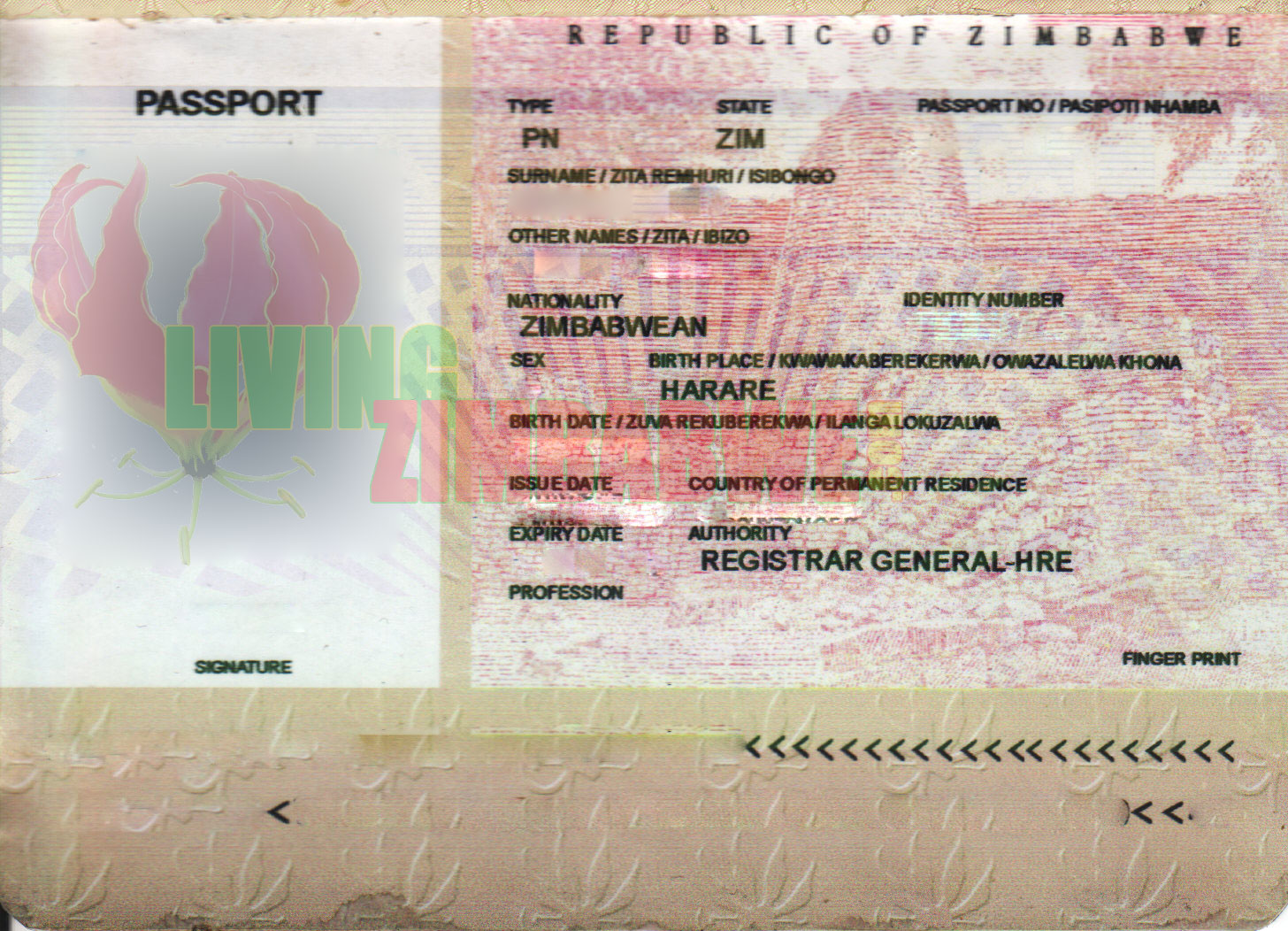
It has been reported that the Home Affairs co-minister Theresa Makone is set to investigate alleged corruption at the Registrar General’s Passport Office. This includes paying for passports at inflated prices and/or having to pay in order to be served.
The minister went on to say that she was not aware of such practises which is absolute rubbish! It is a known fact that in order to get served in a timely manner or even get served at all in government departments you have to be prepared to part with money to get service.
Even though corruption in itself is bad enough, it is the least of people’s worries when it comes to dealing with the passport office. After spending all of that hard earned money of yours to get a travel document you could end up with a fraudulent travel document. Being in possession of a fake Zimbabwean passport or emergency travel document could get you into more trouble and stress than you bargained for (The consequences of being stopped with a fake travel document in or out of Zimbabwe can be left to your imagination).
This is a Zimbabwe passport applicant BEWARE warning. Having to pay corrupt officials is the least of your worries. You need to be sure that you are getting a genuine document.
Below is an image of the details page of a fraudulent Zimbabwean passport [sensitive information has been removed]. Can you spot any differences?
A Zimbabwean superstar in the making Gamu Nhengu has been causing quite a stir in the UK with her X factor performances. Unfortunately it all came to an end at the weekend and this left a number of fans very unhappy. Now news is going around that her and her family are facing deportation due to a failed visa application.
Her being in that situation got me thinking about the hundreds if not thousands of Zimbabweans who are waiting on asylum applications (even though her and her family are not asylum seekers). Some have been lucky enough to get their application approved quickly. There are others who years down the line are still waiting on the Home Office to make a decision on their claims. Whist they wait they are in a situation where they are neither here nor there.
Being a migrant in itself is enough to take a significant emotional toll on a person. Can you image what it would be like with the added stress of waiting on an asylum claim? For months and months applicants are in a situation where all they can do is sit and wait for someone to make their mind up. Whilst all of that is in progress, they cannot work which means they have to live off whatever assistance they are receiving from the government. For others that also means less or no monetary assistance for family they may be supporting back home. They also obviously cannot travel to Zimbabwe or anywhere else for that matter which can make it tough if a situation arises where their presence would have been expected.
Some people have simply put in claims so that they can legally stay on in the UK and work. They may not have necessarily been persecuted in Zimbabwe and have become illegal with asylum being the option they can think of to become legal.
If all else fails for asylum seekers, The International Organisation for Migration runs a Voluntary Assisted Return and Reintegration Programme (VARRP) to assist asylum seekers who want to return to their country. Who knows how well this programme works? It may just be a way of enticing migrants to leave the country so that the Brits don’t have to worry about them; in other word’s, “here, have some money now get out of our country!”
This is just a bit of what some asylum seekers have to go through. If an application is successful, refugees are allowed to travel wherever they like except to their country of origin. But, that restriction doesn’t stop some brave souls from making their way home. It makes you wonder if it is really worth it going through all of that just so that you can stay in the United Kingdom?
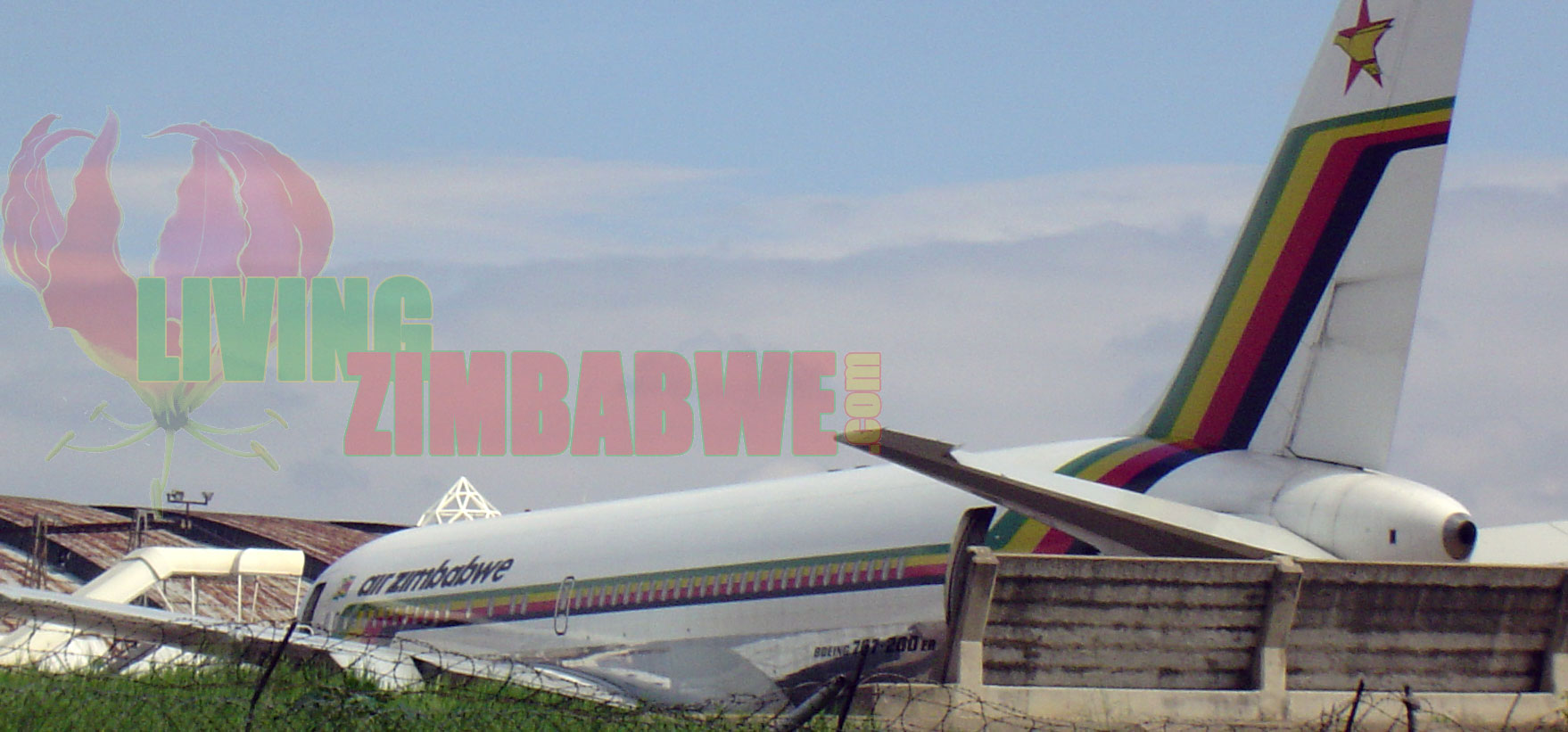
Air Zimbabwe like many other parastatals has been in a downward spiral for the last few years. It has been plagued with all sorts of issues with the majority being of a financial nature. Its pilots are striking at the moment over unpaid wages and this is causing a lot of turmoil. In response to the strike action, the airline fired its pilots after they refused to return to work by a given date.
By doing a bit of analysis it seems as if a major problem is that the airline is a government entity. Because of being a parastatal it succumbs to a lot of political interference. That being said, some of the decisions being made may not be in the best interests of the business as a whole. Without naming names, some decisions seems to be made to suite the personal interests of a select few.
Air Zimbabwe is managed by individuals who don’t seem to have what it takes to review the airline and turn it into a profitable business. The reasons for that may be that they were put in those positions not because they were the right people for the job but because of their affiliations. Another thing that they may be more concerned about is filling their pockets with as much money as they can before they move on. Some of the statements that their executives make just don’t make sense. In the last few hours news has come out that Air Zimbabwe has reportedly purchased 2 Airbus A340 aircraft for $400 million. This is what the chairman Jonathan Kadzura had to say about the supposed purchase, “I have also heard about it (new planes), but to be frank, I am not aware of it.” This and other confused statements leave you in a position where you can’t trust of have much faith in its management.
One of the best things that could be done for the airline would be to privatise it. Making such a move could bring in much needed investment which would not only carry the airline forward but also help it get out of debt. Such a move could also bring about a complete change of management and much needed corporate restructuring.
The major stumbling block in a move towards privatisation seems to be the government itself who just don’t want to let go of it and other failing parastatals. The reasons for this could range from wanting to keep a grip on anything and everything to greed to monopolisation and the list goes on. If they haven’t already done so they need to realise that there are some things that they are not good at and continue to fail it and in the interest of economic recovery should let go of.
If the downward spiral is not brought under control soon Air Zimbabwe is going to crash and burn and leave Zimbabwe with no national airline.
Freshlyground released a music video, “Chicken to Change” a few days ago which will probably attract a bit of attention. At the beginning of the video you see the latex Mugabe saying, “I Robert Gabriel Mugabe do swear that I will be faithful and bear true allegiance to Zimbabwe and observe the laws of Zimbabwe so help me God” and goes on to cross his fingers close to the end of the speech.
With lyrics like, “An iridescent example of honour for the coming generation… You promised always to open the doors for us… Indeed it is you and only you who sleeps with the key… You are chicken to change!” it is plain to see that the video is a message or challenge to Mugabe to let go of the power he has held on to for decades. But, he is too chicken to do so.
The latex Mugabe character is the creation of the well-known cartoonist and co-creator of ZA NEWS, Zapiro. This may mean we will be seeing more of Mugabe on ZA News.
Given Zimbabwe’s political history is taking such a stand against Mugabe really worth the while or is it a waste of time?
Last month a plane that crashed in Congo and on board were Australian mining executives from Sundance Resources. The purpose of their visit was to take a look at the expansion of their operations in West Africa. An entire board taking the time to travel to West Africa is sign that there is something there worth Billions. One very big question is how much of that money stays in Africa?
All over Africa, you will find foreign based companies with a strong presence in whatever sector they do business in. Yes, they may be providing jobs for people in the regions in which they operating. But, how does that compare to the amount of money that they are making that does not stay in Africa?
In some cases, the governments of African nations are to blame. They may for example get a few millions dollars of investment from Africa’s new colonial powers China. What the Chinese get in return may be mining concessions which could make them Billions. In some cases the government officials try and do whatever they can to make it look like they are trying to gain control of sectors that are in chaos (such as the hotly debated diamonds from Chiadzwa). They will say they want to be able regulate it for everyone’s benefit when in actual fact it is for the benefit of a select few. This kind of greed is a completely different story all together.
When it comes to multinational corporations that are owned and operated by entities outside of Africa, is there a need for them? Can’t we do it ourselves? Out of Africa’s population of an estimated 850 million there has to be groups of people who can do what the multinationals are doing. Why can’t we be the ones to have control of our resources which after extraction we sell on at a price we set? Could the Indigenisation and Economic Empowerment Act in Zimbabwe really be a way of getting what is really ours back in our hands? Some say it is just a way of Zanu PF keeping a grip on things and something that will sink the economy.
Why can’t we do it ourselves and be the ones to benefit from our riches?
Is Africa in such a bad state that those who are able to get their foot into the door are just exploiting the chaos?
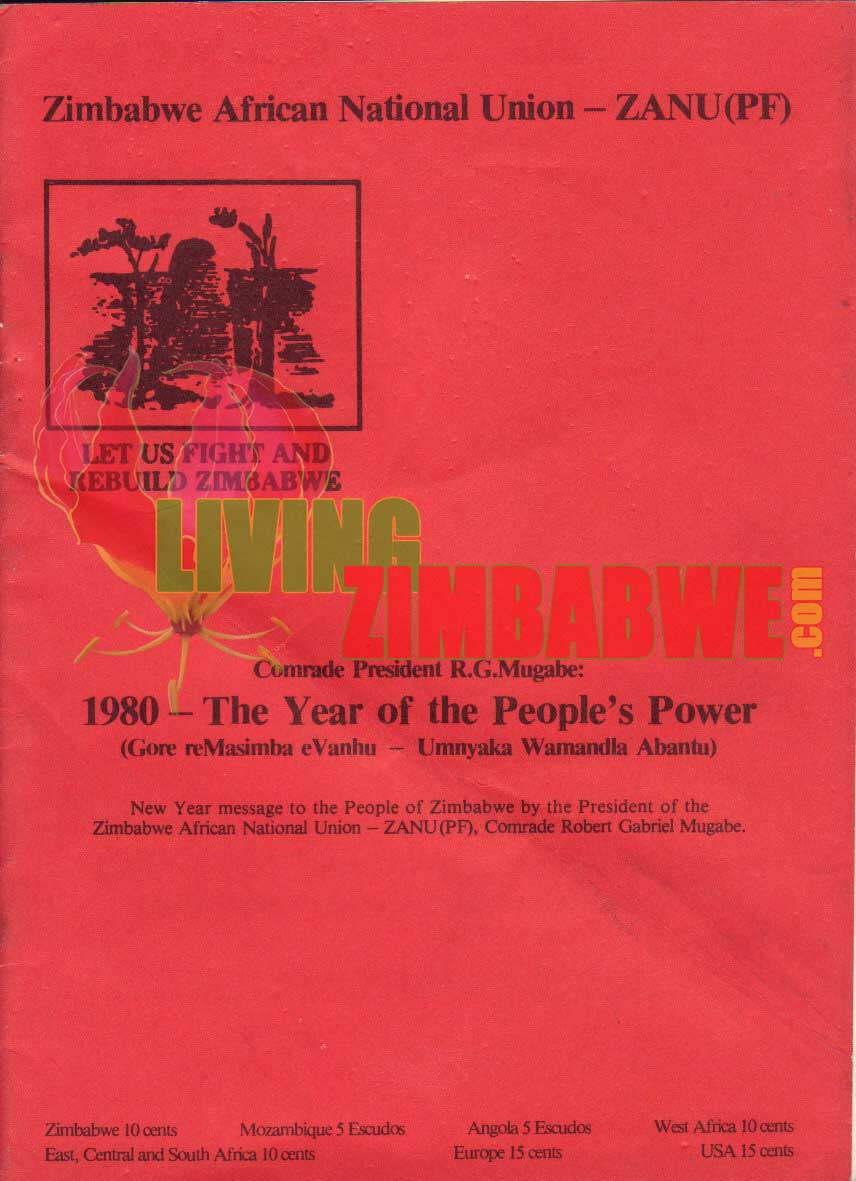
1980 – The Year of the People’s Power (Gore reMasimba eVanhu – Umnyaka Wamandla Abantu) is a publication that was put out in 1980. It is a New Year Message to the people of Zimbabwe by Comrade Robert Gabriel Mugabe, the President of the Zimbabwe African Union ZANU (PF).
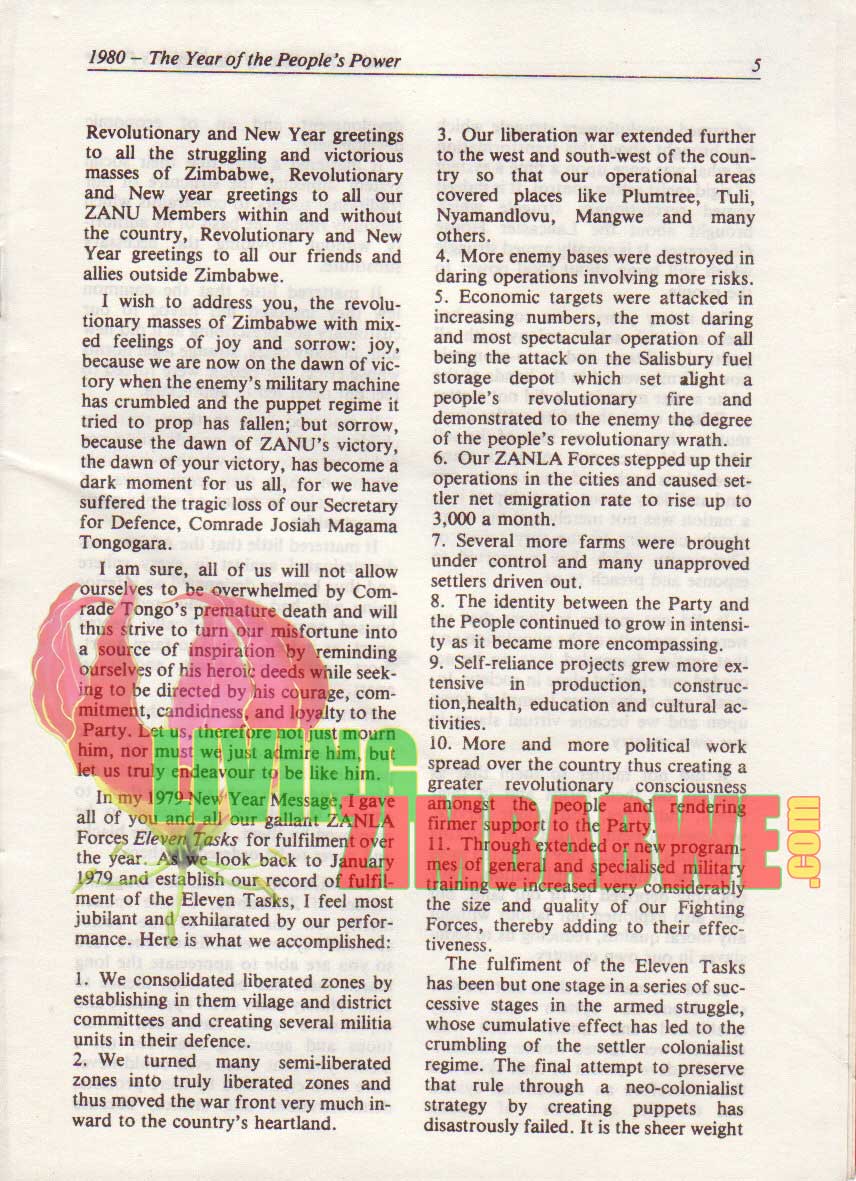
In it, he talks about the revolutionary triumphs and misfortunes that they face along the way. It also touches on the progress of certain objectives such as the ZANLA Forces Eleven Tasks, British colonisation, traitorous puppets working against the victorious Zimbabwean masses and other significant events in the liberation war (Chimurenga).
Here is an excerpt of the first two paragraphs: Revolutionary and New Year greetings to all the struggling and victorious masses of Zimbabwe, Revolutionary and New year greetings to all our ZANU Members within and without the country, Revolutionary and New Year greetings to all our friends and allies outside Zimbabwe.
I wish to address you, the revolutionary masses of Zimbabwe with mixed feelings of joy and sorrow: joy, because we are now on the dawn of victory when the enemy’s military machine has crumbled and the puppet regime it tried to prop has fallen; but sorrow, because the dawn of ZANU’s victory, the dawn of your victory, has become a dark moment for us all, for we have suffered the tragic loss of our Secretary for Defence, Comrade Josiah Magama Tongogara.
The full 12 page publication is available in PDF format for US$0.50. To purchase the publication visit the Living Zimbabwe Store or by clicking on the Buy Now button below which will take you through to PayPal
Whilst in Zimbabwe on a visit, I tried to access my PayPal account and was unsuccessful. All I got after entering in my details was the following message:
Error 3028: You have accessed your account from a sanctioned country. Per international sanctions regulations, you are not authorized to access the PayPal system, For more information about your PayPal account status, contact complianceverification@paypal.com
I do not have any political affiliations in Zimbabwe but here I find myself being affected by the TARGETED sanctions. My understanding was that the sanctions were targeted towards certain individuals and that they would not have an effect on the general population. My little experience obviously goes to show that this is not the case.
A week or two after my arrival there was a newspaper article about a university student who tried to get her hands on demonstration software from ETAP Enterprises Solutions. Getting a hold of the demo disc entailed entering her address into a form which she did do. She was later told that they would not be able to provide her with the disc due to trade sanctions against Zimbabwe.
I am not on the sanctions list and the student mentioned above may not be either. That experience has been an inconvenience and I am sure that there are a lot more Zimbabweans with no political associations who have experienced similar. It has also made me think about what kind of effect it has had on individuals, businesses and institutions that have been denied access to products and services that they would have otherwise have had the right to access. My guess is that they would have had a major negative that would have led to them finding a roundabout way of getting something or going without it completely and having to deal with it.
If you take a look at some of the individuals on the sanctions list, they are living very opulently. Many a people in Zimbabwe may have been able to better their lives and those of others had there been no sanctions. It just makes me wonder whether there is a point to the sanctions and whether or not they have really worked?
The award winning Journalist and Filmmaker Hopewell Chin’ono is at it again. He has put together another documentary film called A Violent Response. The documentary covers some of the actions carried out by the government after the March 2008 elections. Here is the trailer of the film which is due to be released in December:
After a Friday (12 June 2009) afternoon meeting with the President Barack Obama, Morgan Tsvangirai received the US Presidents seal of approval and $73 million dollars to go towards education, health and governance. The $73 million is a few million shy of what the Zimbabwean Prime Minister was hoping to have received. Nonetheless, Tsvangirai was able to reach out and get a positive response from the west which is something Mugabe would not be able to do with his attitude towards them and the asset freezes and travels bans he is subject to.
The fact that the West is warmly welcoming Tsvangirai is a positive sign for what the future holds for Zimbabwe if his efforts are not hampered by Mugabe. Obama mentioned that the aid pledeged by the US government would not be channelled through the Zimbabwean government and would go directly to the people. This was a very good move on their part because the Mugabe government has been known to use such funds for their own purposes.
Despite the progress made so far in mending relations between the West and Zimbabwe, one thing that will continue to stay are the sanctions directed towards Mugabe and his aides. A number of commentators argue that the sanctions need to be removed in order to revive industry and thus create jobs. They argue that yes, a number of companies may be run by individuals with close ties to Mugabe but at least they provide people with gainful employment to allow them to feed their families.
Whatever the case may be, the hope is progress continues to move in positive direction for the people of Zimbabwe.
That was a video of a recent farm invasion. In one foul swoop, these farmers have lost everything that they have spent most of their lives building and it is not an easy thing for anyone (white or black) to go through. In addition to the farmers losing their livelihood, their employees suddenly find themselves without a job which only adds to the ridiculous unemployment rate that is already above 90%.
“Land distribution will continue. It will not stop,” Mugabe said. “The few remaining white farmers should quickly vacate their farms as they have no place there.” These were some of the words recently spoken by Mugabe. Farm invasions are continuing and they seem to have stepped into high gear. Last weekend in the Zimbabwe that has a unity government, one of change, an elderly couple were beaten by thugs who invaded their property just outside Harare.
A number of farms have been seized in recent weeks, 100 or so farmers are facing prosecution, some are under siege and some have gone into hiding. Majority of the farms being invaded are run by white Zimbabweans and the animosity towards them will not make life comfortable for those who are not even remotely involved in farming. Britain announced plans to evacuate its older and vulnerable citizens from Zimbabwe, a plan that Mugabe responded to by saying, “They are free here. They are quite comfortable. It’s queer, strange thinking by the British. We don’t understand.” Whether or not they really need help, Mugabe’s words and actions towards whites have done nothing to make them feel at ease.
During his 85th birthday celebrations, Mugabe said, “In the areas of mining, agriculture and manufacturing, a methodological and systematic identification of areas in which the state and indigenous entrepreneurs can participate, is being carried out, in line with the Indigenous and Empowerment Act.” This law is supposedly in place to facilitate the majority control of industry by blacks. One point to note is that it is not only white farmers who have been kicked off their land. It has happened to black farmers as well. The Zanu PF greed has extended beyond moving white farmers off their land. If a minister or someone else with a voice within the ruling party sets their eyes on a black owned farm, they do what they can to get their hands on it. This is going against what is stated in their own laws if they are taking something that a black person lawfully owns.
There are so many inconsistencies with the farm invasions, related laws and statements made by the government. It has gone from eviction to allowing some farmers back with 99 year leases on resettled farms to evicting them all over again. It is almost impossible to keep track of or figure out exactly what the government is trying to do or think they will achieve.
Has Mugabe not seen what effect the land invasions had in the past? The collapse of the agricultural sector and people facing starvation can be in part attributed to the invasions. After the invasions, a number of the farms became pieces of land with zero productivity. But still Mugabe continues to press on with land reform programme and calling on white farmers to leave and say they are not welcome.