Category: Politics

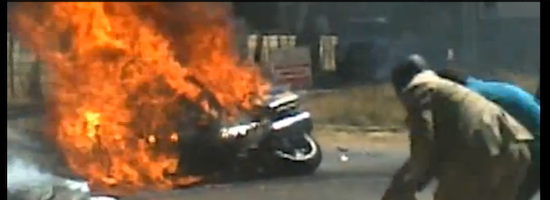
  • 30 Seconds After – Mugabe’s Motorcade Motorcycle Crash

    30 Seconds After – Mugabe’s Motorcade Motorcycle Crash

    I am one of those people who believe that caring and emotions are definate indicators of being human. Lack of the above makes you any other. While I almost respect RG, I also have my issues with his 80% none human attributes. It is my personal opinion that for the last 32 years this guy has no clue what it is to be Zimbabwean today. You do not need to be informed every minute while you are in your little heaven, experiencing the ups and downs with your people makes you human.

    As for the accident a few days ago, I find myself asking what was going through the minds of

    1. the President, if he was there
    2. the other bikers
    3. the rest of the entourage and the people, witnesses or bystanders thirty seconds later

    Categorically,

    1. I never saw a thing and seriously thinks, “who drives into the back of a lorry mfana angware next time (he should watch out next time)”
    2. if I stop I will be fired or be a victim of an ‘accident’
    3. Sorry, Tiripabasa. Aenda uyu. (we are at work and he is gone).
    4. Ko zvavamusiya achitsva? (how can they leave him to die).

    The burning man represents the real Zimbabweans and where we are 30 seconds later.

    This has been a submission by Rodney Chenge Katsidzira.
    You too can become a Citizen Journalist by submitting your story here: Citizen Journalism by Living Zimbabwe  
    The views expressed in the article are those of the author and not necessarily Living Zimbabwe.

  • Can Air Zimbabwe Fly Back Into The Black Like Air Pacific?

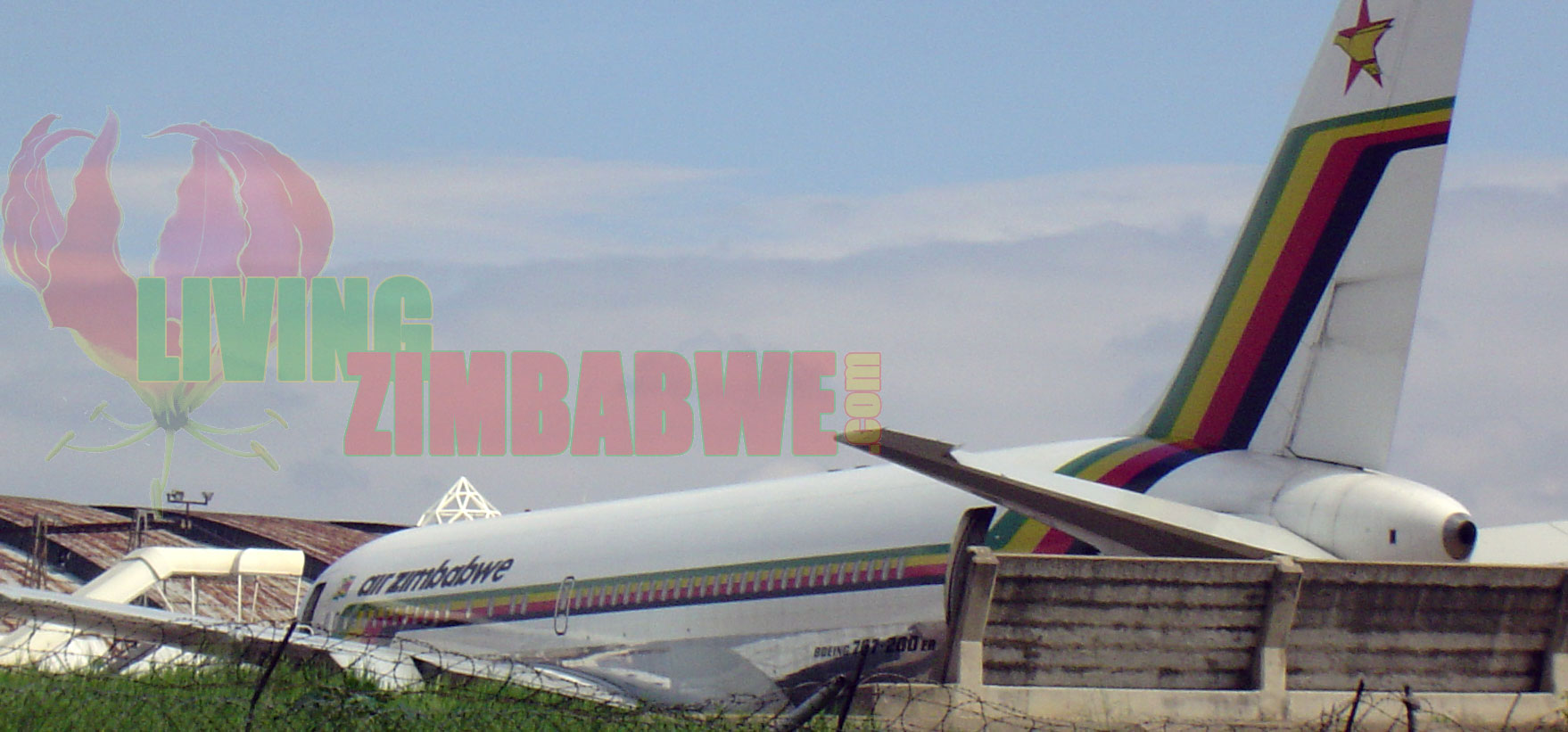
    Can Air Zimbabwe Fly Back Into The Black Like Air Pacific?

    Fiji, a former British Colony, a nation that was expelled from the Commonwealth and one that has various sanctions placed upon it, is a small island nation in the South Pacific ocean. It is ruled by what many seem to deem a dictatorial government lead by Commander of the Fijian Military Forces Frank Bainimarama. Does it’s recent history sound somewhat familiar?

    A number of airlines connect Fiji to a few of it’s neighbouring island’s and countries further afield with one of the service providers being Air Pacific, the national carrier. Like a number of airlines around the world who have found the aviation industry a challenge to make a profit in, Air Pacific saw itself slip into the red. But, this year they managed to slip back into the black and recorded an operating profit of $11.5 million versus an operation loss of $2.6 million the previous financial year. This bottom line result was attributed in part to an increase in the tourist numbers.

    As far as ownership goes, Air Pacific is owned by the government but now wholly! The government holds a 51% stake, Qantas 46.3% with the remaining 2.7% being held by other entities. Despite recent attempts by the government to exert greater control over the airline, it is still operating as normal.

    Looking at Air Zimbabwe which is wholly owned by the government, the national carrier is in a serious state of distress and owes millions to various creditors and unpaid staff. At present, Air Zimbabwe is being threatened with losing it’s membership from The International Air Transport Association (IATA) over the renewal of its Operational Safety Audit. If this does happen, it means that the airline will not able to fly to international airports and airspace. But, this may be something that might not be a major concern seeing as they are currently only flying domestically.

    If the government deems it important enough for the country to not lose it’s national carrier and provides it with the minimum it requires in order to get back into full operation what then? The way in which they have been operating over the years has obviously not been working. Privatisation is something that has been spoken about in the past but something that the government does not seem keen on. That said, could them implementing a model such as Air Pacific’s work in transforming Air Zim into a viable airline? The Fijian government is one that likes to be in control but as far as the running of their national airline goes, they are only a majority shareholder. To add to that, it’s operations are overseen by a CEO who has no political affiliations and is not influenced by politics.

    Tourists numbers to Zimbabwe are reportedly on the rise which means that Air Zimbabwe will not be flying empty planes if they get back into full operation. As they continue to not fly international and try to figure out how to stay alive, other airlines are taking advantage of the huge gap they have left in the market. In recent months, South African Airways increased flight frequency into Harare and Emirates which recently started operating a 5 day/week service into Harare announced that they will soon start daily flights into the city. This goes to show that there isn’t a lack of travelers to and from Zimbabwe.

    With the passage of time, regional and international carriers will continue to increase their market share and squeeze the national airline out of a space that they should be dominating. Air Zim may need to quickly learn a lesson on ownership and operation from an airline such as Air Pacific and get themselves to where they should be before it’s too late.

    Is it already too late?

  • Are We Going Down The Drain… Again? Part 2

    Are We Going Down The Drain… Again? Part 2

    Following on from – Are We Going Down The Drain… Again? Part 1:

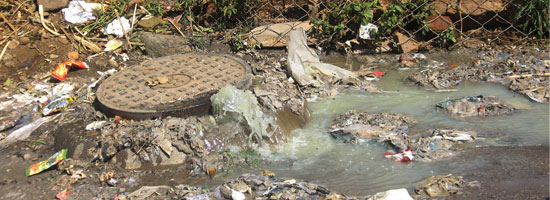
    Then there is another monstrosity in the form of the Zimbabwe National Road Agency, ZINARA. One is often reminded of another miscreation, the National Oil Corporation of Zimbabwe (NOCZIM) which, despite the glaring reality that we are yet to strike oil, that was shoved down our throats only for it to manifest one of the most devastating fuel shortages this country has ever experienced.

    NOCZIM proved to be a blatant funnelling of state resources into the pockets of a handful of clever dicks. To this day, the culprits are yet to see the four walls of a prison cell as is expected of miscreants of this kind. Shock turned to desperation as very prominent politicians were dispatched to the mountains to seek divine intervention of a traditional kind.

    If the images of shoeless leaders witnessing pure diesel gushing from a rock awash in the blogosphere are any accurate, then it explains why Zimbabwe is in the mess it is in. But that is not the point. Another elaborate siphon of state funds has entered the fray, ZINARA, and the fact that it has been in operation for close to four years is cause for concern. Just the acronym itself should send shivers of trepidation.

    Anyone who has driven on the roads in Zimbabwe will tell you that they are arguably the worst. Let me drop any comparison because that would open a Pandora’s box. In some parts of the country, the roads have simply vanished, reclaimed by the advancing bush.

    A giraffe is claimed to have disappeared into one notorious drumhole. It is stuff of crisis proportions if highways are fraught with gulleys and are evidently disintegrating by the day. That fatalities are the norm on our roads should to surprise anyone.

    It then begs the question: what the heck is ZINARA doing?

    Time there was when the mere existence of a ministry dealing with roads and transport was enough to keep our roads in pristine condition. It then boggles the mind why an entity created for the purpose decides that their first act is to acquire new headquarters and a shiny fleet of vehicles for their ‘hard working’ executives? What has this got to do with fixing the roads? Get your hands dirty first to earn your keep, I say.

    The toll fees that we are levied on the highways should be going into the coffers of ZINARA to help fix the roads. Before we can even smell the bitumen, there now is a proposal on the table to increase the tolls so that they are ‘in line with those in the region.’ OR WHAT? Tell us where the money already collected is!

    The only time the public knew anything about the revenues from toll gates was when some more clever dicks employed the Zimbabwe Revenue Authority, ZIMRA, originally tasked with collecting the toll fees were caught with their hands in the till. They had managed to spirit away more than a million dollars by the time they were caught. A MILLION DOLLARS! How selfish can one get!

    Then we read in the press that ZINARA is blacklisting a number of local authorities for the abuse of something called called the Road Fund. Where is the accountability or transparency in all this? Why is it that all we hear does not directly translate into good roads that we are be paying for through levies and toll fees?

    Talking about toll fees, tell us, has the role of the Zimbabwe Republic Police, ZRP’s national traffic cops been amended to include the mandatory collection of another set of toll fees? Is it true that traffic police have each been given a daily target to collect from motorists? If that is the case, then one can explain why Zimbabwe arguably has the highest number of road blocks on the continent per kilometre of road, easily surpassing those of Mobutu Sese Seko’s era.

    That does not include those irritating bike cops who run the danger of being run over themselves. Never mind the fact that they are so blatantly corrupt, in a manner of speaking. How long shall they kill our economy while we stand aside and look? Surely?

    This has been a submission by Lenox Mhlanga. If you have something to share, you too can become a Citizen Journalist by submitting your story here: Citizen Journalism by Living Zimbabwe.

    Image courtesy of Sokwanele

  • Are We Going Down The Drain… Again? Part 1

    There are some of us who have entered 2012 with a sense of trepidation. They believe this is the year when a decadent earth will collapse into itself. I predicted the same for Zanu PF, but the earth? My bible says no one knows the day or the hour when the Son of Man will come. Meaning, make a living while the sun still shines.

    Don’t listen to those who are creating a multi-billion dollar industry out of scaring people. There even is a movie entitled “2012” that portrays the destruction of the world as we know it. It relives mankind’s worst fears…earthquakes, floods, fires, the works. But then I ask, what’s new? We already have fair share of death and destruction… most of it man made. We have seen it all.

    Mankind has become suicidal. We now swear by the motto “Live for today fas if there is no tomorrow.” Guess what? – to borrow Reserve Bank head honcho Gideon Gono’s favourite cliché – there is a tomorrow we all can look forward to. You might be flat broke today, yet tomorrow could be different. Just like the fingers on your hand, not all days are the same.The key is to have a deliberately positive attitude.

    There are a lot of things that we will never understand. If we knew all of life’s secrets, we would hasten the end of the world as we know it selfish beings that we are. We are so destructively selfish that we do not care about the consequences of our actions as long as we believe we are not on the receiving end.

    Take the fact that God has endowed Zimbabwe with unfathomable mineral wealth and a people who are supposed to be intelligent because, come to think of it, we run the world. Minerals that would easily take the country out of the rut it is in if the revenue found its way into the fiscus and not into someone venerated pocket.

    Yet the nation is robbed blind in broad daylight by people whose preoccupation is to ensure that we marvel at how rich they are. We watch them with awe as they claim that they were not born poor.

    There is nothing more treacherous than to personalise state resources with impunity and continue to perpetuate a crisis in order to pull wool over our eyes. We are in trouble as a country because there are those whose very existence is dependent on the status quo remaining as it is. They thrive on chaos.

    There are things happening that defy logic. Air Zimbabwe, a pale shadow of its former self, is kept gasping in the Intensive Care even when a basic grasp of elementary economics tells us that it should be shut down. It has gone way below the status of a chicken bus operation. The only consolation perhaps is that they don’t allow one to enter the cabin with chickens and goats like used to happen on some airlines in West Africa.

    Not that I don’t like goats and chickens. But there are depths that we cannot surely plumb if we claim to be more educated and intelligent than the next village idiot. We are tempted to believe that we are a country that celebrates mediocrity.

    Reports of the aircraft that transported the president to the African Union summit filling up with smoke before take-off should have sent alarm bells ringing in close security circles. If it were in Idi Amin’s time, those responsible would have been fed to the crocodiles.

    Worse still, the fact that engineers had to be lured from their lairs for a few pieces of silver to repair the plane reads like something out of a very dark comedy. I know of prominent people who have vowed never to fly Air Zimbabwe again even at gunpoint.

    It remains a mystery why none of their planes have ever dropped out of the sky. Is it because of the fact that it takes 120 people to service one Air Zimbabwe plane? I bet that some of those duties would be to blow cockroaches from the aircraft’s avionics if need be. Aren’t we just embarrassed that the South African Taxi Association has managed to, or is about to launch an airline of their own?

    This has been a submission by Lenox Mhlanga. If you have something to share, you too can become a Citizen Journalist by submitting your story here: Citizen Journalism by Living Zimbabwe.

  • Hwangwa on Zim: Tales of the Zimbabwean Dollar, Bad Memories For The Average Masses

    HARARE – By David Hwangwa

    The Reserve Bank of Zimbabwe governor, Dr. Gideon Gono once revealed that he had nightmares over the zeros he had slashed on the Zim dollar. Tales of the dreaded Zim dollar evoke several emotions amongst the people. The majority would not even want to hear even the slightest mention of the word whilst some of Harare’s dealers would jump with joy if it is to return in its weak state. The era of the Zim dollar in its last days, were the worst for the majority.

    Since its inception after independence, the Zim dollar was a stable currency that was even at par with most of the world’s strongest currencies, at one time being of more value than the US dollar, one of the currencies currently being used as legal tender in the country. It was not until the late 1990s that the dollar started to slide when the Zim government was just starting with their poor domestic and foreign policies.
    Fighting for regional dominance with South Africa, the Zim government entered our troops into the infamous DRC war despite being warned about its negative effects on the economy. Just to add to their poor policies, the government further gave out huge payments of ZW$50,000 each to the thousands of the veterans of the Second Chimurenga. This also had massive effects on the economy because we could not afford that at the time but once our government decides on a policy, they go ahead with it without considering the after effects of such moves. The Zim dollar started falling, foreign currency shortages were being reported and the sliding trend for Zimbabwe was just beginning. At the turn of the new millennium, such policies continued. The chaotic land redistribution, oppressive laws, Operation Murambatsvina, rigged elections and ofcourse continuous printing of the Zim dollar, all added to the further weakening of the currency.

    Whilst the economists can go over their books and come with various reasons and formulas why we should not resort to the Zim dollar just yet, the average man on the street will just hit you with a blank NO. They have so many reasons why that currency should never come back.

    In the last decade where the Zim dollar was the main currency, it cast a dark shadow over the general masses. How could it not be when the governor was printing money at will as if he was funding a mafia organisation? His new hobby was that of printing trillions, quadrillions and figures never heard of without even considering the plight of the masses.

    It was a period where nothing was available in the shops. To those who had supplies and who were selling them, the mode of payment was the scarce forex even though it had not yet been legally approved by the government.

    The most painful thing during the Zim dollar era was that of waiting in queues, even for things that were not even there. It was even more heartbreaking when that commodity you had been waiting for runs out whilst you were still in the line. We became so accustomed to waiting in lines that whenever you saw people standing in a queue you would immediately join them without even knowing what they were waiting for. One would almost be certain that whatever that thing was, you would probably need it. People would go to the shops as the whole family because things were rationed; 1 – 2 per person and a family of eight would probably require three people just to get enough supplies.

    The Zim dollar era resulted in the country becoming almost idle. Industries closed, multi-national companies relocated to neighbouring countries and most local businesses were just operating at a loss. The unemployment rate rose to levels never heard of. People reluctantly left the country they loved so much for menial jobs outside. People had no options but to degrade themselves so as to feed their own families.

    The government had no pity at all for the businesses during that time. With Gono printing his worthless Zim dollars at will, it meant that every time a new family of currencies was introduced, prices would rise as well. It was even painful seeing prices being increased whilst you were waiting by the till. To counter such practices, the government introduced the infamous price controls. This was the final nail in the coffin because this practice resulted in companies not producing anything because the price fixed by the government was just suicidal to their businesses. You could not blame the business people because you honestly cannot sell a product marked for example $5 and be told to sell it for a dollar. Anyone in his right senses would say no to that and it would be beneficial to that person to just stop producing that product. The biggest victims from this policy by the government were the masses because we got everything we want from the store and waking up one day being told that there is no bread, it is just an insult. At times, Zimbos we are just too tolerant.

    The big shefs in government were living large at the time yet the masses were paying the price for their incompetent policies. People had to purchase goods where they were limited. Substandard goods became the order of the day. New terms were being coined by the suffering masses to portray their everyday life. People were now living on economics Zero-Zero-One where the one referred to the only meal of the day. The one meal was even necessitated by two factors; one it was because in that day and age, people could only manage to scavenge one meal per day because things were so hard. The other factor was that even though some people might have had the means to have more meals per day, the stumbling block was that there was nothing in the shops to buy. We are talking of a time where if you visited a relative, you would expect to return to your place without even being offered anything to eat. Visiting people was almost a burden because you would just inconvenience your host.

    In the rural areas it was even worse. Visiting my grandmother I the village in December 2008 I almost cried. She had stacks of worthless Zim dollars that she was saving; dollars that were not even in circulation anymore. She told me that she was not even aware of what the new family of currencies was. The other factor was that she kept them because there was nothing to buy from the stores. It was even sad visiting people in the village. There was virtually no food to eat. The government had banned NGOs from operating in the country. They were the only ones that were giving people in the rural areas food supplies.

    Things were so drastic that people were boiling mangoes to eat. It might sound weird to the urban folk but that was the situation on the ground. The situation in the rural areas was a little different from that in the city. We went to ChaChaCha growth point in Shurugwi to buy my old lady some supplies for Christmas. In some of the shops there was maize meal from South Africa that was written “Not for Consumption by People under 12years and those over 65years.” I was shocked because that is generally the average ages you will find in the rural areas. The sad part was that people were buying that very produce. I asked myself, is it ignorance or the mere fact that people were taking advantage of the rural folk. Some overzealous entrepreneurs were just taking advantage of the rural folk.

    It was not only business people who were taking advantage of the masses. It started from the top. Gono and his cronies were printing gazillions of Zim dollars at will, fuelling the black market. It was hard waking up to go to work. You were never guaranteed that the price you paid for the kombi would be the same come 6 pm. No wonder the soldiers ran amock when shops were refusing the $10trillion notes. That was towards Christmas in 2008, government workers had been paid $30 trillion. Just those three notes that were not being accepted in shops. That was just taking our patience and tolerance to the limit. Not everyone had the means to forex then but the government never considered how the average man on the street was surviving. Yet you wonder why Zim remained at peace. Zimbos and their tolerance.

    Now we see the state media journalists and Dr Gono echoing the same sentiments from the December 2011 ZANU PF Conference about bringing back the Zim dollar. Yes a country needs its own currency but at the present moment Zimbabwe is better off without its own currency. I am not an economist but I know that we are not yet ready for a return of the Zim dollar. Our industries are still recovering and hardly working at full capacity. Bring the Zim dollar right now is just tantamount to disaster. Maybe the ghosts of the slashed zeros are haunting our learned governor that he is under pressure to bring back the dollar. We all know that the governor does not really care. He is one man who purchased a Mercedes Brabus when the country was the majority of the population was languishing in poverty.

    Well Dr. Gono and fellow Cdes from ZANU PF, we suffered so much under the Zim dollar we are not yet ready for the return of our fallen currency. Our economy is just starting to recover, can we please allow it to grow before the once mighty Zim dollar makes its inevitable return. Elections are just around the corner, now is not the time for the Zim dollar.

    David T. Hwangwa is writing in his own capacity. He can be contacted on dhwangwa@gmail.com

    This has been a submission by David Hwangwa. If you have something to share, you too can become a Citizen Journalist by submitting your story here: Citizen Journalism by Living Zimbabwe.

  • Hwangwa on Zim: Zimbabwean Youths As Pawns In The Political Warfare

    As youths we are pawns in the political field. We form 60% of the voting electorate yet we are hardly represented in parliament and government. There has been so much advocacy for women representation in government, i.e. in parliament and cabinet and the political parties have heeded this call with increased number of women in government, with Vice President Joice Mujuru and Deputy Prime Minister Khupe being the leading examples. What the politicians have failed is to increase the number of youths in government and this is one of the biggest challenges we are facing because without one of our own in government, our views can never really be represented.

    Political parties take advantage of the challenges facing the youths, chiefly that of unemployment and use it against us. A perfect example is that of Chipangano in Mbare. Luring the youths with incentives such as a low allowance, most youths facing financial problems will do anything even for a tiny allowance. The ZANU PF sponsored Chipangano in Mbare has coerced and forced the youths to join them in their violent paths as they are left with no choice. They are promised cash allowances and most of them use it to buy drugs and toxic spirits such ZED as a way of boosting their confidence when terrorizing civilians in Mbare and surrounding areas in Harare.

    The problem is that the youths are being forced to play the role of the pawn, play the dirty work whilst the politicians are in their offices. As pawns we are forced to protect the “king” by all means even if it means resorting to all the unorthodox methods. Zimbabwe is by far a peaceful country but some of these youth leaders become overzealous thinking that violence will bring forth with it success. The youths in Mbare have been playing the part of the pawn for a while yet their “king” keeps on finding better opponents. Cde Savandhu should know better having seen his fortunes dwindle because his pawns have not done a good job of protecting their king.

    As leaders these politicians should know better and start from the front and condemn violence and should further set the example. When the Human Rights Bill was being deliberated in Parliament, the president was at the forefront of condemning violence yet outside the building overzealous Chipangano were busy terrorizing people outside parliament building. As if that was not enough ZANU PF youths attacked and clashed with MDC-T youths at a rally for the MDC-T in Chitungwiza with senior ZANU PF officials being fingered in the plans to cause chaos. What is surprising is that whilst the GPA leaders might go on TV denouncing violence, the problems that need to be addressed are there within their parties because as leaders they are largely expected to say certain things but the problems are there within their own parties through their youth leaders.

    We can thus never really move forward for as long as these youth leaders and senior party officials continue to promote their cause through violence. It is not even helping when some in ZANU PF say that they will continue to support Chipangano yet perennial Mbare constituency candidate Cde Tendai Savanhu continues to deny the existence of this youth militant group. What this does is that it does not help the cause of preventing violence because the youths will continue to be used as scapegoats to play the role of the pawn, as the face of violence for them. With threats to their families as well as their well being, youths are left with no option but to go on with whatever they are told to do.

    ZANU PF has thus taken the role of coercion and force to a whole new level. Youths are forced to go knock door to door into people’s houses forcing them to come to ZANU PF rallies and functions. ZANU PF wants to create an image to everyone that they are a well oiled machine giving back to the people yet this is to the contrary. In the recent ant-Sanctions petition, they knew they would not get the numbers they wanted for their project. Youths terrorized people in town forcing them to close their shops and stop whatever they were doing so as to attend the signing on ceremony at ZANU PF headquarters. People were driven in trucks from their villages to come and sign the petitions without even their consent all for the sake of maintaining a fake image. That is not what the people want and that is by far not the role the youths want to play when we say we need a political role.

    Why take advantage of the youths? We are by far the most important group in the population, the most important group of the electorate. What politicians forget is that a youth movement may as well play a determinant role when it comes to elections. Our interests are hardly being addressed yet we are the pawns in the game. We are the ones that necessitate their political paths yet our political interests are not being addressed. We need leaders that understand that the views of the youths have to be attended to. The truth is that we cannot continue playing the role of the pawn forever. There would be a time when some of us will make the journey across the board from being a mere king to a “queen”, a “bishop” and even starting the game as the king. Politicians have to understand that as kings they cannot go anywhere without their pawns and they need a strategy. They need to understand that they cannot play chess with draft tactics, they will not win because their pawn will be crashed in no time. What they need is a strategy, a formula where they make everyone happy and not use us as tools for their dirty work. They are the ones who more or less got the country into the situation that it is in and thus there is need for them to pull it out and as youths we need to play our part for our country because the day of being nothing but a mere pawn has to end.

    David T. Hwangwa writing in his own personal capacity. He can be contacted on dhwangwa@gmail.com

    This has been a submission by David Hwangwa. If you have something to share, you too can become a Citizen Journalist by submitting your story here: Citizen Journalism by Living Zimbabwe.

  • The Unemployment Challenge For The Zim Youth

    Youth Manifestos for the upcoming elections

    Introduction

    The Zimbabwean youth make up about 60% of the active electorate and they are by far the most important age group that play a very important role in the society. Despite being the most important part of the electorate, the youth of Zimbabwe still have no active part when it comes to playing a political part, our role being reduced to nothing but political pawns, we are only there to enhance and legitimize politicians’ ascendency to the top through our vote. We are their face, we do the dirty work for them , running their errands in the streets, at rallies but as is as much political role we are given because as soon as the results are announced the politicians will assume their positions as “kings” but as for us the youth, we will soon assume our permanent roles as pawns in the political arena.

    The challenges the youth are facing

    Zimbabwe has over the last decade been at the summit when it comes to literacy levels in Africa and still continues to churn out thousands of world class graduates every year. Every year each prospective graduate is full of optimism of graduating, being capped by the president, being called a graduate, getting a job and contributing to their country’s development but that optimism is soon replaced by heartache because our industry and economy cannot offer them anything. The biggest challenge that the youth are facing is that of unemployment. With more than 90% unemployment rate, it means that only a fraction of the estimated 12 million people is employed, roughly over a million if we are to go with the estimates. Every year, close to more than 5 000 people graduate in Zimbabwe, from state universities, poly techs, nursing school, teachers colleges, apprenticeships to name but a few and all these people are expecting to be part of that 10%.

    The Zimbabwean economy continues to grow at a painfully slow rate. Things have gotten better in the country but people continue to struggle for a decent living. Wages and salaries continue to be stagnant and despite the cries from the people salary raises continue to be a pipedream. The President has on many occasions called for all our foreign graduates to come home and contribute to the building of our economy and resuscitating our country’s fortunes. Locally we have thousands graduating from high schools and universities and already the country cannot support all these graduates and apart from all those foreign graduates the president is calling on, we have thousands more from his Presidential scholarship from all the major universities in South Africa coming back as well to scavenge for the little resources that are already exhausted. I wonder where the learned President of the Republic of Zimbabwe wants all those professionals earning a decent living overseas, want to put them when the local professionals here have nothing. Does he want them to contribute to the unemployment rate. There is need for him to create job opportunities for us here in Zimbabwe before calling on all those foreign graduates. As a graduate myself who is unemployed I believe the president should work on making me and the rest of the other graduates happy by giving us jobs.

    In developed countries, even in some African countries it is unheard of for graduates to go for prolonged periods of time unemployed but for our beloved country, you might as well bury them because they might not get used in a very long time because there is nowhere to use them for. Most youths will regard the four years they spent studying for a degree, for that diploma, for that profession as a waste because most people usually end up in trades that have nothing to do with what they studied for just to make ends meet. We have seen people with a professional qualification swallowing their pride to do menial jobs. We have seen most youths editing their CVs removing their degrees so as to get a job because most companies will not employ a graduate with a degree for a menial job. Thus, most youths in our country are certificate holders yet they are not doing what they went to school for all for the sake of making ends meet.

    What the youths need is a government that gives them a guarantee that there will be jobs. Jacob Zuma promised to get 500 000 jobs for his people after a certain period. At least people can hope. The ZANU PF government engages in policies that are killing the economy where most people see the only alternative as going overseas. The ZANU PF government destroyed our economy with their guerrilla policies of how to run the economy, running it down and destroying the industry, effectively destroying the source of employment for the majority of the people. I want a government that provides a guarantee and an effective plan and policy of providing for jobs. The Ministry of Finance continues to freeze out jobs in the public sector effectively rendering all the graduates jobless because the government is the biggest employer in the country yet they are failing to provide us with employment, yet the president is calling on graduates to come home. To work where Mr. President if I may ask?

    What we need is a treasury that is able to support the populace through the provision of releasing funds and unfreezing jobs in the civil service. The treasury has to release funds to bail out the industries so that the youths get employed. Zimbabwe is becoming centralized with everything being reduced to Harare. This is a sad reality particularly for the other youths based in other parts of the country. It is even sad for those in Bulawayo as most industries there are relocating to Harare. Prof. Welshman Ncube, what are you doing? Lobby the Finance Ministry to bail out Bulawayo because as youths we are seeing our dreams disappear in front of us because we cannot get jobs.

    Unemployment is a bigger challenge to us the youths and there is need for these politicians to walk their talk because the time has come where we will not tolerate their improbable plans for us because we need something to look forward to for tomorrow.

    This has been a submission by Anonymous. If you have something to share, you too can become a Citizen Journalist by submitting your story here: Citizen Journalism by Living Zimbabwe.

  • Transitional Justice In Zimbabwe, Seeking Ways To Heal The Nation

    On Wed July 6 a workshop was convened at the Diakonia Centre in Central Durban by Zimbabwe Exiles Forum (ZEF) in partnership with other Zimbabwean civic groups which are based in South Africa. Keynote speakers were Gabriel Shumba (ZEF), Munjodzi Mutandiri (NCA), Janet Munakamwe (Southern Africa Women’s Institute for Migration Affairs~SAIMA), Sox Chikohwero (Zimbabwe Global Forum) and Patience Rusere (Media Consultant).

    The purpose of the workshop was to analyse how Transitional Justice can be applied in pre and post crisis Zimbabwe. Transitional Justices looks at the various avenues both judicial and quasi-judicial, which can used to address human rights abuses. In the case of Zimbabwe this entails strategies needed to bring closure and healing to victims of state sponsored violence and to ensure that perpetrators are held accountable for atrocities committed since 1980.

    This Workshop proved quite interesting because ordinary Zimbabweans who attended the event were given the opportunity to contribute and present their own perspectives on how Transitional Justice can work in Zimbabwe. The workshop was basically divided into 2 components, comprised of contributions by the main speakers representing Zimbabwe Exiles Forum, National Constitutional Assembly and SAIMA. These speakers expressed their views on how Transitional Justice can be applied in Zimbabwe.

    On the other hand, other participants were also given an opportunity to present their views on reforms needed to transform institutions like the police and justice system. Also discussions centred on how to promote truth, reconciliation, justice and gender equality in Zimbabwe.

    There was an impressive turnout by ordinary Zimbabweans, based in and around Durban, from all walks of life. This could be a sign that exiled Zimbabweans, particularly in SA, are now more actively interested in participating in the shaping of a new Zimbabwe.

    What came out from this workshop was a clear common understanding by everyone that Transitional Justice will work if applied in a holistic approach. This will ensure that national harmony, justice and sense of nationhood can return to our traumatised nation.

    Article submission by: Chamunorwa Nhau

  • Wikileaks United States Embassy Harare Cable on Zimbabwe

    Some of you will know that Wikileaks recently released a number of confidential US embassy cables. As you can imagine, a number of them contained information or sentiments that the United States government may have rather not had the world know about. The US Embassy in Harare was not immune with a 2007 cable being released on what the then ambassador, Christopher Dell had to say about Zimbabwe.

    The full text of the cable (courtesy of Wikileaks) is as follows:

    Source Embassy Harare

    Classification CONFIDENTIAL

    C O N F I D E N T I A L SECTION 01 OF 04 HARARE 000638

    SIPDIS

    SIPDIS

    DEPARTMENT FOR P, AF, AND AF/S FOR MOZENA AND HILL,

    NSC FOR SENIOR AFRICA DIRECTOR B.

    PITTMAN AND B. LEO; USAID FOR M. COPSON AND E. LOKEN

    E.O. 12958: DECL: 07/12/2017

    TAGS: PGOV, PREL, ZI

    SUBJECT: The End is Nigh

    Classified By: Ambassador Christopher W. Dell under Section 1.4b/d

    1. (C) Having said my piece repeatedly over the last three years,

    I won’t offer a lengthy prescription for our Zimbabwe

    policy. My views can be stated very simply as stay the

    course and prepare for change. Our policy is working and it’s

    helping to drive change here. What is required is simply the grit,

    determination and focus to see this through. Then, when the changes

    finally come we must be ready to move quickly to help consolidate

    the new dispensation.

    THE SITUATION

    2. (C) Robert Mugabe has survived for so long because he is more

    clever and more ruthless than any other politician in

    Zimbabwe. To give the devil his due, he is a brilliant

    tactician and has long thrived on his ability to abruptly

    change the rules of the game, radicalize the political

    dynamic and force everyone else to react to his agenda.

    However, he is fundamentally hampered by several factors:

    his ego and belief in his own infallibility; his obsessive

    focus on the past as a justification for everything in the

    present and future; his deep ignorance on economic issues

    (coupled with the belief that his 18 doctorates give him

    the authority to suspend the laws of economics, including

    supply and demand); and his essentially short-term,

    tactical style.

    3. (C) While his tactical skills have kept him in power for 27

    years, over the last seven this has only been achieved by a

    series of populist, but destructive and ultimately

    self-defeating moves. In reaction to losing the 2000

    referendum on the constitution, a vengeful Mugabe unleashed

    his “Green Bombers” to commit land reform and in the

    process he destroyed Zimbabwe’s agricultural sector, once the

    bedrock of the economy. While thousands of white farmers

    saw their properties seized, hundreds of thousands of black

    Zimbabweans lost their livelihoods and were reduced to utter

    poverty. In 2005, having been forced to steal victory by

    manipulating the results of an election he lost, Mugabe

    lashed out again, punishing the urban populace by launching

    Operation Murambatsvina. The result was wholesale

    destruction of the informal sector, on which as much as

    70-80 percent of urban dwellers had depended, and the

    uprooting of 700,000 Zimbabweans. The current inflationary

    cycle really began with Murambatsvina, as rents and prices

    grew in response to a decrease in supply.

    4. (C) And now, faced with the hyperinflationary consequences

    of his ruinous fiscal policies and growing reliance on the

    printing press to keep his government running, Mugabe has

    launched Operation Slash Prices. This has once again given

    him a very temporary boost in popularity (especially among

    the police, who have led the looting of retail outlets and

    now seem well positioned to take a leading role in the

    black market economy) at the cost of terrible damage to the

    country and people. Many small grocery and shop owners,

    traders, etc., will be wiped out; the shelves are

    increasingly bare; hunger, fear, and tension are growing;

    fuel has disappeared. When the shelves are still empty

    this time next week, the popular appeal of the price roll

    back will evaporate and the government simply doesn’t have

    the resources to replace the entire private commercial

    sector and keep Zimbabweans fed. It may attempt to do so

    by printing more money, adding even more inflationary

    pressure on a system already reeling from the GOZ’s

    quasi-fiscal lunacy combined with the price impact of

    pervasive shortages. The increasingly worthless Zim dollar

    is likely to collapse as a unit of trade in the near

    future, depriving the GOZ of its last economic tool other

    than sheer thuggery and theft of others’ assets.

    5. (C) With all this in view, I’m convinced the end is not

    HARARE 00000638 002 OF 004

    far off for the Mugabe regime. Of course, my predecessors

    and many other observers have all said the same thing, and

    yet Mugabe is still with us. I think this time could prove

    different, however, because for the first time the

    president is under intensifying pressure simultaneously on

    the economic, political and international fronts. In the

    past, he could always play one of these off against the

    other, using economic moves to counter political pressure

    or playing the old colonial/race/imperialist themes to buy

    himself breathing room regionally and internationally. But

    he is running out of options and in the swirling gases of

    the new Zimbabwean constellation that is starting to form,

    the economic, political and international pressures are

    concentrating on Mugabe himself. Our ZANU-PF contacts are

    virtually unanimous in saying reform is desperately needed,

    but won’t happen while the Old Man is there, and therefore

    he must go (finding the courage to make that happen is

    another matter, however, but even that may be coming closer).

    This is not some sudden awakening on the road to

    Damascus, but a reflection of the pain even party insiders

    increasingly feel over the economic meltdown. We also get

    regular, albeit anecdotal, reports of angry and

    increasingly open mutterings against Mugabe even in ZANU-PF’s

    traditional rural bastions. Beginning in March, the

    other SADC leaders finally recognized (in the wake of the

    terrible beatings of March 11 and the international outcry

    that followed–another self-inflicted wound for Mugabe)

    that Zimbabwe is a problem they need to address. Thabo

    Mbeki appears committed to a successful mediation and is

    reportedly increasingly irritated with Mugabe’s efforts to

    manipulate him or blow him off altogether. If Mugabe

    judges that he still commands all he surveys by virtue of

    being the elder statesman on the scene, he may be

    committing yet another serious blunder. Finally, one does

    well to recall that the only serious civil disturbances

    here in a decade came in 1998 over bread shortages, showing

    that even the famously passive Shona people have their

    limits. The terror and oppression of the

    intervening years have cowed people, but it’s anyone’s guess

    whether their fear or their anger will win out in the end.

    WHAT WILL THE END LOOK LIKE?

    6. (C) This is the big, unanswerable question. One thing

    at least is certain, Mugabe will not wake up one morning a

    changed man, resolved to set right all he has wrought. He

    will not go quietly nor without a fight. He will cling to

    power at all costs and the costs be damned, he deserves to

    rule by virtue of the liberation struggle and land reform and

    the people of Zimbabwe have let him down by failing to

    appreciate this, thus he needn’t worry about their

    well-being. The only scenario in which he might agree to

    go with a modicum of good grace is one in which he

    concludes that the only way to end his days a free man is

    by leaving State House. I judge that he is still a long

    way from this conclusion and will fight on for now.

    7. (C) The optimal outcome, of course, and the only one that

    doesn’t bring with it a huge risk of violence and conflict, is

    a genuinely free and fair election, under international

    supervision. The Mbeki mediation offers the best, albeit

    very slim, hope of getting there. However, as Pretoria

    grows more and more worried about the chaos to its north

    and President Mbeki’s patience with Mugabe’s antics wears

    thin, the prospects for serious South African engagement

    may be growing. Thus, this effort deserves all the support

    and backing we can muster. Less attractive is the idea of

    a South African-brokered transitional arrangement or

    government of national unity. Mbeki has always favored

    stability and in his mind this means a ZANU-PF-led GNU, with

    perhaps a few MDC additions. This solution is more likely

    to prolong than resolve the crisis and we must guard

    against letting Pretoria dictate an outcome which

    HARARE 00000638 003 OF 004

    perpetuates the status quo at the expense of real change

    and reform.

    8. (C) The other scenarios are all less attractive: a popular

    uprising would inevitably entail a bloodbath, even if it

    were ultimately successful; Mugabe’s sudden, unexpected

    death would set off a stampede for power among ZANU-PF

    heavy weights; a palace coup, whether initiated within

    ZANU-PF or from the military – in which Mugabe is removed,

    killed, exiled or otherwise disposed of, could well devolve

    into open conflict between the contending successors. Similarly,

    some form of “constitutional coup” i.e., a change at the top

    engineered within the framework of ZANU-PF’s “legitimate”

    structures could well prove to be merely the opening bell

    in a prolonged power struggle. None of the players is

    likely to go quietly into the night without giving everything

    they have, including calling on

    their supporters in the security services. Moreover, experience

    elsewhere would suggest that whoever comes out on top

    initially will struggle, and more than likely fail, to halt

    the economic collapse. Thus, there is a good prospect of

    not one but a series of rapid-fire “transitions,” until

    some new, stable dispensation is reached.

    9. (C) The final, and probably worst, possibility is that Mugabe

    concludes he can settle for ruling over a rump Zimbabwe,

    maintaining control over Harare and the Mashona heartland,

    the critical forces of the National Reserve Force and CIO

    and a few key assets–gold, diamonds, platinum and Air

    Zimbabwe to fund the good times. Under this scenario the

    rest of the country, in one of the comrade’s favorite

    phrases, could “go hang,” leaving it to the international

    community to stave off the worst humanitarian consequences.

    WHAT OF THE OPPOSITION?

    10. (C) Zimbabwe’s opposition is far from ideal and I leave

    convinced that had we had different partners we could have

    achieved more already. But you have to play the hand you’re dealt.

    With that in mind, the current leadership has little executive

    experience and will require massive hand holding and assistance

    should they ever come to power.

    11. (C) Morgan Tsvangarai is a brave, committed man and, by and

    large, a democrat. He is also the only player on the scene

    right now with real star quality and the ability to rally

    the masses. But Tsvangarai is also a flawed figure, not

    readily open to advice, indecisive and with questionable

    judgment in selecting those around him. He is the indispensable

    element for opposition success, but possibly an albatross around

    t heir necks once in power. In short, he is a kind of Lech Walesa

    character: Zimbabwe needs him, but should not rely on his executive

    abilities to lead the country’s recovery. Arthur Mutambara is young

    and ambitious, attracted to radical, anti-western rhetoric and

    smart as a whip. But, in many respects he’s a light-weight

    who has spent too much time reading U.S. campaign messaging

    manuals and too little thinking about the real issues. Welshman

    Ncube has proven to be a deeply divisive

    and destructive player in the opposition ranks and the

    sooner he is pushed off the stage, the better. But he is

    useful to many, including the regime and South Africa, so

    is probably a cross to be borne for some time yet. The

    prospects for healing the rift within the MDC seem dim,

    which is a totally unnecessary self-inflicted wound on

    their part this time. With few exceptions–Tendayi Biti,

    Nelson Chamisa–the talent is thin below the top ranks.

    The great saving grace of the opposition is likely to be

    found in the diaspora. Most of Zimbabwe’s best

    professionals, entrepreneurs, businessmen and women, etc.,

    have fled the country. They are the opposition’s natural

    allies and it is encouraging to see signs, particularly in

    South Africa and the UK, that these people are talking,

    HARARE 00000638 004 OF 004

    sharing ideas, developing plans and thinking together about

    future recovery.

    12. (C) Unfortunately, among the MDC’s flaws is its inability to

    work more effectively with the rest of civil society. The

    blame for this can be shared on both sides (many civil

    society groups, like the NCA, are single-issue focused and

    take the overall dynamic in unhelpful directions; others,

    like WOZA, insist on going it alone as a matter of

    principle), but ultimately it falls to the MDC as the

    largest and the only true political party, to show the

    way. Once again, however, these are natural allies and

    they have more reason to work together than fight against each

    other.

    STAYING THE COURSE, PREPARING FOR CHANGE

    13. (C) If I am right and change is in the offing, we need to

    step up our preparations. The work done over the last year on

    transition planning has been extremely useful, both for

    stimulating a fresh look at our own assumptions and plans

    and for forging a common approach among the traditional

    donor community. But the process has lagged since the

    meetings in March in London and should be re-energized. It is

    encouraging in this respect that USAID Washington has

    engaged the Mission here in discussing how we would use

    additional resources in response to a genuinely

    reform-minded government . I hope this will continue and

    the good work done so far will survive the usual

    bloodletting of the budget process.

    1. (C) The official media has had a field day recently whooping

    that “Dell leaves Zimbabwe a failed man”. That’s not quite

    how it looks from here. I believe that the firm

    U.S. stance, the willingness to speak out and stand up,

    have contributed to the accelerating pace of change.

    Mugabe and his henchman are like bullies everywhere: if

    they can intimidate you they will. But they’re not used to

    someone standing up to them and fighting back. It catches them

    off guard and that’s when they make mistakes. The howls of protest

    over critical statements from Washington or negative coverage

    on CNN are the clearest proof of how this hurts them. Ditto

    the squeals over “illegal sanctions.” In addition, the regime

    has become so used to calling the shots and dictating the

    pace that the merest stumble panics them. Many local

    observers have noted that Mugabe is panicked and

    desperate about hyperinflation at the moment, and hence he’s

    making mistakes. Possibly fatal mistakes. We need to

    keep the pressure on in order to keep Mugabe off his game

    and on his back foot, relying on his own shortcomings to do

    him in. Equally important is an active U.S. leadership

    role in the international community. The UK is ham-strung

    by its colonial past and domestic politics, thus, letting them

    set the pace alone merely limits our effectiveness. The EU is

    divided between the hard north and its soft southern

    underbelly. The Africans are only now beginning to find

    their voice. Rock solid partners like Australia don’t

    pack enough punch to step out front and the UN is a

    non-player. Thus it falls to the U.S., once again, to take

    the lead, to say and do the hard things and to set the agenda.

    Hundreds, maybe thousands, of ordinary Zimbabweans of all

    kinds have told me that our clear, forthright stance has

    given them hope and the courage to hang on. By this regime’s

    standards, acting in the interests of the people may indeed be

    considered a failure. But I believe that the opposite is true,

    and that we can be justifiably proud that in Zimbabwe we have

    helped advance the President’s freedom Agenda. The people of

    this country know it and recognize it and that is the true

    touchstone of our success here.
  • Time For Zimbabweans in the UK To Head Home Or Be Deported

    Time For Zimbabweans in the UK To Head Home Or Be Deported

    The UK Border Agency recently released a statement stating that they were going to resume enforced returns of failed asylum seekers. The deportation of Zimbabwean nationals was suspended in 2006 but for some reason the UKBA now feels that it is safe for failed asylum seekers to return home. Understandably so, there are thousands of Zimbabweans in the UK who are not happy with the decision and are in a state of worry.

    One force that may have aided in the UKBA making such a decision may have been Mr. Morgan Tsvangirai’s 2009 plea to Zimbabweans in the UK to return home. That statement put people in a precarious position and they did not take too kindly to that and he was heckled and booed with the response being Mugabe should go before that happens. Another reason may be the formation of Unity Government which the Brits must see as working well for them to come up with such a decision. Of late, it has become more apparent that the GPA is not working as hoped and that Mugabe and Zanu PF are still running the show.

    The resumption of deportations was bound to reach this point because the UK does not want foreigners in their land. New Immigration laws are constantly being put in place and some see these actions as a way of reducing migrant numbers and getting more Brits to work. Other see them as hidden racist tendencies aimed at reducing the number of migrants. You may disagree with that statement and say racism is restricted to a small portion of the population but that is not the case.  A lot of people would rather not have foreign nationals in their country but are not vocal about it. What more for foreigners who come from a nation whose president openly criticises the West and doesn’t bow to their pressure?

    If the UK can find the slightest excuse to get people out of their country without breaking any human rights acts they will take them. This seems to be what is happening and now many Zimbabweans may be faced with the decision of either returning home voluntarily or taking their chances and maybe be deported at one point or another.