Category: Politics

  • Zimbabwe’s Stolen Election Conspiracy Theory Involving China, Nikuv, The CIA & Baba Jukwa

    Zimbabwe’s Stolen Election Conspiracy Theory Involving China, Nikuv, The CIA & Baba Jukwa

    Below is something akin to a conspiracy theory that we received. This content is doing the rounds on WhatsApp and social media. The theory gives a break down of how ZANU PF managed to defeat MDC in the elections and how the ruling party may have gotten themselves into a quandary. However true or false it is, it makes for some interesting and entertaining reading.

    (Note: We have decided to not edit it and rather post it in the form that we received it in)

    Let us know your thoughts by leaving a comment below:

    this is hw Mdc ws beaten, Zanu created baba jukwa to hypnotize th nation,to divert
    pple frm where ey r going to steal th election, toking abt pens and intimidation,
    that’s not where th election ws stolen, not frm busing pple, it ws a diversion, th
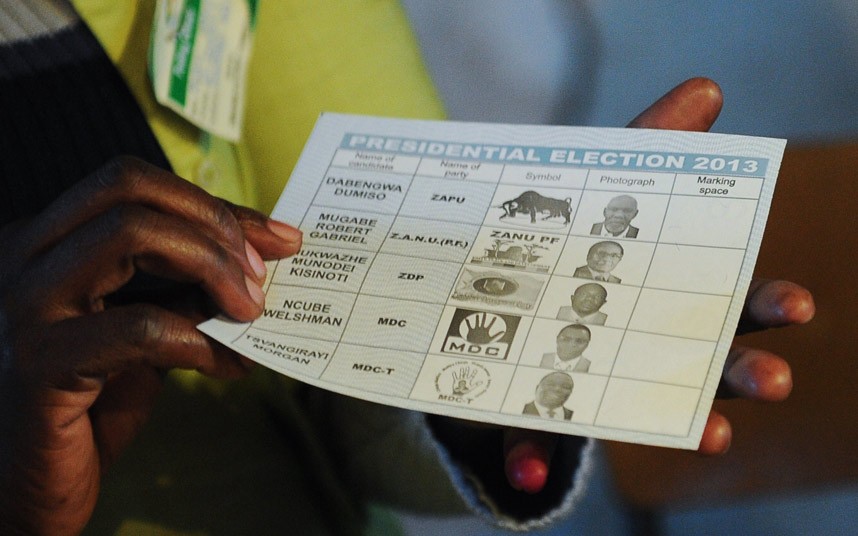
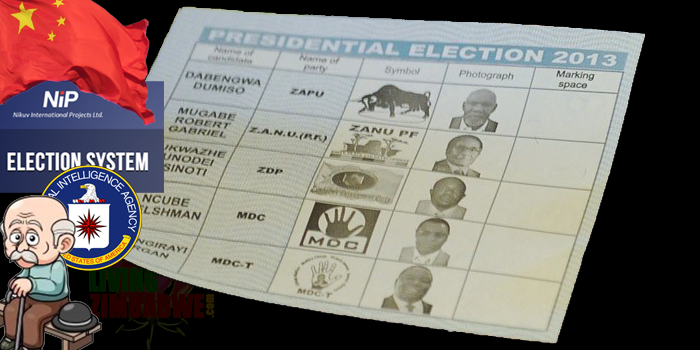
    election ws stolen in th making of th BALLOT PAPER, two types of ballot papers
    were made, one frm China wc ws houzd at Morris Depot and th other one in Zim,
    ts one frm China hd Maths in it, if u look at closely facing th sun, it had a big X water mark, dat X ws linking RGM’ s head to MRT’s box and vice versa, dat water
    mark ws an electric device, if u make yo X in MRT’s box it links wth RGM’s head
    and appears in front of him after 4hours,that device deactivates afta 24hrs if th
    paper is used, hw u cn verify ts, there are Xs already in front of RGM s head jus
    waiting activation, they r strait like ey were drawn using a ruler. 4million of these
    papers were done that Maths while th 2million ws not tempered wth, so th distribution of these ballot papers ws strategic, Byo ws not tempered with as it ws
    going to b evn more suspicious, Baba Jukwa ws meant to divert yo attention to
    concentrate on none important issues. On Tuesday night RGM came out on TV
    speaking confidently dat thoz dat luz must surrender to thoz dat hv won, he also
    said if Hre votes for MRT he will hv a heart attack as he knew dat all things hv
    been done to make him win in Hre, 13million dollars was spent on ts project, 5guys frm Nikuv were behind ts project and were escorted to th airport on Wed b4
    th elections were over as they hd accomplished their mission From inside Nikuv
    source
    ZANU was fooled by Nikuv ane after rigging the elections Nikuv took all the evidence when they left Zim and handed it to their subsidiary company in SA to give to Mdc.Mugabe is in quandary,walked out of meeting angry with how he was tricked.Nikuv was working wth CIA to expose Mugabe ‘s rigging ways.Now he is astonished.The World knows,SADC knows hence 14 members have refused to indose t elections as fair.Next week is going t be interesting.ZANU’s plann was to rigg a certain section but they over did it to the extend tat they are shocked as well.Pray pray pray pray,the truth will be out soon.God is on Zimbabwe side.Mugabe is a lame President even if he is sworn in.

  • Technical Rigging By ZANU PF In The 2013 Zimbabwe Harmonised Elections?

    Technical Rigging By ZANU PF In The 2013 Zimbabwe Harmonised Elections?

    The official results of the 2013 Presidential Elections have been announced and President Mugabe’s Zanu-PF claimed a landslide victory.

    To date, the election process has been peaceful which makes Morgan Tsvangirai’s loss even more difficult. Previous elections were marked with violence and in the face of defeat, Tsvangirai used these acts as a major trump card to cry foul. Suggestions of people being intimidated into voting for Zanu-PF where their vote would have otherwise gone to MDC would be aired in an attempt to nullify the elections.

    In 2013, citing violence and intimidation is something that cannot be used and this now leaves the opposition in a position where they have to find another avenue through which to proclaim the elections as a “sham”.

    At a press conference over the weekend, Tsvangirai stated the following:

    [quote]”The fraudulent and stolen election has plunged Zimbabwe into a constitutional, political and economic crisis,”[/quote]
    His concerns included stating the need for fresh elections:
    [quote]”…… once all remedies have been be exhausted, the people of Zimbabwe should be allowed fresh opportunity to freely, fairly elect a government of their choice. In this regard a credible free and fair, legitimate election must be held as soon as possible.”[/quote]

    (continued below)

    In order for their request for fresh elections to be actioned, MDC would have to prove that there were irregularities in the election process. That said, the likely option (since there was no violence) would be to go via the route of technical rigging by Zanu-PF.

    Well before the elections took place, there were reports of the ruling party enlisting Israelis to rig the elections and ensure a win for them. The company in question has a presence in not only Zimbabwe but also in other parts of Africa and provides a number of services to governments. One of their services is the provision of an election system that handles and manages voter’s registration and the election process.

    In the last day or so, a report surfaced where a spokesperson from a private South African based intelligence organisation alleged to have uncovered election fraud stated the following:

    “From our findings so far we are 99.9% convinced that the election was rigged via a ballot paper. A special watermarked ballot was used to give president Mugabe a resounding victory. The ballot had a water X against President Mugabe’s name such that if any ink is placed on the paper the substance on the paper will react and remove the ink and activate the watermarked X into print. If you look at some ballots you would see that Xs are very straight and Identical. These were mixed with ordinary ballot papers in a proportion that would favour Zanu-PF. Therefore I call for the opposition parties and the international community to stage an urgent probe into this scam”

    Who is to know which route the MDC will use to fight the election result? They may chose to go the Israeli firm route, the “water X” ballot paper route, both of the aforementioned or via a completely different channel. Which ever way they chose to go, they will need evidence if they are going to convince the powers that be that of the need for fresh elections.

    Finding that evidence, convincing the AU, SADC and whoever else needs to be convinced and getting to the point of fresh elections represents quite a challenge for MDC! Question is, do they have what it takes to make it happen?

    Whatever the case may be, the votes are in and as it stands, President Mugabe is victorious and is set to sit his seventh term in office.

  • The Zimbabwe 2013 Presidential Election Results

    The Zimbabwe 2013 Presidential Election Results

    President Robert Gabriel Mugabe has been officially declared the winner of the 2013 harmonised elections and effectively giving him a seventh term in office.

    The official Zimbabwe Electoral Commission (ZEC) results are as follows:

    Election Results:

    Robert Mugabe: 2 110 434 votes – 61,09%
    Morgan Tsvangirai: 1 172 349 votes – 33,94%
    Welshman Ncube: 92 637 votes – 2,68%
    Dumiso Dabengwa: 25 416 votes – 0,74%
    Kisinoti Mukwazhi: 9 931 votes – 0,29%

    National Assembly Results:

    Eighth Parliament 210 parliament seats:

    ZANU-PF – 158 seats
    MDC-T – 51 seats
    MDC – zero seats
    Jonathan Samkange (Independent candidate) – 1 seat

  • Shock & Dismay At Zimbabwe Elections By A First Time Voter

    Shock & Dismay At Zimbabwe Elections By A First Time Voter

    I am a first time voter, 25 and a recent graduate. I studied Chemical Engineering and am a proud holder of a degree. But in this country i am just one of many, educated but cannot find a job in this broken system. My call to action was a Sunday Mail headline which claimed only 17% is unemployed. I mean that had me angry and I knew then I had to vote for change. The feeling was shared by almost everyone I knew. Enough was enough Zanu PF needed a break, the 89 year old leader needed to retire.

    Post result shock and disappointment is what I have at the moment. We all know who really won the election, we all know who rescued the economy. We are not dumb we know our country was headed in the right direction. We where robbed. Zanu PF are thieves who overdid it. And, they took a 2/3 majority so as to implement more oppressive statutes as they and ONLY they plunder the resources of Zimbabwe. There are no celebrations, only mourning. We are mourning the death of any hope we had of a better Zimbabwe.

    This has been a submission an anonymous contributor
    You too can become a Citizen Journalist by submitting your story here: Citizen Journalism by Living Zimbabwe
    The views expressed in the article are those of the author and not necessarily Living Zimbabwe.

  • The ZANU-PF & MDC-T 2013 Election Manifestos

    The ZANU-PF & MDC-T 2013 Election Manifestos

    Over the last few months, some political milestones have been reached in Zimbabwe with one of the more significant ones being the signing of a new Constitution. Along with the Constitution came the need for general elections that in recent weeks were set for 31 July 2013 by President Mugabe. MDC-T leader Prime Minister Morgan Tsvangirai has made unsuccessful attempts to have the elections postponed until a later date and appeals to the Constitutional Court (ConCourt) have ruled in Mugabe’s favour and concluded that the elections are to be held on the 31st.

    With that ruling, Zanu-PF and MDC-T have gone into full election mode with both parties choosing last weekend to launch their election manifestos with Zanu-PF launching theirs on the 5th of July and MDC-T on the 7th of July.

    The election manifestos serve to outline each party’s vision and what they have planned for Zimbabwe’s future. As you can imagine, the intentions stated will contain a number of measures that the general population would like to see being implemented. The thing about manifestos is that they are NOT legally binding. So, a party can state a raft of intentions that win them crucial votes, intentions of which when the winning party get’s into office does not deliver on.

    Every vote counts and will have an impact Zimbabwe’s future. Make sure that when you cast your vote, it is based on sound a decision that takes what you consider as important factors into consideration.

    To view the manifestos, visit the links below:

  • Anonymous Africa – Our End Game For Zimbabwe & Africa (@zim4thewin)

    Anonymous Africa – Our End Game For Zimbabwe & Africa (@zim4thewin)

    Greetings and Salutations fellow Africans and Earthlings.

    We are Anonymous Africa and we were asked to write a short blog explaining our motivations. By now you may have noticed some of our ops hitting Southern Africa. We hope you like our work. We would like to thank you for the overwhelming support you are giving us.

    So far our targets have included:

    • IOL – A partly South African government owned media publication that pushed pro-Mugabe propaganda – www.iol.co.za
    • ZANU-PF – The website for the completely corrupt ruling party in Zimbabwe – www.zanupf.org.zw
    • Zimbabwean Herald – The ZANU-PF owned puppet media publication – www.herald.co.zw
    • ZIMRA – The Zimbabwe Revenue Service, the Zim tax collectors – www.zimra.co.zw
    • ZIM MOD – The Zimbabwe Ministry of Defence – www.mod.gov.zw
    • ANC – The corrupt ruling political party in South Africa that supports Mugabe – www.anc.org.za

    Why are we upset?

    TWe believe most of Africa’s modern day problems stem from corrupt and evil leaders that have sold the people out (mostly to corrupt private commercial interests). Much of Africa has entered a cycle of corruption and we believe we are the generation to start breaking up that cycle. Not only can the youth of Africa change Africa. They have to.

    Who are we?

    The Hacker Manifesto best describes who we are:

    “This is our world now… the world of the electron and the switch, the beauty of the baud. We make use of a service already existing without paying for what could be dirt-cheap if it wasn’t run by profiteering gluttons, and you call us criminals. We explore… and you call us criminals. We seek after knowledge… and you call us criminals. We exist without skin color, without nationality, without religious bias… and you call us criminals. You build atomic bombs, you wage wars, you murder, cheat, and lie to us and try to make us believe it’s for our own good, yet we’re the criminals.”

    We are a tight collective of hackers and coders. Some of our members have been part of anonymous since their origins in the Scientology protests. We have been involved in previous ops from around the world including and not limited to, South America, South East Asia and Europe.

    What are we doing?

    Following what happening in the Middle East we are hoping to help start the launch of the African spring. We believe that the Internet is the last place that free speech truly exists. We hope to use whatever skills and abilities we have to bring as much attention to the crimes and corruptions of our African leaders.

    What do we have planned for the future?

    We have many non-violent forms of electronic protest planned. We also hope in the near future to release an African specific version of wikileaks where Africans can expose corruption without fear.

    This has been a submission by Anonymous Africa.
    You can connect with Anonymous Africa via the following: .
    You too can become a Citizen Journalist by submitting your story here: Citizen Journalism by Living Zimbabwe
    The views expressed in the article are those of the author and not necessarily Living Zimbabwe.

  • My Late Father Would Vote Zanu (PF) Today

    My Late Father Would Vote Zanu (PF) Today

    “Kays” as they called him was son to a Gushungo who migrated from Serima and my gogo a Muturikwa whose parents possibly migrated from Mrehwa. He was born in 1945, across the river from Prime Minister’s home. Surprisingly that is as far as their similarities go because had he been alive, he would not vote for MDC-T today. This man who forever will be revered as a hero in my memory was disabled. It was not an inborn disability, but something happened to his right lower leg when he was young. Up to the day he died, he had not been able to discuss with me nor my siblings regards to what really happened. All I know is that it was a fire accident.

    Kays believed in the revolutionary movement’s focus on policies that improve lives of the common man. He would always urge Zanu (PF) to go back to roots to emphasise on such policies to lure lost votes. “It will be a walkover on these directionless boys” he argued with me on his deathbed at Parerinyatwa. He belonged to a generation who had wanted to participate in liberation struggle but failed because of various reasons. They mobilised students, recruits, provided clothes and other support. Such a class faced wrath of Smith regime accused of being lifeblood to the comrades and withholding information. These professionals played their part but never clamoured for recognition to date.

    Education

    After completing Standard 6 (Form 2) he trained as a teacher at Wadilove Mission (Marondera) in 1972 where he met my mother who was from Bumburwi. He stayed in the same profession till his end in 2009. Through correspondence he attained O levels , Grad CE and later BA Hons. As a primary school teacher working in rural areas, he knew that the only way societies can improve is through education. He worked hard through disability to send his children to get descent education. Free education policy of the 1990s produced a Zimbabwe which is rated to have above average literacy world over. Kays although an executive, believed that militants in ZIMTA led to the first teachers’ strike in 1990 and had no care for teachers or students welfare at all. Post 1990 period saw introduction of school fees and cases started appearing of children dropping out or being unable to write exams because of lack of funds. He always felt that IMF demands for government to slash social services bill (ESAP) was a way of West getting even with Mugabe.

    Health

    The fire accident deformed his right leg such that his toes turned towards the heel to form a round like foot developing into a very thin sheen up the leg. So to speak he stepped on the top of his foot. That leg became shorter. At times he used clutches until Jairos Jiri organised a special shoe for him. From Bata shops, he would buy a pair of size 11 but only use the left one. That special shoe could only be repaired but he could not buy a new one. Courtesy of Mugabe’s health policy, more disadvantaged people like him during years after independence could always be treated for free regardless of medical needs. UK has maintained a similar socialist health policy to date. The number of health clinics opened country wide, more medical professionals training, building of toilets in rural areas, access to clean water all pointed to a caring leader in Mugabe.

    The Land Question

    Just like many, he was frustrated that the Lancaster House Agreement put land redistribution on hold for 10 years. Worse still after that period, Mugabe was frustrated into being unable to fulfil pre-war time period promises to resettle masses from reserves as apportioned by Land Apportionment Act 1930. When farm invasions started in 2000, all Kays said was “Commercial Farmers’ Union have shot themselves in the foot.” CFU never thought farms could be taken away from them. White farmers believed in the Courts which continued to make decisions against land redistribution. To date land redistribution has continued and although chaotic, people’s lives have been changed.

    Legacy

    Zanu (PF) legacy is open to interpretation but Kays would always look beyond negatives. He believed that “honourable” is the best way regard Mugabe. A Politburo Member recently summarized Zanu (PF) legacy to me as “Land, Empowerment, Development creation, Sustained support for farmers and reform to mining sector” .Even after formation of GNU, the revolutionary party pulled indigenization policy which in theory seeks to put control of economy in the hands of locals. The mining sector has also been opened up to allow local ownership. I do not see MDC-T pulling out any of the landmark policies to convince voters. This is the reason why penetration to the rural areas has been sketchy for Harvest House arrogant overrated under-achievers.

    Vote Rigging

    Kays was appointed acting headmaster closer to his home in 1985 but by then he was already involved in running elections. He would later work as presiding officer in charge of polling centers Talk of Zanu (PF) vote rigging was doing rounds by 1990 elections. Edgar Tekere gave Mugabe a run for his cash and many expected a surprise. Results later indicated that “Two-Boy” Tekere actually lost dismally. I put it to him then about vote rigging and to the day he died, he maintained the answer he gave me 19 years before. He explained the system to me, how each candidate’s representatives verify boxes before they are sealed and sign to agree authenticity. The same happens when opening the boxes and counting the ballots. He believed that in the system run by Mudede, there is no way any rigging can happen. He reminded me that rigging could affect Mugabe as well and as such the system had to be water tight. I believed him and still can argue that it is possible Zanu (PF) has never rigged elections to this day.

    Enemy No. 1

    Landmark policies as he viewed them are a good enough weapon to win any elections. Zanu (PF) is presenting voters to MDCs on a platter, credit to enemy No1 -violence. There is no need for violence because in a “free and fair” conducted poll, Kays in his grave still argues that “Zvimba” can claim the gong. Use of force blinds folds people from looking at facts on the ground. By forcing people not to vote for other parties or for Zanu (PF), proponents of violence will be confessing to a weakness in policy. This frustrated Kays so much because he believed that Mugabe has over the years built a case to uplift generations in Zimbabwe. During 2008 elections people voted for anything other than Zanu (PF).They don’t even know their MPs’ names to date. This hatred is an offspring of violence. Kays was not sure if violence is official policy at Zanu (PF) but believed that strategists may as well accept that as much as countering MDCs, they have to plot against violence. It is a corroding the party from within and only Mugabe can stamp his foot on this. No matter how much people bleed, get houses burnt or bury the dead, days are gone that force will bring in votes.

    Die Hard

    By mid-2009 aged 64 he had not been admitted to hospital in 50 years but complained of shortness of breath, later turned out to be Pulmonary Embolism. His veins and arteries were developing blood clots caused by a violent form of Pancreatic Cancer. The deformed leg soon developed Gangrene. Six weeks later Vascular Surgeons in Harare recommended amputation of the affected leg but ended up cutting off both legs and the right arm. Gangrene had spread over all those parts. He never woke up from the operating table. 10 days before his death I implied to him that shortages in hospital supplies required for his treatment were as a result of his irresponsible vote for Zanu (PF). Even though knowing that with Stage 4 Cancer, his chances of survival were below 20%, at a moment when walls of his heart were weakening due to excessive use of Morphine, he reassured me that Mugabe had not yet finished the job he started. He refused to condemn the beloved party he regarded as saviour of the masses. He argued that GNU would allow Mugabe to focus on people again.

    True to that word, I think Mugabe is back. Just open your eyes to what Kays called “Landmark Policies” and you can witness people’s lives changing.

    R.I.P my idol because your institution par excellence may still be in the game.

    This has been a submission by kelvin Mupungu.
    You can connect with kelvin Mupungu via the following:  http://www.twitter.com/mtkelvin
    You too can become a Citizen Journalist by submitting your story here: Citizen Journalism by Living Zimbabwe
    The views expressed in the article are those of the author and not necessarily Living Zimbabwe.

  • 10 Years After Henry Olonga & Andy Flower’s Black Armband Protest, Zimbabwe Is Still Mourning The Death of Democracy

    10 Years After Henry Olonga & Andy Flower’s Black Armband Protest, Zimbabwe Is Still Mourning The Death of Democracy

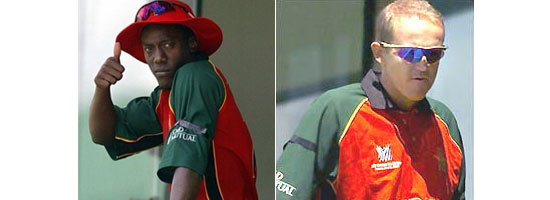
    The world on Thursday commemorated former Zimbabwe cricket captain Andrew Flower and the first black cricketer to play for Zimbabwe, Henry Olonga’s Black armband protest against the death of democracy in Zimbabwe. On the 10th of February 2003, when Zimbabwe, co-hosting the cricket world cup with South Africa and Kenya were preparing for their match with Namibia on an overcast day at Harare Sports Club, two of their influential players, wicket-keeper Andy Flower and fast bowler Olonga took to the field wearing black armbands in a show of no confidence against Mugabe’s ZANU-PF regime.

    At the time, Zimbabwe was going through a bad patch both economically and politically, a patch that would last for the entire first decade of the new millennium. Mugabe’s ZANU-PF, led by weapon-totting war veterans were terrorizing white farmers, or the few that were left, invading all the white owned farms across the country. The chaotic and highly racist land-redistribution program, meant to address the injustices of the past when the British settlers took over the land belonging to the indigenous people, was highly condemned and deemed unconstitutional by the courts. The land reform triggered an economic melt-down for the once prosperous bread basket of the region. The program in itself was a gross violation of human rights and to this day, the perpetrators of that dark period are still to be brought to book.

    White farmers were given ultimatums to leave their properties within days. Some did not even get the chance to pack before the ZANU-PF youths invaded their land, burning some alive, some shot in front of their children and wives whilst some who resisted were arrested and tortured in the police cells. Property rights of these farmers were violated and these invasions were only targeted against white farmers, making the whole program wholly racist. White farmers were accused of supporting the new opposition party, the Movement for Democratic Change (MDC) and to drum up support for the black majority who owned barely a quarter of the total agricultural land in their country, Robert Mugabe and his ZANU-PF went on a massive farm invasion spree that brought the country to its knees.

    Zimbabwe, a once stable and industrial power-house second only to South Africa in the region started falling dismally. The West condemned events that were happening in Zimbabwe. In the elections that were held in 2001 and 2002 for parliament and the presidential election respectively, there were massive irregularities and vote rigging that cost Morgan Tsvangirai’s MDC victory in the elections. Political activists were arrested and killed whilst the rule of law was ignored making Zimbabwe’s elections a farce and thus triggering the death of democracy, or the lack thereof.

    Speaking on BBC5 radio on Thursday, Andy Flower, the current director of the England cricket team, revealed what triggered the events of that fateful day. Back at the time, it was almost a taboo for one to go against the Robert Mugabe regime as you would most likely disappear or rot in jail. After seeing the death of the agricultural sector with former white-owned farms being reduced to nothing but a typical African savanna, Flower was prompted by a former friend who had lost his farm to take a stand. With Zimbabwe hosting the cricket world cup, all eyes were on Zimbabwe and that was more than a platform for him and Olonga to show and reveal to the world the death of democracy in Zimbabwe.

    Flower spoke to Henry Olonga, who shared the new ball then with Heath Streak, as he wanted the protest to be led by two people of different races, one white and one black. That brought the balance to the protest, as it brought two men, one black and white, who shared the same views and who were also suffering from the Mugabe regime. One man who was in the thick of things with the plans for the protest was Senator David Coltart, the current minister of Education, Sports and Culture, who was then a human rights lawyer. The plans for the black armband protest were only known to the three and those in the background with the whole of the Zimbabwe cricket team unaware until the day of the match against Namibia.

    It was only until moments before the match when the two issued out their statement to the media. The media statement contained, ”We believe that if we remain silent that will be taken as a sign that either we do not care or we condone what is happening in Zimbabwe. We believe that it is important to stand up for what is right. In doing so we are making a silent plea to those responsible to stop the abuse of human rights in Zimbabwe.”

    Recalling on those events ten years ago, both Flower and Olonga have no regrets of their actions. What they did ten years ago was a brave and noble thing, facing and exposing the monster when everyone was scared and just looking at events in Zimbabwe from a spectator’s view. Olonga and Flower stood up for the voiceless, the oppressed and for all the people of Zimbabwe. They put everything before them considering that such an act in itself was next to committing high treason. Three weeks after the cricket world cup, Henry Olonga received death threats and relocated to England, where Andy Flower also fled to and continued with his cricketing career.

    Henry_Olonga_Andy_Flower_Armbands_2003

    In Zimbabwe then, as it is now, democracy is still six feet under. Elections are still a farce and human rights violations are still an everyday experience. State-sponsored violence and target based violence are still the biggest cancer in Zimbabwe and something that will continue in this country unless we change and head towards democracy. So many people have died, lost their possessions and fled Zimbabwe because of what they believed in. We have come through a long way since the two led the way on that cricket ground those many years ago.

    Whilst some might say that Olonga was used by the whites to get back at the ZANU-PF regime for their lost possessions, the truth is that Olonga represented all the black people in Zimbabwe that were suffering from the chaotic regime of Robert Mugabe. It is not only the whites that lost out when their farms were taken but the whole country. Zimbabwe is an agro based economy that depended on agriculture to support its economy and with the death of that sector of the economy, everyone suffered. The thousands of farm workers lost their jobs, the country lost revenues from the agricultural exports and in return the country’s economy fell.

    Politically such a move isolated Zimbabwe. Western nations put Zimbabwe on sanctions and everyone was affected as Zimbabwe was reduced from the bread basket of the region to the begging bowl of the world. As we remember the Black Armband revolt of ten years ago, we acknowledge the efforts of these two who put themselves on the line for the rights of the millions of Zimbabweans. That act was more than a stroll onto the pitch of the Harare Sports Club, it was great courage and bravery considering that the man they were revolting against lived and still do, next door at the State house, a stone’s throw from Zimbabwe’s home of cricket. Was that revolt enough? Zimbabweans only hope that the elections penciled for this year will complete the dream that Henry Olonga, Andy Flower, MDC activists and other democratic activists started.

    David Hwangwa is a Human Rights Activist and Polical Commentator

    This has been a submission by David Hwangwa .
    You can connect with David Hwangwa via the following: http://davidhwangwa.blogspot.com/.
    You too can become a Citizen Journalist by submitting your story here: Citizen Journalism by Living Zimbabwe
    The views expressed in the article are those of the author and not necessarily Living Zimbabwe.

  • What Zimbabwe’s Draft Constitution Has To Say About Citizenship

    What Zimbabwe’s Draft Constitution Has To Say About Citizenship

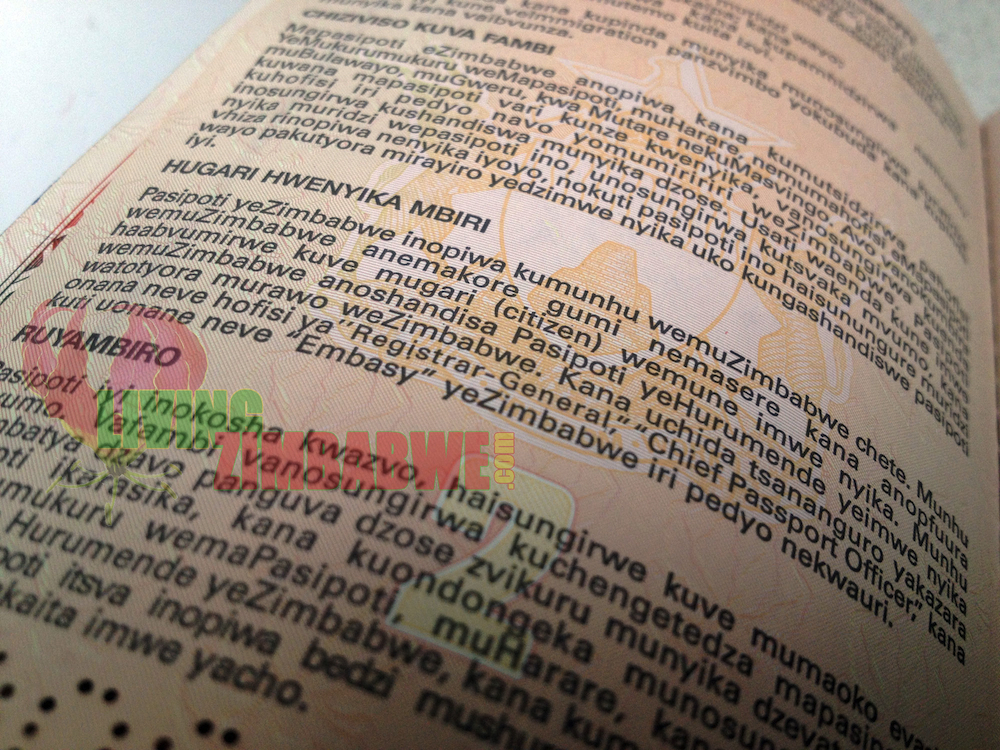
    There have been and probably are still a few sticking points in Zimbabwe’s Draft Constitution and one or them happens to be the issue of Citizenship. This topic may also be of interest to some in the Diaspora who in the recent past have taken up citizenship in their host nations or to be correct, “new homes”. It could be of interest for various reasons but the main one would be how it will affect their possible return home.

    Below is what the Draft Constitution has to say about Citizenship:

    Citizenship

    35  Zimbabwean citizenship

    (1) Persons are Zimbabwean citizens by birth, descent or registration.

    (2) All Zimbabwean citizens are equally entitled to the rights, privileges and benefits of citizenship and are equally subject to the duties and obligations of citizenship.

    (3) All Zimbabwean citizens are entitled to the following rights and benefits, in addition to any others granted to them by law—

    (a)  to the protection of the State wherever they may be;

    (b)  to passports and other travel documents;  and

    (c)  to birth certificates and other identity documents issued by the State.

    (4) Zimbabwean citizens have the following duties, in addition to any others imposed upon them by law—

    (a)  to be loyal to Zimbabwe;

    (b)  to observe this Constitution and to respect its ideals and institutions;

    (c)  to respect the national flag and the national anthem;  and

    (d)  to the best of their ability, to defend Zimbabwe and its sovereignty.

    36  Citizenship by birth

    (1) Persons are Zimbabwean citizens by birth if they were born in Zimbabwe and, when they were born—

    (a)  either their mother or their father was a Zimbabwean citizen;  or

    (b)  any of their grandparents was a Zimbabwean citizen by birth or descent.

    (2) Persons born outside Zimbabwe are Zimbabwean citizens by birth if, when they were born, either of their parents was a Zimbabwean citizen and—

    (a)  ordinarily resident in Zimbabwe;  or

    (b)  working outside Zimbabwe for the State or an international organisation.

    (3) A child found in Zimbabwe who is, or appears to be, less than fifteen years of age, and whose nationality and parents are not known, is presumed to be a Zimbabwean citizen by birth.

    37  Citizenship by descent

    (1) Persons born outside Zimbabwe are Zimbabwean citizens by descent if, when they were born—

    (a)  either of their parents or any of their grandparents was a Zimbabwean citizen by birth or descent;  or

    (b)  either of their parents was a Zimbabwean citizen by registration;

    and the birth is registered in Zimbabwe in accordance with the law relating to the registration of births.

    (2) Subsection (1) does not affect a person’s right to citizenship by birth under section 36.

    38  Citizenship by registration

    (1) Any person who has been married to a Zimbabwean citizen for at least five years, whether before or after the effective date, and who satisfies the conditions prescribed by an Act of Parliament, is entitled, on application, to be registered as a Zimbabwean citizen.

    (2) Any person who has been continuously and lawfully resident in Zimbabwe for at least ten years, whether before or after the effective date, and who satisfies the conditions prescribed by an Act of Parliament, is entitled, on application, to be registered as a Zimbabwean citizen.

    (3) A child who is not a Zimbabwean citizen, but is adopted by a Zimbabwean citizen, whether before or after the effective date, is entitled, on application, to be registered as a Zimbabwean citizen.

    39  Revocation of citizenship

    (1) Zimbabwean citizenship by registration may be revoked if—

    (a)  the person concerned acquired the citizenship by fraud, false representation or concealment of a material fact;  or

    (b)  during a war in which Zimbabwe was engaged, the person concerned unlawfully traded or communicated with an enemy or was engaged in or associated with any business that was knowingly carried on so as to assist an enemy in that war.

    (2) Zimbabwean citizenship by birth acquired under section 36 may be revoked if––

    (a)  the citizenship was acquired by fraud, false representation or concealment of a material fact by any person;  or

    (b)  the person’s nationality or parentage becomes known, and reveals that the person was a citizen of another country.

    (3) Zimbabwean citizenship must not be revoked under this section if the person would be rendered stateless.

    40  Retention of citizenship despite marriage or dissolution of marriage

    Zimbabwean citizenship is not lost through marriage or the dissolution of marriage.

    41  Citizenship and Immigration Board

    An Act of Parliament must provide for the establishment of a Citizenship and Immigration Board consisting of a chairperson and at least two other members, appointed by the President, to be responsible for—

    (a)  granting and revoking citizenship by registration;

    (b)  permitting persons, other than citizens, to reside and work in Zimbabwe, and fixing the terms and conditions under which they may so reside and work;  and

    (c)  exercising any other functions that may be conferred or imposed on the Board by or under an Act of Parliament.

    42  Powers of Parliament in regard to citizenship

    An Act of Parliament may make provision, consistent with this Chapter, for—

    (a)  procedures by which Zimbabwean citizenship by registration may be acquired;

    (b)  the voluntary renunciation of Zimbabwean citizenship;

    (c)  procedures for the revocation of Zimbabwean citizenship by registration;

    (d)  the restoration of Zimbabwean citizenship;

    (e)  the prohibition of dual citizenship in respect of citizens by descent or registration;  and

    (f)  generally giving effect to this Chapter.

    43  Continuation and restoration of previous citizenship

    (1) Every person who, immediately before the effective date, was a Zimbabwean citizen continues to be a Zimbabwean citizen after that date.

    (2) Every person who was born in Zimbabwe before the effective date is a Zimbabwean citizen by birth if—

    (a)  one or both of his or her parents was a citizen of a country which became a member of the Southern African Development Community established by the treaty signed at Windhoek in the Republic of Namibia on the 17th August, 1992;  and

    (b)  he or she was ordinarily resident in Zimbabwe on the effective date.
  • Why Are Diasporans Not Returning Home?

    Why Are Diasporans Not Returning Home?

    Just over a week ago, Power FM ran a segment where they were discussing Zimbabweans in the Diaspora and trying to understand the reasons for them not wanting to return home. The hosts came up with some reasons as to why they thought Diasporans were not returning home and they went on to invite listeners to air their opinions on the topic. Some of the listeners were themselves recent returnees and had valid points to put forward but in their case, the opposite of “why not return home” was true for them.

    The main themes from the discussion for people not wanting to return home were as follows (in no particular order of importance):

    • Reverse Culture Shock – some people have been away from Zimbabwe for such a long time and have become used to living wherever they are living. They feel as if they would not be able to adjust to life at home if they were to return.
    • Family – some have no family to return to and because of that don’t feel like they have any links with Zimbabwe and nothing to go back to.
    • Political – the political instability is a deterrent and there are many who may face or feel that they may face political persecution.
    • Difference of opinion within families – husbands and wives may have differing views were one partner would like nothing more than to return home whilst the other is of the opposite view. Without any sort of resolution, this leaves a number of families “stuck” with out decision and still in the Diaspora.
    • Employment – a high unemployment rate and a perceived lack of opportunity leaves Diasporans with the notion that there is no point in going back home if they are not going to be able to find a way of making a living.
    • Dual Citizenship – many Zimbabweans have been living in their new homes away from home for so long that they have become Citizens of that particular nation. With the current state of the Dual Citizenship debate, they feel that it is better to stay away from home until there is some sort of positive resolve on the debate.

    After listening to what listeners had to say about the topic of returning home, the conversation shifted to what could have been seen as an attack on people who felt that it is not yet time for them to move back. For example, something along the following lines was mentioned, “they were born in and grew up in Zimbabwe and one day got on a plane and moved to the UK, US, Australia or wherever they ended up. They were not used to life over there and had to adjust. Why cant they get to used to living in Zimbabwe again, it is after all their home?”

    Yes, this could be the basis of an argument but there (for the example above) is the issue of reverse culture shock which is very real and something that some people will have to deal with. For most of the other reasons listed above, they present real issues that the people facing them have to contend with and could bring about a certain degree of stress.

    One question is, was that sort of a rebuttal called for? There is bound to be a world of individuals who would have similar things to say about those who do not want to return home.

    The thing is, Zimbabweans who are not ready to return home at the moment and some who have sworn to never return have made that decision. Some of those reasons may be legitimate, some of them may seem ridiculous but, as already mentioned above, this is a decision that someone has made for their life or their families lives and it should be respected.

    Yes, we can offer our opinions on their decisions but these opinions should be put forward in a non-critical tone because no-one has the right to judge people and/or their decisions. If anything, opinions should be put forward in a way that opens the door to further discussion on ways of breaking down the barriers to returning home and making the idea a possible reality.

    What are your thoughts on the Zimbabwean Diaspora who are not yet ready to return home and is there anything that can be done to facilitate their return home?

    Leave your comments below!