Category: Politics

  • The Devil’s Advocate: What Price for Morality?

    The Devil’s Advocate: What Price for Morality?

    This piece was submitted on 15 December 2019 and was not published at the time due to a system error. Read it, leave a comment and share it with your tribe. The Living Zimbabwe Team.

    WR 29: THE DEVILS ADVOCATE: WHAT PRICE FOR MORALITY?

    Warmest greetings to you all despite the turbulent weather. In a week where we find ourselves in the midst of a fractious election, a particular topic has captured the imagination of a number of us, the ethics of a criminal defense attorney.

    Senior MDC member and [crucially] Masvingo Mayor Collen Maboke is representing Zanu PF youth accused of violently locking a Bikita engineer out of his office recently. The same Maboke who was ordered by President Chamisa to step down as the mayor of Masvingo on allegations that he had defied the party position in which he stood against MDC Alliance preferred candidate Godfrey Kurauone during the mayoral elections.

    Maboke was also accused of making a pact with Zanu PF councillors in the elections that saw the ruling party’s Wellington Mahwende coming in as a deputy mayor [The two have since buried the hatchet and Chamisa has since given Maboke the green light to take up his office at the Civic Centre].
    ZANU-PF has chided MDC politicians who are lawyers for taking up cases of ruling party officials accused of corruption.

    Zanu-PF political commissar Victor Matemadanda expressed concern over the development as it comes at a time when the Zimbabwe Anti-Corruption Commission (Zacc) recently arrested Tourism Minister Prisca Mupfumira over the criminal abuse office.

    “At the moment, every person who is accused of being corrupt in Zanu-PF is being represented by an MDC lawyer, not your ordinary lawyers, some who are MPs and one wonders what moral ground they have when they talk about corruption.’’

    “Are they really fighting corruption, or they just fight for money,” Matemadanda said.

    Zimbabweans have also expressed their concern over the representation of corrupt Zanu-PF officials by the opposition.

    Several members of the MDC, who are lawyers, are representing under-fire Zanu-PF officials – from the party’s vice national chairperson Job Sikhala, who has been retained as Walter Mzembi’s lead counsel, vice president Welshman Ncube who is representing former VP Phelekezela Mphoko. Mphoko is now suing Ncube for allegedly “neglecting” to transfer more than US$1.4m (R20.7m), part of an amount awarded to Mphoko and his son Siqokoqela after a protracted ownership battle for retailer Choppies Enterprises Ltd., and Tendai Biti who at one point represented former Reserve Bank governor Gideon Gono.

    Now, there is controversy about whether lawyers aligned to the MDC – which is a proponent of punishment for alleged Zanu-PF thieves – can mount a defence as to why the same alleged thieves should not go to jail.

    CASE FOR THE DEFENCE

    Defense lawyers are ethically bound to zealously represent all clients, those whom they think will be justly found guilty as well as those whom they think are factually innocent. A vigorous defence is necessary to protect the innocent and to ensure that judges and citizens—and not the police—have the ultimate power to decide who is guilty of a crime.

    A defendant may have done the act in question, but the client may have a valid defence that would exonerate him. For these reasons, among others, defence lawyers often do not ask their clients if they committed the crime. Instead, the lawyer uses the facts to put on the best defence possible and leaves the question of guilt to the judge or jury.

    The things you have to realize are (1) A person is innocent until proven guilty (usually beyond a reasonable doubt), (2) the government has unlimited resources at its disposal to prove a case, (3) prosecutors, judges, juries are all human beings, and not infallible and (4) there is a moral obligation to uphold the rights of all, especially the unpopular.

    The job of a lawyer is to ensure the government, from the arresting officer to the prosecutor, follow the rules that govern the criminal justice system. These rules are to protect the citizens from overreaching by the police and prosecutors. It’s a check against government power.

    “Whether the client is in fact guilty or not” is a common theme in anti-justice system arguments. First, your client is not guilty until proven otherwise. Second, just because someone thinks you’re guilty does not make them guilty, nor does it make them less deserving of their civil rights.

    You might think that shady-looking fellow “looks guilty” and fortunately, that’s not a reason to incarcerate someone. People can be mistaken, they can be wrong, they can have it “in” for your client, they can make errors along the way or they can be so blinded by vengeance, that they will want to punish a likely culprit, even if it’s not the correct person. As the accused’s lawyer, you have a moral obligation, both to your client and to the justice system, to ensure that none of that happens.

    ‘’It is the duty of a lawyer to accept any briefs in the Court in which he professes to practice provided the proper professional fee is offered unless there are special circumstances which justify his refusal.”
    ” A legal practitioner is obliged to accept the brief from the client….(he) is not only bound to accept the brief, he should put his best in discharging his responsibilities towards the cause. The rationale behind this rule is that legal practitioners should not pick and choose briefs they should handle in court. As officers of the court, they are not at liberty to select the cases to appear in since the primary duty of a legal practitioner appearing in a case in court is to assist the court in arriving at a just decision.

    The fact that a case is unpopular or that a client has a very bad criminal record or public record or that the legal practitioner believes that the accused person is guilty, may not justify his refusal to accept the client’s case. (This) …cab rank rule is mostly applied in criminal cases to prevent accused persons from being denied legal representation by lawyers owing to their bad record… “

    Below is an argument presented by my lecturer when l asked him this thorny question:

    ‘’Say you’re an A&E doctor. Into the A&E one night is wheeled a gang member who has just been shot in a gunfight and is bleeding out. The gang member himself is a bad man, and you hear he shot an innocent person in the gunfight himself. You may feel, morally, that he deserves punishment, deserves the gunshot, maybe even deserves to die.

    Do you let him die?

    Not if you’re an ethical doctor. You do your absolute bloody best to save the no-good’s life, because that’s your job. Judging him is up to the courts and to God. If you let him bleed out, no matter how bad he is, you have failed him, you’ve cheated him, and you’ve cheated yourself. You’ve even cheated the courts, because it was their right, not yours, to decide his punishment.’’

    There’s a reason that Maimonides’ Oath says, “May I never see in the patient anything but a fellow creature in pain.”

    Lawyers are the same way. We don’t have to like our clients. We can morally disapprove of them. We can even send them to another lawyer if our dislike of them is so intense that we can’t protect their interests adequately. But so long as we represent them, we do our absolute best, because that’s our moral obligation, just like the doctor with the gangster.

    Everyone deserves a fair hearing, even people accused of the most heinous crimes, and whether or not they actually committed those crimes. Even if they did commit them. So the ethics of defence lawyers, if you want, are the defence of liberty, of everybody’s right to due process, equal protection, and other technicalities, namely, the fundamental law of the land and the rules for a fair hearing involved in the rules of criminal procedure, evidence and the like.

    MORAL ARGUMENT

    For those in private litigation practice, no lawyer has to take the case of any client if they do not wish to. If the lawyer doesn’t believe in the client’s case, they shouldn’t take it on — in fact, doing so might run them at risk of violating one or more of our professions Rules of Professional Conduct, since it’s hard to provide someone with the best representation if you honestly believe them to be in the wrong in the matter.

    Disclosure of interest

    When lawyers are consulted about matters in which they have a personal interest, they must explain that interest to the client. This will let the client decide whether or not they want the lawyer to continue working for them.

    If the personal interest is significant and a lawyer’s advice could be affected by it, the solicitor must decline to work for the client and advise them to look for another solicitor.
    I would argue that corruption, embezzlement, murder, terrorism and wholesale violation of human rights, is of significant personal interest to all democrats in the MDC and in particular its leadership.

    Conflict of interest

    Equally, a lawyer cannot work for a client when there is a conflict between the interest of the client and the lawyer. This also applies to other organisations that lawyers work for. Where there is a conflict of interest, lawyers must inform all of the clients involved. Even where there is only a possible conflict of interest, lawyers should be very careful.

    There is an obvious and powerful argument that unjust advocacy is morally wrong: as a general rule, one should not knowingly pursue injustice.

    The ethical dilemmas facing a lawyer with a guilty client appear frequently in popular drama, where the ethical resolution is often supposed to be for the lawyer to betray his client by intentionally sabotaging the case.

    I propose a less extreme means of avoiding contributing to injustice: The lawyer should inform his client up front that he will refuse to advocate for a position that he, the lawyer, finds to be unjust. If the client wishes to retain the lawyer’s services after being informed of this condition, the lawyer then does no wrong by following through on the stated condition and indeed would do wrong by failing to follow through.

    Equating the bad acts of the accused with the lawyer representing them is a natural human impulse, especially when the crimes alleged are heinous and the defendants are unpopular.

    While we respect that every accused person has the right to legal representation of their choice, I would like us to be aware that people like Walter Mzembi are accused of corruption and it was Deputy Vice Chairperson Sikhala who took up the case.

    We once had Gono being a client of Vice President Biti and also of late Professor Ncube taking up Mphoko’s battles with the government.

    The masses out there are not so sophisticated that they see the difference between Biti the lawyer and Biti the politician. To them, they are seeing a top opposition leader defending a man accused of corruption, accused of murdering and maiming their relatives.

    The same people who you purport to fight as part of a system that has ruined their lives decimated their livelihoods and caused unimaginable suffering.

    The principle that one is innocent till proven guilty does not exist in the court of public opinion.”

    Have a wonderful weekend.

    By Tim Mutsekwa: Political Science and International Relations[University of Greenwich]
    Secretary for Party Business & Investments [MDC UK & Ireland]
    Twitter: @tsumekwa

    This has been a submission by Tim Mutsekwa.
    I am a honours graduate in Political Science and International Relations from the University of Greenwich[UK].l write a weekly piece called the WR [ Weekend Read] ,which is found on the MDC Southend Blog, as ”Weekend Read With Tim”, details l have supplied below. lt is also published on all relevant Whatsapp platforms and on the MDC London Facebook pages.l have been published in the online publication Nehanda Radio. link l provide below:
    https://nehandaradio.com/2019/11/28/tim-mutsekwa-mnangagwas-repression-a-case-for-a-peoples-revolt/ I am also the Secretary for Party Business and Investments [UK & Ireland] for the MDC.

    The views expressed in the article are those of the author and not necessarily Living Zimbabwe.

  • Was the January 2019 Shut Down Zimbabwe protest worth it?

    Was the January 2019 Shut Down Zimbabwe protest worth it?

    On 12 January 2019, President Mnangagwa announced that the government had decided to raise the fuel prices by more than 200% with petrol pump price being set at $3.33 per litre and diesel at $3.11 per litre. This he said was put in place to address the fuel shortage and illegal currency and fuel trading activity in the black market. This was also the day that the Zimbabwe situation became a lot more interesting.

    The next day, Pastor Evan Mawarire and Peter Mutasa (President of the Zimbabwe Congress of Trade Unions) put out a call for the people of Zimbabwe to stand together and reject all that is happening in the country such as the fuel increases and the bond note. They called for a national stay-away #SHUTDOWNZIM on the 14th, 15th and 16th of January.

    https://www.facebook.com/evan.mawarire/videos/10155999900212043/

    The shutdown went ahead with many people deciding to stay at home. For some, they really didn’t have a choice as they found themselves in a situation where they couldn’t afford the combi fares which had jumped quite significantly as a result of the price hikes.

    As the day progressed, what was supposed to have been a stay away or peaceful protest quickly escalated into something else! Those who had made their way into the city centres found themselves making a hasty exit as the situation started getting chaotic. Not before long, things, started turning violent in various areas with the armed forces having to step in to restore order.

    Many people’s lives were changed forever last week. A range of activities took place which includes:

    Looting

    Damage to property such as buildings and vehicles

    Beatings causing serious injury to scores of people

    Loss of life

    Days of lost productivity that has amounted to millions; with Sifelani Jabangwe (President of the Confederation of Zimbabwe Industries (CZI)) putting that figure for the three days at $300 million???

    https://www.facebook.com/TheHeraldZimbabwe/posts/1987239244687947

    Fake news/updates being spread

    https://twitter.com/CitizensForumZW/status/1086931111123533825

    Internet being shut down or social media platforms being blocked due to ‘security concerns’

    Soon after making the announcement on the fuel price increase, President Mnangagwa made his way to Russia aboard a Boeing 787 Dreamliner Deer Jet charter. Chartering that particular aircraft is said to cost an astronomical US$74,000 per hour.

    Russia was the first stop of a multi-nation trip was to also include attending the World Economic Forum in Davos. But, due to the situation at home, the president decided to cut the trip short and fly home to restore calm. And then again, there were messages being passed around pointing towards a possible coup attempt (fake news?).

    That said, if we look at the almost 12-hour flight from Astana, Kazakhstan to Harare, it would have cost the government US$888,000! Does this get you thinking? Were there no cheaper options available? Could Air Zimbabwe have been an option for the trip with the money being spent in the country versus it going to an entity out of the country?

    The last week or so has seen a lot happen in Zimbabwe and all of it has been so disruptive in so many ways. As it stands, there is still uncertainty about the way forward. A lack of internet (or blocking of certain social media applications) which for many meant an almost total loss of communication created an ‘information gap’. This gap left people in a situation where they did not know what to do upon waking up some mornings; to go to work or not go to work etc.? As it stands, there are still a number of question marks with regards to the way forward because what we think is going on (or are told is going on) and what is really going on behind the scenes are completely different!

    As far as the international community is concerned, events that have taken place can’t bode well for us as far as attracting foreign investment goes. What do you think an investor would say if you were to approach them today and say that Zimbabwe is open for business?

    People have returned back to their day to day life. Their situation is as it was more than a week ago, if they were broke, they are still broke! If they were managing to get by, they will probably still be managing to get by! If they were sitting pretty, then they are still sitting pretty! However, regardless of one’s socioeconomic status, living Zimbabwe is becoming more challenging.

    So now we ask the question, was the #ShutDownZim protest worth it? Please do comment below!

  • Zimbabwe’s Military coup, Mugabe must go, continuing to live our lives

    Zimbabwe’s Military coup, Mugabe must go, continuing to live our lives

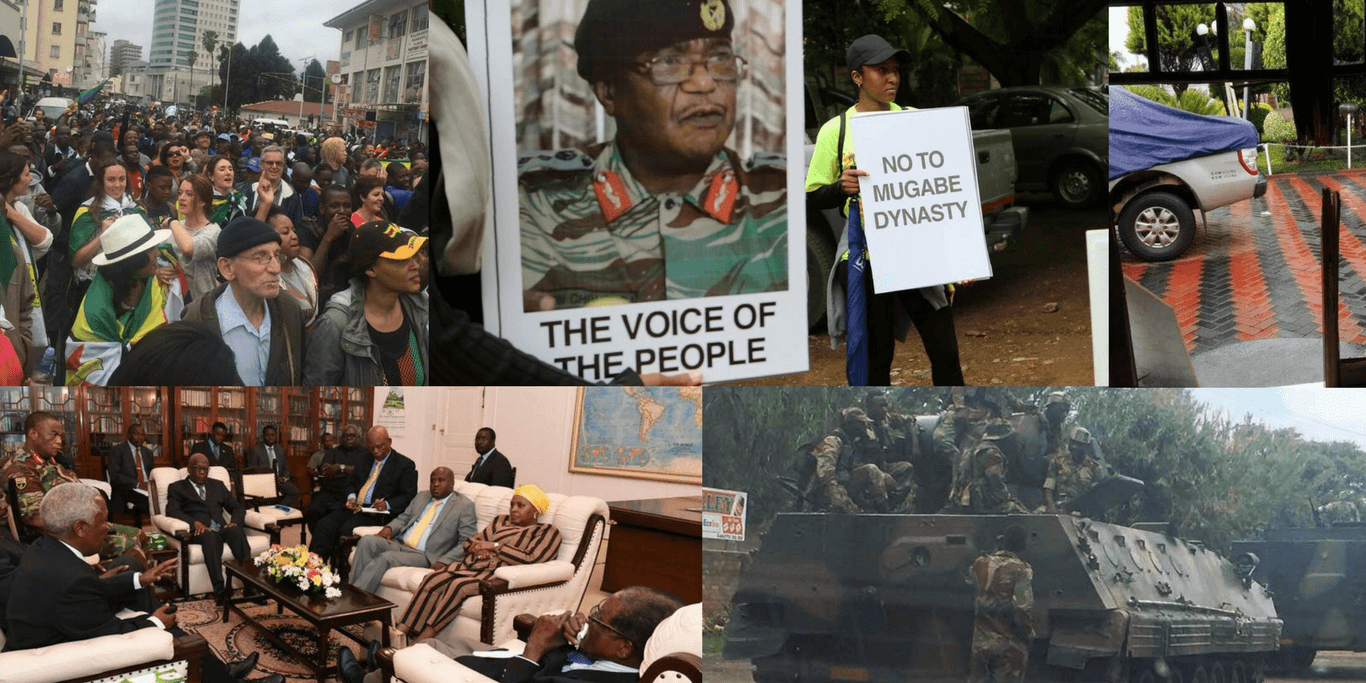
    If you are part of a Whatsapp group or an avid social media user, then mid last week, you would have started getting messages and seeing updates about tanks and military personnel making their way to Harare. On the back of Emmerson Mnangagwa’s recent sacking as Vice-President of Zimbabwe, the Commander of the Zimbabwe Defence Forces General Constantino Chiwenga, released a statement and with the events the followed, many jumped to speculation of a military coup.

    General Chiwenga’s Statement 13 November 2017

    https://www.facebook.com/LivingZimbabwe/posts/2260874480604698

    Early the next morning, there was apparent gun fire and explosions somewhere in Harare, the military went on to take over the Zimbabwe Broadcasting Corporation and eventually made a statement outlining their motivations behind the actions they had taken.

    Major General SB Moyo’s (Chief of Staff Logistics) Statement

    https://www.facebook.com/LivingZimbabwe/videos/2262134067145406/

    This fuelled the speculation even more with many seeing this as that the time finally coming where Mugabe’s reign comes to an end. Yes, there have been suggestions that this is the case. Offical statements have been released here and there but no definitive statement that outlines the way forward for Zimbabwe.

    Very excitable times for many as many want to see Mugabe go and this could be it. On the same token, it is a stressful time for others because with Mugabe gone, their future is uncertain.

    That said, we don’t really know what is going on behind closed doors. We don’t really know what the next few days will bring. Whatever the case may be, it is very clear that the masses want Mugabe gone! As we speak, there are thousands of people of all ages and races are marching in Harare and Bulawayo and freely expressing their sentiments.

    After the march everyone will make their way back home and continue on with their lives. At the end of the day, families need to be fed, bills need to be paid and day to day life has to go on. As far as our leadership is concerned, we don’t as yet know what is going to happen in the short or long time. Some people are getting over excited and on the verge of making irrational decisions. If you aren’t directly link with what is going on between the powers that be, don’t forget to get on with what you need to do to live your life. The challenges that you were facing yesterday may still be there today and may still need to be tackled tomorrow!

  • Is Acie Lumumba Capitalising on #ThisFlag?

    Is Acie Lumumba Capitalising on #ThisFlag?

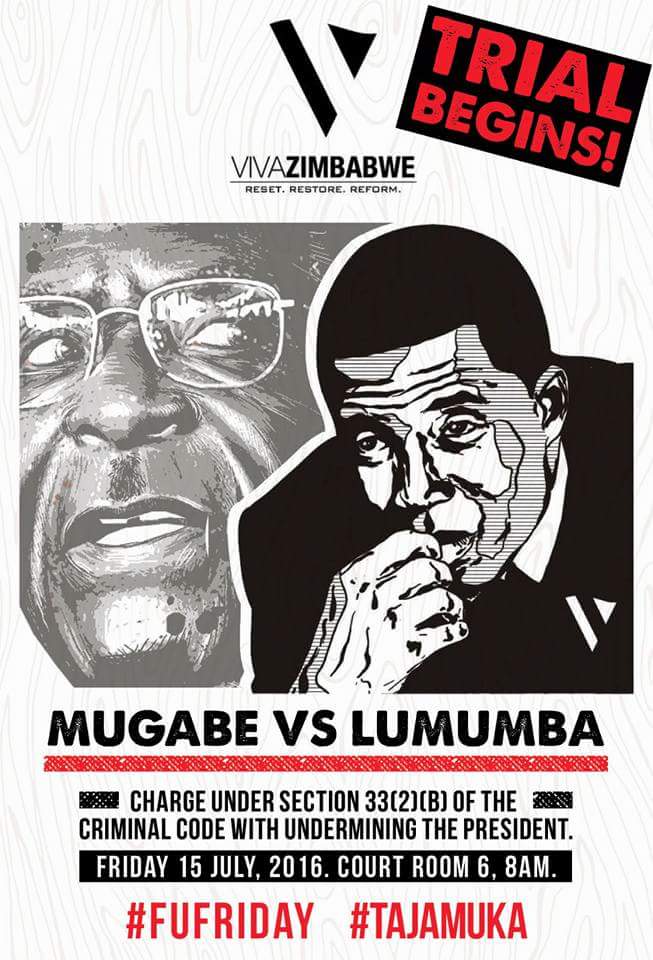
    This week and Wednesday 13 July 2016 in particular, has been quite moving. It was the week in which someone was arrested for inspiring others to speak up. It saw scores of people come together in person at the Harare Magistrates Court and in spirit via social media in support of Pastor Evan Mawarire (#ThisFlag Pastor) at his court appearance. 200 lawyers turned up for his court appearance and hundreds if not thousands or everyday Zimbabweans also turned up with their flags to support and pray for him.

    At the end of the day, Pastor Evan walked out of the courthouse and thanked everyone for their support. What happened on that day went to show that he is someone who is widely loved and revered for what he has done and what he stands for.

    On the other hand, we have Acie Lumumba. He has of late received notoriety for certain actions and opinions. He is someone with whom people have mixed feelings about. Going by discussions that we have engaged in and from comments on social media it’s either that people love him or hate him.
    (Continued below)

    mugabe-vs-lumumba-fufriday-15-july-2016

    Whatever the case may be, he put out a video this week talking about how he did not believe that #ThisFlag would go anywhere. Now that he has seen the traction the movement has gained, he is thankful to Pastor Evan for his efforts.
    (Continued below)

    Question is, was this genuine gratitude and appreciation or him trying to capitalise on the situation to further his own agenda?

    Share your thoughts by leaving a comment below.

  • MDC Zimbabwe peaceful demonstration (14 April 2016) in pictures

    MDC Zimbabwe peaceful demonstration (14 April 2016) in pictures

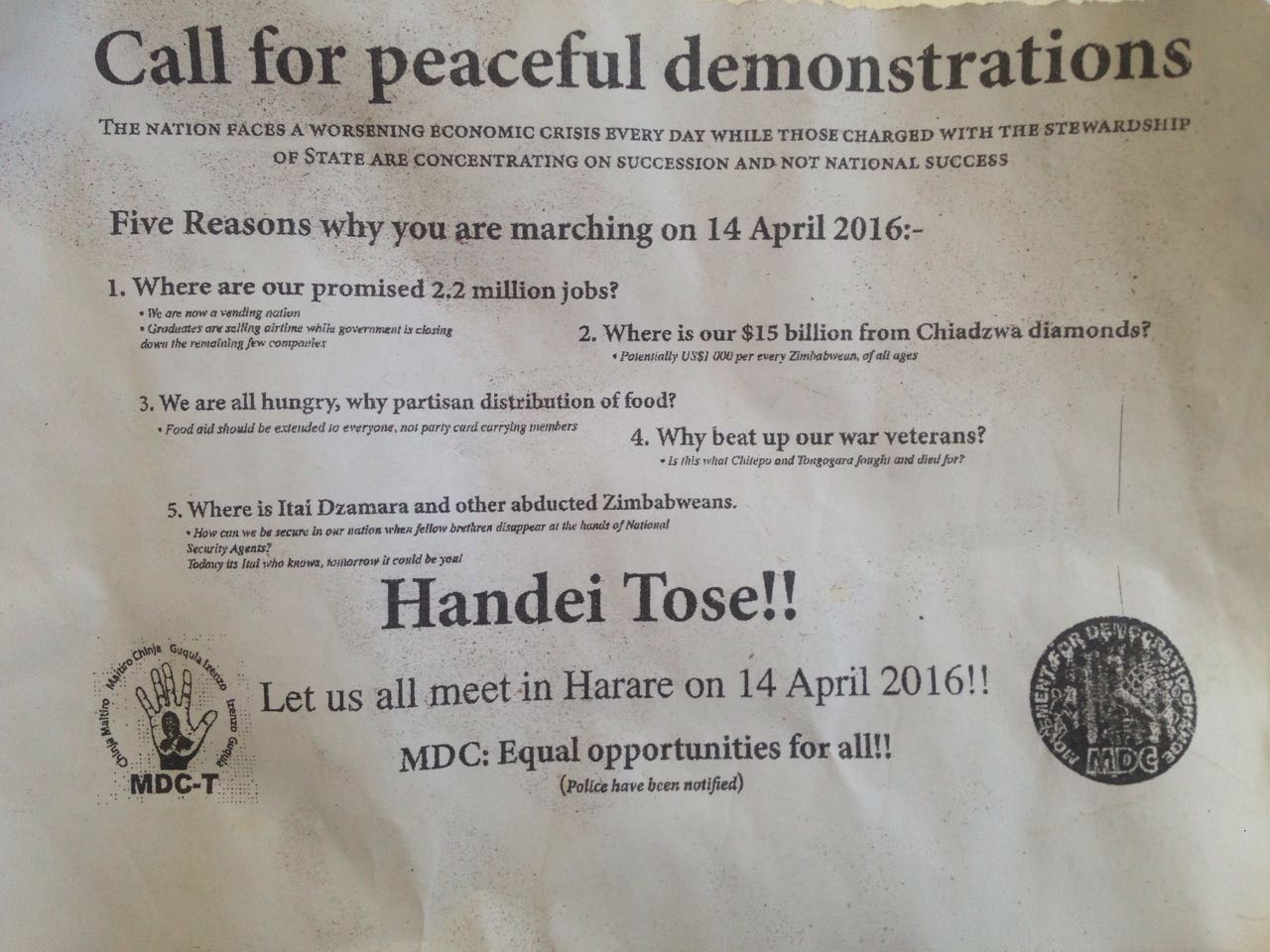
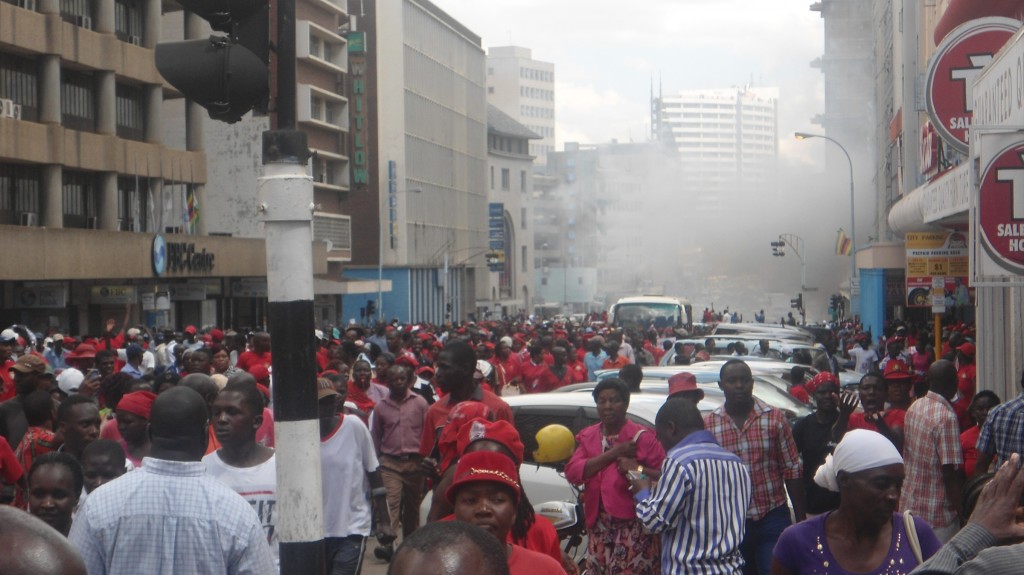
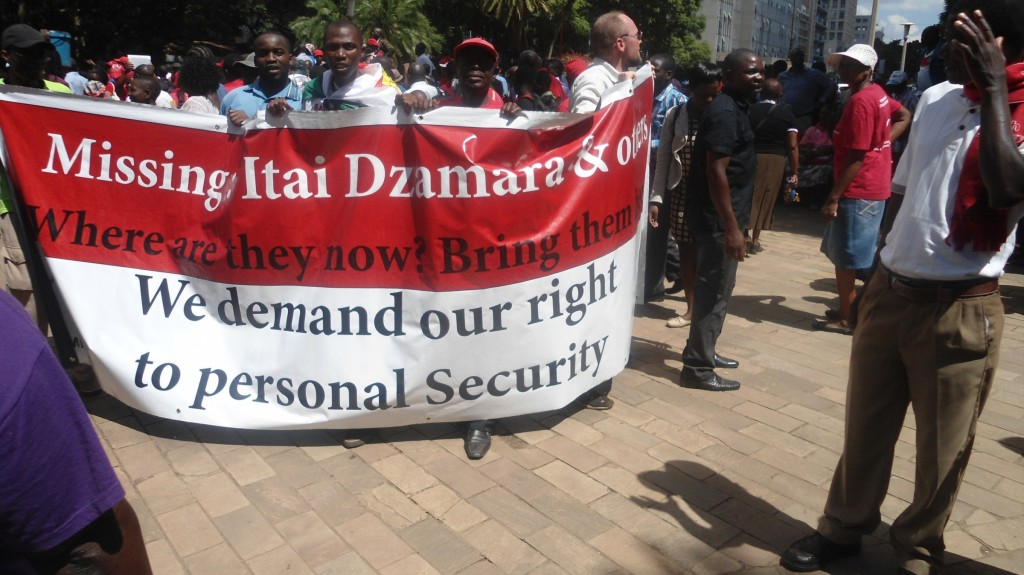
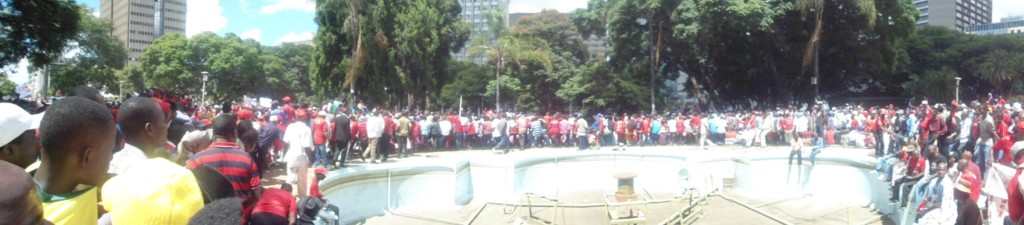
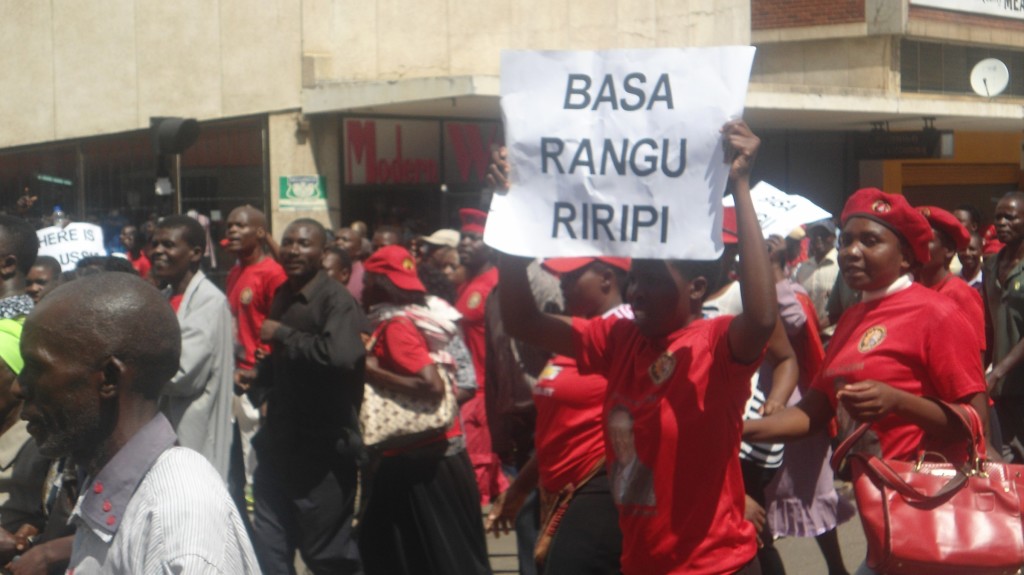
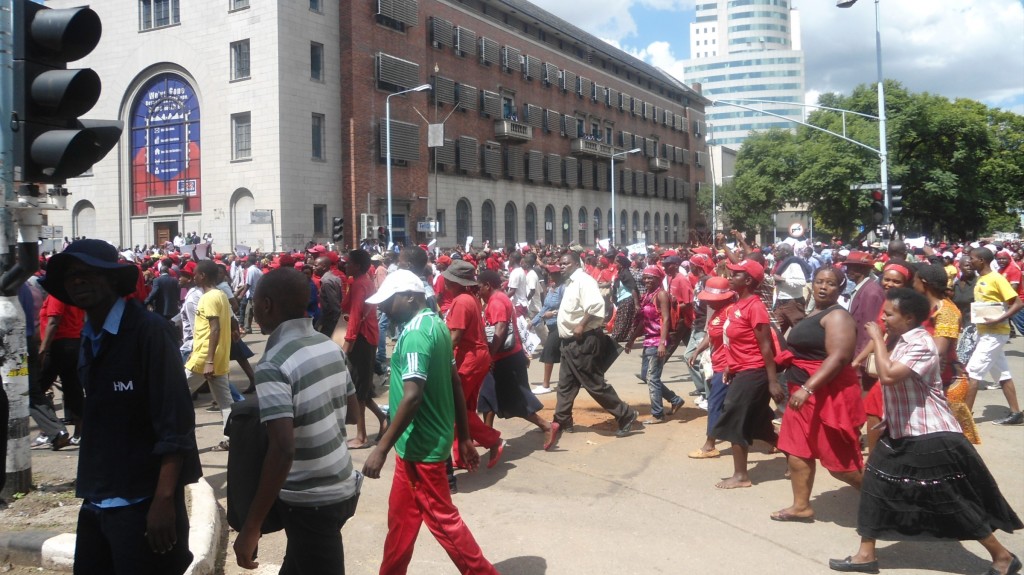
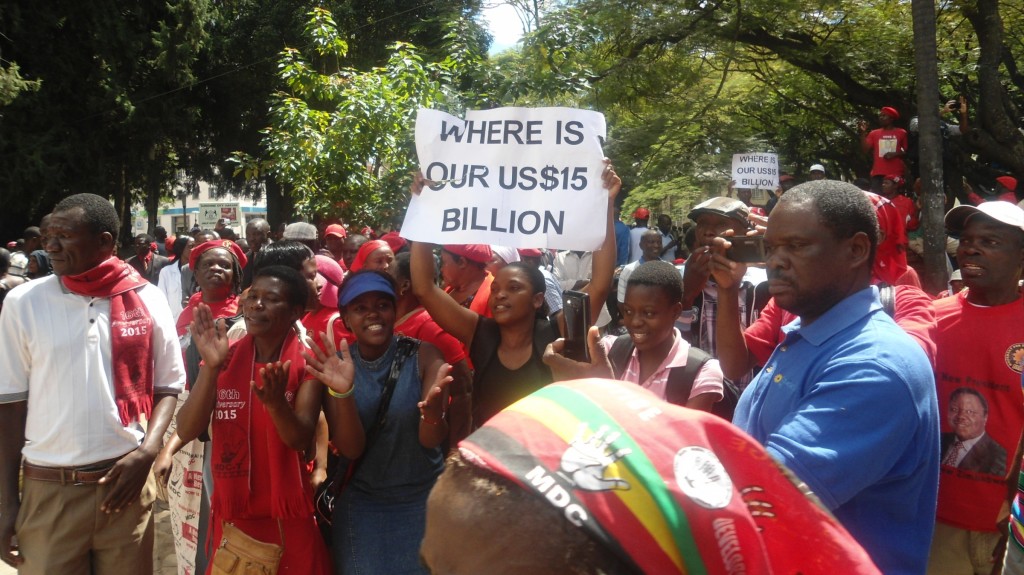
    The Movement for Democratic Change held a demonstration in the city centre of Harare today in protest of unemployment, corruption, lack of rule of law and the economic meltdown currently dogging the country.

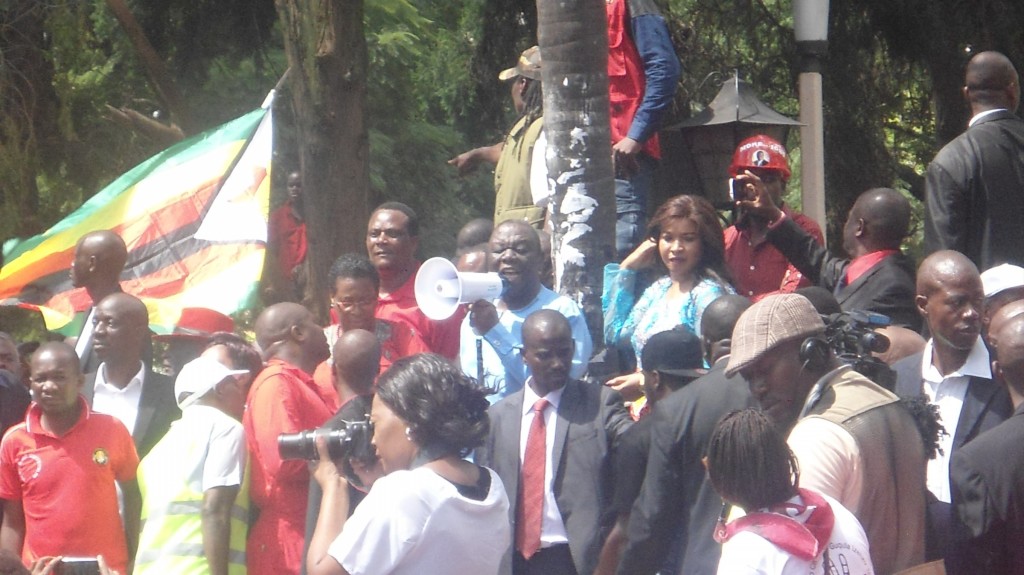
    The leader of MDC former Prime Minister Morgan Tsvangirai addressed the protesters at Africa Unity Square where he implored the youths of Zimbabwe to safe guard their future and to stand up for their rights as enshrined in the constitution and “take them and not wait to have them given to them”.

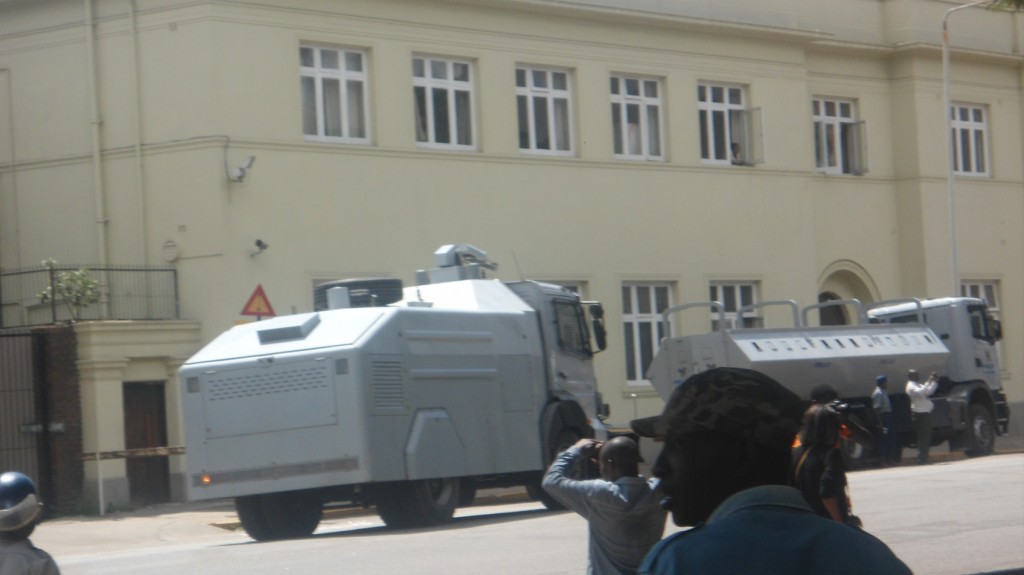
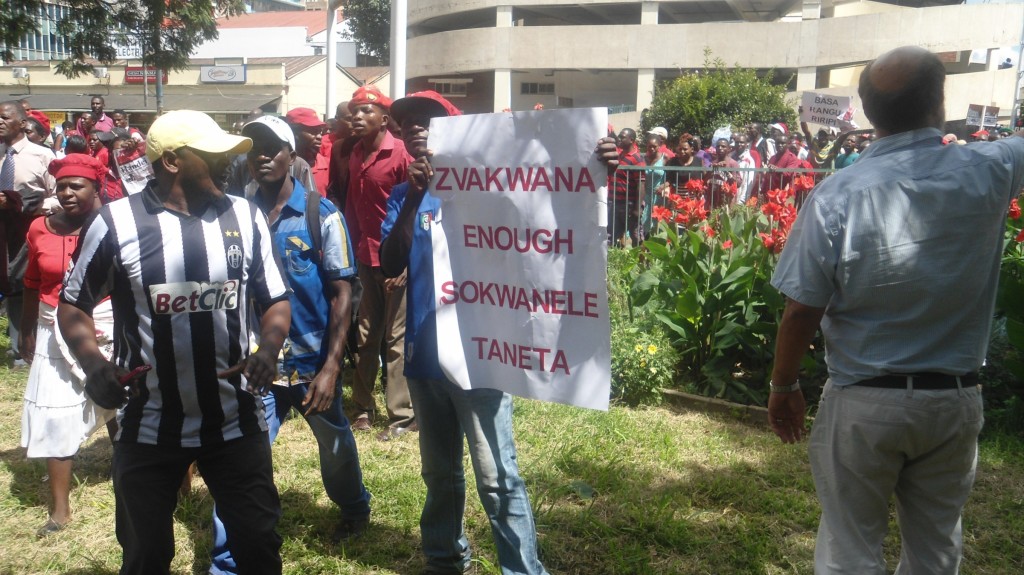
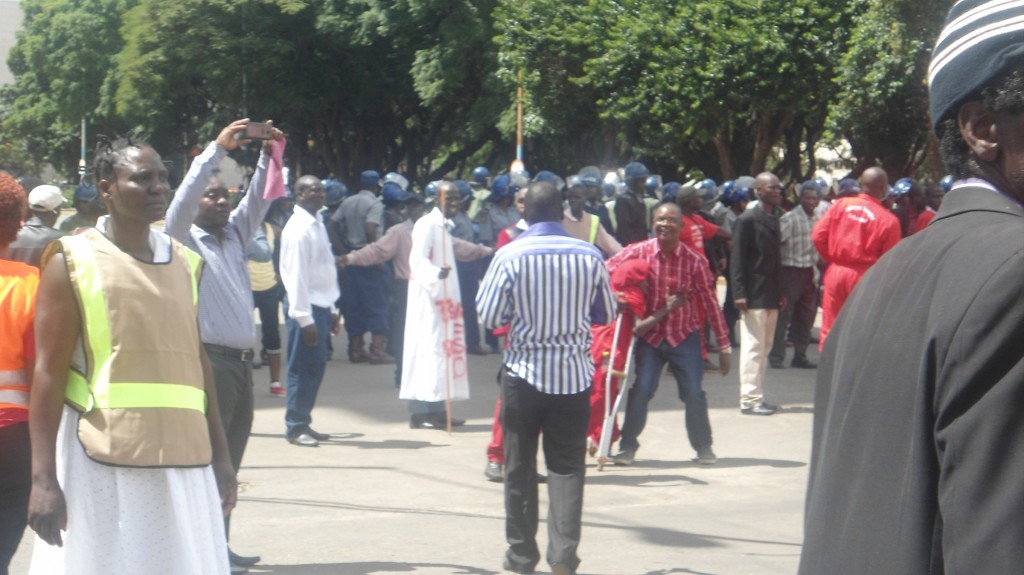
    He lamented the rampant corruption in the country and called for the return of the missing 15billion dollars from diamond sales which mysteriously disappeared in the government coffers. The protesters could be seen brandishing placards written “basa rangu riripi” as they were asking for the 2.2million jobs they were promised by the Zanu PF government, according to Mr. Tsvangirai “instead of 2million jobs, Zanu has created 2million beggars”. The Zimbabwe Republic Police were present to keep the peace and there was one isolated incident where tear gas was deployed, but the protest was relatively peaceful.

    This has been a submission by Kevin Ngwazane.
    You too can become a Citizen Journalist by submitting your story here: Citizen Journalism by Living Zimbabwe
    The views expressed in the article are those of the author and not necessarily Living Zimbabwe.

  • Zimbabwe hopelessly obsessed with politics

    Zimbabwe hopelessly obsessed with politics

    After the unspectacular purge that characterised the lead up to the discredited ‘congress’ of 2014, we thought we had seen the last of retrogressive political drama which proved a nasty and messy divorce. The nation looked ready to move on and it looked like 2015 was going to be the year for policy implementation. With ‘sanctions’ and so-called corrupt ministers fired, Zimbabwe was hypothetical on the verge of success. We were wrong. Today we are forced to watch the catfight escalate.

    Reports are doing the rounds that Occupy African Unity Square leader, Itai Dzamara was abducted from his neighbourhood. It prompted former Prime Minister Morgan Tsvangirai to issue a statement, “The demon is back!” I feel the demon never left us, we are just waking up from our slumber to realise that we have changed nothing since the 2008 massacre. The demon of politics and the impunity that accompanies it in this land continues to haunt us even when it is becoming clearer that politics will not solve our problems because it is part of the problem.

    Yes, politics affects our daily lives but when it eclipses other aspects of human life, it becomes nothing less than obsession. It is not too early to conclude that the political leadership in Zimbabwe suffer from a condition that presents as a compulsive obsessive disorder, COD. Politburo meetings have become more important than parliament that ministers would rather dodge parliamentary sessions to spend the day engaged in unending meetings adopting resolutions that are never implemented. It is not only has the legislature that has been rendered useless. The judiciary will be under the spotlight now that expelled members have lodged a case against Mugabe. Inasmuch as the case looks like a waste of time, it will serve to prove that our judicial system is not as independent as we believe..

    When Mujuru and company were ousted albeit under controversial circumstances, we were convinced the whole anti-Mujuru campaign was over but we were stunned when birthday boy took a while at the Victoria Falls bash to admonish his former deputy. Judging from the way Bob vilified Mujuru’s widow; it became difficult to distinguish the event from Heroes’ or Defence Forces Day celebrations. With as much vitriol and anger the president disregarded all diplomacy and respect for women when he ‘stripped down’ Mujuru in public view. Politics without reasoning has driven down this ground.

    Pronouncements that government intends to kick out the remaining white farmers whom they allege were protected by Mutasa and Kaukonde prove the land reform was neither about righting the wrongs nor economic empowerment. It was all about weakening political opponents. The invasions in the early 2000 were meant to choke the MDC as it was believed that white farmers were the brains and funders of the opposition. Now that he believes the remaining farmers are propping the Mujuru camp, Bob in all his wisdom has seen it fit to destroy the residuals of an agricultural system he successfully wrecked.

    I do not deny that land reform was necessary as a means to create space for the marginalised. Had that been the sole aim and had it been implemented in such a manner to achieve a win-win result, Zimbabwe would have conducted a successful economic empowerment program. By now, we would be regarded as a model nation in terms of empowerment and we would be renowned for that. Instead, we are seen either as cowards too afraid to rise against a failed leadership or as obsessives who believe in the wrong politics of then era. It is not sanctions that have brought Zimbabwe to her knees, it’s obsession with politics.

    Zimbabwe has successfully politicised every aspect of citizen’s life from arts, sport, and culture to education and health. Promotions, official appointments, tenders and even radio licenses are awarded after political considerations. Unfortunately, it is not politics that will fix Zimbabwe. It is not politics or birthday rants that will build schools and refurbish dilapidated hospitals. It is the economics. Politics and policy pronouncements will not fix the roads or expand our energy generating capacity. It is through implementing sound economic policies that will lead to increased FDI inflows and not speeches about how a former deputy employed the services of Nigerian spiritualists to unsit a man who is fast losing grip of the reigns with each passing day.

    We are sick and tired of diplomatic visits by a Chinese delegation or some dignitaries from little known countries whose contribution towards people’s livelihoods goes from minimal to zero. Yes political or diplomatic allies are important (everyone needs friends) and we are better with more but we do not need political relations that don’t put food on the tables of ordinary citizenry (we don’t need friends who steal food from our tables). It is futile to suck up to political allies that will not add value to our nation at the expense of our economy.

    Politics may have gotten us into this pit but as it stands, it will not get us out of it. Zimbabwe definitely needs another way. Politics and the politicians have failed us.

    We need a rethink.

    IMG_20150520_122454

    This has been a submission by Ittai Bryan.
    You can connect with Ittai Bryan via the following: http://ibmatteu.blogspot.com, http://twitter.com/ibmatteu, http://fb.com/ibmatteu.
    You too can become a Citizen Journalist by submitting your story here: Citizen Journalism by Living Zimbabwe
    The views expressed in the article are those of the author and not necessarily Living Zimbabwe.

  • Don’t blame the youths for their indifference towards Independence Day

    Don’t blame the youths for their indifference towards Independence Day

    By mentioning places like the National Heroes Acre, Nyadzonia, Wha Wha and Sikombela, Zimbabwe’s state media has tried to sensationalise Independence Day that falls on 18th April. Other countries have these national monuments where they honour the heroes and heroins who sacrificed for their countries like the USA has the Arlington National Cemetery which have gained popularity to rank amongst tourist sites. Zimbabwe has failed to raise our historical sites because of the way ZANU controls and manages the monuments.

    Every year, a few select loyalists of the ruling party to go visit shrines like Chimoio. They have turned the shrines into their retreat camps where they regroup periodically to strategize on party policies. The National Heroes Acre is not national in the actual sense. The youth in Zimbabwe view the national shrine as but a burial site for ZANU crooks. It sounds ridiculous when names like Border Gezi and Elliot Manyika who have no documented war credentials are mentioned alongside Jason Moyo and Joshua Nyongolo Nkomo yet ZANU founder Ndabaningi Sithole was denied the hero status.

    Independence Day has lost its lustre because the youth who make up >60% of the population are struggling to get the basics. Many youths anxiously watch as their dreams are shattered despite their academic, sport, or artistic talents. With high unemployment and lack of opportunities for income generating projects, youths concentrate on these more pressing issues other than celebrate an event that has been personalized by a select few. It is difficult to create hype around an event where the background history, information, and event organization is left exclusive to a few. Party loyalists use the event to enjoy what the rest of Zimbabwe is lacking.

    Easter and related paschal events like Judgment Night have overshadowed this year’s Independence Day because no one can personalize Easter.

    As long as government wants to personalize these shrines, we will let them but they should be rest assured that it is them and their fanatics that will attend those ceremonies. There is no reason to create hype around an event where one has to endure either scorching sun or cold winter drizzle packed at the National Sports Stadium for the whole of the official proceedings. It unfathomable to get excited about a happening where the same man says the same rhetoric he has shared for the past 3 decades like a broken record. The attendees return home empty handed, unchanged to reawaken to the harsh realities of poverty that faces them.

    To many, Independence Day brought no meaningful changes to their lives. The same oppressive laws and organs that existed before 1980 still exist today. The masters simply changed faces, General Peter Walls and Ian Smith may be gone, but Zimbabweans still feel unsafe in their own country. To many youths, Independence Day is a commemoration of the day when slave master turned black. In the rural areas, local political leaders target civil servants (whom the government underpays) when it comes to fund raising for the event. On the day of this event, the same civil servants are sidelined at the festivities. The day to celebrate freedom is to most the day when the slave master manifests.

    Yes, we may try to create hype around the 18th of April and the day deserves as it came after a protracted struggle. However, the way independence (history, celebrations and shrines) has been handled or mishandled has dampened the spirit of most Zimbabweans. The blame is not on the youth for their indifference to the day but on the ZANU PF-led government for treating the event as a party issue.

    This has been a submission by Ittai Bryan.
    You can connect with Ittai Bryan via the following: http://ibmatteu.blogspot.com, http://twitter.com/ibmatteu, http://fb.com/ibmatteu.
    You too can become a Citizen Journalist by submitting your story here: Citizen Journalism by Living Zimbabwe
    The views expressed in the article are those of the author and not necessarily Living Zimbabwe.

  • Should Mugabe Really Be Attending Mandela’s Memorial Service?

    Should Mugabe Really Be Attending Mandela’s Memorial Service?

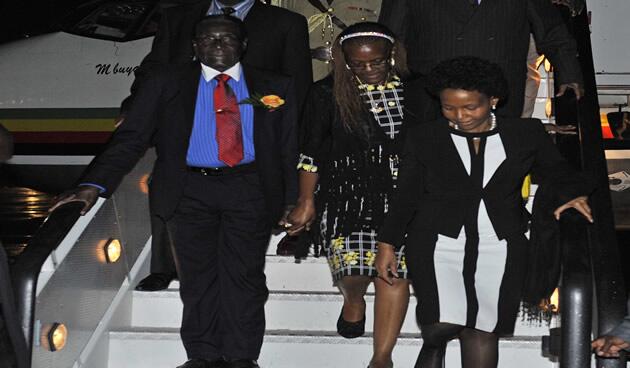
    Last night President Mugabe and his wife Grace joined a long list of world leaders who landed at the Waterkloof Air Force Base just outside Pretoria to attend Nelson Mandela’s memorial and funeral.

    Most if not all of the world leaders attending the funeral had great respect for and revered Madiba and felt the need to pay their last respects. The former and current world leaders attending include people who have clashed with and do not see eye to eye with Mugabe. This is something that presented an interesting logistical challenge for those managing the events.

    One of those people that Mugabe has clashed with is Mandela. It was only a few months ago in an interview with Dali Tambo that Mugabe said the following (the commentary starts approximately 24:30 mins into the video):

    [quote]”They [whites] will praise you only if you are doing things that please them. Mandela has gone a bit too far in doing good to the non-black communities, really in some cases at the expense of [blacks],

    ….. That is being too saintly, too good, too much of a saint.”

    ….. Naturally we will speak good of him [Mandela] but everyone knows he did not do enough for his people”[/quote]

    To add to that, upon hearing news about Mandela’s death it took Mugabe and/or the Zimbabwe Government a lot longer that the rest of the world to respond to the news and send a condolence message. On ZBC, the news was reported about 20 mins into the 8pm News Hour versus it it being the first piece report as it was around the world. Looking from the outside in, this would seem as if as far as Zimbabwe is concerned, the event was a non-event.

    Over the years, comments exchanged have gone both ways with Mandela expressing his disapproval on the way in which matters were being handled in Zimbabwe and going as far as stating that there was a failure of leadership. Mandela was also quoted as saying:

    [quote]”Before I was released from prison, he was the most popular African leader, but when I was released the media said this is the end of Mugabe from the point of view of popularity. In fact he himself didn’t want me to come out of jail,”[/quote]

    This statement is one that the media may or may not be twisting and are saying is the root of a jealousy that caused the dislike that Mugabe has for Mandela.

    The above is only a snippet of what both leaders have had to say about each other and as for some of the reasons why the rift existed, we can only speculate.

    But, Mugabe’s decision to travel to South Africa for the send off leaves you wondering WHY? Does it not?

  • Tsvangirai’s First Real Post Election Defeat Interview

    Tsvangirai’s First Real Post Election Defeat Interview

    The 2013 harmonised elections in Zimbabwe once again brought about a disappointing result for MDC-T as they failed to secure a win. Since the results were announced, the President of MDC-T, Morgan Tsvangirai has not been very vocal about the events that took place before, during and after 31 July, 2013.

    However, there have been a number of supporters and critics who have had a lot to say about him and the Movement for Democratic Change. This has included commentary from pundits that the party did not do much over the years to prepare themselves for the elections; that they haven’t done anything different to what they have done in the past to try and defeat Mugabe and Zanu-PF; that this event has marked the beginning of the end for Tsvangirai; that SADC/AU is not to blame; and the list goes on.

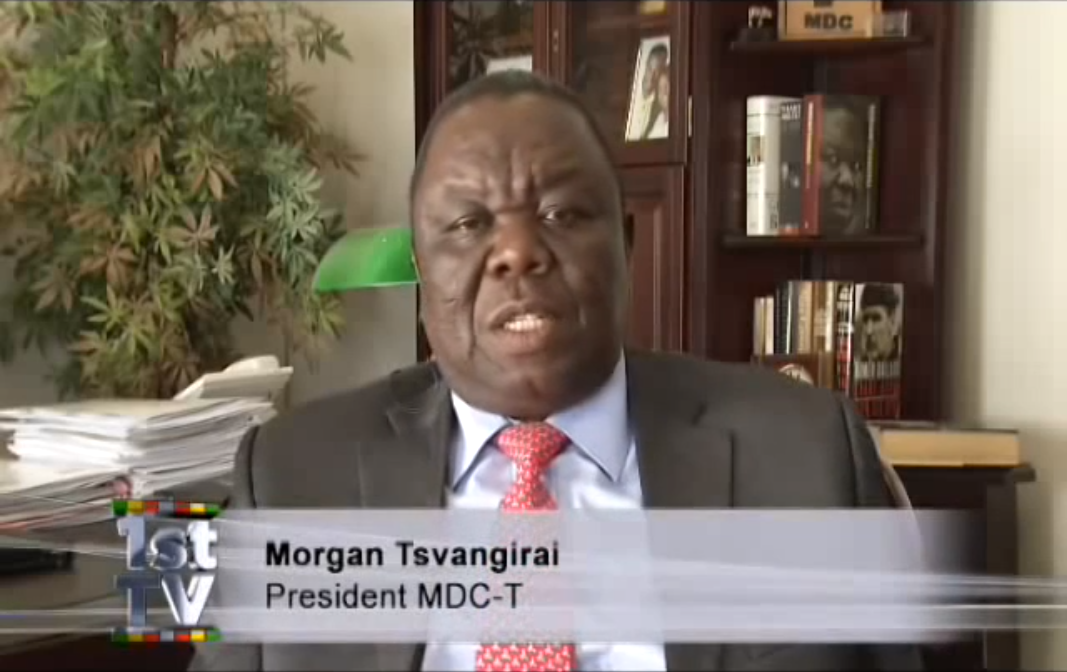
    He recently sat down for an interview with Violet Gonda on 1st TV where they discussed a number of issues surrounding the elections and the way forward for MDC-T. Even though what Tsvangirai has to say may seem a bit vague and confusing at times, it gives a bit more insight into his thoughts about the elections, his current frame of mind, possible actions that they may take and the way forward for the party.

    Watch it and let us know what your thoughts are (by leaving a comment below) on the future of Tsvangirai and MDC-T.

  • Zimbabwe 2013 Cabinet Announcement (Alphabetical)

    Zimbabwe 2013 Cabinet Announcement (Alphabetical)

    President Mugabe has announced the new cabinet after his 31 July election win. The new cabinet now consists of 26 ministers, down from the 33 under the unity government. Given the state of a number of affairs in Zimbabwe, these ministers face a few challenges and it is hoped that they are able to meet them and deliver results that benefit the NATION. The list is as follows:

    • Agriculture – Joseph Made
    • Defence – Sydney Sekeramayi
    • Energy – Dzikamai Mavhaire
    • Finance – Patrick Chinamasa
    • Foreign Affairs – Simbarashe Mumbengegwi
    • Health – David Parirenyatwa
    • Higher Education – Olivia Muchena
    • Home Affairs – Kembo Mohadi
    • Information Communication and Technology and Postal and Courier Services – Webster Shamu
    • Indigenisation – Francisa Nhema
    • Industry and Commerce – Mike Bimha
    • Information – Jonathan Moyo
    • Justice – Emmerson Mnangagwa
    • Labour – Nicholas Goche
    • Lands – Douglas Mombeshora
    • Local Government – Ignatius Chombo
    • Mines – Walter Chidhakwa
    • Presidential Affairs – Didymus Mutasa
    • Primary and Secondary Education – Lazarus Dokora
    • Small and Medium Enterprises – Sithembiso Nyoni
    • Sports and Culture – Andrew Langa
    • Tourism – Walter Mzembi
    • Transport – Obert Mpofu
    • Water – Saviour Kasukuwere
    • Women’s Affairs – Oppah Muchinguri
    • Senior Minister of State – Simon Khaya Moyo