Category: People

  • Empowering Zimbabwean Women

    Empowering Zimbabwean Women

    Most if not all of us can attest to a woman being one of the most influential people in our lives who have made us who we are today. Yes, in a typical family, you usually have the father as the breadwinner and head of the family. The mother completes the other half of that coin and more often than not, it is the mother who we can say is the moral fabric that keeps the family together.

    There are women out there who end up in situations where they have to go it alone and find themselves filling the roles of mother, father, breadwinner, friend, disciplinarian, counsellor, educator and the list goes on. In some situations even where there is a father figure in the picture, some women find themselves having to take on these roles. Whatever the case may be, it is amazing how they manage to build up an uncanny resilience to all of these challenges that life has to throw at them. Their end game is to make sure that they provide the best of what they can for their family.

    Taking on such characteristics sees the rise of entrepreneurs who despite the circumstances, make money however they can. It cannot be disputed that women play a pivotal role in society and it’s progression. This is something that was recgonised by Executive Chairman and Founder of the Econet Wireless Group, Dr Strive Masiyiwa whose Facebook update (here) on empowering women we shared with our followers:

      It starts off with him saying, [quote]If we educate the girl child, and economically empower woman, poverty will be history, within a generation.[/quote]

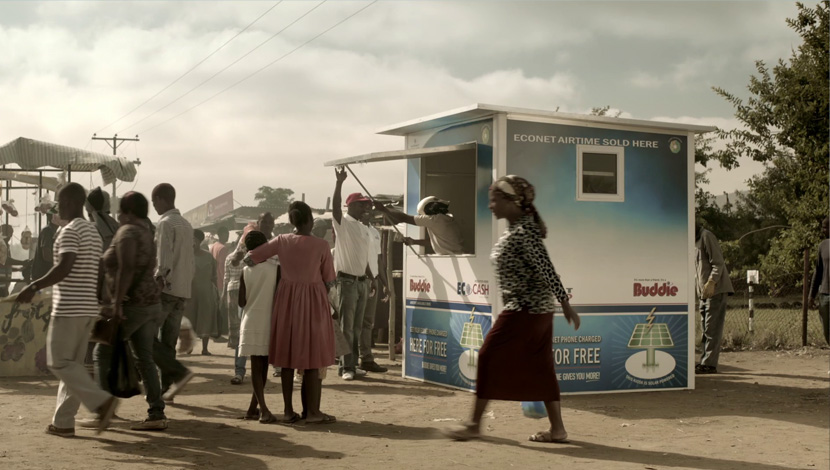
    He then goes on to share his thoughts on empowering women and what it was that lead to him and his organisation developing an empowerment program, "Green Kiosk" that specifically targets women entrepreneurs.

    Initiatives like this cannot be faulted because if they are successful, they lift people out of poverty and the less misery there will be. Not all of us will have the capacity to launch such initiatives but can make a difference with simple acts and words of encouragement towards the women in our lives.

    What does Zimbabwe's society have to lose by empowering Zimbabwean women?

  • Grace, The Grace Mugabe Interview With Dali Tambo (VIDEO)

    Grace, The Grace Mugabe Interview With Dali Tambo (VIDEO)

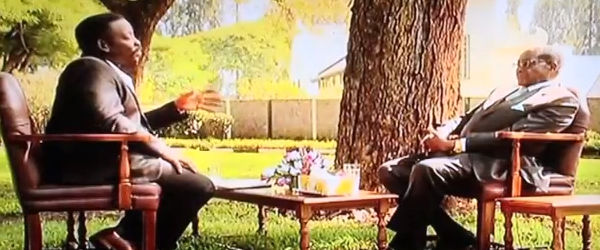
    Following on from his interview with President Mugabe (Chimurenga Man, The Robert Mugabe Interview With Dali Tambo (VIDEO)), Dali Tambo also sat down with Zimbabwe’s First Lady, Grace Mugabe.

    A few topics were covered during the interview which included how Grace and the president ended up together, how they had kids whilst Sally Mugabe was still alive and those media “rumours” about some of her habits such as extravagant shopping.

    She also spent a lot of time singing praises about her husband as well as emphasising the fact that she is a hard worker and not a lazy person as what some people may seem to think.

    The interview progressed to a family lunch which included a discussion on what kind of a person Robert Mugabe would like to see Bona marry. At the table, Bona and Bellarmine share why they love their mother and father and vice versa with the President and First Lady also being given the opportunity to exchange the same sentiments about each other.

    It is a somewhat interesting watch that may see you raising your eyebrows or shaking your head at certain points.

    Watch it and let us know your thoughts on the interview by leaving a comment below.

  • Chimurenga Man, The Robert Mugabe Interview With Dali Tambo (VIDEO)

    Chimurenga Man, The Robert Mugabe Interview With Dali Tambo (VIDEO)

    On the 2nd of June 2013, an episode of People of the South aired on SABC3 where Dali Tambo interviewed President Robert Mugabe. It is one of those interviews that people in Zimbabwe and around the world would be interested in because interviews with Mugabe are a rarity and also that it was marketed as an occasion where viewers got to gain a deeper understanding of and got to see a side of Mugabe that has never been seen.

    The start of the interview (video below) paints Mugabe in the following light,
    “Robert Mugabe is to many the archetypal son of the soil, a strong man, an African gentleman, a controversial man, but above all else, a Chimurenga Man.”

    The interview has had mixed reviews with some people saying that Dali glorified Mugabe by only asking surface questions and not probing or asking the tough questions about the issues that Zimbabwe may be facing. Others look at it as being a good interview, one where has not become the victim of Western media.

    It is an interview that you should watch (if you havent already done so) and make your own assumptions about.

    The interview ends with Mugabe being asked what he would like to be remembered for most with his answer being:
    “There was once a man called Robert Mugabe who in the interests of his own people formed a struggle to liberate them and had ideas, ownership of resources for his own people, and…. the fact that the people should be united, to remain revolutionary, guard against colonial and imperial powers, that seek to undermine the authority…. of governments and what he desired right up to the end that his own people should be masters of their own destiny and that is all. I don’t desire to be know as anything greater than that…….”

    In your own opinion, was the interview good or was it a disappointment?

    Leave a comment with your thoughts.

  • The Plight Of A Diaspora Returnee Wife

    The Plight Of A Diaspora Returnee Wife

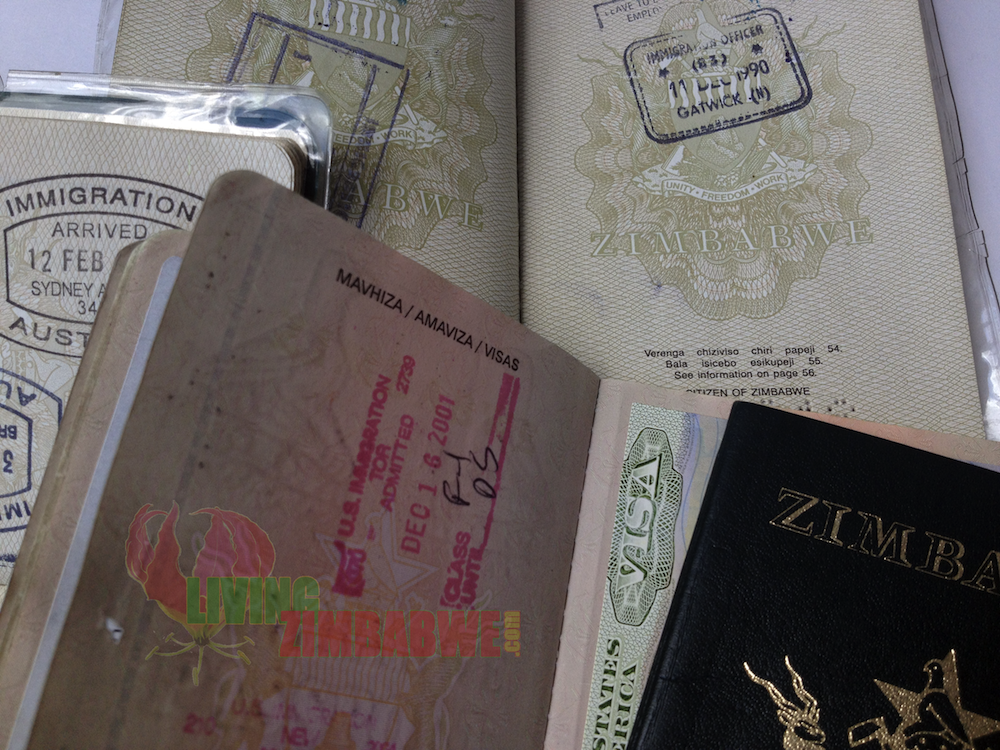
    Yes, there are a number of Diasporans who are a bit sceptical about returning home for one resason or another > Why Diasporans Are Not Returning Home. On the other hand, there are a those who have taken the step to return home permanently with those in this group having realised varying levels of success with their decision. It has either been one of the best decisions ever made or one filled with regret.

    For singletons, the task of purchasing a one way ticket to Zimbabwe is not as daunting as they probably don’t have that much ‘baggage’. However, some returnees are families and for them, having a solid plan in place of how they are going to sustain themselves is of utmost importance. This includes things such as a steady stream of income, appropriate accommodation and reliable transportation just to name a few things.

    Can you imagine leaving the comforts of London, Sydney, Dallas, Singapore or wherever. Places where you have an income, live in your own accommodation have a car or two and all the mod cons to taking up two rooms at your parents place? That’s what some families who move back home have to do to accommodate themselves in the interim. Living like this might be fine for a few days or weeks but it will more than likely reach a point when it will start to feel a little cramped and you are all in each others space!

    Living in this state of being is not ideal especially so for women who are independent and used to having a space that is ‘theirs’. As they continue to live with their parents, the women don’t have a place to call home. Yes, you could say they are home but they aren’t in that comfortable homely place that has their own feminine touch that is home.

    Another plight that diaspora returnee wives have to deal with is their husbands. Life in the diaspora is not easy and living in luxury comes at a cost. This then dictates that their men take a more active role around the house. This sees their husbands cleaning, cooking, doing laundry, helping out with the kids and so on.

    In Zimbabwe, domestic workers are an affordable luxury which frees up husbands to take care of their business and also to be ‘Zimbabwean men’. Them being immersed back into the Zimbabwean lifestyle sees some of them become different people.

    The wives of these husbands who have become someone else now see themselves having to follow the cultural and social expectations of a Zimbabwean wife. This sees them having to let go of certain liberties that they had grown accustomed to in the diaspora. For some it also means having to accept a third or more parties into their marriages as they are forced to accept the small house culture of Zimbabwe.

    The above is only an example of what happens to some women. It isn’t the be all and end all for diaspora returnee wives. Some go through worse and for others, the transition to living in Zimbabwe all over again is relatively smooth. Everyone has their own story to tell.

    Do you have anything to say on the pros and/or cons faced by Diasporans on the return home?

  • Extensive NGO Consultation Key To Sustainable Development In Zimbabwe

    Extensive NGO Consultation Key To Sustainable Development In Zimbabwe

    Last week, l visited my mother in the country side, Zvishavane communal areas and l was privileged to witness a gathering in which one of the many non governmental organisation, the Australia aid was giving money to rural people which they were supposed to use to buy livestock thereby alleviating poverty. But, what l personally observed prove otherwise .

    Firstly,  people are shared my observation, it is important to highlight that in rural areas in Zimbabwe the majority of people are living below the poverty datum line. More interesting, is the fact that the majority of people relied on the agrarian economy of the country and hence they need livestock and seed in order for them to cultivate their pieces of land. I’m quiet convinced that the Australia Aid put this into cognisance, hence prioritising the provision of funds to people to purchase livestock.

    But, here is what the workers in that organisation failed to put into consideration in order to achieve community-oriented development. Firstly, you can not give a person who can not afford to buy sugar a sum of $US160.00 because he/she will use that money to buy other basic commodities like sugar, rice etc and this is exactly what is happening in Zvishavane. Secondly, a mechanism to ensure that the money is used to achieve the intended goal must be in place to ensure transparency and accountability and this is not happening in this community. So for a community-oriented development all of the aforementioned issues must be put into consideration

    This has been a submission by Musavengana Hove.
    You can connect with Musavengana Hove via the following: http://www.soldierjournalist.blogspot.com
    You too can become a Citizen Journalist by submitting your story here: Citizen Journalism by Living Zimbabwe
    The views expressed in the article are those of the author and not necessarily Living Zimbabwe.

  • Trevor Ncube at TEDxEuston on: Life is Unconventional. Embrace it!

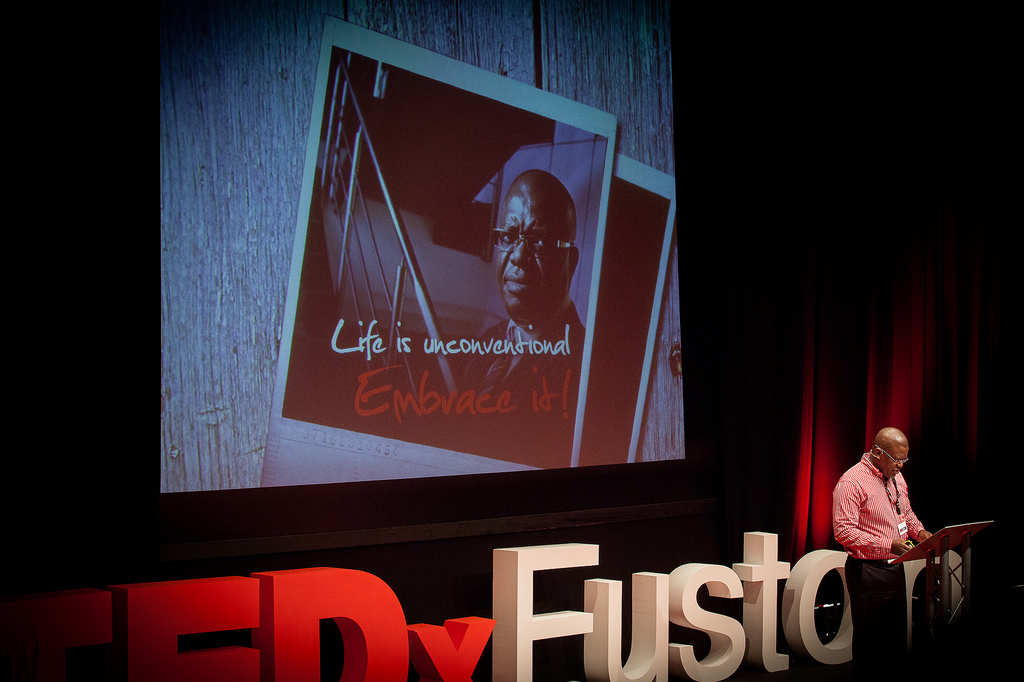
    Trevor Ncube at TEDxEuston on: Life is Unconventional. Embrace it!

    Would you have ever thought that the man at the helm of a media empire was dyslexic? Well, Trevor Ncube, the Chairman of Alpha Media Holdings (which owns NewsDay, The Zimbabwe Independent and The Standard) is just that! This is one of the many things he shared at TEDxEuston about himself, his up bringing and defining moments in his life that made him the person he is today.

    Trevor_Ncube_TEDxEuston_Life_is_Unconventional_Embrace_itDuring his TEDxEuston talk, he highlighted some key lessons that play a pivotal role in shaping people and societies. These lessons include:

    Words – what we say to other people can build or destroy them

    Teachers – they have a huge impact on who and what we become

    Comfort Zones – sometimes it takes being outside your comfort zone to reach your true potential

    Watch the video of his talk, be inspired and take whatever action you deem necessary!

  • Why Are Diasporans Not Returning Home?

    Why Are Diasporans Not Returning Home?

    Just over a week ago, Power FM ran a segment where they were discussing Zimbabweans in the Diaspora and trying to understand the reasons for them not wanting to return home. The hosts came up with some reasons as to why they thought Diasporans were not returning home and they went on to invite listeners to air their opinions on the topic. Some of the listeners were themselves recent returnees and had valid points to put forward but in their case, the opposite of “why not return home” was true for them.

    The main themes from the discussion for people not wanting to return home were as follows (in no particular order of importance):

    • Reverse Culture Shock – some people have been away from Zimbabwe for such a long time and have become used to living wherever they are living. They feel as if they would not be able to adjust to life at home if they were to return.
    • Family – some have no family to return to and because of that don’t feel like they have any links with Zimbabwe and nothing to go back to.
    • Political – the political instability is a deterrent and there are many who may face or feel that they may face political persecution.
    • Difference of opinion within families – husbands and wives may have differing views were one partner would like nothing more than to return home whilst the other is of the opposite view. Without any sort of resolution, this leaves a number of families “stuck” with out decision and still in the Diaspora.
    • Employment – a high unemployment rate and a perceived lack of opportunity leaves Diasporans with the notion that there is no point in going back home if they are not going to be able to find a way of making a living.
    • Dual Citizenship – many Zimbabweans have been living in their new homes away from home for so long that they have become Citizens of that particular nation. With the current state of the Dual Citizenship debate, they feel that it is better to stay away from home until there is some sort of positive resolve on the debate.

    After listening to what listeners had to say about the topic of returning home, the conversation shifted to what could have been seen as an attack on people who felt that it is not yet time for them to move back. For example, something along the following lines was mentioned, “they were born in and grew up in Zimbabwe and one day got on a plane and moved to the UK, US, Australia or wherever they ended up. They were not used to life over there and had to adjust. Why cant they get to used to living in Zimbabwe again, it is after all their home?”

    Yes, this could be the basis of an argument but there (for the example above) is the issue of reverse culture shock which is very real and something that some people will have to deal with. For most of the other reasons listed above, they present real issues that the people facing them have to contend with and could bring about a certain degree of stress.

    One question is, was that sort of a rebuttal called for? There is bound to be a world of individuals who would have similar things to say about those who do not want to return home.

    The thing is, Zimbabweans who are not ready to return home at the moment and some who have sworn to never return have made that decision. Some of those reasons may be legitimate, some of them may seem ridiculous but, as already mentioned above, this is a decision that someone has made for their life or their families lives and it should be respected.

    Yes, we can offer our opinions on their decisions but these opinions should be put forward in a non-critical tone because no-one has the right to judge people and/or their decisions. If anything, opinions should be put forward in a way that opens the door to further discussion on ways of breaking down the barriers to returning home and making the idea a possible reality.

    What are your thoughts on the Zimbabwean Diaspora who are not yet ready to return home and is there anything that can be done to facilitate their return home?

    Leave your comments below!

  • Locardia, Tsvangirai And The $280,000 Payment?

    Locardia, Tsvangirai And The $280,000 Payment?

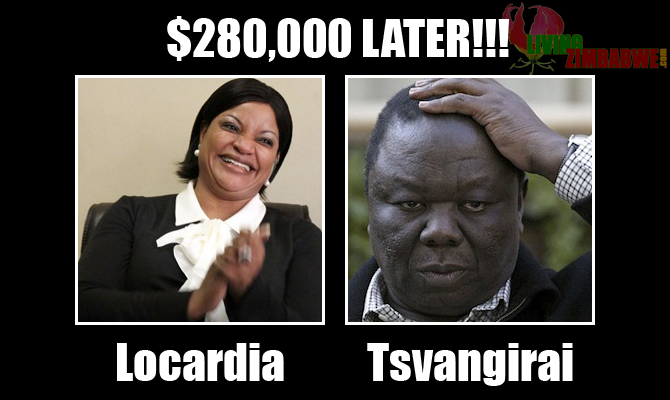
    Since the death of his wife Susan in 2009, Morgan Tsvangirai has found companionship with a number of women over the years. The relationships have taken various shapes and forms with some allegedly resulting in promises of marriage such as the one with South African Nosipho Regina Shulubane. Another of his relationships with Loreta Nyathi, a woman almost 40 years his junior resulted in a love child. And yet another one of his relationships and probably the most famous was with Locardia Karimatsenga who was recently recognised by the courts as his customary wife.

    After all of these relationships, Mr. Tsvangirai eventually settled on Elizabeth Macheka as the woman he was going to “officially” marry but when some of the women from his past heard about it, they took measures to prevent it from happening. Locardia made the most notable push in stopping the marriage but her bid was not 100% successful.

    Such indiscretions rarely go unpunished and end up with someone paying in one way or another and Tsvangirai did not come out unscathed. Locardia did not let the matter lay to rest and has made a number of demands that have included maintenance payments. In the last few days there have been reports that her and Tsvangirai have reached a settlement agreement that will see her receive a lump sum payment of between US$280,000 to US$300,000.

    This is just over a quarter of a million dollars and is not a small amount of money by any measure and especially so for a man who is essentially a civil servant. That said, it leaves a lingering question, if such an amount was agreed upon, how can Zimbabwe’s Prime Minister afford to make such a payment?

  • Four Young Zimbabweans Up For Prestigious International Honours

    Four Young Zimbabweans Up For Prestigious International Honours

    Four young Zimbabweans from different facets of life are up for a prestigious international honour under the 2012 Junior Chamber International (JCI) Ten Outstanding Young Persons of the World Program (TOYP). Tendai Wenyika, a political activist and Deputy President of the Pan Africa Youth Organisation, humanitarian and Harvard student Dalumuzi Mhlanga, Journalist Brian Hungwe and Businessman-cum-musician Tawanda Mutyebere are amongst the final 20 contestants in the global program, which identifies and honours ten young people from across the globe in various categories.

    Announcing the achievement, 2012 JCI Zimbabwe National President Mr Spicer Munjeri, whose organisation identified the honourees at national level called upon the general public to support the young achievers through on line voting, which will partly contribute to the selection of the final 10.

    “In celebrating the thirtieth anniversary of the JCI TOYP program which started in 1983, JCI has this year opened up an opportunity for the general public to contribute to the selection of the final ten by voting through Facebook. As a nation, lets show support for these young people creating positive change by voting through this platform”, said Munjeri.

    Munjeri added that the to have 4 Zimbabweans amongst the 20 finalists is a huge vote of approval for the impressive work young Zimbabweans are doing, and deserved national support.

    “Their individual achievements deserve the recognition they have received”, he said

    Wenyika, who was nominated in the Political/Government of Legal Affairs Category, became the first female student to be elected President of a Students Representative Committee (SRC) at a Zimbabwean University. She went on to serve on the Zimbabwe Youth Council Board before getting involved with the Pan African Youth Union (PYU) where she oversees PYU programs across the entire South African region, fighting for active participation by young people in their countries. She has also taken part in several grassroots peace missions in many African countries and is an inspiration to young female politicians in the country and region.

    Mutyebere, nominated for Personal Improvement and/or Accomplishment, rose from being a humble baker at the age of 23, to become one of the country’s most recognised entrepreneurs, at the helm of the Slice fast food outlets that include the hugely popular Chicken Slice brand. Mutyebere’s business’ community involvement sets a strong example for both employees and business leaders that community action provides a sense of self-worth and unity within a corporate culture.

    Mhlanga was recognised for mobilizing youth to be socially responsible citizens who address community needs through leadership, internships and service through an organisation he founded in Bulawayo, Lead Us Today. While studying in Swaziland, Mhlanga had also formed Career Support Initiative which helped young people make informed early career choices through holding Career Fares.

    Brian Hungwe’s work as a Journalist has seen him travel around war-torn zones in Africa, covering instances of human rights violations, violence and thefts despite incurring backlash from African authorities and risking his life. He carries an inspiring commitment to his work, going beyond his professional boundaries and using values and morals to direct his path.

    Both Hungwe and Mhlanga were nominated in the Humanitarian and/Voluntary Leadership category.

    The JCI TOYP is an annual international program that selects 10 outstanding young people under 40 who live the JCI Mission in extraordinary ways. It highlights the accomplishments of these young active citizens in a variety of fields, inspiring young people across the world to be better and realize our full potential as active citizens. The honourees motivate their peers to seek excellence and serve others. Their stories of discovery, determination and ingenuity inspire young people to be better leaders and create better societies.

    Previous winners in the competition from Zimbabwe include Charlene Hewat (Environment Africa), Strive Masiyiwa (Econet), Advocate Sabelo Sibanda (School of African Awareness) and Betty Hazviperi Makoni (Girl Child Network).

    JCI is a membership-based non-profit organization of 200,000 young people ages 18 to 40 in 5,000 communities and more than 100 countries around the world. Its members share the belief that in order to create lasting positive change, they must improve themselves and the world around us. They seek targeted solutions to the unique problems in our communities to build a better world, creating global impact.

    Top20Honourees

    This has been a submission by Lloyd Ngwenya. You can connect with Lloyd Ngwenya via the following: , , http://www.facebook.com/xoduster. You too can become a Citizen Journalist by submitting your story here: Citizen Journalism by Living Zimbabwe.
  • In America by NoViolet Bulawayo & The Cost Of Living In The Diaspora

    In America by NoViolet Bulawayo & The Cost Of Living In The Diaspora

    A few weeks ago, Zimbabwean author NoViolet Bulawayo made an appearance on Rendezvous With Zeinad Badawi. During her appearance she read an extract from a story that she wrote “In America”. The story is about the immigrant experience and the costs that some people pay for leaving home and not being able to return.

    [quote] And when our parents reminded us over the phone that it had been a long, long time, and that they were getting old and needed to see us, needed to meet their grandchildren, we said, we are coming mama, siyabuya baba, we are coming gogo, tirikuuya sekuru. We did not want to tell them we still had no papers. And when they grew restless and cursed

    America for being the greedy monster that swallowed their children, swallowed the sons and daughters of other lands and refused to spit them out, we said, we are coming very soon, we are coming next year. And next year came and we said, next year. When next year came we said, next year for sure. And when next year for sure came we said, next year for real. And when next year for real came we said, we are coming, you’ll see, just wait. And our parents waited and they saw, saw that we did not come.

    They died waiting, clutching pictures of us leaning against the Lady Liberty in their dried hands, graves of lost sons and daughters in their hearts, old eyes glued to the sky for fulamatshinaz (diaspora planes) to bring forth lost sons and daughters. [/quote]

    The story tells a tale about the struggles of getting to America and upon getting there, people forgetting about the dreams that they went there to pursue. This left work as the next option and due to visa restrictions, it meant working illegal and with the passage of time, the expiration of visas and people becoming illegal immigrants and all the while working menial to support family back home.

    It carries on telling the story of becoming stuck in the diaspora and longing for Mother Africa. Children being born  and raised in a way that is completely different to how they are raised at home. The passage of time also brings with it the passing of loved ones (parents) and facing the harsh reality of not being able to properly say goodbye. It then leads on to their own inevitable aging and their children putting them in nursing homes to be taken care of by strangers which is soon followed by death, an unceremonious burial and a spirit left in limbo.

    Being stuck in the diaspora and not having the papers to return back home is a story echoed by many Zimbabweans. “In America” gets you thinking about the costs of living in the diaspora and leaves you wonder if it is worth it?

    The article was published in Callaloo, an African Diaspora literary journal and can be found in it’s entirety here.