Category: Rights

  • Government and the Indigenous Church battling for control

    Government and the Indigenous Church battling for control

    Government vs. mapostori: the battle for followers

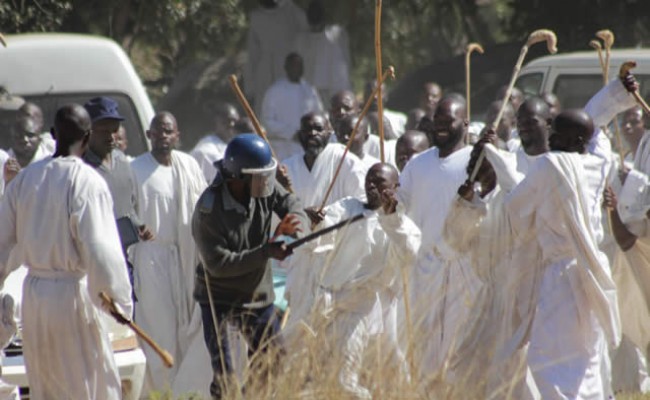
    The news that a sect of the white garment churches brutalised riot police officers, ZBC journalists and a ZANU PF ordained bishop of the mapostori has captivated many. What has caught the people’s attention is not the mapostori’s blatant disrespect for media personnel or law enforcement agents. Rather it is the way the men and women in white garments stood up to authority. People are marvelling at their courage and speculators have been quick to conclude that the white garments have become the new regalia for the opposition movement.

    Government to blame

    For years, the ZANU PF government has sided with mapostori overlooking their wrongs and praising them as indigenous churches. Despite the sects’ record of abusing women and children and their anti-education doctrine, government has supported them all the way. The sects enjoyed unfettered attention and airplay on radio and always had reserved seats at all national events like Heroes’ Day. The rest of the churches were seen as pursuing a regime change agenda.

    The battle for control

    For years, government has been desperately trying to assert its authority over the church. Their desperation was highlighted when intelligence agents carried out a covert mission to expose and disgrace the then Archbishop of Bulawayo Archdiocese, Pius Ncube. The plot was to silence him as Ncube was a fierce critic of government’s abuse of power and was vocal about Gukurahundi.

    Before the dust settled, government through disgraced ex-bishop Nolbert Kunonga grabbed the reigns of the Anglican Church using homosexuality as an excuse. For years, Anglicans were persecuted and banned from their churches and denied access to their Bernard Mizeki shrine until government realised the futility of its actions.

    Orthodox Church or state controlled doctrine

    Upon realising, they could not win the battle to control the western churches, government turned to the locals: mapostori. What government is seeking is to impose its bigoted political views as the central dogma of the sects. By sowing ideologies that border on racism and promote distrust of foreigners, they seek to establish a church that follows a toxic anti-Western doctrine. They are trying to create a church on the lines of the Russian Orthodox that derives power from government and legitimises government policies.

    Radicalisation and religious extremism

    The way the mapostori reacted to the police paints a gloomy picture of the future of religion in Zimbabwe. When one takes into cognisance, the fact that mapostori were complicit in the 2008 election violence that left more than 500 dead, it is not outlandish to believe that they are turning into religious extremists. Their views on women, children and western education and health are no different from the views of Nigeria’s Boko Haram and Somalia’s Al Shabaab. As they wake up to the reality that they have a significant population behind them, there is a possibility these sects will seek to expand their power and influence beyond their current boundaries. It is no surprise if decades from now Zimbabwe will be in Nigeria’s position facing religious extremists.

    The misguided ZANU PF thugs

    They are referred to as youths but I see nothing in them to celebrate as a youth. They are social misfits who offer themselves to be used as political pawns all for a sip of opaque beer ‘Chibuku or Ingwebu.’ In idiotic fashion, these vigilantes took to the streets in defence of the riot police. Its mind boggling that sane people will seek to defend the police from the people. What are they getting from the police? Whom are they representing: the people or the junta? Instead of demonstrating against corruption, high unemployment, collapsing education and health delivery systems, the brain dead saw it fit to waste their energy toy toying in solidarity with the police.

    All have sinned and none is pure

    The mapostori just like the spiritualists of this generation are taking advantage of people in desperation. They follow skewed doctrines that degrade women and children and glorify racism. Their views on western education and health are retrogressive. The mapostori are radicalising into religious extremists. However, this does not give the police or government the right to control the followers. The police are not a law unto themselves. They are mere enforcers and they must stick to that. As for the ZANU PF thugs, they stay out of the feud and stop escalating the situation. They are better if they go to Ngungunyana building and apply for farms so they can do something productive with their lives.

    Let the Human Rights Commission do the job. Give the commission the adequate resources and necessary legislative backing to investigate and prosecute human rights violators in a non-partisan manner.

    This has been a submission by Ittai Bryan.
    You can connect with Ittai via the following: http://ibmatteu.blogspot.com, http://twitter.com/ibmatteu, http://fb.com/ibmatteu.
    You too can become a Citizen Journalist by submitting your story here: Citizen Journalism by Living Zimbabwe
    The views expressed in the article are those of the author and not necessarily Living Zimbabwe.
  • Corrupt Temba Peter Mliswa Hon MP

    Corrupt Temba Peter Mliswa Hon MP

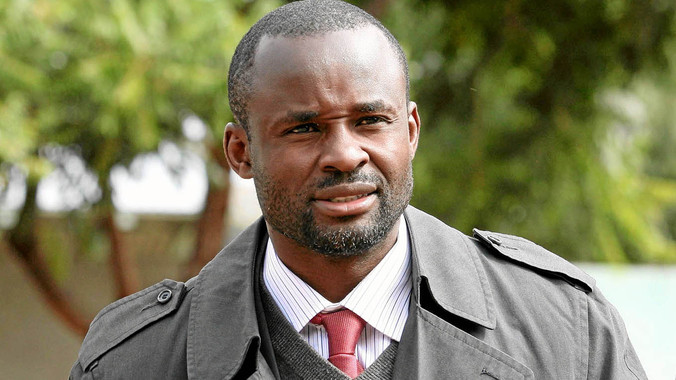
    On the 18 December 2009 Temba Peter Mliswa (now MP) came to my company Noshio Motors incorporating Benbar/Tromps (Zimbabwe’s Number One choice) and said “In line with indiginization I now own this company.” “I have a “Banda Trust” in my hand of which I am the Chairman.”! My lawyer Victor Zobgo at the time did a search at the deeds office in February 2010 and NO such trust exists!

    My business partner is Hammarskjold Banda (Was a Senior Pastor at the church he brought me to, where in fact I got “Born Again”) and his wife Brendaly Banda (Also Pastor of the same church) was finance and administration manager (but acted like the Chairman of the board) at the company. It was when I suspended her on 22 October 2009 the Hammarskjold and his wife started plotting a way how to get out of this massive they were up to! They were deducting money from the workers, but DID NOT pay relevant authorities (Nassa, N.E.C. P.A.Y.E etc) and converted the money for their personal gain!! They also defrauded SARS and ZIMRA (I gave ALL proof to the Police, Public Prosecutor (who mysteriously died 48 hours after he was released from jail as he was charged with obstructing justice and colluding with state witnesses!) This is why Temba Peter Mliswa was brought in as I had called for a forensic audit, but Bredaly Banda had to make sure this DID NOT happen. Hammarskjold Banda, the Managing Director and public officer held the company to ransom and did not come to work until 18 December 2009!!( What a coincidence) Temba used his uncle, Didymus Mutasa (As Martin Mutasa Didymus’s son was also involved) to make sure they would be “aquitted”. (BROWN ENVELOPES were definitely used to make sure my case went away in a hurry!!

    I was defamed by Mliswa and the state closed the case without 3 other very important witnesses testifying, (A lady from the deeds office, the investigating officer (who Hammarskjold confessed to and my wife who was at the company when this terrifying ordeal was taking place. Even though Brendaly Banda was still suspended she started running the payroll and awarded herself and her husband a bonus along with other family members working at the company). All the proof the court needed to hear was prevented by Temba Mliswa and his “behind the scenes meetings” with the magistrates involved! The Attorney General at the time Johannes Tommana (who was Temba Mliswa’s lawyer in 2000 during the land invasion where Mliswa ruthlessly beat up people) purportedly ordered the state to close the case as I had too many facts and evidence to back the charges.

    Hammarskjold Banda and His wife Brendaly fled the country to South Africa with his daughter and son but there still charges pending against them! I am led to believe interpol are looking for them and are staying in Johannesburg nearAmalgam off the R41 having left Port Elizabeth.

    These are the facts I present to you “the jury” as to why Hon MP Temba Peter Mliswa was brought to my company! This Hon MP lied as he claimed he had “permission” from Minister Saviour Kasukuwere, (Then Minister for indiginisation) but worst of all he claimed His Excellency President R.G. Mugabe “sanctioned” this illegal takeover!

    I have faith that this time Hon MP Mliswa will be held accountable for his wrongful actions and decisions and the TRUTH WILL come out! Justice is near.

    Paul Westwood

    This has been a submission by Paul Westwood.
    You can connect with Paul via the following: http://twitter.com/PaulPaulus13/status/464388746599620609.
    You too can become a Citizen Journalist by submitting your story here: Citizen Journalism by Living Zimbabwe
    The views expressed in the article are those of the author and not necessarily Living Zimbabwe.
  • Workers’ Day: Celebrating a dwindling labour force in Zimbabwe

    Workers’ Day: Celebrating a dwindling labour force in Zimbabwe

    Trade unions like ZCTU and ZIFTA annually organise Workers’ Day celebrations on May Day. For a time workers have struggled to have their grievances addressed.

    Low wages
    As many companies close or scale down operations, most are struggling to give their workers the gazetted salaries.
    Workers are in debt as they get loans from loan sharks in a bid to meet their financial obligations.
    As a result many workers are sinking in debt.

    Job insecurity
    Corporates realising the benefits of hiring contractors have resorted to offering workers short term contracts lasting 6months or 1year.
    By this, workers are spending their days on a prawl looking for the next job.
    Some contracts are silent on medical and life insurance policies or pensions.

    Accommodation
    The majority of workers in Zimbabwe are tenants.
    Some have been on hiding lists for a long time and several have been duped by housing cooperatives and land barons.
    The zimbabwean workers are looking for affordable houses to buy.
    For this cause, government and corporates must work together to avail decent accommodation for the workers.

    Individual freedoms
    It’s enshrined in the Bill of Rights that all citizens have the freedom of expression, association, etc.
    However, government has come down heavy on workers effectively banning demonstrations and disturbing workers meetings.

    Chronic joblessness
    Its said when one door closes, another opens.
    But not in Zimbabwe.
    When the contract expires, workers have a torrid time searching for new job.

    Yes entrepreneurship and enterprise development are part of the solution to workers problems but judging from the nature of the problems, workers feel let down by both government and private seer

    This has been a submission by Ittai Bryan.
    You can connect with Ittai Bryan via the following: http://ibmatteu.blogspot.com, http://twitter.com/ibmatteu, http://fb.com/ibmatteu.
    You too can become a Citizen Journalist by submitting your story here: Citizen Journalism by Living Zimbabwe
    The views expressed in the article are those of the author and not necessarily Living Zimbabwe.
  • The Frustration Of Applying For A Zimbabwean Passport From The UK

    The Frustration Of Applying For A Zimbabwean Passport From The UK

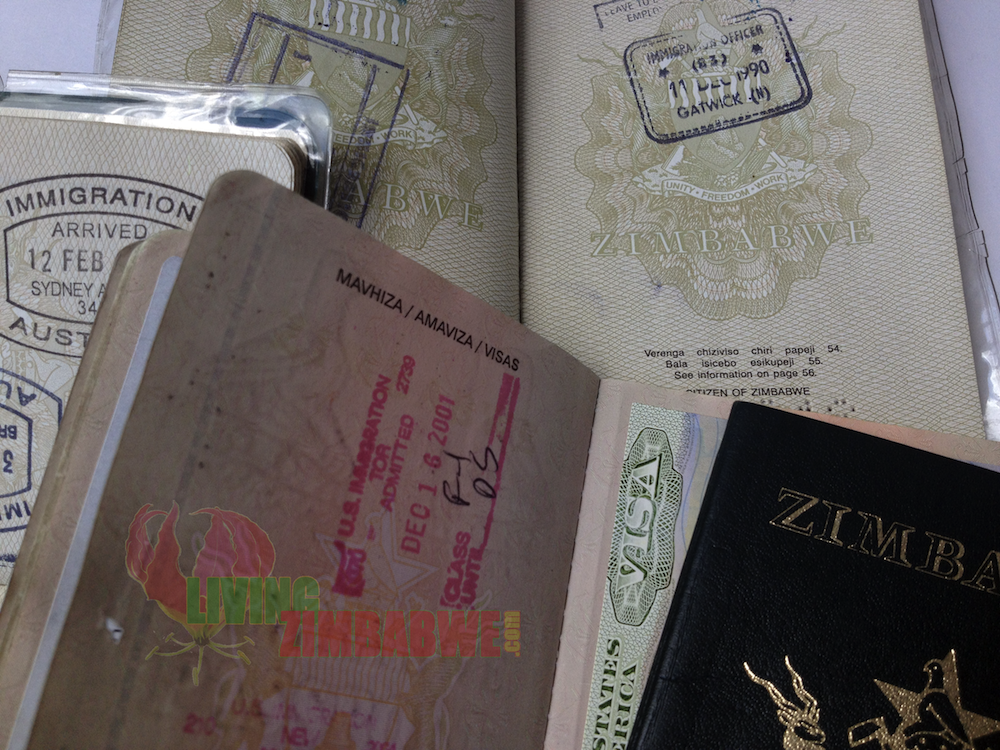
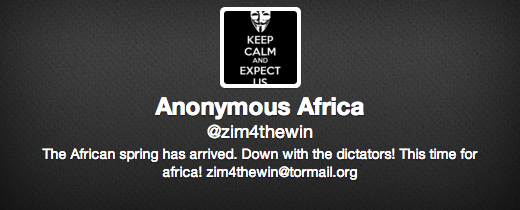
    I don’t get the Zimbabwean passport system! I am not usually one to comment on blogs but I am both dismayed and disgusted at the ridiculousness of the situation. I’m in the UK and I have lost my Zimbabwean passport, like most people on here. The consulate keep insisting I go back and get an ID card.

    Soooo let me get this right, I am expected to firstly pay for flights in excess of £1000, and let’s not forget accommodation as I have no links there so that will be whatever the daily changing rate is, not to mention food, water, and travel. God only knows how I am meant to get from A-B, and then the cost of both a new passport and the ID card and FINALLY fly back to England and hope and pray that border control will let me in because obviously my VISA won’t be stamped in my new passport! And even the Zim embassy cannot guarantee you will get back in they said it is a matter to take up with the Home Office Immigration (and we all know exactly how happy the current Government will be to lose a few immigrants).

    No, I am not playing the violin and I don’t want sympathy but I left Zimbabwe as a very young child I don’t know anyone there, and I cannot just ‘hey ho’ back to some unknown country for a little card and then face the possibility that the UK Home Office make it difficult for me to get back in.

    I have a little girl here and I cannot chance leaving her for who knows how long! I don’t really expect any advice from anyone here other than “go back” because truth be told that’s the only option we are given BUT I feel as a citizen I can vent (not that it will do me an ounce of good) but it is a stupid rule imposed by stupid people who really have not got the best interest of anyone other than themselves!

    We live in a time of economic crisis – who the heck can afford to make such an expensive trip plus all the costs? And what frustrates me further is having read other blogs some people have had their fingerprints done and passports issues in the UK so I think it’s a “help who we like” policy. The Consulate are unhelpful and when I called the man I spoke to blatantly gave me a false name. What a farce!

    I am seeking legal advice and Zimbabwe can keep its passport and absurd policies. I know there is another way round this because there always is another way and I just refuse to do it Zimbabwe’s way I would be happier to fork out £4000 into an immigration solicitors pocket and get my British passport than spend as little £1 on a country that clearly has no respect for her own people! I am sorry if that offends anyone but it’s the naked truth (in my eyes).

    Good luck to anyone else in a similar situation and I hope yours is a happier tale to tell of Zimbabwe and it’s frigged up system.

    This has been an anonymous submission by Frustrated Citizen.
    You too can become a Citizen Journalist by submitting your story here: Citizen Journalism by Living Zimbabwe
    The views expressed in the article are those of the author and not necessarily Living Zimbabwe.
    Zimbabwe-Passports-Diaspora

  • Widespread Human Rights Violations Threaten Elections in Zimbabwe

    FULL REPORT:

    PRESS STATEMENT

    With just weeks to go before a watershed election, a political atmosphere of intimidation and violence has taken hold in Zimbabwe. Rather than promoting an environment in which civic participation and political tolerance are encouraged, the government of Zimbabwe has engaged in a systematic crackdown on civil society and the human rights community, including arbitrary detention of activists and opposition supporters, and widespread violations against freedom of expression and access to information.

    These are the findings of a report released today by the Robert F. Kennedy Center for Justice and Human Rights (RFK Center) entitled, “A Promise in Peril: How Widespread Rights Violations Undermine Zimbabwe’s Elections.” The report comes one month before Zimbabwe’s July 31 election, and presents findings that were collected during an international delegation organized by the RFK Center in March 2013.

    “The routine intimidation, harassment, and arbitrary criminal prosecutions of human rights defenders, lawyers, and political activists in Zimbabwe threaten the rights of all citizens to participate freely in public affairs,” said Kerry Kennedy, President of the RFK Center. “With an election upcoming, the government must ensure an electoral environment that is consistent with international standards.”

    “These ongoing human rights violations set the stage for the type of violence and chaos that has marred past elections in Zimbabwe. State authorities have engaged in a pattern of suppression that specifically targets groups engaged in voter registration, education, and mobilization initiatives,” said Santiago A. Canton, Director of RFK Partners for Human Rights. “This behavior is unacceptable and represents clear breaches of domestic and international law.”

    In the report, the RFK Center urges the government of Zimbabwe—which is largely dominated by President Robert Mugabe and the Zimbabwe African National Union–Patriotic Front—to immediately cease the continued harassment, intimidation, and violence perpetrated against civic actors. The report also encourages the government to respect international legal conventions to which Zimbabwe is a party or state signatory, including the Universal Declaration of Human Rights, the International Covenant on Civil and Political Rights, the African Charter on Human and People’s Rights, and the Declaration of Principles of Freedom of Expression in Africa.

    This has been a submission by Jeffrey Smith.
    You can connect with Jeffrey Smith via the following:
    You too can become a Citizen Journalist by submitting your story here: Citizen Journalism by Living Zimbabwe
    The views expressed in the article are those of the author and not necessarily Living Zimbabwe.
  • Anonymous Africa – Our End Game For Zimbabwe & Africa (@zim4thewin)

    Anonymous Africa – Our End Game For Zimbabwe & Africa (@zim4thewin)

    Greetings and Salutations fellow Africans and Earthlings.

    We are Anonymous Africa and we were asked to write a short blog explaining our motivations. By now you may have noticed some of our ops hitting Southern Africa. We hope you like our work. We would like to thank you for the overwhelming support you are giving us.

    So far our targets have included:

    • IOL – A partly South African government owned media publication that pushed pro-Mugabe propaganda – www.iol.co.za
    • ZANU-PF – The website for the completely corrupt ruling party in Zimbabwe – www.zanupf.org.zw
    • Zimbabwean Herald – The ZANU-PF owned puppet media publication – www.herald.co.zw
    • ZIMRA – The Zimbabwe Revenue Service, the Zim tax collectors – www.zimra.co.zw
    • ZIM MOD – The Zimbabwe Ministry of Defence – www.mod.gov.zw
    • ANC – The corrupt ruling political party in South Africa that supports Mugabe – www.anc.org.za

    Why are we upset?

    TWe believe most of Africa’s modern day problems stem from corrupt and evil leaders that have sold the people out (mostly to corrupt private commercial interests). Much of Africa has entered a cycle of corruption and we believe we are the generation to start breaking up that cycle. Not only can the youth of Africa change Africa. They have to.

    Who are we?

    The Hacker Manifesto best describes who we are:

    “This is our world now… the world of the electron and the switch, the beauty of the baud. We make use of a service already existing without paying for what could be dirt-cheap if it wasn’t run by profiteering gluttons, and you call us criminals. We explore… and you call us criminals. We seek after knowledge… and you call us criminals. We exist without skin color, without nationality, without religious bias… and you call us criminals. You build atomic bombs, you wage wars, you murder, cheat, and lie to us and try to make us believe it’s for our own good, yet we’re the criminals.”

    We are a tight collective of hackers and coders. Some of our members have been part of anonymous since their origins in the Scientology protests. We have been involved in previous ops from around the world including and not limited to, South America, South East Asia and Europe.

    What are we doing?

    Following what happening in the Middle East we are hoping to help start the launch of the African spring. We believe that the Internet is the last place that free speech truly exists. We hope to use whatever skills and abilities we have to bring as much attention to the crimes and corruptions of our African leaders.

    What do we have planned for the future?

    We have many non-violent forms of electronic protest planned. We also hope in the near future to release an African specific version of wikileaks where Africans can expose corruption without fear.

    This has been a submission by Anonymous Africa.
    You can connect with Anonymous Africa via the following: .
    You too can become a Citizen Journalist by submitting your story here: Citizen Journalism by Living Zimbabwe
    The views expressed in the article are those of the author and not necessarily Living Zimbabwe.

  • What Zimbabwe’s Draft Constitution Has To Say About Citizenship

    What Zimbabwe’s Draft Constitution Has To Say About Citizenship

    There have been and probably are still a few sticking points in Zimbabwe’s Draft Constitution and one or them happens to be the issue of Citizenship. This topic may also be of interest to some in the Diaspora who in the recent past have taken up citizenship in their host nations or to be correct, “new homes”. It could be of interest for various reasons but the main one would be how it will affect their possible return home.

    Below is what the Draft Constitution has to say about Citizenship:

    Citizenship

    35  Zimbabwean citizenship

    (1) Persons are Zimbabwean citizens by birth, descent or registration.

    (2) All Zimbabwean citizens are equally entitled to the rights, privileges and benefits of citizenship and are equally subject to the duties and obligations of citizenship.

    (3) All Zimbabwean citizens are entitled to the following rights and benefits, in addition to any others granted to them by law—

    (a)  to the protection of the State wherever they may be;

    (b)  to passports and other travel documents;  and

    (c)  to birth certificates and other identity documents issued by the State.

    (4) Zimbabwean citizens have the following duties, in addition to any others imposed upon them by law—

    (a)  to be loyal to Zimbabwe;

    (b)  to observe this Constitution and to respect its ideals and institutions;

    (c)  to respect the national flag and the national anthem;  and

    (d)  to the best of their ability, to defend Zimbabwe and its sovereignty.

    36  Citizenship by birth

    (1) Persons are Zimbabwean citizens by birth if they were born in Zimbabwe and, when they were born—

    (a)  either their mother or their father was a Zimbabwean citizen;  or

    (b)  any of their grandparents was a Zimbabwean citizen by birth or descent.

    (2) Persons born outside Zimbabwe are Zimbabwean citizens by birth if, when they were born, either of their parents was a Zimbabwean citizen and—

    (a)  ordinarily resident in Zimbabwe;  or

    (b)  working outside Zimbabwe for the State or an international organisation.

    (3) A child found in Zimbabwe who is, or appears to be, less than fifteen years of age, and whose nationality and parents are not known, is presumed to be a Zimbabwean citizen by birth.

    37  Citizenship by descent

    (1) Persons born outside Zimbabwe are Zimbabwean citizens by descent if, when they were born—

    (a)  either of their parents or any of their grandparents was a Zimbabwean citizen by birth or descent;  or

    (b)  either of their parents was a Zimbabwean citizen by registration;

    and the birth is registered in Zimbabwe in accordance with the law relating to the registration of births.

    (2) Subsection (1) does not affect a person’s right to citizenship by birth under section 36.

    38  Citizenship by registration

    (1) Any person who has been married to a Zimbabwean citizen for at least five years, whether before or after the effective date, and who satisfies the conditions prescribed by an Act of Parliament, is entitled, on application, to be registered as a Zimbabwean citizen.

    (2) Any person who has been continuously and lawfully resident in Zimbabwe for at least ten years, whether before or after the effective date, and who satisfies the conditions prescribed by an Act of Parliament, is entitled, on application, to be registered as a Zimbabwean citizen.

    (3) A child who is not a Zimbabwean citizen, but is adopted by a Zimbabwean citizen, whether before or after the effective date, is entitled, on application, to be registered as a Zimbabwean citizen.

    39  Revocation of citizenship

    (1) Zimbabwean citizenship by registration may be revoked if—

    (a)  the person concerned acquired the citizenship by fraud, false representation or concealment of a material fact;  or

    (b)  during a war in which Zimbabwe was engaged, the person concerned unlawfully traded or communicated with an enemy or was engaged in or associated with any business that was knowingly carried on so as to assist an enemy in that war.

    (2) Zimbabwean citizenship by birth acquired under section 36 may be revoked if––

    (a)  the citizenship was acquired by fraud, false representation or concealment of a material fact by any person;  or

    (b)  the person’s nationality or parentage becomes known, and reveals that the person was a citizen of another country.

    (3) Zimbabwean citizenship must not be revoked under this section if the person would be rendered stateless.

    40  Retention of citizenship despite marriage or dissolution of marriage

    Zimbabwean citizenship is not lost through marriage or the dissolution of marriage.

    41  Citizenship and Immigration Board

    An Act of Parliament must provide for the establishment of a Citizenship and Immigration Board consisting of a chairperson and at least two other members, appointed by the President, to be responsible for—

    (a)  granting and revoking citizenship by registration;

    (b)  permitting persons, other than citizens, to reside and work in Zimbabwe, and fixing the terms and conditions under which they may so reside and work;  and

    (c)  exercising any other functions that may be conferred or imposed on the Board by or under an Act of Parliament.

    42  Powers of Parliament in regard to citizenship

    An Act of Parliament may make provision, consistent with this Chapter, for—

    (a)  procedures by which Zimbabwean citizenship by registration may be acquired;

    (b)  the voluntary renunciation of Zimbabwean citizenship;

    (c)  procedures for the revocation of Zimbabwean citizenship by registration;

    (d)  the restoration of Zimbabwean citizenship;

    (e)  the prohibition of dual citizenship in respect of citizens by descent or registration;  and

    (f)  generally giving effect to this Chapter.

    43  Continuation and restoration of previous citizenship

    (1) Every person who, immediately before the effective date, was a Zimbabwean citizen continues to be a Zimbabwean citizen after that date.

    (2) Every person who was born in Zimbabwe before the effective date is a Zimbabwean citizen by birth if—

    (a)  one or both of his or her parents was a citizen of a country which became a member of the Southern African Development Community established by the treaty signed at Windhoek in the Republic of Namibia on the 17th August, 1992;  and

    (b)  he or she was ordinarily resident in Zimbabwe on the effective date.

  • Government Should Intervene To Curb Corruption In Rural Areas

    Government Should Intervene To Curb Corruption In Rural Areas

    Transparency International Zimbabwe (TI-Z) a non-partisan, systems oriented local chapter of the international movement in the fight against corruption is deeply disturbed by reports on alleged corruption in rural areas in which political leaders exacerbate the suffering of the most vulnerable people living in rural communities.

    It has come to TI-Z attention that most people in Tsholotsho are not accessing the government’s Grain Loan Scheme. The Grain Loan scheme is a social safety net which was introduced by the government to assist villagers in need of grain. However that seems to have fallen on the wayside as councillors and local leaders who are politicians loyal to their parties are accused of selecting beneficiaries along party lines.

    A survey conducted by TI-Z revealed that villagers were being asked to pay up to US$3 the transportation of grain. Only a few were being chosen to benefit from this scheme despite the fact that they all had paid money for the transportation of the grain from Bulawayo to Tsholotsho. Upon further inquiry it emerged that councillors were choosing people who are loyal to their political parties. TI-Z also learnt that few people were benefitting from the scheme because powerful political figures and ministers are accused of diverting grain and agricultural inputs such as fertiliser meant to benefit communities of Tsholotsho to other nearby constituencies. Villagers further allege that a minister (name supplied) was taking grain from Tsholotsho and giving it to people of nearby constituency leaving the people of Tsholotsho helpless.

    The Basic Education Assistance Module (BEAM) facility is another social safety net which is being abused by local community leaders. Respondents visited by TI-Z accused headmasters and traditional leaders for abusing the facility meant to benefit everyone in the community. Rural communities such as Tsholotsho and Lupane are more vulnerable to the corruption risks than the urban community as a result of a multiplicity of factors. Rural communities depend on the government and Non-Governmental Organisation (NGO for food aid and school fees support for the vulnerable groups of society.

    TI-Z strongly believes there is need for the government through the Zimbabwe Anti-Corruption Commission to intervene and investigate alleged corrupt activities in rural areas. Parliamentarians and representatives should pay attention to these reports because their constituencies are suffering while they are living lavishly in urban areas. The trend has been that most parliamentarians neglect the people they represent and only re-surface during election periods. The electorate should choose leaders who uphold principles of transparency, accountability and integrity.

    This has been a submission by Transparency International Zimbabwe.
    You can connect with Transparency International Zimbabwe via the following: http://www.tizim.org/, http://twitter.com/transparencyzim, http://www.facebook.com/pages/Transparency-International-Zimbabwe-TI-Z/168077246536817.
    You too can become a Citizen Journalist by submitting your story here: Citizen Journalism by Living Zimbabwe
    The views expressed in the article are those of the author and not necessarily Living Zimbabwe.

  • Justice Is Blind

    Justice Is Blind

    My mind goes back to the year Zimbabweans last took it to the ballots, 2008. Arguably, the most storied year “my” people have had to endure.This writer’s idea of life hinges on two elements, enjoy or endure. After the first bout which saw a clear turn on the political tide, since independence, however, the result was said to be indecisive. A re-run was calendered 27 days after the last hour of the polls, and all hell broke loose.

    I remember remembering my history lessons on the French Revolution; Danton, Marat and Robespiere unleashed a “reign of terror” on their political opponents in 1793-1794, the sympathisers of the Bourbon monarch. I had thought these days were long gone or archived as “bygones” as they brought nothing but misery on the hoi polloi. Similarly, and sadly, 8 years after we graced the second millenium I was awed to see such primitive bickering for electorate’s favours in my own backyard-Zimbabwe.

    Innocent and defenceless citizens were massacred by their own neighbours or kinfolk if they were somehow alleged to be affiliated to the MDC, the opposition, which had proved to be a tougher contender to the revolutionary and geriatric incumbent.I expected the so-called “long arm of the law” to take its stand and bring those who had orcheastrated the “injustices” to book, but everyone acted as nothing had happened. Thats when I start questioning the justice system in my motherland, the place I call home.

    The debacle which ensured saw uncalculated risks being taken, compromises agreed to to form a government of national unity which ridiculously epitomised the fact that the biggest losers in a plebiscite is the electorate. As if it wasn’t enough Zimbabwe saw obsolete ministries like the one led by 3 ministers put in place, the Organ for National Healing and Reconciliation. I seriously thought my country’s leaders needed shots of whisky each for this madness. Expecting a mere sorry from a government official for my cattle stolen, body parts dismembered, kinfolks murdered, and property vandalised is not only ludicrous, but insane.

    As the shona say, “kugona ngozi kuiripa”. This writer thinks pertrators and orchestrators of this unjustifiable and primitive system which forces political coherence must pay. Please give democracy and justice a chance because at the moment it is blind.

    This has been a submission by James Chiwoko.
    You too can become a Citizen Journalist by submitting your story here: Citizen Journalism by Living Zimbabwe
    The views expressed in the article are those of the author and not necessarily Living Zimbabwe.

  • Transitional Justice In Zimbabwe, Seeking Ways To Heal The Nation

    On Wed July 6 a workshop was convened at the Diakonia Centre in Central Durban by Zimbabwe Exiles Forum (ZEF) in partnership with other Zimbabwean civic groups which are based in South Africa. Keynote speakers were Gabriel Shumba (ZEF), Munjodzi Mutandiri (NCA), Janet Munakamwe (Southern Africa Women’s Institute for Migration Affairs~SAIMA), Sox Chikohwero (Zimbabwe Global Forum) and Patience Rusere (Media Consultant).

    The purpose of the workshop was to analyse how Transitional Justice can be applied in pre and post crisis Zimbabwe. Transitional Justices looks at the various avenues both judicial and quasi-judicial, which can used to address human rights abuses. In the case of Zimbabwe this entails strategies needed to bring closure and healing to victims of state sponsored violence and to ensure that perpetrators are held accountable for atrocities committed since 1980.

    This Workshop proved quite interesting because ordinary Zimbabweans who attended the event were given the opportunity to contribute and present their own perspectives on how Transitional Justice can work in Zimbabwe. The workshop was basically divided into 2 components, comprised of contributions by the main speakers representing Zimbabwe Exiles Forum, National Constitutional Assembly and SAIMA. These speakers expressed their views on how Transitional Justice can be applied in Zimbabwe.

    On the other hand, other participants were also given an opportunity to present their views on reforms needed to transform institutions like the police and justice system. Also discussions centred on how to promote truth, reconciliation, justice and gender equality in Zimbabwe.

    There was an impressive turnout by ordinary Zimbabweans, based in and around Durban, from all walks of life. This could be a sign that exiled Zimbabweans, particularly in SA, are now more actively interested in participating in the shaping of a new Zimbabwe.

    What came out from this workshop was a clear common understanding by everyone that Transitional Justice will work if applied in a holistic approach. This will ensure that national harmony, justice and sense of nationhood can return to our traumatised nation.

    Article submission by: Chamunorwa Nhau