Category: Health

  • How do you afford emergency medical care in Zimbabwe?

    How do you afford emergency medical care in Zimbabwe?

    Now and then, we face situations where we are involved in accidents or, things go wrong with our bodies and we need emergency medical attention. During these times we really aren’t left with much of a choice but to seek medical attention in order to get back to a normal or close to normal state of being. Not seeking help could mean death or a diminished quality of life due to health complications.

    Here are two instances from the very recent past where people have been in situations where they needed medical attention.

    One was involved in a car accident resulting in a fractured limb. They went to Parirenytwa and when there, no one seemed too interested in attending to them. Seeing as they weren’t going to get the help they needed, they ended up going to the Avenues Clinic. The other had a sudden onset medical situation that required urgent attention. Given the state of government-run institutions, they decide to bypass Pari and made their way to The Avenues.

    On arrival, both were welcomed into the hospital but before they were attended to, the issue of payment was brought up. The accident victim who wasn’t critical was lucky enough to have some money on them to get treatment started. What they had wasn’t enough to cover all expenses and they had to call upon relatives for a top up to cover all the expenses.

    The other person was critical and required urgent surgery. This person only had some money on them but nowhere near the amount required to cover the costs. Given the situation, surgery was carried out after giving a guarantee that they had access to funds to make full payment. They too had to call upon relatives both locally and abroad (via a WorldRemit transfer) for assistance in order to make up the difference.

    In the end, both got the treatment that they needed after spending well over $1000!

    Even if you do have that amount of money sitting in the bank getting cash out is easier said than done. How do you access the amounts that you need, given the current daily withdrawal limits imposed by the banks? Instead of concentrating on getting treated, people find themselves stressing about how they can or can’t afford to pay for treatment.

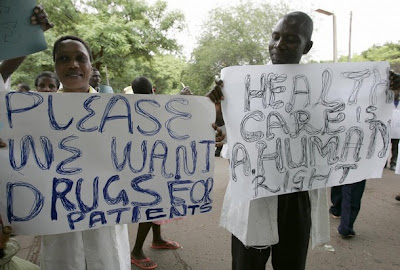
    This difficult situation is further compounded by a shortage of (disgruntled) medical personnel, inadequate infrastructure, shortage of drugs and so on.

    The sad thing about events like these is that once upon a time, anyone could walk into a government run hospital, receive good quality care and pay a nominal fee. Nowadays, if you are aged between 5 and 65 years, you can expect to pay $20 for a consultation at a government run hospital. Depending on what prompted you to seek medical attention, the costs can rise. How high they rise depends on any tests, follow up treatments, specialist consultations, medication and so on that may be required.

    What does one do when they clearly need treatment but don’t have the money? Do they seek alternative forms of treatment or do they just go home and hope for the best?

    That begs the question, how do you afford emergency medical care in Zimbabwe?
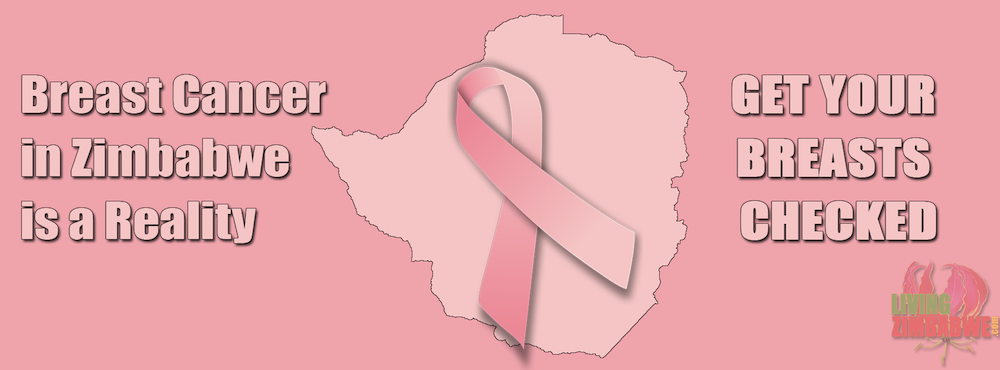
  • Breast Cancer in Zimbabwe is a Reality, Get Your Breasts Checked!

    Breast Cancer in Zimbabwe is a Reality, Get Your Breasts Checked!

    This weeks @263Chat hosted by Sir Nige and Pearls, Heels & Dreams was focused on CANCER but was originally centered on breast cancer given that it is Breast Cancer Awareness Month. One thing that was apparent during the chat session was that just about everyone who joined in on the conversation had been directly affected by cancer be it a family member, friend or colleague living with or having lost their life to some type of cancer.

    Other insights that came to light when talking about cancer and Zimbabwe were fear and stigmatization. The fear is a fear of the unknown or of getting to know whats going on and what the end result might be. The stigmatization is that cultural problem where when someone develops a condition, phrases such as “aka royiwa” (bewitched) are thrown around.

    Breast cancer is a dreaded disease and causes a lot of fear and anxiety that prevents women from going for regular screening or to the doctor when they feel that something is not quite right. No-one wants to hear that they have something like breast cancer but advances in medicine have made it a condition that is manageable if it is caught early. Stigma also plays a role in preventing people from seeking medical advise. Breast cancer has a number of associated risk factors but, being subjected to one or more doesn’t mean you WILL develop the cancer. Conversely, being subjected to zero risk factors doesn’t mean that you WON’T develop the cancer. Just being a woman and growing older puts you at risk. Cancers are not the result of evil doing by someone who has a grudge against you.

    We here at Living Zimbabwe personally know of women who have battled with breast cancer. These women whose ages ranged from the early 30’s to the late 40’s fought different battles because of the way in which they managed the condition. The woman in her early 30’s was diagnosed when the cancer was in it’s early stages. Her treatment included a mastectomy and radiotherapy. She went on to lead a normal life and start a family. The other’s were diagnosed when the cancer had progressed significantly. Both sought medical attention with varying outcomes. One of them (we’ll call her X) was committed to following prescribed treatments. The other (we’ll call her Y), was not so diligent and was somewhat in denial, didn’t follow advice and treatment. Both of these women lost their battles but X had a bit more time to come terms with her cancer and more time to spend with her family. For Y, the disease rapidly took over and the result was painful (both physically and emotionally) and unpleasant for her and those close to her.

    Breast cancer doesn’t need to be a killer and there are a number of key steps that can be taken to win the battle. They include early detection, education and support:

    • Early detection – if cancer is present and it is caught early, the chances of survival are significantly increased
    • Education – knowing what it is, what the risk factors are, when and where to get screening are pivotal. Knowledge is power
    • Support – talking about it and getting or giving the correct information and supporting those living it strengths the fight and also helps to dispel false stigmas that exist in society

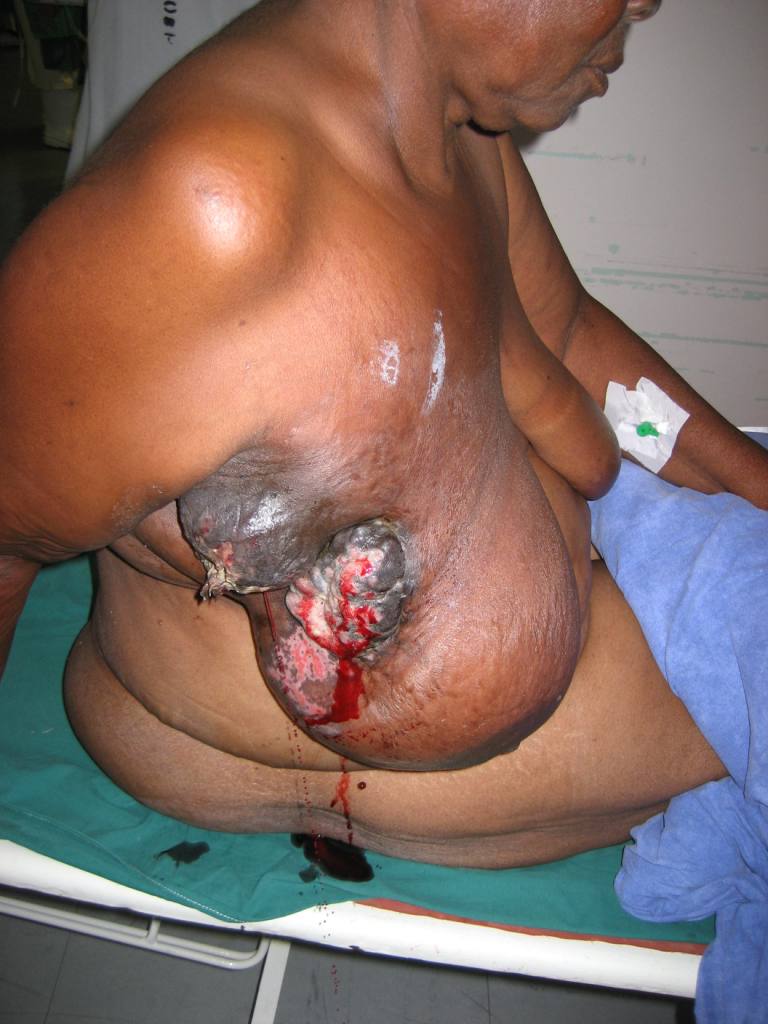
    If you haven’t had breast cancer screening or know someone that you care about whom you think should probably get checked, we encourage you to make it happen at the earliest possible convenience. You don’t want to leave it too late (look at the image below).

    [quote]Do not be afraid of tomorrow; for God is already there ~ Author Unknown[/quote]

    For more information on breast cancer and cancer in general, visit the following resources:

    Breast-Cancer-Tumor-Zimbabwe

  • The Fight Against Chronic Disease In Zimbabwe

    The Fight Against Chronic Disease In Zimbabwe

    Since the early nineties, Zimbabwe has been plagued by HIV/AIDS which over the years has seen countless numbers of people being infected and losing their lives. The high infection rates lead to various organisations investing a huge amount of resources to combat the disease.

    Whilst this fight against HIV/AIDS has been taking place, another menace has been slowly creeping up and making it’s way to the forefront. That menace is chronic disease and there is an ever increasing number of Zimbabweans who are succumbing to cancer, diabetes, cardiovascular disease and other chronic conditions.

    For some people, words such as “cancer” and “diabetes” are just that; words. For others they go far beyond being just words and have become a reality that they have to live with for the rest of their lives. This reality is not limited to the victims, their loved ones also fall victim with the emotional turmoil that they go through and they too may need to make slight adjustments to their lifestyles.

    Increasing numbers of Zimbabweans are being diagnosed with various chronic conditions. For some, diagnosis is made at a later stage of the disease progression and at a point when a significant amount of irreversible damage has already been done. Such a diagnosis will more than likely bring about emotional and physical turmoil that may lead people into a state of hopelessness which may then lead them to having to deal with depression as well.

    One of the necessary steps in the fight against chronic disease is education. There needs to be an increase in awareness to the point where the public has a basic understanding about various conditions and knows the answers to questions such as:

    • what is cancer?
    • what are the risk factors?
    • what is diabetes?
    • how do you prevent diabetes?
    • how do you detect cancer?
    • how do you prevent cancer?
    • how do you detect diabetes?
    • where can I get more information?
    • where can I discuss any concerns?
    • and so on and so forth….

    Knowledge is power and being more informed about these topics will allow people to make better life choices. For those living with diabetes, cancer and other conditions, being knowledgable about their condition will allow for better self management.

    There is no time better than the present to start having a conversation about chronic diseases. Beyond having these conversations, we need to start taking action on a number of fronts. Evidence suggests that a number of these diseases a brought about by lifestyle choices. That said, we can choose to make choices in our lives that reduce our risk factors and these can include good nutrition, keeping physically active, staying away from tobacco and managing stress.

    These diseases are not going away anytime soon and you really need to ask yourself a question; is your life and the lives of your loved ones worth it?

  • Medical Misadventure In Zimbabwe

    Medical Misadventure In Zimbabwe

    Statistics show that chronic diseases such as caner and diabetes are on the rise in developing nations. A number of these nations are still battling infectious diseases such as HIV. Having to deal with both infectious and chronic diseases puts even more pressure on health systems that are already struggling to cope. Zimbabwe’s brain drain of medical professionals has further compounded this situation due to the shortage of nurses, doctors and specialists.

    The increase in the prevalence of chronic diseases has lead to the need for more specialists such as oncologists for cancer management. In the case of diabetics, there may be a need for them to have access to a team of specialists that may include an endocrinologist, nutritionist, eye doctor and cardiologist. Not all of these specialists will be at the publics’ disposal and if they are, there is a limited choice as to whom someone can visit about a particular condition.

    This may lead to a predicament where lets say for example there is only one or two specialist in a particular field in the whole of Harare. This for a number of reasons is not a good situation for those seeking medical attention. Doctors don’t always get it right and patients may be in a situation where they are not showing any signs of progress. With the limited choice of medical care, patients become reliant on one person for their disease management. Under normal conditions, if someone is not showing signs of progress, it is always a good idea to get a second opinion. With not being able to do that and living with a condition that is progressively deteriorating, a point will eventually and unnecessarily be reached where nothing can be done.

    Just like everywhere else in the world, specialist visits come at a cost and you would hope that you are getting the best care possible. If after repeated visits and interventions and it is plain to see that a patient is not showing signs of progress you would hope the specialist would suggest other options. One feasible option is seeking medical attention outside of Zimbabwe with a good option being neighbouring South Africa.

    Some people in Zimbabwe have the means of making their way to South Africa to explore treatment options. Due to various circumstances such as the logistics of booking the necessary appointments, the prospect of travelling abroad seems like a very daunting task.

    Every life is worth living and you only have one life to live. Whether or not you or they (doctors) may not like to admit it, there is only so much treatment you can get in Zimbabwe. If you, a family member or a friend are in a situation where it seems as if all hope has been lost and treatment options abroad have not been explored, then do what it takes to make it happen. It may not be too late!

  • Cholera, the Zimbabwe Killer

    Cholera according to the world health organization is:
    an acute intestinal infection caused by ingestion of food or water contaminated with the bacterium Vibrio cholerae. It has a short incubation period and produces an enterotoxin that causes a copious, painless, watery diarrhoea that can quickly lead to severe dehydration and death if treatment is not promptly given. Vomiting also occurs in most patients.

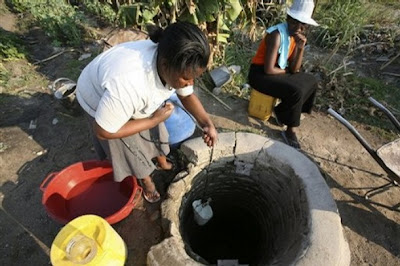
    Cholera is hitting Zimbabwe hard at the moment with an estimated 300 people having succumbed, 6,000 reported cases and 1.4 million people at risk. Zimbabwe National Water Authority (ZINWA), the government body responsible for water provisions and sewage management has failed to provide adequate services which has lead to the cholera outbreak. Those who once had running tap water now have no choice but to seek out water in shallow wells and rivers but the pools of stagnant sewage dotted around the streets does not make the situation any better.

    The already crippled health system is struggling to ease the situation and for all we know, the actual number of people with cholera could be well above the reported estimates. The government has been urged by Zimbabwe’s Medical Association to declare a national disaster which would bring aid to ease the situation. At the moment it seems as if the Zanu PF government may not see the need to take such measures. With the onset of the rainy season the epidemic could get a whole lot worse and see many more people dying.

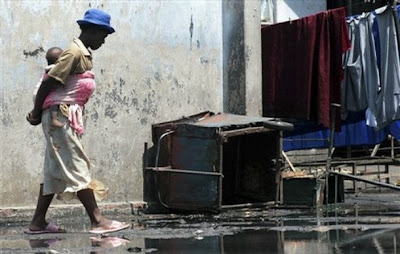
    Stagnant Sewage, Mbare, Harare
    Unprotected Well, Glenview, Harare

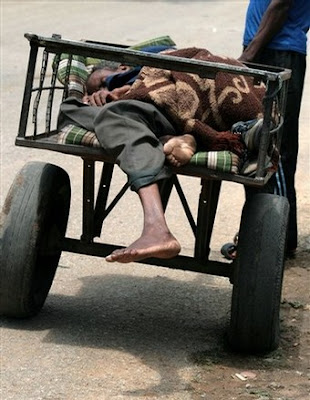
    Cholera Sufferer Being Carted To a Clinic, Budiriro, Harare

    Zimbabwean Doctors and Nurses Pleading For Help