Category: Culture

  • 25 Random Things I love about Zimbabwe

    1. We have the best climate in the world- ask anyone. Harare in particular is wonderful, but the whole of Zim is pretty lovely. No, I am not biased.

    2. We are really nice people. When you sit in a kombi (public transport), you can pour out your troubles and everyone will listen, perhaps laugh, usually have a kind word to say- no matter how pressing their own problems are. Strangers also smile and say hello. I love that.(Australians are nice too, incidentally).

    3. We are peace-loving. After all the troubles we have been through in the last ten years… Well, anything could have happened. That stuff happens in other African countries. Not to minimize the cases that have been in the world media so much, but we never thought to turn to arms to make our point.

    4. We know how to have fun. In the old days (pre-financial trouble), Christmas was a good excuse to party all night- with the whole neighbourhood. We know how to laugh, no matter what’s going on around us. I think Zimbabwean jokes are among the best in the world. Maybe it’s the weather, but anyone can have fun, at any time- and we do.

    5. We endure. I admire the businesspeople who’ve stayed, and stayed in business, in spite of how tough things have been. I love walking into the shops and seeing products made in Zimbabwe. I love seeing people “making a plan”- people who lost their jobs five years ago just finding a new way to stay in the game. I love that most Zimbabweans don’t sit around waiting for a handout, no matter how hopeless the situation seems. I love that we are a hopeful lot.

    6. I love that I don’t have to worry about the food I eat. Since just about everything we eat is organic, I don’t have to wonder if I’m getting cancer from my food… Or worry about being morbidly obese because of a reliance on takeaway food.

    7. I love that no matter what the stresses we live under look like to the outside world, we still live a relatively stress-free life. Our lives are real. When we are stressed out, it’s because we have no food in the house, or because we are sick. It’s not because we want that fancy new car, or because of credit card debt. Levity aside, the incidence of so-called lifestyle diseases is low, and as a result we are healthier even into our old age.

    8. I love the importance we place on extended family. One is never alone here. In times of trouble, there is always someone to turn to… And one in turn looks after others. I love that I will raise my children in community.

    9. I love the importance we place on respect for elders. I think it’s a good basis for stability in society. I love, too, knowing that I will not be placed in an old age home for the convenience of my family, because that’s not how we do things here.

    10. I love the way the rainy season comes. I love the way the dry heat builds up until it is almost unbearable, but then if you watch, every day you see storm clouds growing on the horizon… And then the first rains come with their drama- huge storm clouds, lightning, wind and the wonderful scent of rain mingling with dust… And then the storms that come at lunchtime and when you are about to leave the office after work, just to drench you. And then everything becomes green again, and it’s like the whole world is sighing with happy relief.

    11. I love seeing the farmers work in the fields. I love going up to Honde Valley in Nyanga, the way the road winds until you are sick with vertigo, and yet you are gasping with amazement because each turn reveals some pretty, secret, lush valley… I love standing on the mountainside where home is, and looking across to the tea estates near the border with Mozambique. I love getting up really early, on those tear-inducingly cold mornings in Honde Valley, when you see woodsmoke from a dozen fires drifting upwards to mingle with the mist.

    12. I love walking through the rain forest at Victoria Falls, getting drenched, and feeling like a child again… And then coming to a sudden clearing in the “jungle”, and there is the magnificent, me-shrinking majesty of the Falls. And all the other things- the hotels in Vic Falls and the excitement of being on holiday and ordering breakfast, the not-too-resorty “resortiness” of Vic Falls, the crocodile farm, watching the hippos swim at A’Zambezi River Lodge…

    13. I love taking road trips here, and taking in the vast expanses of savanna… I love how beautiful the countryside is, and how the space gives one a feeling of freedom. I love that even in the city, I don’t feel cramped. I love that one can own a few acres of open land even in the city.

    14. I love the pace of life here. Not even in the so-called fast-paced Harare is life truly fast-paced. I love that one still has time to stand and stare, and that work is never really frenetic.

    15. I love that we don’t really have crime here. Not compared with other countries, I mean. And when there is crime, it’s hardly ever violent. The incidents are so isolated that this is the exception, rather than the rule. I love that you can walk around during the day without worrying about someone pulling a gun on you. I love that you can drive around without being certain that someone will try to hijack you.

    16. I love how patriotic we get around sport- but usually only when our teams are winning. I remember going to a soccer match in Harare, and failing to get in because the stadium was packed. And how everyone was singing, and the feeling of pride in being Zimbabwean. I suppose this happens in other countries too… (grudgingly).. I love, too, going to watch cricket, whether at Harare Sports Club, or Queens in Bulawayo. The weather is always wonderful when cricket is on, and the atmosphere is fantastic.

    17. I love how Zimbabweans think a party- or fun- is synonymous with a braai (barbeque)

    18. I love the little places there are? were? in Harare, informal eating places like KwaMereki and Cresta Mbare, where one could get an excellent Zimbabwean meal- excellent value for your money. I love that one got to know about these places by word of mouth, and that everyone seemed to go to these places… So you would meet your friends and associates there. And that a lot of office workers would drive there at lunchtime, rather than to some fancy takeaway place… And the service at these places would be the envy of any catering business. And gradually the service would get personal, too, as you became a regular. I love that you never had to worry about the hygiene, because the hosts were at pains to make sure everything was perfect- just like home. I hope these places survive.

    19. I love township life. I love how when you play your radio, it’s so that the neighbours at the end of the line can hear every word. I love that everyone knows when you have bought a new fridge- even those who live ten roads down. I love that every home has a fruit tree in the front yard- and if you don’t have one, you can steal your neighbour’s fruit- doing them a favour, because otherwise the neighbourhood kids will. I love the fact that you can borrow a cup of sugar from your neighbour, or a teaspoon of salt- unless they started a rumor about you ten years ago, in which case you would rather go to the people two roads away. I love the general exodus to any cleared space as soon as the rains begin, to plant maize (corn), which you can be sure we’ll be eating like mad for four months.

    20. I love how we exaggerate. I love that nothing is small, especially when you tell a story. I love that everyone is a storyteller- you only have to watch a Zimbabwean, any Zimbabwean, for two minutes as they relate something, to know that. The gestures are huge, the voice is raised, and there is a great deal of poetic licence.

    21. I love that I can joke with policemen. I call them “chef” or “officer”, and watch them puff up with pride when I do. I love Zimbabwean in-jokes like that, the words and phrases that I can use to any Zimbawean that convey a wealth of meaning- words and phrases like “berial cheques”, “demonize”, Diaspora, and “under curatorship”. I love how we are about community, and every experience becomes a shared “Zimbabwean” thing.

    22. I don’t know how many of these things are particularly, or originally, Zimbabwean, but I love: Mazoe Orange, Buttercup Margarine, Sun Jam, Willards Custard, Colcom Cambridge Pork Sausages, Chimombe…. Zimbabweans will know what I mean. I love that we get homesick when we think about such things when we are far away.

    23. I love how public transport is never full here. There is always room for one more person on the bus or Kombi. I love (strangely enough) the “chicken” buses that take you to the rural areas, no longer with squawking chickens, but with squealing babies and sweating mothers, with blaring music and a shouting conductor, and a household’s complement of furniture on the roof. I also love how the informal bus stops gain a name that everyone knows them by- pa chibage (“by the mealies”, referring to where someone is selling roasted maize/ corn); pa ma gum tree (at the gum trees), pa musika (at the market), ekhoneni (at the corner), e mapostorini (where members of the Apostolic Faith meet or sell their wares). I love that the name may last even though landmarks change.

    24. I love the music… From the endlessly-repeated riffs and plaintive sound of the lead guitar in sungura, to the sort of Afro-jazz sound of Oliver Mtukudzi, to the vernacular choral music we sing at the Anglican church, that has the ability to move me so…

    25. I love how Zimbabweans in the Diaspora long for home. It must mean that there is something particularly special about this sort of teapot-shaped piece of earth.

    This has been a submission by shonatiger.
    You can connect with shonatiger via the following: http://shonatiger.blogspot.com, http://twitter.com/shonatiger.
    You too can become a Citizen Journalist by submitting your story here: Citizen Journalism by Living Zimbabwe.
  • The Cost of A Zimbabwean Dying In The Diaspora

    The Cost of A Zimbabwean Dying In The Diaspora

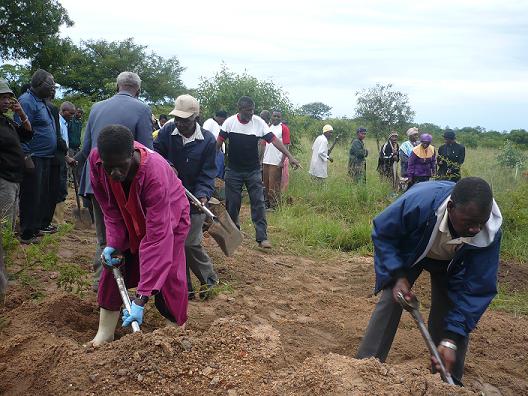
    A Zimbabwean mother living in the Diaspora lost her son a few days ago. This was a particularly difficult time for her because her husband is still in Zimbabwe putting together the necessary documentation to allow him to join his family. This lady does not have a very strong support network where she resides which means, she has no-one of significance to turn to and has to wait for her husband to make the two to three day journey to be by her side.

    One fact of life that all of us will one-day face is our death. For some, that day comes after a long and hopefully prosperous life. For others, it comes at an unexpected time such as the example above where parents are burying their child.

    Many Zimbabweans living in the Diaspora say they would eventually want to return home at some point to live out the rest of their lives. This for some also holds true in death; some people explicitly state that in the event of their death, they want to be laid to rest at home in African soil.

    Left with such wishes, family members and/or close friends of the deceased pull together to fulfil the wishes of the deceased. Making the wish a reality presents a number of challenges with the main ones being the logistics of repatriating the body and the associated costs. CNN Marketplace Africa recently aired a piece where Robyn Curnow covered what some Zimbabweans living in South Africa go through in the event of a death. It also covers the services a Zimbabwean entrepreneur is providing to try and ease the cost of burying a love one. Its gets you thinking about how prepared you are for such situations.

    Would you rather be buried at home or in the Diaspora?

  • Colcom Pork Pie

    Colcom Pork Pie

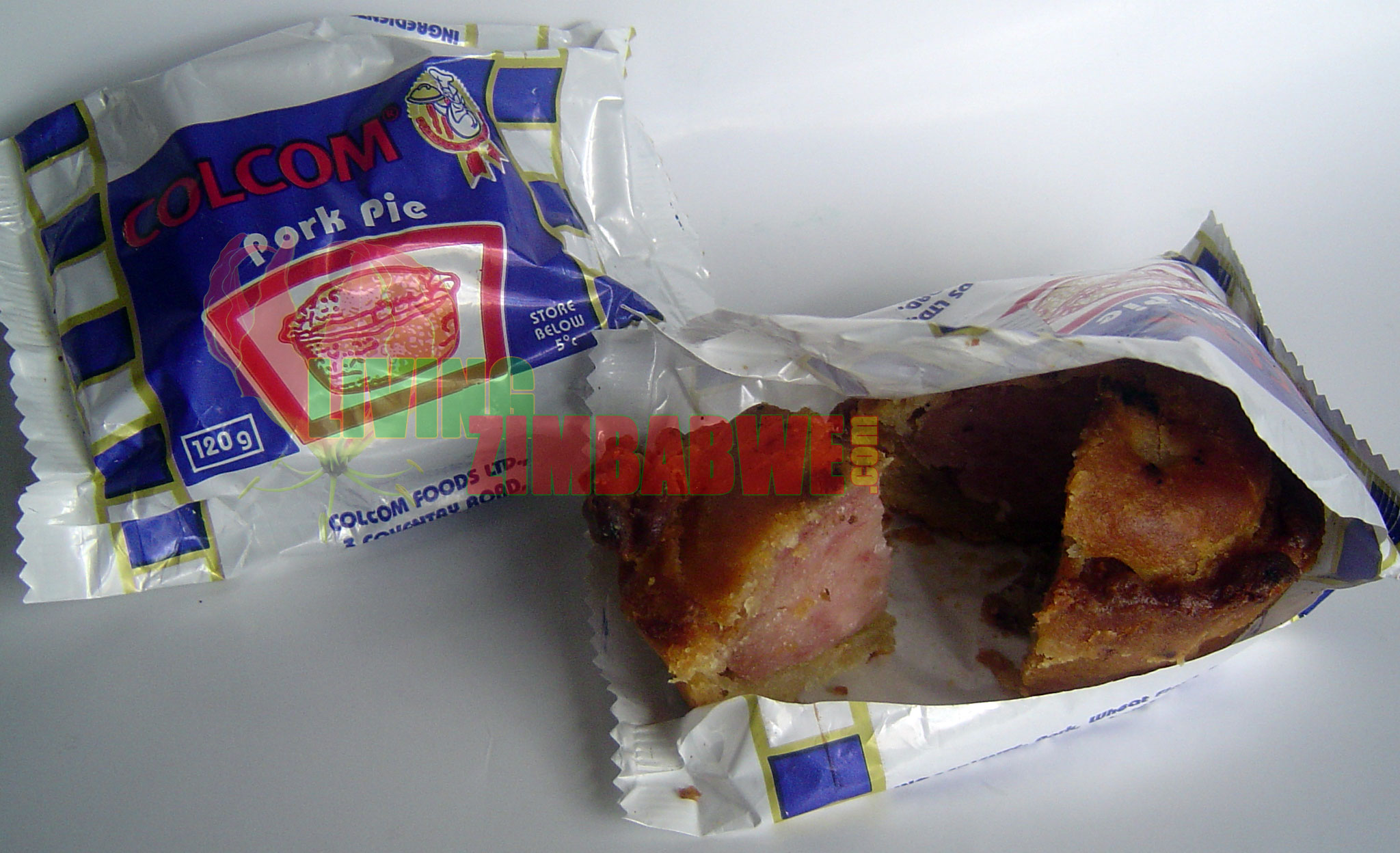
    Colcom pork pies are one of those food items that have forever been a favourite with many Zimbabweans. They are a tasty snack item that can be taken hot or cold. If you listen close enough to people in the diaspora when they talk about the foods they miss from home, pork pies usually pop up as one of them.

  • Perceptions of Zimbabwe – November 2009

    It has been three or so years since I last visited Zimbabwe and the last time around it was so mind boggling having to deal with all the zeros in the currency, the state of the infrastructure and the lack of many basic everyday items.

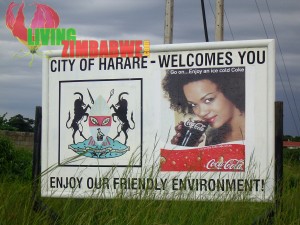
    City of Harare - Welcomes YouThis time around, things have been a little different and after only a few hours in, I was pleasantly surprised by some the changes in the country. First off there was the worry about our luggage as we flew via Johannesburg (which is notorious for luggage being stolen) but everything that we had made it to Harare. Next up was ZIMRA (Zimbabwe Revenue Authority) how in the past have really given me a hard time but this time around we walked right past them without any words being exchanged. All that was exchanged as we walked through the ‘nothing to declare’ area and on to waiting family was a nod of acknowledgement.
    [ad#Adsense 250×250 white-posts]The drive home was pretty much what I expected with potholes all over the place, robots (traffic lights for those of you who do not know that kind of African lingo) on their last legs, people selling airtime and other bits and pieces and just about every street corner, a mix or cars that should be condemned in and amongst really expensive ones (Mercedes still seems to be a favourite over here).

    The day after arriving in Harare I went for a drive around the place and was surprised to see how full the supermarkets were. Just about anything and everything seems to be available provided you have the U.S. dollars to pay for your goods. Some things such as food, alcohol and cigarettes are a lot cheaper over here than they are in the part of the world I am currently living. Other commodities however are ridiculously priced.

    For some, things seem to be a bit rosier but there are still plenty of other people out there who are in a desperate situation. There are people working in certain trades who are being compensated in food rather than cash (by their own preference). One thing that is evident though from just about everyone I have spoken to is that it is a lot better that it was last year. They all say it was very tough and they do not know how they got through it but they did. My hope is that things only get better!

  • It’s Tough Being Black!

    A few weeks ago I was directed to Africa Online (NZ) to read the review of the Celeb Wedding where Fortune and Zanele tied the knot. Reading through the review got me thinking about something someone said at an event where there were a number of Africans present. All that this person said shaking his head was, “it’s tough being black”! What he was referring to was the manner in which people arrived at the event and the manner in which they conducted themselves throughout the evening. It was a case of look at the car I am driving, look at who I am with, look at what I am wearing and so on. Reading the review of the wedding just got me thinking about how with so many black people it is all about the ‘show’ and ‘keeping up appearances’.

    Going back to the wedding, to me it seemed like the wedding was put on as a show of God knows what for the guests. It is all well and good to celebrate such a day to the fullest and being a Zimbabwean wedding you can expect it to be a jam packed and joyous event. But, when it goes to the point of talking about how we did this, did that, had this, had that it takes a bit of light off what the day was about. Marriage is the union of two souls and when a wedding goes over the top it can take a lot of essence off of that.

    You don’t have to try hard or even look far to find people out there who go to great lengths to make it look as if they have made it when that may not necessarily be the case. For a lot of them, they are struggling to make ends meet and trying to keep up appearances is fuelling their journey towards more debt. On the outside they may look happy and as if they have got it all together but in actual fact there may be amongst other things emotional turmoil.

    This is something that I failed to understand in the early 90’s when I would observe young Zimbabwean’s in the middle of summer sweating up and down 1st Street for hours on end and wearing heavy jeans and a leather jacket. Regardless of the temperature, the leather jacket would not come off because I guess it looked good. This is the same phenomenon I am still seeing today almost two decades later but I still fail to understand it.

    That there is where “it’s tough being black” came from. Some of these people are likely to spend their last few dollars on something to enhance their social standing than something more beneficial such as food. But, who am I to judge? People can do and are entitled to do whatever they want to do but what is the point when nothing meaningful comes from it?

  • Gays and Lesbians in Zimbabwe and Their Rights

    “It degrades human dignity. It’s unnatural, and there is no question ever of allowing these people to behave worse than dogs and pigs. If dogs and pigs do not do it, why must human beings? We have our own culture, and we must re-dedicate ourselves to our traditional values that make us human beings. … What we are being persuaded to accept is sub-animal behavior and we will never allow it here. If you see people parading themselves as Lesbians and Gays, arrest them and hand them over to the police!” That being said, you can see that being openly gay in Zimbabwe does not work well in ones interests. Homosexuality is not illegal, it is sodomy that is.

    The issue of gays and lesbians has for a long time been a highly contentious issue in not only Zimbabwe but around the world. It is an area that has put many a world leader to the test in how they respond to the issue of their rights. Mugabe’s disgust towards homosexuality is a sentiment that is shared by many a Zimbabwean as well.

    Gays and lesbians have for a time long been subjected to all forms of discrimination which has lead to them living their lifestyle under the radar. This is not to say that all homosexuals are living under the radar, there are some who are very much out there in the open and made their sexual orientation known to all. With the inclusive government and the new Constitution expected in the near future, gays and lesbians are becoming more vocal and demanding that their rights are recognized and made a part of the new Constitution. A lot of them are fighting hard to see that they are protected under the constitution. Gays and Lesbians of Zimbabwe (GALZ) www.galz.co.zw is at the forefront of seeing to it that there is constitutional equality.

    GALZ Mission Statement

    The principle objective of GALZ is to build a democratic and accountable organisation and to strive for the attainment of full, equal rights and the removal of all forms of discrimination in all aspects of life for gay men, lesbians and bisexual people in Zimbabwe and to inform, educate, counsel and support people in matters relative to their health and well being.

    Sexual rights are human rights.

    Mugabe’s fight against homosexuality was dealt a blow in the mid to late 90s when the 1st president of Zimbabwe, Canaan Sodindo Banana was convicted of sodomy. He was jailed for a year and died a few years later but was not buried at Heroes Acre with full honours as you would expect for a former head of state. This goes to show what happens to people convicted of sodomy regardless of who you are and what you have done for the nation.

    Could the extreme homophobia be a result of Mugabe’s attitudes towards them influencing people to detest homosexuals or is it based on something that they themselves truly believe to be wrong? Many Zimbabweans are Christian and there are passages in the Bible that condemn homosexuality. These include Genesis 19, 1 Corinthians 6:9-10 and Leviticus 20:13 –

    “If a man lies with a man as one lies with a woman, both of them have done what is detestable. They must be put to death; their blood will be on their own heads.”

    This is something that may drive them towards making the decisions they have made about homosexuality.

    This “Satanic”, “Western Import” (not my words but those of Mugabe and his supporters) of homosexuality will continue to be a thorn in the side of Zimbabwean politics for a long time coming. Human rights groups see it as another violation in Zimbabwe and other see it as a moral issue that just shouldn’t be allowed. It may be one of those issues where there will never be a resolve that leaves both parties happy.

    What will become of the gays and lesbians on Zimbabwe?

  • Religion in Zimbabwe

    Religion in Zimbabwe is a very contentious issue. Mainly because we are a religious people from the days of our forefathers and that makes us different from all other cultures. Contentious issue because we have been fought by forcise of evil and deceit to the extend of getting so confused that it is now normal to see a family no longer on talking terms among themselves because of issues of religion.

    I will trace back from the early days of precolonial history of Zimbabwe. The Zimbabwean people mainly of the Shona race were under ancestral spirits, and the centre of governance were the spirit mediums. These were the people who installed chiefs and that by its positioning meant that the chief’s power was derived from their obedience to the order of the spirit mediums.We talk of Chaminuka, Mutota, Murenga, Nehanda, Gwangwadza, Gondondo and many more that we may mention etc. as the centres of power. These were the centre forces of the African religion.

    Midzimu determined where to build your houses, which forests to go hunting and which not to hunt in. Midzimu communicated a code of conduct for each particular dunhu/administrative area. They chose the ‘sabath day’ (Chisi) among their people. They had the power to summon the rains and the rains would come. They would prophesy and prepare their people aginst draught, invasions etc. The spirit mediums advised on what to do and where to go in times of war etc. Also the process of choosing the chief/mambo, where three men from a chiefstainship clan would be selected by midzimu, brouht forward, given bute/snuff to hold tight into their closed palms and three times thrown deep into river pond and see which of them would come out with the snuff dry.

    Therefore, this was the centre of authority where all chiefstainship authority was derived from. And thios is also where punishments came from. If one was found to be in acts of misconduct and a punishment was meted, all would see exactly that happen.The Zimbabwean people believed and worshiped that. This worked for the shona people and they maintained that always as their religion.

    Chaminuka of Dumbwiza(Chitungwiza), told of the coming of the whites, which is well documented. He told of these people’s cunning and evil ways against the national people’s governance and religion. He advised against allowing them any space at all. And he also warned of their mighty power which would defeat the native chiefs and their chiefdom. This all happened. So the shona people remained steadfast. Nehanda commanded the first Chimurenga war. He directed how the fighters should behave and warned against touching any of the whiteman’s things. On the breaking of whjich rules was a defeat for the fighters and subsequently came a demise of the ancestral spirit worship. That was the fall of the Shona rulership and with it the beginning of the fall of the shona culture.

    When the whiteman came, they made sure they destroyed that religion first. This again is most dicumented. The whiteman quickly searched and understood where the shona kingdom power derived from. They then went on the hunt for all the prominent spirit mediums and slaughtered them. In a conclusive brutal stop to a shona resistance. They knew that the shona had a religion. They knew that you could not defeat the shona if you let loose their religion and religious practises. And their hunt for the kill went on into the second Chimurenga era, and many spirit mediums too were murdered. They were murdered for the very simple reason of practising an own religion which their only source of solace and source of power.

    The spirit mediums blessed the second Chimurenga. Many religious songs were sung to go with that. The war went on and even a simple Mujibha and Chimbwido would tell you it was a sacred war. It was a religious war. And the religion won. If it were not for the religion and if it were not for the worship, the whiteman would have won. But our Zimbabwean religion won the war!

    The Great Betrayal! We did not have religious leaders. We did not get religious leaders into the rank and file of ruleship. We got too too excited to recognise and maintain our religion. The liberation war leaders came back on Independence, grabbed power, grabbed influence away, grabbed women, money and all resources of their choice, and they stuck away with their families. They stuck away, far far away from the religion, from the religious leadership and religious influence, and they shunned all that. Also they stuck away and shunned even the religious advice that won them the war and the power and the priviledged.

    Education. That too we grabbed. Not that there is anything wrong with being educated but what type of education. The very educational curriculum that destroys us, that destroyed us that which shuns us as a people is what we grabbed and celebrated and glorified. Thsi brought a devout clinging to the bible. The Christian bible which teaches us that there is a Jesus who curses our religion and a Jesus who says serve the whiteman, remain poor so that you will be rewarded in heaven And so we grabbed the Christian religion and that one many follow, especially the current generation, the young and tomorrow generation.

    Leadership. That too we grabbed and in that we brought the same same people who were shunned by our religion. And those we celebrated and glorified and in the spirit of forgiveness and reconciliation we trusted and promoted at the expense of our own. At the expense of our own religion. Our own religion that brought us independence.

    Culture. Theirs too we grabbed. And our own we ignored and discarded. All this happened with the blessings of our very powerful and most learned leaders. The very leaders who are still in power today, and have brought our religious Zimbabwe down to its waist.

    The War Values. These we abandoned. But these remain the key to a change to our fortune. The war values as dictated by our religion. Through our religious leaders. And so we remain a lost people, a people who shunned an own religion in favour of a foregn religion. The very foregners who became our tormenter, the very foregners who are our tormenters and very foregners who are jeering our ‘new democratic’ leaders. Zimbabwe, a religious people a confused culture,all because of a shunning of a true African religion.

    By: Masimba Murambiwa
    A religious person in the diaspora with a keen interest on the matters of African History and African Rennaissance

  • Zimbabweans Must Go Home Says Tsvangirai

    Morgan Tsvangirai had the pleasure of addressing diasporans in the UK and his main message was that Zimbabweans should return home. The message was met with what seemed to start as applause that progressed to jeering and chanting and the PM was unable to continue with his speech.

    Chinja! Mugabe Must GO! was what the crowd was chanting with some people waving Banners with “Mugabe and Gono Must Go”. People in various forums saw it as an embarrassing move by Zimbabweans in the UK but it may just have been them getting their point across that Mugabe must go before they consider returning home.

    Tsvangirai clearly looked lost for words when he saw that he had no control over the crowd. There was nothing else he could do but step down from the pulpit.

    Take a look at the video for yourself and be the judge of whether or not the jeering was justified:

  • Zimbabweans in New Zealand Poll Results

    Zimbabweans in New Zealand Ballot PaperBelow are the results of the mock elections organized by the Save Zimbabwe Campaign New Zealand where Tsvangirai won with an overwhelming majority of the votes. Given that there are about 7,000 Zimbabweans in New Zealand, turn out was poor with just under 200 votes made.

    Tsvangirai

    %

    Makoni

    %

    Taugana

    %

    Mugabe

    %

    TOTAL

    CITY

    Auckland

    68

    71.58%

    27

    28.42%

    0

    0.00%

    0

    0.00%

    95

    Christchurch

    20

    71.43%

    7

    25.00%

    1

    3.57%

    0

    0.00%

    28

    Wellington

    25

    83.33%

    5

    16.67%

    0

    0.00%

    0

    0.00%

    30

    TOTAL

    113

    73.86%

    39

    25.49%

    1

    0.65%

    0

    0.00%

    153

    In Zimbabwe, MDC is claiming victory in a number of constituencies based on early unofficial results with their Secretary General Tendai Biti stating that they have taken 66% of the votes in Harare and 88% in Mashonaland West with more results to be released that they hope are in their favour. The Zimbabwe Electoral Commission said it would start announcing official results late Sunday but the final results are not expected for a few days. It is still a bit too early for MDC to be celebrating a victory because anything can happen.

  • The Zimbabwe Flag

    The Zimbabwe Flag

    I work with people from all over the world and the other day one of my colleagues starting asking people what the symbols and colors on the flags from their respective countries meant. It was very interesting in that some people went into a detailed history as to what they meant and others weren’t quite sure about what their flag meant. This got me to thinking that it is important to know what the colors of your flag mean to better understand where you are coming from. Flags are used to represent a country or nation and are a symbol of national identity. For some people, a flag stirs up a sense of pride as they think of what they or others before them went through and those that died during liberation struggles. The Zimbabwe flag tells its own story with the various colors and symbols that make up the flag.

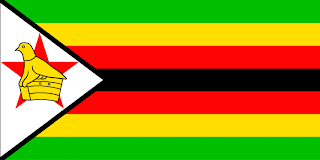
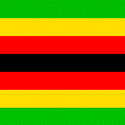
    The Colours of The Zimbabwe FlagGreen Stripe – represents the Country’s vegetation and land resources.
    Yellow Stripe – represents the country’s mineral wealth.
    Red Stripe – represents the blood spilt during the liberation struggle.
    Black Stripe – represents the black majority.
    White Triangle – represents peace

    The Zimbabwe Bird on The Flag of ZimbabweThe Bird – the bird is the national emblem of Zimbabwe which also features on the coat of arms and the currency. The Image was derived from carved soapstone birds found at the Great Zimbabwe ruins in the late nineteenth century. All the carvings were taken away from the country and all but one have been returned. Legend has it that peace will never return to Zimbabwe until all of the artifacts have been returned to their rightful place.

    The Red Star on The Flag of ZimbabweThe Star – The red star which is located behind the Zimbabwe Bird represents the nation’s aspirations, internationalism and the ruling party’s socialist credentials.