Category: Culture

  • Where to get the scarf Emmerson Mnangagwa wore at the World Economic Forum

    Where to get the scarf Emmerson Mnangagwa wore at the World Economic Forum

    The World Economic Forum holds an annual meeting in Davos at the end of January where leaders of politics, business and society converge to discuss various issues facing the world in an effort to make a positive change. It is not very often that a Zimbabwean President is invited to attend the meetings. But, with the recent change in leadership and the ‘West’ seeming to warm up a little to the new president, an invitation was extended.

    President Mnangagwa accepted the invitation and attended the meeting where he sat down with and had televised conversations with the likes of Mishal Husain (BBC) and Richard Quest (CNN) and meetings with amongst other people, Christine Lagarde‏ from the IMF. He was on a major drive to attract investors to Zimbabwe with his key message being, ‘Zimbabwe is now open for business’.

    There has been varying opinion on whether or not what Mnangagwa had to say in Davos would see investment coming into the country. Some were impressed by and others were not so impressed by what he said. Only time will tell if his efforts are able to bridge the divide between Zimbabwe and Foreign Direct Investment.

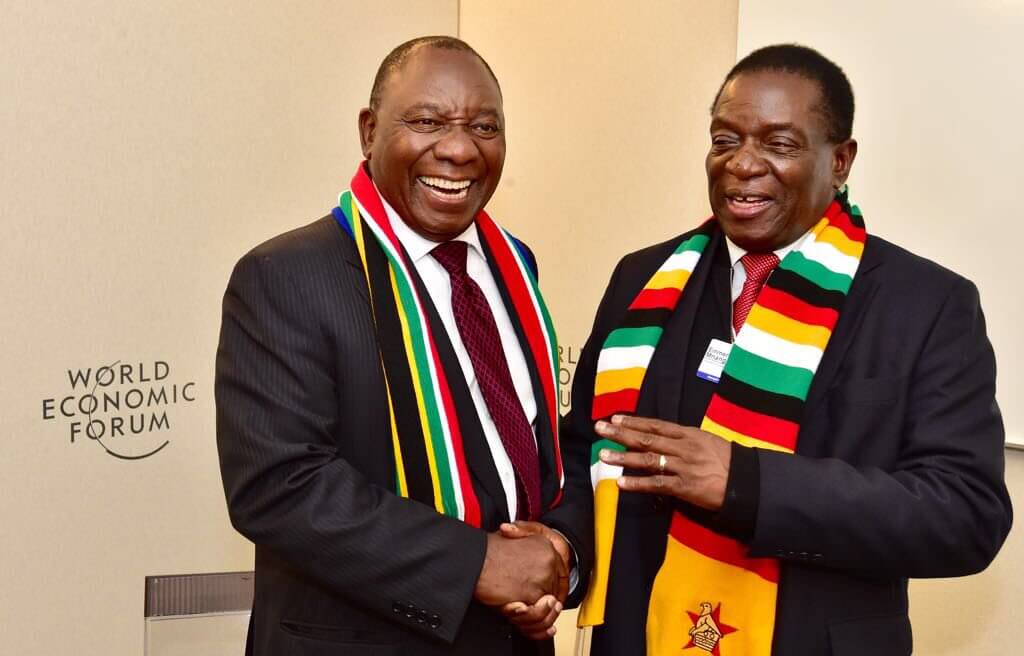
    Another talking point from the president’s visit to Davos was the scarf he wore (pictured below in ANC President Cde Cyril Ramaphosa’s tweet).

    Once again, there have been mixed feelings about the scarf. Some people have absolutely loved it and are asking where to get their hands on one. Others are not so fond of it and are pointing out the fact that the colours do not follow the sequence of the Zimbabwe flag. But, without knowing the intent of the designer, who is to say what is wrong or right?

    Where to get the ED Scarf

    For those who want to get their hands on the scarf, journalist Hopewell Chin’ono posted the details of the designer (and person selling them) on Twitter. The ED Scarf was designed by Celia Rukato, founder of Chjaa Enterprise, a fabric manufacturing clothing brand. The scarf costs $15 and can be ordered via the following channels:
    email: Chjaa.ent@gmail.com
    mobile (WhatsApp): +263783137263
    address: 28 Transtobac Building, Hillside Road Ext

  • Fashion Trends in Zimbabwe

    Fashion Trends in Zimbabwe

    For a while I thought setting a fashion trend in a country like Zimbabwe was easy…it’s not. Setting a trend requires innovation and taste. The question is how does a thing become the in thing. Who approves trends? Who decides?

    Zimbabwe has seen the jelly pumps, colour blocking, Rihanna hairstyle, skinny jeans as top trends that caught on like wildfire in the past few years. The challenge with Zim Fashion trends is that nobody is daring enough to be the ultimate trendsetter. Everybody is following trends some of which are outdated or too popular. On the international scene tastemakers who set the trends already know what you will be wearing in 2015. Their trend forecast is always 2 years ahead of Zimbabwe, literally.

    Thank’s to Ftv and fashion magazines some of us are not always left behind. The process of introducing trends all the way from Milan’s haute couture runway to the high street fashion of Harare through the whole supply chain is very long. Who has patience for that? This is when you find a typical Zim fashionista ordering straight from the European countries or getting the style custom made locally.

    To spot trends one should look at the colour, cut, textile and length of a garment. The secret to keeping up with trends is looking at glossies, fashion shows, blogs and fashion related television programmes. That is where all the fresh trends are born. To stay on top of the game always get in with the new and out with the old. That is the trend rule . Nonetheless, if you are or want to be a true trendsetter none of this should matter because you are an innovator. You do the opposite. You DON’T follow trends and the streets are your runway.

    Chose, one of Harare's fashion forward fashionistas

    This has been a submission by Beryl Kanyowa.
    You can connect with Beryl Kanyowa via the following: , , .
    You too can become a Citizen Journalist by submitting your story here: Citizen Journalism by Living Zimbabwe
    The views expressed in the article are those of the author and not necessarily Living Zimbabwe.

  • Indigenous Proverbs: Something We Need To Preserve For The Future Zimbabwe

    Indigenous Proverbs: Something We Need To Preserve For The Future Zimbabwe

    Its really sad that we (Zimbabweans), have reduced the importance of our indigenous proverbs to something we need to cram in order to pass our Ordinary and Advanced level exams. As a result most people don’t pass these exams and end up relying on the domestic aide from kumusha to help their children to do their Shona (i don’t know about Ndebele) homework. Like all other proverbs, our indigenous proverbs are rich sources of wisdom that are very much applicable in our day to day living. Not only are these proverbs relevant to our day to day living,they are easy to understand (no need to crack your head), which is not much of a shocker because they were created for us. Its a pity that my Ndebele speaking is really bad,but I gathered a number of Shona proverbs to jog memories. I also put a link at the end of the article,for those who want to acquaint themselves with the meanings of these and other Shona proverbs and for those who might want to help their kids with their Shona homework every once in a while :D.

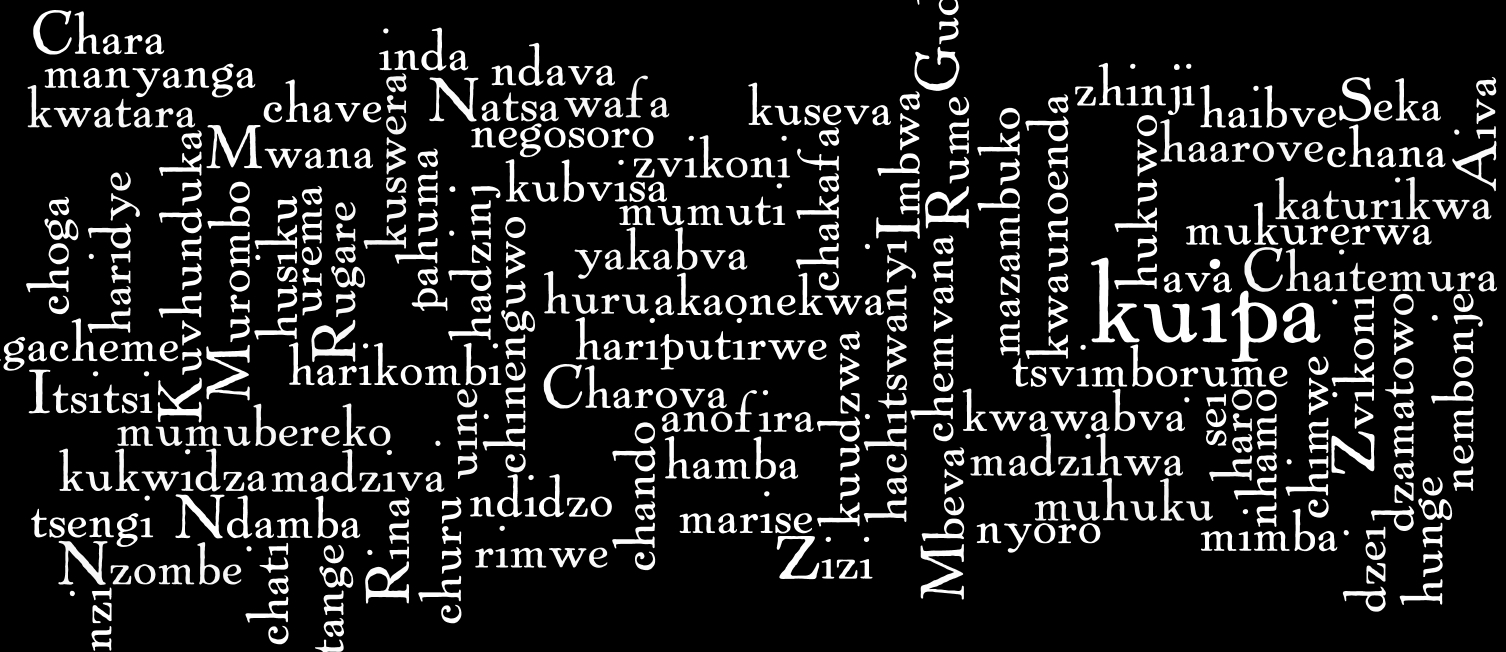
    1. Nzombe huru yakabva mukurerwa.
    2. Ndamba kuudzwa akaonekwa nembonje pahuma.
    3. Gudo kuipa kuipa haro asi haridye chakafa choga.
    4. Rina manyanga hariputirwe.
    5. Imbwa nyoro ndidzo tsengi dzamatowo.
    6. Zvikoni zvikoni mimba haibve negosoro.
    7. Aiva madziva ava mazambuko.
    8. Chaitemura chave kuseva.
    9. Kuvhunduka chati kwatara hunge uine katurikwa.
    10. Seka urema wafa.
    11. Zizi kuswera muhuku hunzi ndava hukuwo.
    12. Itsitsi dzei tsvimborume kubvisa chana chemvana madzihwa?
    13. Charova sei chando kukwidza hamba mumuti?
    14. Natsa kwawabva kwaunoenda husiku.
    15. Murombo haarove chinenguwo.
    16. Mbeva zhinji hadzinj marise.
    17. Rume rimwe harikombi churu.
    18. Chara chimwe hachitswanyi inda.
    19. Rugare tange nhamo.
    20. Mwana asingacheme anofira mumubereko.

    For meanings to these and other proverbs check out I believe that our languages are important in defining who we are as Zimbabweans..lets embrace them…lets preserve them..lets be Zimbabwean. NMN

    This has been a submission by Nyasha Mukai Nyakunu.
    You can connect with Nyasha Mukai Nyakunu via the following: , .
    You too can become a Citizen Journalist by submitting your story here: Citizen Journalism by Living Zimbabwe
    The views expressed in the article are those of the author and not necessarily Living Zimbabwe.

  • The Plight Of A Diaspora Returnee Wife

    The Plight Of A Diaspora Returnee Wife

    Yes, there are a number of Diasporans who are a bit sceptical about returning home for one resason or another > Why Diasporans Are Not Returning Home. On the other hand, there are a those who have taken the step to return home permanently with those in this group having realised varying levels of success with their decision. It has either been one of the best decisions ever made or one filled with regret.

    For singletons, the task of purchasing a one way ticket to Zimbabwe is not as daunting as they probably don’t have that much ‘baggage’. However, some returnees are families and for them, having a solid plan in place of how they are going to sustain themselves is of utmost importance. This includes things such as a steady stream of income, appropriate accommodation and reliable transportation just to name a few things.

    Can you imagine leaving the comforts of London, Sydney, Dallas, Singapore or wherever. Places where you have an income, live in your own accommodation have a car or two and all the mod cons to taking up two rooms at your parents place? That’s what some families who move back home have to do to accommodate themselves in the interim. Living like this might be fine for a few days or weeks but it will more than likely reach a point when it will start to feel a little cramped and you are all in each others space!

    Living in this state of being is not ideal especially so for women who are independent and used to having a space that is ‘theirs’. As they continue to live with their parents, the women don’t have a place to call home. Yes, you could say they are home but they aren’t in that comfortable homely place that has their own feminine touch that is home.

    Another plight that diaspora returnee wives have to deal with is their husbands. Life in the diaspora is not easy and living in luxury comes at a cost. This then dictates that their men take a more active role around the house. This sees their husbands cleaning, cooking, doing laundry, helping out with the kids and so on.

    In Zimbabwe, domestic workers are an affordable luxury which frees up husbands to take care of their business and also to be ‘Zimbabwean men’. Them being immersed back into the Zimbabwean lifestyle sees some of them become different people.

    The wives of these husbands who have become someone else now see themselves having to follow the cultural and social expectations of a Zimbabwean wife. This sees them having to let go of certain liberties that they had grown accustomed to in the diaspora. For some it also means having to accept a third or more parties into their marriages as they are forced to accept the small house culture of Zimbabwe.

    The above is only an example of what happens to some women. It isn’t the be all and end all for diaspora returnee wives. Some go through worse and for others, the transition to living in Zimbabwe all over again is relatively smooth. Everyone has their own story to tell.

    Do you have anything to say on the pros and/or cons faced by Diasporans on the return home?

  • Locardia, Tsvangirai And The $280,000 Payment?

    Locardia, Tsvangirai And The $280,000 Payment?

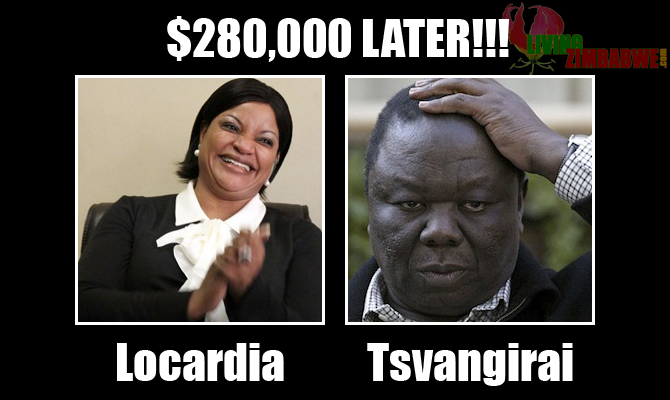
    Since the death of his wife Susan in 2009, Morgan Tsvangirai has found companionship with a number of women over the years. The relationships have taken various shapes and forms with some allegedly resulting in promises of marriage such as the one with South African Nosipho Regina Shulubane. Another of his relationships with Loreta Nyathi, a woman almost 40 years his junior resulted in a love child. And yet another one of his relationships and probably the most famous was with Locardia Karimatsenga who was recently recognised by the courts as his customary wife.

    After all of these relationships, Mr. Tsvangirai eventually settled on Elizabeth Macheka as the woman he was going to “officially” marry but when some of the women from his past heard about it, they took measures to prevent it from happening. Locardia made the most notable push in stopping the marriage but her bid was not 100% successful.

    Such indiscretions rarely go unpunished and end up with someone paying in one way or another and Tsvangirai did not come out unscathed. Locardia did not let the matter lay to rest and has made a number of demands that have included maintenance payments. In the last few days there have been reports that her and Tsvangirai have reached a settlement agreement that will see her receive a lump sum payment of between US$280,000 to US$300,000.

    This is just over a quarter of a million dollars and is not a small amount of money by any measure and especially so for a man who is essentially a civil servant. That said, it leaves a lingering question, if such an amount was agreed upon, how can Zimbabwe’s Prime Minister afford to make such a payment?

  • We Seriously Went Wrong Somewhere

    We Seriously Went Wrong Somewhere

    Three Zimbabweans were arrested for the murder of former boxing world champion Corrie Sanders. Yes Zimbabweans are making the headlines. Very sad if you think of the potential we thought we had. The effects of such headlines tell a story. The three don’t know what they have actually done. Locals who have always been angry are having ideas.

    Those who are having challenges with getting by, those who got laid off for being drunk at work, those who lost jobs because a Zimbabwean showed the right attributes for a job, those who are angry because white people had it easy, those who expected open doors without knocking and those who just booze for life.

    They are coming after a family that is also struggling and working 9hours a day. They are going to kill and destroy all little they have.

    Growing up my mum always told me, “usaise makumbo pamasofa kumba kwevanhu“, (don’t sit on or put, your legs on top of the couch when you have visited people). How can people forget where they come from and pick the worst habits in foreign lands and become the best at it. Even getting caught. Its disgusting. For such stupidity innocent people are going to pay. For every action there is a reaction. The cowards will be in jail while those out side will wish they had been arrested. Wherever we are, we represent our people. We can embrass them or make them proud.

    This has been a submission by Rodney K. written in South Africa.
    You too can become a Citizen Journalist by submitting your story here: Citizen Journalism by Living Zimbabwe
    The views expressed in the article are those of the author and not necessarily Living Zimbabwe.

  • In America by NoViolet Bulawayo & The Cost Of Living In The Diaspora

    In America by NoViolet Bulawayo & The Cost Of Living In The Diaspora

    A few weeks ago, Zimbabwean author NoViolet Bulawayo made an appearance on Rendezvous With Zeinad Badawi. During her appearance she read an extract from a story that she wrote “In America”. The story is about the immigrant experience and the costs that some people pay for leaving home and not being able to return.

    [quote] And when our parents reminded us over the phone that it had been a long, long time, and that they were getting old and needed to see us, needed to meet their grandchildren, we said, we are coming mama, siyabuya baba, we are coming gogo, tirikuuya sekuru. We did not want to tell them we still had no papers. And when they grew restless and cursed

    America for being the greedy monster that swallowed their children, swallowed the sons and daughters of other lands and refused to spit them out, we said, we are coming very soon, we are coming next year. And next year came and we said, next year. When next year came we said, next year for sure. And when next year for sure came we said, next year for real. And when next year for real came we said, we are coming, you’ll see, just wait. And our parents waited and they saw, saw that we did not come.

    They died waiting, clutching pictures of us leaning against the Lady Liberty in their dried hands, graves of lost sons and daughters in their hearts, old eyes glued to the sky for fulamatshinaz (diaspora planes) to bring forth lost sons and daughters. [/quote]

    The story tells a tale about the struggles of getting to America and upon getting there, people forgetting about the dreams that they went there to pursue. This left work as the next option and due to visa restrictions, it meant working illegal and with the passage of time, the expiration of visas and people becoming illegal immigrants and all the while working menial to support family back home.

    It carries on telling the story of becoming stuck in the diaspora and longing for Mother Africa. Children being born  and raised in a way that is completely different to how they are raised at home. The passage of time also brings with it the passing of loved ones (parents) and facing the harsh reality of not being able to properly say goodbye. It then leads on to their own inevitable aging and their children putting them in nursing homes to be taken care of by strangers which is soon followed by death, an unceremonious burial and a spirit left in limbo.

    Being stuck in the diaspora and not having the papers to return back home is a story echoed by many Zimbabweans. “In America” gets you thinking about the costs of living in the diaspora and leaves you wonder if it is worth it?

    The article was published in Callaloo, an African Diaspora literary journal and can be found in it’s entirety here.

  • Zim Names (Part 3)

    Zim Names (Part 3)

    Caroline Hooper-Box, writing a few years ago for the Sunday Independent, tells the movingly tragic story of the tribulations of an immigrant painter at the hands of South African police and Home Affairs officials. No money for guessing which country the man, named Between Siziba, hails from. A decade and a half ago, the Woolworths Food Market in Sea Point, Cape Town had in its employ (in its meat section) a gentle, hardworking and friendly man, unfortunately now late, from up north. His name? Delicious Mafanya.

    Malawians too have been at it. As soon as the cellphone appeared there, talking names followed : Selefone Banda, Eyatime Sakala, Richaji Phiri, Netweki Mwale, Simikadi Mbewe, Henisfree Ngoma are some of the names reported in a widely distributed e-mail.

    But why are Zimbabweans so uniquely fond of these names? To be honest my queries drew blanks. A friend suggested that an African name must say something. Many, if not all, African nations have names that “speak”. In fact a typical African name reflects the hopes, wishes, fears, feelings and prevailing circumstances of the parents, family or community of the newborn. My own grandfather, Njini, was so named because he was born in 1897 when the first railway engine steamed into Matabeleland. I used to think my late great uncle Fleza’s name was a distortion of the name Frazer until my grandmother explained to me that he was born in 1918 in the height of the great influenza epidemic that swept the world that year.

    In Africa, speaking names are normally in the indigenous and first language of the family. They are common in Zimbabwe too. Rudo, Tererayi, Simbarashe, Kudakwashe and so on among the Shona. Thulani, Nkululeko, Thokozani among the Ndebele. Nothing different from any other African peoples. But what should we make of Zimbabweans’ penchant for direct translation to English?

    Is it the famed love for education? The love for English in particular. And loved it is. I recall the speaking of indigenous languages being a punishable offence at Mpumelelo, my township primary school in Bulawayo. Justification for a two hour slog in the school vegetable garden was provided by no more than a two word entry in a prefect’s notebook- “Ndebele speaking”!

    It is as if parents are competing to show off their knowledge of the Queen’s language. Why call the little girl Ntokozo when you know how to say Happiness? or Sicino when Last is only an English word away? Why Babusi, Baphathi or Vatongi when Rulers is there for the taking?? There is no problem really. Well , not until the love for English gallops a little too far ahead of the knowledge of it. And Thulani ends up in someone’s birth certificate as “Keepquiet” or even “Shutup”!!

    Babusi Sibanda. Mobile : +27721969188 E-mail: kwizeen@gmail.com
    Zimbabwean born, South African, freelance writer and columnist .
    Has had numerous articles published in a variety of publications in the last 25 years including The Chronicle (Bulawayo), The Sunday News (Bulawayo), Moto, Parade, The Cape Times, Food & Home, Rootz, Femina, African Decisions, Mercedes , Mail & Guardian and others.

    Member of SAFREA (Southern African Freelancers Association). Visit us at www.safrea.co.za

    This has been a submission by Babusi Sibanda.
    You can connect with Babusi Sibanda via the following: http://www.safrea.co.za, , .
    You too can become a Citizen Journalist by submitting your story here: Citizen Journalism by Living Zimbabwe.

  • Zim Names (Part 2)

    Zim Names (Part 2)

    At home, Zifudlana (meaning little streams in siNdebele) Ndlovu, the man who helped herd our cattle, and taught me most of what I know about the bush, had his first born daughter named Surrender! There are numerous other examples. One of my abiding childhood memories is of a cousin (Given Maphosa) , chasing us around the cattle kraal while we taunted him with a newly learnt Salvation Army Sunday school chorus “ My sins are for-given…. Are yourrrrrrs? Aaaare yourrrrrs?”

    For some odd reason the country’s footballing world seems to attract more than its fair share of interestingly named players. I remember Doubt Sithole’s blistering right wing runs (for Bulawayo’s Highlanders FC, in the late 70s). The National team in the early 80s boasted Shakeman Tauro, Friday Phiri, Sunday Marimo. All in one team! And these were not nicknames. We are not talking about the likes of Sugar Muguyo here. The latter, whose real name was Ebson, together with Onias Musana were well known Zimbabwean expatriates in the South African soccer scene of the late 70s. The number of interesting names in one team has never been bettered although we have had people like Boy Ndlovu, Mercedes “Rambo” Sibanda in the mid to late 80s.

    In the last few years we have also seen the likes of Pressmore Moyo (former under 17 player) Master Masuku (AmaZulu) and Pope Moyo (who kept goals for Highlanders) to name a few. A recent Zimbabwean national team headed for the 2006 Africa Cup of Nations in Egypt with a squad that included Gift Mudzadzi, Energy Murambadoro, Method Mwanjali, and Honour Gombani.

    After Kirsty Coventry sensationally bagged Zimbabwe’s 3 swimming gold medals in the 2004 Olympics (and was, rather disingenuously, feted by Robert Mugabe) a hilarious e-mail did the rounds among Zimbabweans all over the world. It listed some of the names, purportedly garnered from Zimbabwean maternity wards, in the weeks after Kirsty’s feats, that parents gave to their newborns. These included Freestyle Madongo, Goldengirl Mazorodze, Threemedals Sibanda, Backstroke Karimanzira and yes, why not, ….Kestricoventry Munyoro

    The more refined “sports” are not exempt. Zimbabwe’s entrant in the 2005 M-Net face of Africa Finals has the name Greatmore Chatya. A few years ago, after an earthquake rocked part of Zimbabwe and Mozambique another e-mail doing the rounds referred to nurses from Harare’s Ambuya Nehanda maternity home announcing that names of newborns discharged the next day included: Shakes Dube, Vibration Kunonga, Tremble Magwaya, Tremor Dangare, Tectonic Muzondiwa, Kudengenyeka Charovachii, Richter Sibanda and Earthquake Maposa. The e-mail was probably a joke but it could only have been a Zimbabwean joke!

    Babusi Sibanda. Mobile : +27721969188 E-mail: kwizeen@gmail.com
    Zimbabwean born, South African, freelance writer and columnist .
    Has had numerous articles published in a variety of publications in the last 25 years including The Chronicle (Bulawayo), The Sunday News (Bulawayo), Moto, Parade, The Cape Times, Food & Home, Rootz, Femina, African Decisions, Mercedes , Mail & Guardian and others.

    This has been a submission by Babusi Sibanda.
    You can connect with Babusi Sibanda via the following: http://www.safrea.co.za, , .
    You too can become a Citizen Journalist by submitting your story here: Citizen Journalism by Living Zimbabwe.

  • Zim Names (Part 1)

    Zim Names (Part 1)

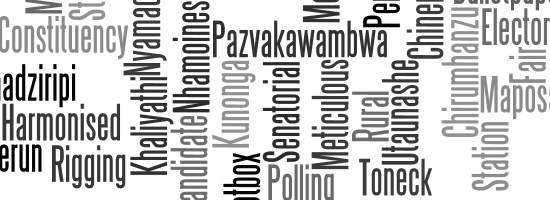
    You have probably heard the story : some of the names of babies born in local clinics and hospitals after the 2008 “harmonised” Zimbabwean elections-

    Runoff Moyo
    Senatorial Chirumhanzu
    Candidate Pote
    Independant Maposa
    Rigging Hamadziripi
    Electoral Commission Ndlovu
    Foreign Observer Chimunda
    Neck Toneck Nyamadzawo
    Sadhaki Sibanda
    Heavyweight Utaunashe
    Percentage Ndlondlo
    Released Results Matongo
    Meticulous Verification Chinengundu
    Free & Fair Pazvakawambwa (Twins)
    Rerun Mombeshora
    Rural Stronghold Khaliyathi
    Constituency Madison
    Polling Station Nhamoinesu
    Ballotbox & Ballotpaper Kunonga (Twins)
    Harmonised Chitanda

    And…..Parliament Nyathi!

    My fascination with Zimbabwean names dates back, some two decades, to my first university vacation job as a personnel records clerk at Monarch Products, a Bulawayo household and travel goods manufacturer. Perhaps I should change this to a fascination with the way ‘indigenous’ Zimbabweans name their children in English. To be sure, this intriguing tendency is not exclusive to Zimbos. Happy Sindane is, after all, a South African. But who else in the world gives their children names such as Passmore, Scholastic, Promotion, Lovemore, Godknows, Promise, Knowledge, Moreblessings, Trademan, Bornfirst , Boniface, Takesure and many other suchlike gems?

    I landed myself the princely vacation job because Monarch Products (part of the Treger Group of Companies) was, for the first time, computerising its personnel records. The first part of the job consisted of trawling through each employee’s personnel file for copies of birth and death certificates, note entries, and any evidence of family changes in the employee’s life and then updating the official record cards which for some reason had not been done for the previous decade or so. Once updated the card would then be passed on to some data capture clerk for the computerisation process. My part, in other words was painstaking and extremely boring. That is until I stumbled upon some of the most amazing examples of interesting names and decided to keep a toll and further amuse myself by working out the story behind each of the gems.

    Anyone meeting Promotion Ncube today (perhaps now some hot-shot lawyer, teacher, soldier or one of Zimbabwe’s millions of refugees) would not know that in 1981, a month before his birth, his father- a leading hand in Monarch’s Travel Goods division- was promoted to first line supervisor! Old man Treger himself, probably late now, may not have known that at least three of his employees named their children “Treger” in appreciation of continued employment. Or perhaps even in some sycophantic search for that elusive promotion!

    But my fascination goes back even further- to childhood days. I had a brother ,now late, called Bigboy , who has a son called Agreement. I attended Primary school with three boys, Sunrise, Sunshine and Sunset, the children of a neighbouring school headmaster. Or- as they were affectionately known- Rise, Shine and Set. (Incidentally, their three sisters were Ntombikayise, Ntombikanina and Ntombiyelizwe- literally father’s girl, mother’s girl and the nation’s girl, respectively).

    At about the same period, a village bully named Ambulance Ncube, five years older but two grades behind me, terrorised the whole school. One day I forgot to bring his “order” of cooked peanuts and he fractured my elbow with a knobkerrie. Our freedom from Ambulance’s tyranny only came when he ran away (from the pressures of yet another repeated lower primary school academic year!) to Geneva (as Zambia was popularly known after the 1975 Geneva Conference on Rhodesia) to “join the liberation struggle”. But that was not before my older brother Sibangilizwe, and an uncle, Smile Moyo, cornered and thrashed him until his own arm was broken! (Sibangilizwe, incidentally, means “we are fighting for the country” in siNdebele. A very nice name to present at a pre-independence Rhodesian Army roadblock, as my brother frequently found out!)

    – Babusi Sibanda . Johannesburg, 2008

    Babusi Sibanda. Mobile : +27721969188 E-mail: kwizeen@gmail.com
    Zimbabwean born, South African, freelance writer and columnist .
    Has had numerous articles published in a variety of publications in the last 25 years including The Chronicle (Bulawayo), The Sunday News (Bulawayo), Moto, Parade, The Cape Times, Food & Home, Rootz, Femina, African Decisions, Mercedes , Mail & Guardian and others.

    Member of SAFREA (Southern African Freelancers Association). Visit us at www.safrea.co.za

    This has been a submission by Babusi Sibanda.
    You can connect with Babusi Sibanda via the following: http://www.safrea.co.za, , .
    You too can become a Citizen Journalist by submitting your story here: Citizen Journalism by Living Zimbabwe.