Category: Business & Economy

  • Our Fiduciary Duty to YOU The Public

    Our what? Exactly! Who even understands big words like that? Not many, but it is my job to understand, and explain it to you so that you know what is expected of someone who presents themselves to you as an Estate Agent.

    Estate Agents in Zimbabwe are controlled by a very strict set of conduct rules that most of the public are completely unaware of.

    When one becomes registered as an Estate Agent in Zimbabwe, they have had to have had at least 3 years practical experience in the industry and pass a rigorous set of exams. The most important of which is Estate Agency Practice. This covers all the legal aspects of property sales and rentals, as well as an Estate Agent’s Duty to the Public.

    I have listed below, in English, not legalese, what you not only can expect, but must demand from your Estate Agent:

    1. An agent must put the interests of his client above his own at all times, and must treat the business dealings of his clients as well as he would treat his own, if not better. This means that you can and should demand confidentiality at all times from your agent. He should never try to purchase or lease your property himself, without having first made it very clear to you of his personal interest.

    Any Estate Agent is obliged to offer you advice and professional knowledge about the industry, regardless of whether you employ his services. (Much like a doctor is obliged to save lives even if they are not his patients!)

    2. Agents should not defame other agents, or treat them in a manner that is inconsistent with fairness, courtesy and professionalism.

    3. Agents should not tout, i.e. should not try to canvass for business by door to door calling. They should not approach you if your house is on the market and ask to sell it. So many people don’t realize this and an agent will call them and say, “I have a buyer for your house, please can I bring them around?” If the property is with another agent then you should tell the caller, that they must go through your appointed agent. Sellers can get themselves into all sorts of trouble when allowing a non mandated agent to sell their property as they will be liable for the mandated agent’s commission, even if that agent did not sell the property.

    4. Agents should not pose as buyers to illicit information from sellers or other agents.

    5. Money held in an agent’s trust account does not belong to the agent, and under NO circumstances is that agent allowed to use the money for the running of his business or personal expenses, (not even bank charges!) The agent should not move any money in the trust account out of the account without the written permission of the owner of that money. The number of cases that exist of agents “borrowing” money from the trust account and never repaying it, is quite frightening.

    The deposit paid for a rental property belongs to the tenant until the end of the lease, and at such time the money will either be returned to the tenant or used to repair the property and pay outstanding bills.

    At any stage that you have money in an Estate Agent’s trust account, you can and probably should ask to see a statement. All rental properties should have a monthly statement of their account forwarded to the owner and tenant, if the tenant requests it.

    If at any stage, you feel an agent is not fulfilling these obligations, you can report them to the Estate Agents Council, and the matter will be taken up by them. If you have been unfortunate enough to lose money from an Estate Agent’s Trust Account, the Estate Agents Council has a Compensation Fund, which all agents have to pay money to each year, so that the public can be reimbursed for their losses. Bet you didn’t know that…I am letting out all the secrets today, aren’t I?

    But remember, you have the right to expect the best from the person you are entrusting with your most valuable possessions, so don’t settle for less…

    Visit my website for more on property www.pageproperties.co.zw

    To read more articles like this visit my blog http://www.pageproperties.blogspot.com

    This has been a submission by Nicky Versfeld. If you have something to share, you too can become a Citizen Journalist by submitting your story here: Citizen Journalism by Living Zimbabwe.

  • Cassette Tapes Still Thriving in Zimbabwe

    Cassette Tapes Still Thriving in Zimbabwe

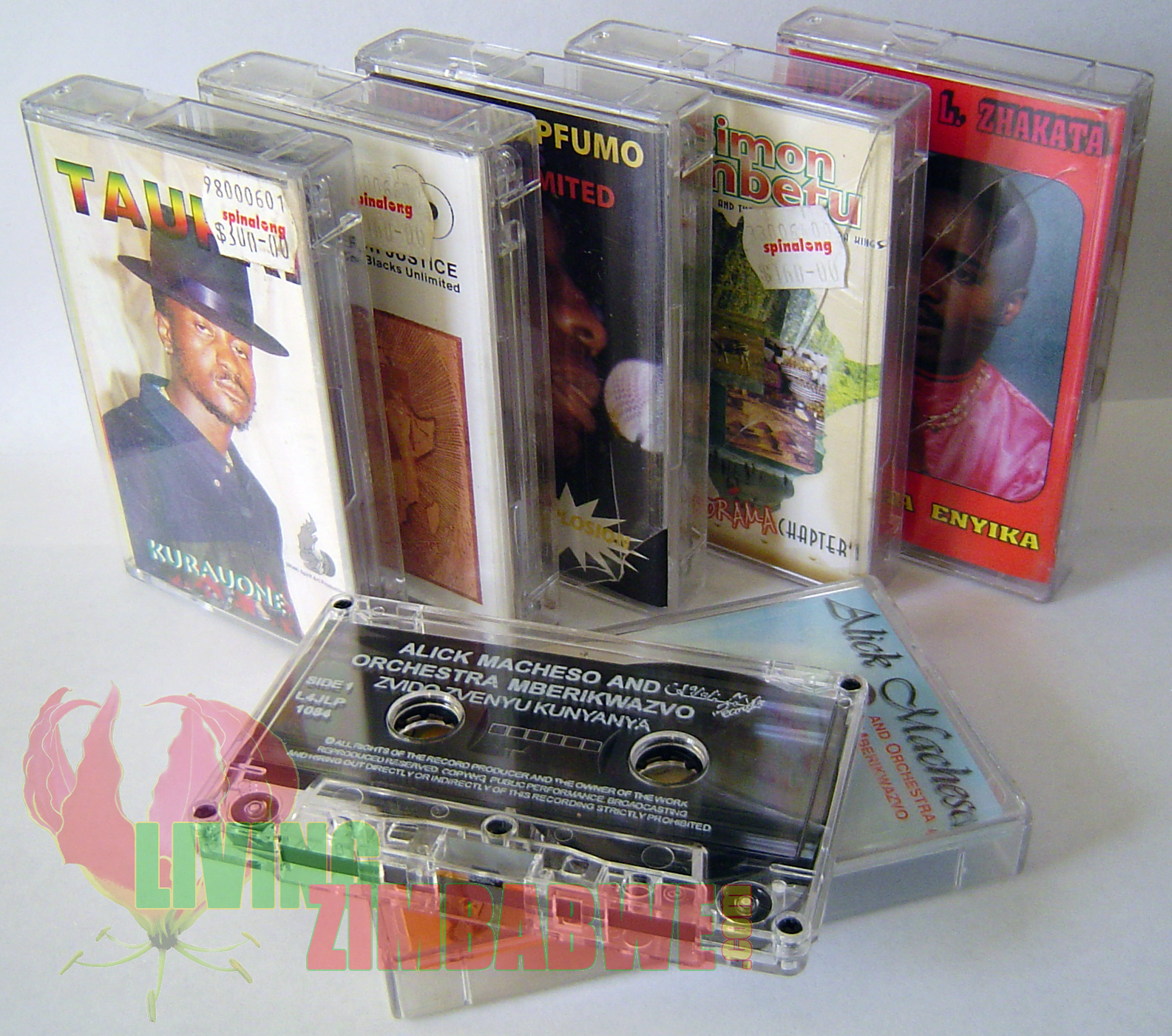
    A large majority of you have probably had a good laugh about how decades ago cassette tapes were a popular source of media that was used when buying, storing and of course “dubbing” music. If you went through this era then you probably also remember rewinding or forwarding tapes using an Eversharp 15M ball point pen and knowing that in order to get to a particular song, you had to turn it so many times clockwise or counter-clockwise. For some, having to pick and chose songs with a pen became a necessity when the fast-forward or rewind button on their trusty cassette player stopped working.

    Technology has taken a great leap forward and now people buy and store their music in digital formats such as mp3’s. If you are to roam around flea markets in Zimbabwe you will be sure to find someone sitting at their stall with a laptop ready to take requests of and make a copy of whatever music or movies you are after and only for a few dollars. This practise seems to be okay with the only material that you cannot be openly seen to be making and selling illegal copies of being anything by Zimbabwean artists. The Zimbabwean authorities do try to take a hard line against copyright infringements of material by local artists.

    To that end, there was a recent feature on CNN by Robyn Curnow about the resurgence of cassette tapes in Zimbabwe. She featured a cassette manufacturer, Diamond Studios that saw an opportunity and set up operations 3 years ago. Their current output is 10,000 tapes a month, which they ship to customers in not only Zimbabwe but Mozambique and Botswana as well. This has provided them with a more lucrative revenue stream than producing CD’s alone because of how quickly and easily they are pirated.

    The interesting bit is that going back to an old technology has been more beneficial for artists than CD’s. The reasons stated for this were that:

    • making pirate copies of tapes for profit is not as simple and easy as it is with discs
    • people in many areas of the country do not have a steady supply of electricity or any at all. This means that they have to run their radios on batteries and tapes are not as power hungry as CD’s so it makes sense to play them instead

    Even though cassettes tapes may be a dead technology in most of the world, it is still thriving in a few places and working to the advantage of many people. Manufacturers are making a living, musicians are getting paid their dues and consumers have their favourite music in a format that suits their needs.

  • Should Air Zimbabwe Be Privatised?

    Should Air Zimbabwe Be Privatised?

    Air Zimbabwe like many other parastatals has been in a downward spiral for the last few years. It has been plagued with all sorts of issues with the majority being of a financial nature. Its pilots are striking at the moment over unpaid wages and this is causing a lot of turmoil. In response to the strike action, the airline fired its pilots after they refused to return to work by a given date.

    By doing a bit of analysis it seems as if a major problem is that the airline is a government entity. Because of being a parastatal it succumbs to a lot of political interference. That being said, some of the decisions being made may not be in the best interests of the business as a whole. Without naming names, some decisions seems to be made to suite the personal interests of a select few.

    Air Zimbabwe is managed by individuals who don’t seem to have what it takes to review the airline and turn it into a profitable business. The reasons for that may be that they were put in those positions not because they were the right people for the job but because of their affiliations. Another thing that they may be more concerned about is filling their pockets with as much money as they can before they move on. Some of the statements that their executives make just don’t make sense. In the last few hours news has come out that Air Zimbabwe has reportedly purchased 2 Airbus A340 aircraft for $400 million. This is what the chairman Jonathan Kadzura had to say about the supposed purchase, “I have also heard about it (new planes), but to be frank, I am not aware of it.” This and other confused statements leave you in a position where you can’t trust of have much faith in its management.

    One of the best things that could be done for the airline would be to privatise it. Making such a move could bring in much needed investment which would not only carry the airline forward but also help it get out of debt. Such a move could also bring about a complete change of management and much needed corporate restructuring.

    The major stumbling block in a move towards privatisation seems to be the government itself who just don’t want to let go of it and other failing parastatals. The reasons for this could range from wanting to keep a grip on anything and everything to greed to monopolisation and the list goes on. If they haven’t already done so they need to realise that there are some things that they are not good at and continue to fail it and in the interest of economic recovery should let go of.

    If the downward spiral is not brought under control soon Air Zimbabwe is going to crash and burn and leave Zimbabwe with no national airline.

  • Africa Being Exploited For Its Riches

    Last month a plane that crashed in Congo and on board were Australian mining executives from Sundance Resources. The purpose of their visit was to take a look at the expansion of their operations in West Africa. An entire board taking the time to travel to West Africa is sign that there is something there worth Billions. One very big question is how much of that money stays in Africa?

    All over Africa, you will find foreign based companies with a strong presence in whatever sector they do business in. Yes, they may be providing jobs for people in the regions in which they operating. But, how does that compare to the amount of money that they are making that does not stay in Africa?

    In some cases, the governments of African nations are to blame. They may for example get a few millions dollars of investment from Africa’s new colonial powers China. What the Chinese get in return may be mining concessions which could make them Billions. In some cases the government officials try and do whatever they can to make it look like they are trying to gain control of sectors that are in chaos (such as the hotly debated diamonds from Chiadzwa). They will say they want to be able regulate it for everyone’s benefit when in actual fact it is for the benefit of a select few. This kind of greed is a completely different story all together.

    When it comes to multinational corporations that are owned and operated by entities outside of Africa, is there a need for them? Can’t we do it ourselves? Out of Africa’s population of an estimated 850 million there has to be groups of people who can do what the multinationals are doing. Why can’t we be the ones to have control of our resources which after extraction we sell on at a price we set? Could the Indigenisation and Economic Empowerment Act in Zimbabwe really be a way of getting what is really ours back in our hands? Some say it is just a way of Zanu PF keeping a grip on things and something that will sink the economy.

    Why can’t we do it ourselves and be the ones to benefit from our riches?

    Is Africa in such a bad state that those who are able to get their foot into the door are just exploiting the chaos?

  • Burning Money to Make Money

    US Dollars, the New Zimbabwe Dollar

    Zimbabwe’s economy might be in the doldrums but there are people there who are making a lot of money. Patrick M at Zimbablog wrote an article on ways of making money in Zimbabwe, “The 13 best ways to make money in Zimbabwe”. He outlines a few things that people have been doing to make themselves ridiculously rich. Some of the methods highlighted in his post include selling fuel, trading in forex and Zim dollars (believe it or not), selling food and alternatives to beating the frequent power cuts. That is not all people are doing to make money. The diamond craze that hit the country a couple of years or so ago is till very much alive despite the efforts of police to try and stop their illegal mining and dealing.

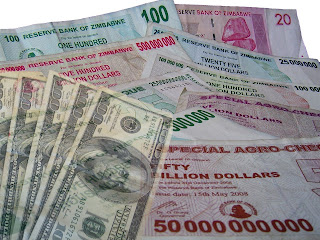
    The other day I caught wind of another way in which people are making money called ‘burning money’ where people take advantage of the very wide gap between the cheque rate and the cash rate of the US dollar against the Zimbabwe dollar. If you want to cash your US dollars you will get a much lower rate for it than if you were to go to the bank and exchange it for Zim dollars which are deposited into your account at a much higher rate. For example, if you cash US$50 it would be at a rate of lets say 30 000:1 and if you were to exchange it at a bank with the funds being deposited it would be at a rate of lets say 2,180,000,000:1.

    The most obvious choice would be to exchange the money using the bank transfer rate but the problem comes when you want to withdraw your billions of dollars from the bank. If you have contacts at the bank you withdraw the money and then go to parallel market to buy US dollars at a rate of lets say 40,000:1. If you do the math you can see that you end making a very good profit. For those that cant get that amount of money out of the bank, what they do is go to a company and buy some sort of goods such as cement or Econet’s pre-paid buddie top-up cards with a cheque and sell them on the streets for cash.

    The kinds of profits that people who ‘burn money’ make can be a bit mind boggling with the number of figures involved in the calculations but those who deal with them on a daily basis are used to it.

    One thing though is that with people managing to make huge amounts of money from their forex in both US and Zim dollar terms, a number of industries or should I say those that are left are struggling to survive. They are struggling to survive because everyone is out there trying to get their hands on some of that money and those that have the money are clearing out companies and selling their goods.

    Some may see this as being immoral and that the people who are out there carrying out such trades are further destroying the economy. The authorities may be out there trying to clamp down on such activities but as they close more and more loopholes and make it harder to carry out these trades, people are finding other ways of making ridiculous amounts of money. The way I see it, it’s just survival. It’s amazing how people can thrive in chaotic conditions.

  • Selling Zimbabwe Dollars Online Is Profitable

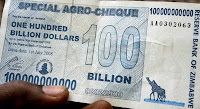
    Zimbabwe $100 Billion Dollar Note - $100,000,000,000At the start of 2007 ZW$10,000 notes were selling for about US$50 on Ebay and a number of people took advantage and sold the notes for more they were worth. With the introduction of the $100 Billion Dollar note ($100,000,000,000), selling notes for more than they are worth is happening again. As of today, there are 111 live auctions for the $100 Billion dollar note on Ebay with the highest bid for a single note being US$152.50 which is well above what one would get for it in Zimbabwe (screen shot below – click on image to enlarge). With the slashing of the zeros taking place the $100,000,000,000 will have a face value of $10 and just about worthless.

    Those who have been quick enough and smart enough have capitalized on the introduction of such notes and listed them on auction sites and sold them for very good profits. Right at this moment, the seller running the auction with a high bid of US$152.50 has 9 other auctions for single notes which if the auctions were to close would net him US$717.89 which is an amount you can’t complain about for $1,000,000,000,000 which at last weeks rates would have gotten you about US$2.

    If you have a few notes in your possession it may not be too late to get in on the action and take advantage of the situation. Even if you miss out on it this time around it is bound to happen again in the near future with the way Zimbabwe’s economy is running. Sign up to Ebay and try your luck. Take a look below:

    No items matching your keywords were found.
  • Zimbabwe’s Economy – Black Friday

    • US $1 is now worth ZW $2,000,000 on the black market.
    • Inflation is said to be around 15,000% (independent analysts put it much higher).
    • Is it all a result of Mugabe’s mismanagement and controversial policies?
    • Mugabe recently said that Zimbabwe’s economy would not collapse.
    • What marks the collapse of an economy?

    The economy has been spiralling downward for a decade now. Zimbabwe used to be the breadbasket of Africa but now it is in a situation where the average person really struggles to make ends meet. Even if they do manage to get their hands on a bit of money to buy basic commodities it can be a struggle trying to get their hands on them due to shortages. When will Zimbabweans see an end to such conditions?

  • The Zimbabwe Dollar – 1,000,000 to 1

    One US Dollar will get you One Million Zimbabwe Dollars. That is just ridiculous!! I checked the official bank rate about two to three weeks ago and it was ZW $30,000 to US$1. The official rate doesn’t really mean much for everyday people in Zimbabwe because you can’t get yourself any foreign currency at the bank and it doesn’t make sense to sell your forex to a bank when you can get more for your money on the street. People who do want to know where the bank rates stand are the black market dealers so that they can adjust their prices accordingly.

    I can remember the days in the early to mid nineties when you could get the US Dollar for well under ZW $10. It was so readily available and you could pick up your foreign currency from the bank on the day that you ordered it. As the years went by and the economic and political situation got a little shaky it became harder and harder to get your hands on forex. The situation has only gotten worse as time has gone by. I was in Zimbabwe at the beginning of the year when US $1 would get you about ZW $15,000 to ZW $20,000 depending on where you changed your money. I would not have thought that it would reach the levels it has reached. The instability in the economy has made a lot of people very rich and very quick!!

    One funny thing is that I kept quite a few notes, in particular the $10,000 bill that does not have a space between the first and second zero. I went on to sell a few of them on eBay! for between US$15-50. A few people are selling an array of Zimbabwe Dollar notes and getting a whole lot more from them than they would get in Zimbabwe.

    It is beyond me how the economic situation has reached the level it is currently at.