Category: Business & Economy

  • Impact of ZiG Devaluation: How to Protect Your Wealth in Zimbabwe

    Impact of ZiG Devaluation: How to Protect Your Wealth in Zimbabwe

    On the 28th of September 2024, many a Zimbabwean became aware of the resolutions of the monetary policy committee meeting held the day before. A number of resolutions were made which included an increase in the bank policy rate from 20% to 35% and reduction of the amount of forex an individual can take out of the country from US$10,000 to US$2,000. 

    For people on the ground, the most significant impact was the devaluation of the ZiG from US$1:13.5 to US$1:25. This move knocked just over 40% off the value of the ZiG (The Zimbabwe Gold (ZiG; code: ZWG) just under six months after its introduction as official currency in April 2024). So, from one day to the next, your money was worth a lot less than what it was (again!).

    Is the ZiG a Reliable Store of Value?

    This begs the question, what’s the point of transacting in or holding the ZiG if it can be drastically devalued just like that? Many traders no longer (some haven’t for a while) accept ZiG and prefer to transact in the ‘stable’ US dollars. 

    The US dollar has for the ages been the world’s reserve currency but who knows how long that will hold with BRICS nations looking to establish a new currency? Where would that leave us USD addicted Zimbabweans? How would we trade and save?

    Protecting Wealth in an Unstable Environment

    The daily grind is not just about survival, it’s also about thriving and getting ahead financially. This is easier said than done especially in economies where decisions can take you backwards or almost wipe out possibly years of savings at no fault of your own. How do you build and protect your wealth?

    Should Zimbabweans completely turn their backs on the ZiG and look to alternatives like the US dollar, physical gold, or cryptocurrencies like Bitcoin or stablecoins? These asset classes offer varying degrees of stability and growth potential, but each comes with its own risks. Read: Is it time for Zimbabwe to adopt Bitcoin, stablecoins and other cryptocurrency?

    Gold, for example, is a traditional store of value, especially in uncertain times. Cryptocurrencies like Bitcoin which are volatile are gaining attention for amongst other things being a hedge against inflation and government interference. Stablecoins, which are pegged to assets like the US dollar have the same advantages as crypto without the extreme price swings.

    Key Insights:

    • ZiG to USD: ZiG has devalued by 40% since its introduction in April 2024.
    • Zimbabwe Gold Price (per gram): Local gold prices increased by over 20% between April and September 2024.
    • World Gold Price (per ounce): Global gold prices have risen by 17.2% from April to September 2024.
    • Bitcoin: Bitcoin showed a slight decline (-3.23%) from April to September 2024 but had a substantial gain (+138.74%) from September 2023 to September 2024.

    Planning for the Future

    Time waits for no one and as it ticks along, we age. As we age, financial security becomes even more important, particularly with the potential for increased medical costs and reduced income in later years. Decisions made today about how to protect and grow wealth will have lasting consequences for the future.

    Not only should the short-term impact of currency devaluation be considered, but also a long-term strategy for wealth preservation. Is it better to move completely to US dollars? Is cryptocurrency the way to go? Or is it best to stick with the primary store of value, gold?

    What are you doing to protect your wealth and financial future in this unpredictable environment?

    Disclaimer: The content provided is for informational purposes only and should not be considered financial advice. These are ideas and suggestions for potential ways to preserve and grow wealth in the Zimbabwean context. Always consult with a qualified financial advisor before making any financial decisions.


    Resources

    Reserve Bank of Zimbabwe

    Mining Zimbabwe

    Gold Price

    Google Finance


  • Retirement Planning Considerations in Zimbabwe

    Retirement Planning Considerations in Zimbabwe

    The global elderly population is increasing, and while the Western world is generally better prepared for this trend with assets, retirement packages, savings, and investments, the situation in Zimbabwe is quite different. Many retirees in Zimbabwe lack substantial savings or secure retirementg packages, which creates a challenging situation. Even though some own homes, financial security is a significant concern due to dwindling savings and limited support from adult children.

    In past years, many pensioners have been left waiting for pensions that ultimately amounted to nothing. Several pension funds have failed to pay out dues due to various issues. These include hyperinflation, corruption, greed and poor corporate governance.

    Young people can learn important lessons from observing the retirement outcomes of previous generations. By examining these outcomes and comparing them to their current situation, they can better prepare for their own financial futures. It’s crucial for younger individuals to work hard during their prime earning years, ensuring they can cover their daily expenses while also saving for the future.

    Achieving a comfortable retirement requires diligent saving and investing, particularly for those without substantial assets. Savings can cover unplanned expenses like medical emergencies or car repairs, while investments can generate dividends later in life. Although it might be challenging, consistent saving and wise investment choices are essential for building a secure financial future.

    For those earning a base salary of $500 USD for example, balancing a fulfilling life today with planning for tomorrow can seem difficult. Increasing income is vital, and exploring various financial solutions tailored to individual needs is crucial. While creating a financial plan may be straightforward, executing it often proves more challenging. Persistence and proactive financial management are key to turning these plans into reality.

    All individuals, young and old should prioritise saving and investing, regardless of the current economic climate. Waiting for economic conditions to improve is not a viable strategy, you may be waiting for a very long time. Instead, focusing on actionable solutions like saving and investing is essential for long-term financial stability. 

    Developing a habit of financial prudence early on can significantly impact future financial well-being and see you well on the way to a worry-free retirement. 

    Have you ever considered Bitcoin, stablecoins and other cryptocurrencys as part of your wealth building strategy? 

  • How to use dirty Zimbabwean US Dollars outside Zimbabwe

    How to use dirty Zimbabwean US Dollars outside Zimbabwe

    Zimbabwe’s economy is definitely an interesting one with the multi-currency system, shortage of foreign currency and the trending away from Bond notes. With the multi-tiered pricing and recent shortages, one thing that has stood out is that cash is king and more in particular, US dollars.

    It is no secret that a large percentage of the US dollar notes in circulation have seen better days. One does begin to wonder how some of the notes are accepted for payment? With the USD being a global currency, it is one that is accepted for trade worldwide. But, this is not quite the case with our dirty ‘Zimbabwean’ US dollar notes.

    Dirty-Zimbabwean-US-dollar-notes-Living-Zimbabwe

    Disclosure: This post contains affiliate links, which means we may receive a small commission, at no cost to you, if you make a purchase through a link.

    TechZim recently wrote an article about their experience of not being able to change some of their ‘Zimbabwean’ USD at various Bureau De Change outlets in South Africa. Other travellers have had similar stories to tell where they were not able to change their dirty money in other parts of the world be it at a bank or currency exchange outlet.

    People travelling out of the country need foreign currency to pay for food, accommodation, shopping sprees or whatever it is they have travelled for. For many, the only cash that they have at hand or access to is the dirty US dollars that have done their rounds. Not being able to change their currency or have it accepted as payment leaves them in a situation where their money is worthless outside of Zimbabwe.

    Once you reach this point, it may seem as if all is lost as far as the seemingly worthless money goes. But, this isn’t quite the case as there is a solution that will revive the value of your notes for use outside the country.

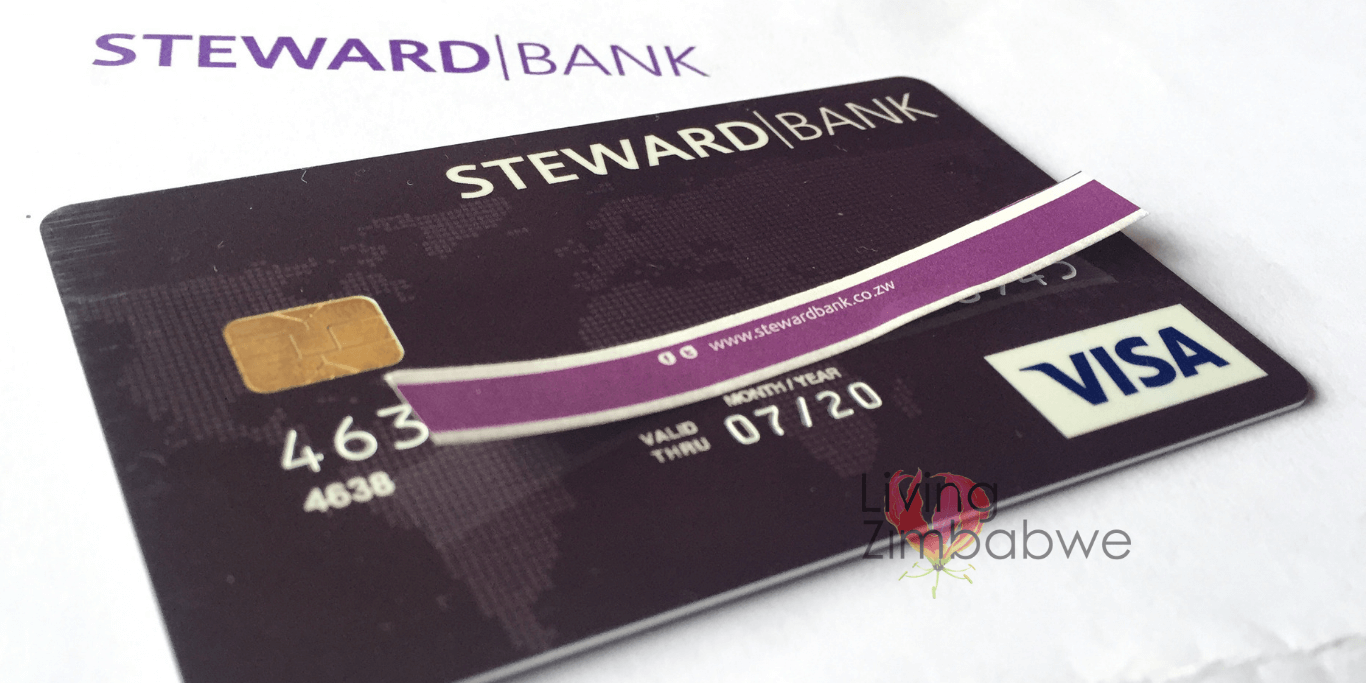
    Steward Bank Globetrotter Visa Card

    Steward-Bank Globetrotter-Visa-Card-Living-Zimbabwe

    A friend recently told us about how he manages to make use of his dirty money when travelling out of the country. His simple solution was the Steward Bank Globetrotter Visa Card.

    This pre-paid VISA card which is available to Steward Bank and non-Steward Bank customers is one that the cardholder funds in foreign currency. Applying for the card is simple and straightforward with all that’s needed being, a completed application form, copy of ID, proof of residence and a US$10 card issuance fee. To fund the card, deposits can be made into the card at a Steward Bank branch, Steward Bank agent or Econet Shop.

    Our friend produced a few US dollar banknotes (the ones pictured above), some of which we thought would not be accepted by the bank due to them being extremely tattered. But, to our surprises, they were accepted for deposit, no questions asked!

    With the money loaded onto the card, it was now in a form where it could be used anywhere in the world or online where Visa is accepted.

    Do you have any other ways of converting dirty US dollars into a useable form?

    Get (or send) money from the diaspora through WorldRemit – Pay ZERO fees on your first money transfer!

  • Get US Dollar hard cash in Zimbabwe through WorldRemit

    Get US Dollar hard cash in Zimbabwe through WorldRemit

    Bond notes, US dollar, RTGS and so on keep Zimbabwe’s economic machine in motion. As far as the Reserve Bank of Zimbabwe is concerned, these are officially at a one to one ratio. But, as those living Zimbabwe at the moment know, that is not the case at all!

    Zimbabwe’s economy has once again gone into freefall and on the ground that one to one ratio is non-existent. The past few weeks has seen the various rates fluctuate quite drastically. This has lead to various shortages for commodities such as fuel, gas, cooking oil and bread just to name a few.
    https://www.instagram.com/p/BpZZK_CgJsY/
    Disclosure: This post contains affiliate links, which means we may receive a small commission, at no cost to you, if you make a purchase through a link.

    Businesses have had to resort to limiting the quantities bought per person on certain items. As far as payment goes, in some instances, some businesses are offering a mix and match of tiered pricing depending on your method of payment. In others, swipe and EcoCash are being shunned and they only accept hard cash be it Bond or US (once again with different prices for each). Further to that, some will only do business with you if you are paying in US dollars (which by all rights is illegal but who is going to police and bring them to account?).

    For a short while, queuing for necessities such as fuel, gas and cooking oil had once again become the order of the day. As at writing of this piece, the queues are now few and far between. In some cases, you can expect to wait a little while for some of those basics.

    No one wants to go back to 2008 and some are trying to buffer themselves in the event of a possible economic disintegration. People are hoarding (if they can afford) for personal use as a just in case. Some speculators are hoarding to sell on the black market for well above market value when the time is right.

    One thing that is for certain is that there is economic uncertainty. Prices are on the rise and the 2% tax on electronic transactions has made cash king and more so the United States Dollar.

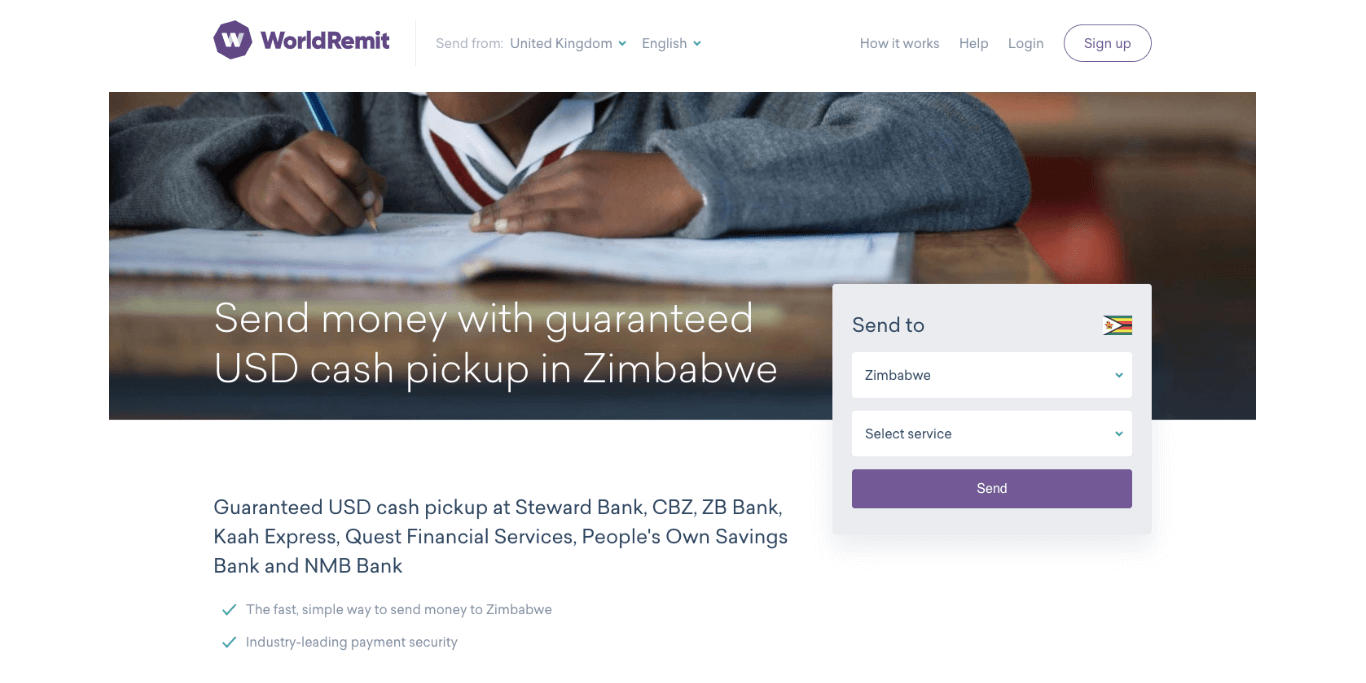
    To get USD in Zimbabwe, the options include but aren’t limited to, buying it from money changers on the black market, from family and friends visiting the country and through a remittance service provider such as WorldRemit.

    WorldRemit provides a money transfer service that provides users with a quick, secure and low cost way of sending money to more than 145 countries around the world. In the case of Zimbabwe, they provide a number of options through which recipients can receive money and theses include, bank transfer, cash pickup, mobile money (EcoCash) and airtime top up.

    At this point in time, cash pickup’s are the most logical because at the moment, WorldRemit guarantees USD cash pick up in Zimbabwe. They have partnered with a number of institutions throughout the country from which cash can be collected. They include Steward Bank, CBZ, ZB Bank, Kaah Express, Quest Financial Services and more (click here for a full list of pickup locations).

    To add to their competitive rates and low fees, WorldRemit also has a refer a friend program where users get rewarded with cash to put towards your next transfer. For example, if someone in the UK refers a friend (via a unique code on the refer a friend page), once the friend sends £100 or more, the referrer gets emails and £20 WorldRemit voucher code.

    So, if you have someone overseas looking to send money home or it you yourself want to send money home, consider using WorldRemit; Sign up today and get Zero fees on your first money transfer – use promotion code FREE!

  • The importance of house or stand price, suburb density and other factors in fulfilling your real estate dream in Zimbabwe

    The importance of house or stand price, suburb density and other factors in fulfilling your real estate dream in Zimbabwe

    A miss is as good as a mile. A situation in which you manage to buy a house or stand for sale somewhere at the backyard of the property market when the initial dream was about one in Harare North’s affluent Borrowdale Brooke will never cover up for the fact that you failed to achieve what your heart fondly desired from the word go. The heart is very honest it will never take a consolation as the first prize or a second best as the best. Its therefore, wise to know about what critical factors that can be involved if one has plans for fulfilling long cherished dreams of owning property in a suburb of choice. Remember the tenets of success will never make special adjustments for you. Those who build aeroplanes had to make them round without sharp edges because they had to comply with already existing principles of aero dynamics. You too in like manner must acquaint yourself with important factors about real estate so that you comply and avoid living a life of regrets. Here are some few but important of these factors that are pillars for your quest to achieve your real estate dream .

    Suburb Density

    Suburb density is basically about the average size of stands in a particular suburb. Sizes less than 300sqm are considered to be high density, those between say 400sqm and around 700sqm are considered as medium and all sizes beyond 700sqm are low density. Its important to know about suburb density because there are some aspects of real estate in Zimbabwe that are density or area specific. A good example of these are title deeds and price per square meter. About title deeds you should know that the greater percentage of properties in low densities have title deeds as compared to high densities and I believe that the major reason why this is so is the issue of past policies of segregation that where calculated to ensure that those who stayed in high densities would never access economic empowerment available through the avenue of collateral security. In terms of prices you should know that low densities are cheaper in terms of price per square meter as compared to high densities simply because purchasing in low densities is more like wholesale buying whilst in high densities it is retail.

    House or Stand Price

    Guess what, the reason why knowing house prices is important, is something very simple yet the price issue can be a very complicated affair for many a property investor. You should know prices because you need to have a correct budget. But many aspiring investors are unaware of the fact that property prices are greatly influenced by the immediate location such that you can never determine a price for your budget by comparing a house in suburb A with a similar one in suburb B. You cannot compare an apple to a banana. Unfortunately, many using this flawed method end up with wrong perceptions of price and of course to the detriment of their budgets. If you want a house in Borrowdale your unmistakable price guide are the prices of similar houses that where recently sold in Borrowdale. Never compare Borrowdale with Mnt Pleasant, Borrowdale is Borrowdale and Mnt Pleasant is Mnt Pleasant.

    Supply and Demand

    Supply and demand is an economic principle well known by many yet many still need to be educated about it but with a special focus on its impact of the Zimbabwean property market. After economic challenges of the past fifteen years there are certain residential stand types that are now out of stock so buyers have to make do with what is there. Good examples are 1000sqm stands like those in Westgate Adylin in Harare West and vacant 300sqm stands within established high density suburbs like Glen View. Besides the economic subsidence another reason why some of these stands are out of stock are local government by-laws that prohibits the sell of undeveloped stands in municipality projects. So subsequently, these supply side shortages may cause the prices of the best alternatives to sour despite the expectation that they should drop because of liquidity challenges in the economy. The take home lesson for investors in light of these things is that the reality on the ground is dictating that they should accept new stands at the periphery of the capital city as long as they are serviced to an acceptable level and have legitimate papers .

    With the rise of the so called “land barons” who are property fraudsters an inability to verify the legitimacy of papers is blocking many property investors from achieving the long cherished real estate dream. The issue of buying property in special cases like deceased estates and when a seller is ill is also another aspect a serious property investor should be thoroughly aware of. Indeed these are very important topics however, one cannot cover everything in a single article the reader is therefore, at liberty to visit my blog propertymattersnews.blogspot.com for a more comprehensive experience involving a diversity of topics that are covered by over sixty articles.

    DISCLAIMER : THIS ARTICLE DOES NOT REPLACE THE ADVICE ONE SHOULD GET FROM HIS OR HER PROPERTY ADVISERS.

    This has been a submission by Cain Ndhlovu.
    You can connect with Cain Ndhlovu via the following: https://propertymattersnews.blogspot.com, https://twitter.com/cainndhlovu, https://www.facebook.com/propertymattersnews/.
    You too can become a Citizen Journalist by submitting your story here: Citizen Journalism by Living Zimbabwe
    The views expressed in the article are those of the author and not necessarily Living Zimbabwe.

  • Critical know-how before buying immovable property in Zimbabwe

    Critical know-how before buying immovable property in Zimbabwe

    When you want to buy immovable property its important to know what to do and where to start. A lack of this know-how has led many people’s hard earned cash into the evil hands of fraudsters . Others have invested into motor vehicles using funds set aside for property investments because the know-how about buying a car is more readily available than that about real estate. But unfortunately a car is more of a consumable than an asset! It begin losing value the moment it leaves the garage. So I hope this article will be worth while.

    Before you do anything its critical for you to know that only two people are allowed by the law to SALE immovable property legally and these are the property owner and a registered estate agent. Any situation in which property is being sold but the seller is not the owner or a registered estate agent must be thoroughly investigated and council must be sort from experts. Though there are many media a buyer can use to reach an owner or a registered estate agent what is fundamental is however this question “ Is this the owner or a registered estate agent?”. So because of this people should be wary of many housing cooperatives mushrooming everywhere and selling land simply because they do not own it.

    After accessing a person claiming to be the property owner or estate agent you must first and foremost determine the legitimacy of their claim. If one is an owner of immovable property and they want to prove this they furnish either a title deed or an agreement of sale. An agreement of sale is what people usually call cession in reference to the name transfer process that is called cession. The name transfer process for title deeds is called conveyancing. You should thoroughly scrutinize these documents in order to prove to yourself that they are what the owner is claiming because you can be shown say a lease which means that person is merely a lodger. If there are title deeds you must be shown a national ID card and the original title deed copy and the personal details of the one referred to as the transferee on the deed should be equivalent to those on the ID shown. From there you go to the deeds office where you request for the twin copy or government copy of the title shown to you by the seller. And again the government copy’s details should be the exact duplicate of the seller’s copy!

    If there is an agreement of sale you go either to a municipality’s housing division or to a private property developer’s office. An agreement is made between two parties namely the seller and the buyer and in this case the municipality or developer is the seller because it would have sold property to the person who is now selling to you. And here also the seller must have his or her ID and the original agreement of sale and you MUST go there together because if you are only yourself the developer or municipality will never entertain you for confidentiality reasons. At these offices the relevant officials will do the authentication part for you and tell you all you want to know with respect to the property being sold. But when dealing with developers it doesn’t end here because you should further ask for a parent title deed and a special document known as a subdivision permit. These last documents’ authenticity should be verified with the deeds office and the physical planning department of a municipality respectively.

    Estate agents are the only professionals licensed by the Estate Agents Council of Zimbabwe under the Estate Agents Act to sale immovable property on behalf of other people. So in order to find out if a person is a registered estate agent you just go to the Estate Agents Council’s offices in Harare. It takes three years worth of real estate experience for one to earn a license. One advantage of dealing with estate agents is that their Act and regulating authority require them to first do the aforementioned ownership authentication process before advising any person to purchase a property. This is the reason why I know all this. Nevertheless, it does’nt hurt if you go an extra mile and do the authenticating yourself.

    DISCLAIMER: THIS ARTICLE DOES NOT IN ANYWAY REPLACE THE ADVICE YOU SHOULD GET FROM YOUR REAL ESTATE ADVISERS.

    This has been a submission by Cain Ndhlovu.
    Cain writes about immovable property and has been doing so for the past 5 years.
    You can connect with Cain Ndhlovu via the following: https://propertymattersnews.blogspot.com, https://twitter.com/cainndhlovu, https://www.facebook.com/propertymattersnews/.
    You too can become a Citizen Journalist by submitting your story here: Citizen Journalism by Living Zimbabwe
    The views expressed in the article are those of the author and not necessarily Living Zimbabwe.

  • Financial consequences of purchasing property from a seriously ill seller in Zimbabwe & other purchases to avoid

    Financial consequences of purchasing property from a seriously ill seller in Zimbabwe & other purchases to avoid

    Questionable contractual capacity of a seriously-ill seller

    In Zimbabwe purchasing property being sold by a seriously-ill seller can be dangerous so it must be approached with great caution. If the seller heals, armed with medical records he can rise from the death bed with a backlash and claim that when he sold, he did so with a state of mind that was not suitable for such a critical undertaking. This argument holds water and justice will demand that it should be taken seriously but for the purchaser it means another extra cost because of unexpected legal expenses.

    Bad debt

    Using a loan to purchase a property can later be regretted. When considering a mortgage its important to bear in mind the essence of this which is that the purchase should be able to service its loan obligations through rental proceeds from tenants. This allows the mortgagee to ease pressure on his or her income thereby enabling it to satisfy other financial demands like bills and tuition fees. But if a mortgagee moves into the new premises as owner-occupier this will in-turn put pressure on their income and tie them to their jobs. Such a situation will later haunt the purchaser as he will be unable to move on to other opportunities or go after other pursuits that need funding because job security will take priority ahead of anything else.

    Hidden defects

    Signing agreements of sale without first conducting a thorough inspection of the intended purchase can have adverse financial consequences tomorrow when you discover defects that where hidden from you. Serious defects that cost much are those that compromise the structural integrity of the property meaning to say depending with their state they can qualify the property as a demolition candidate. You will be forced to incur unexpected costs as you go through extensive renovations. The most unfortunate thing however, will be that your situation would lack legal merit in order to claim compensation since the signed agreement would carry a so called voetstoots clause that says,” The property is sold voetstoots (as it is) and the seller shall not be liable for any defects patent, latent or otherwise in the property nor for any damage occasioned to or suffered by reason of such defect.”

    Image from goafricahealth.com

    This has been a submission by Cain Ndhlovu.
    Has been blogging about property on Property Matters News for 5 years.
    You can connect with Cain Ndhlovu via the following: https://propertymattersnews.blogspot.com, https://twitter.com/cainndhlovu, https://www.facebook.com/propertymattersnews/.
    You too can become a Citizen Journalist by submitting your story here: Citizen Journalism by Living Zimbabwe
    The views expressed in the article are those of the author and not necessarily Living Zimbabwe.

  • Zimbabwe’s 2017 house prices a rags to riches story

    Zimbabwe’s 2017 house prices a rags to riches story

    The state of the property market is a reflection of the economic path the ambitious Zimbabwean take from being a peasant to a wealthy person. An analysis shows that we all belong to four market segments namely the high, medium, transitional low and affluent low densities. The high density ( house prices $20 000.00 [core house] – $50 000.00 e.g Warren Park, Highfield ) is home to low-income earners most of whom informal sector sole traders and vendors earning below the poverty datum line of $400.00. The medium density (house prices $55 000.00 – $100 000.00 e.g Mainway Meadows, Southerton ) is home to the middle class usually junior managers and small size business owners employing few people. Transitional low density (house prices $100 000.00 – $230 000.00 e.g Good Hope, Mandara, Prospect) is where individuals can transition from the medium density to the affluent low density. In the transitional low density, you are likely to come across newly promoted directors of larger enterprises and medium size business owners who would have managed to grow their enterprises from a smaller size operation. The last but not least is the affluent low density namely the Umwinsidale, Borrowdale and Glen Lorne of our days. Here you find the elite, the movers and shakers in politics, industry and commerce. The cheapest house here is around $240 000.00 whilst the most expensive can be almost a million dollars!

    Many of my clients who have transitioned from the high densities to the lower densities over the years found it best to take it one step at a time. This means that they moved from the high to the medium and then from the medium to the lower densities instead of jumping from the high densities and going straight to the affluent low densities. So one can ask “If I manage to get a lump sum of $240 000.00 why can’t I just go straight to the affluent low densities and buy a house in Borrowdale? ” Well with property its not only about the asking price which is the money required by the seller but it’s also about extra costs that come over and above the asking price. Extra costs are in two forms; there are those directly associated with the purchase of the property like name transfer fees and there are those more like running expenses that are incurred as you use the property like municipality rates. After acquiring the lump sum one should first remember that the stomach will always demand that you eat and the kids will need to go to school. Therefore, there should always be a good monthly income that is able to meet the basic needs of life together with the higher costs of being a resident in the affluent parts of the country. Let’s take a look at the extra costs.

    Name transfer costs

    In my nine-year real estate career I have observed that many aspiring property owners do not know that over and above the asking price on the property advert, there are additional name transfer costs that are determined as a percentage of the purchase price. This percentage can be approximately 7% which means over and above the cheapest price of $240 000.00 one will pay $16 800.00 in order to have the property’s ownership legally transferred to his or her name. This will bring the total of the money coming out of your pocket to $258 000.00 excluding bond registration and valuation fees if you are using a mortgage. A good monthly income can help you out so that your dream is not abandoned by facilitating payment terms with the legal practitioners responsible for the transfer.

    Municipality rates

    The municipality provides services like refuse collection, sewer and fresh water supply etc which must be paid for by residents irrespective of whether or not these services have been satisfactorily provided by the former. In affluent areas, municipality rates are the highest because the valuation method used to determine them is based on the reasoning that there is a correlation between rates and capital value of the property. Since property values in affluent areas are high the rates there are also high in line with the value of the area.

    This article was written by Cain Ndhlovu of https://propertymattersnews.blogspot.com. Visit this site to know more about property.

    This has been a submission by Cain Ndhlovu.
    My passion is writing about property.
    You can connect with Cain Ndhlovu via the following: https://propertymattersnews.blogspot.com, https://twitter.com/cainndhlovu, https://www.facebook.com/propertymattersnews/.
    You too can become a Citizen Journalist by submitting your story here: Citizen Journalism by Living Zimbabwe
    The views expressed in the article are those of the author and not necessarily Living Zimbabwe.

  • How to beat Zimbabwe’s Bond Notes

    How to beat Zimbabwe’s Bond Notes

    Our economy has been through all sorts in the last few years. It’s has gone from a functional Zimbabwe dollar to a dysfunctional dollar that saw unprecedented levels of hyperinflation that caused all sorts of chaos. It got to a point where it didn’t make sense to transact in our own currency where trillion dollar notes were being exchanged for goods and services. This crisis eventually led to businesses and traders alike resorting to only accepting foreign currency with the government also conceding and adopting the multi currency economy we live in.

    The acceptance and use of multiple currencies eased a lot of pressure for many a Zimbabwean even though many may not of have respected the mighty US dollar for the value it holds. But, the adoption of all of these currencies has also brought about its own challenges such as really dirty money which is something we now just live with but now, it’s getting harder to get a hold of actual physical cash, dirty or not.

    Besides dirty money, the multi currency economy has brought about a cash crisis/liquidity crisis where citizens just don’t have cash in hand. You may have a bank account that says you have $xyx in it but getting that money may be easier said than done. People just don’t have the cash that they need to get on with their daily lives.

    That said, banks are now putting daily limits on withdrawals, travellers can only take certain amount of money out of the country and business looking to import products have to go through a tedious process in order to pay for their imports.

    The ongoing crisis has spurred the Reserve Bank of Zimbabwe (RBZ) to take action with that being them announcing the introduction of bond notes. We already have a few million dollars worth of bond coins floating around the country, coins that some people still won’t accept.

    The looming injection of bond notes into the economy has freaked out quite a few people. Why? They see it as the return of bearer cheques that saw us transacting in billions and trillions. The RBZ has picked up on public concern and have tried to allay fears. They have put out statements such as they will not replace the current multi currency and that more bond notes will not be printed at will. But, this is all just a wait and see.

    Whatever the case may be, hope is still there that we may one day (sooner rather than later) get back to having a stable economy.

    Some people are taking to hilarity maybe as a way of coping with what may come. One example was in the form of a WhatsApp forward that outlined practical steps to getting by in a bond note economy:

    10 practical steps to beating Bond Notes

    1. Find something that you can do that doesn’t require you to import but can be produced with local materials.

    Local-Materials-Surviving-Zimbabwe-Bond-Notes-LZ

    2. Find something that you can export.

    Export-Surviving-Zimbabwe-Bond-Notes-LZ

    3. Don’t sell your assets.

    Keep-Assets-Surviving-Zimbabwe-Bond-Notes-LZ

    4. If you have a kumusha, buy cattle now, especially if your home area hasn’t been hit by drought.

    Buy-Cattle-Surviving-Zimbabwe-Bond-Notes-LZ

    5. Downsize. If you have a car downsize to a smaller and more fuel efficient vehicle. If you are renting a house, downsize to a smaller one or change suburbs.

    Downsize-Surviving-Zimbabwe-Bond-Notes-LZ

    6. Don’t do things for prestige. Send your children to a school you can afford.

    Affordability-Surviving-Zimbabwe-Bond-Notes-LZ

    7. If you have space, grow vegetables and/or breed chickens (and zvihuta!).

    Grow-Vegetables-Breed-Zvihuta-Surviving-Zimbabwe-Bond-Notes-LZ

    8. If you are renting but have a stand elsewhere, move to your stand. Build something basic and live there. Forego luxury living.

    Forego-Luxury-Surviving-Zimbabwe-Bond-Notes-LZ

    9. If you are married don’t fight over money. Hapana hapana. Put your heads together and think of survival tactics instead of fighting and accusing each other. Not everyone can sell things or be a vendor.

    Dont-Fight-Survive-Surviving-Zimbabwe-Bond-Notes-LZ

    10. Be at peace! This is important. Stress levels will go up. They are already up! Don’t be a victim of things that are not in your control. Speak to others, pray with others and attend church even more. Hearing the word of God heals the broken hearted.

    Be-At-Peace-Surviving-Zimbabwe-Bond-Notes-LZ

    How do you plan on surviving the bond note economy?

  • Why businesses in Zimbabwe must claim their online listings

    Why businesses in Zimbabwe must claim their online listings

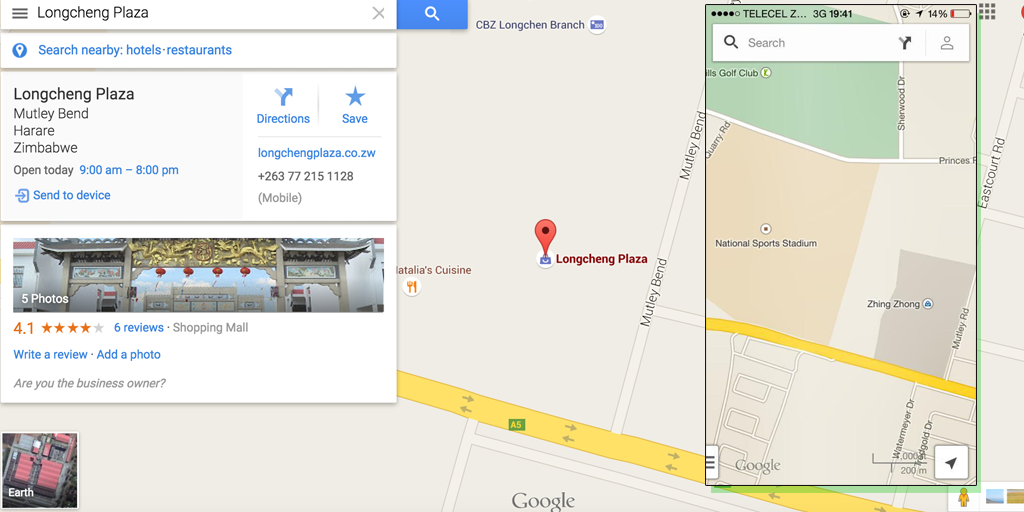
    Last month we came across a tweet with a screenshot of a smartphone map app where the LongCheng Plaza in Belvedere’s online listing was marked as Zhing Zhong! For those of you who aren’t familiar with the term Zhing Zhong, it isn’t exactly politically correct. If you do a search for the term, what comes up is the following:

    “cheap, fake or sub-standard products of Asian origin. These kind of products are mainly rejects from mass production in China that are dumped on struggling markets.”

    As far as LongCheng goes, having that listed as their name wasn’t really the best look. Any business or brand that wants to uphold a certain reputation and get the right message across would not want to misrepresented in any way shape of form. Fortunately, in this particular case, the listing was corrected and they were able to save face.

    Now, imagine a situation where someone sets up an online profile using your business name with a custom url (for example Facebook.com/LivingZimbabwe) and makes it look like an official channel used to engage with customers. Once up and running, they can put up whatever content they like and also communicate with current and potential customers and depending on the nature of the content, they could be doing serious damage.

    If the content being put up by someone purporting to be you, it could wreak havoc and see a business spending a lot of time and resources to try and make amends and rebuild their reputation.

    So, what can be done to avert such a crisis? If your business or brand doesn’t already have an online presence, it may be time to build one or at a minimum, claim your brand or business name online. This can be a simple as buying a domain name such as a co.zw, .com or any other suitable extension.

    Other steps that can and probably should be taken include:

    • Setting up a Google My Business (more so for brick and mortar businesses)

    • Establishing a presence on the major social media platforms such as Facebook, Twitter, Google+, Instagram and the list goes on

    Apart from registering a domain name, the good thing about most of the options listed above is that they are free to set up.

    Yes, some may say Zimbabwe is not in that sort of digital space yet. But, the world is becoming increasingly digital and there will be a need to have a presence in this space, not to mention the benefits that come along with it. In a business context, those benefits could include an increase in revenue and brand recognition.

    If you have some time on your hands, listen to the podcast below on a discussion about online reviews for local businesses. It may seem very Western-centric rather Americentric and some features may not be available in Zimbabwe but the ideas discussed can be adapted to fit your purposes.

    One thing to remember is that claiming your identity on the major networks doesn’t necessarily mean you have to be active on all of them. The need to use them may arise in the future and if this does happen you will not have to worry about having brand consistency across the web.

    Are you convinced that you need to take control of your online presence?