Author: Living Zimbabwe

  • First Bob Parsons Now Donald & Eric Trump In Zimbabwe Hunting Controversy?

    First Bob Parsons Now Donald & Eric Trump In Zimbabwe Hunting Controversy?

    About a year ago, Bob Parsons (former Go Daddy CEO) found himself in a storm of controversy after posting footage (below) of his elephant hunt in Zimbabwe. As you can imagine, there was a lot of public outcry. PETA were very vocal about it and took action against the killing. They closed their Go Daddy account and encouraged the public to follow suit. This action subsequently led to thousands of people disassociating themselves with Go Daddy and transferring their domains to other providers.

    This time, Donald Trump Jr. and Eric Trump (Donald Trump’s sons) have managed to get themselves caught up in something similar. Photos of them sporting trophies from a hunting trip they took to Zimbabwe last year have recently surfaced. The photos have lead to criticism from PETA and other animal rights groups. Just like in the case of Bob Parsons, the hunt has had a negative impact on Trump entities. The biggest blow has been sponsors pulling out of the popular TV series “The Apprentice”.

    Apart from defending his sons’ actions, Donald Trump Senior has said a lot about the issue. On the other hand, Donald Jr. has been hard at work defending his actions. A common theme with him and Bob in the process of defending their actions is that of seeing themselves as heroes. The act of donating the meat from their kills to villagers is what has made them feel as if they have earned hero status. Some people argue that it would have been better to have donated the thousands they paid for the hunt to the villagers instead of killing animals.

    Some of the arguments used by Donald Jr. do however raise an eyebrow. One example is that of a tweet he sent out in response to one from another twitter user:

    To say “with out hunters $ there wouldn’t be much left of africa” is somewhat shortsighted. Isn’t Africa very resource rich? Yes, there may be a few issues with the equitable distribution of wealth but that doesn’t mean that Africa would be a lost cause without hunters. Whatever the motivations are for public figures going on these hunting trips, does the controversy and protest generated by animal rights activists have a positive impact towards their cause? Hunting is something that mankind has engaged in for centuries. In this day in age, it is an activity that when carried out in a controlled manner adds to the tourist dollars generated by African countries. Truth be told, even if public figures aren’t taking themselves off on hunting adventures, there are plenty of other keen hunters who have the resources to be able to take themselves on such trips. For Donald Jr. and Eric, this may have been a PR stunt gone wrong but in the case of the company (Hunting Legends) that took them on the trip, it may have been a blessing in disguise. A recent tweet by Hunting Legends, points towards an increase in business for them:


    This boost in business may have been a result of the publicity they got from the controversy and if that was the case, then the efforts of anti hunting activists have been a waste. It has served to whet the appetites of more hunters and fueled their want to hunt in Africa.


    Link to Bob Parsons > Problem Elephant Controversy Video

  • Reflections From The Diaspora December 2011

    Reflections From The Diaspora December 2011

    Another Christmas has arrived and I’m compelled to reflect on how the past decade of political and economic meltdown has impacted on Zimbabweans. As I look to the future its had to predict what the future holds for us .The continued political uncertainty in the country coupled with the clouded socio~political environment in South Africa has created increasing insecurities amongst Zimbabwean immigrants. Although I may risk sounding overly pessimistic,but the facts at hand do validate this argument.

    However, most Zimbabweans will take time out from their misery and will be in a nostalgic festive mood during this christmas period. As I write this thousands of my country men and women are embarking on their traditional journey from SA to Zimbabwe to celebrate Christmas. This phenomenon is an iconic display of Zimbabweans ability to look past present difficulties and have another merry Christmas. All this happens despite decade long economic and social reversals which have left our country in the depths of mediocrity in all economic indicators. Our once proud nation is now a subject of international ridicule and alienated from the world economy.

    Thus, do we have any real cause to celebrate as a country and people?What has become of our sense of pride and nationhood? We have become a people who are so indifferent to the plight of each other such that we can afford to indulge in self interests over national concerns.

    The economic crisis has been disastrous to the majority but it has created opportunities to some who will stop at nothing to ensure that the prevailing situation is prolonged.

    Therefore it has become very apparent that the problems of Zimbabwe are much more than just the politicians but also ordinary people are complicity to the tragedy which befell our country. As a people we have failed to look past self interests. We are unable to foster solidarity and commitment to restore our national dignity and international respectability .There is need for a fundamental shift in our national psyche and mindset so that we can be able to unite and reclaim our place in the world of nations.

    This is my on reflection on 2011.

    Article submission by: Chamunorwa Nhau

  • The Cost of A Zimbabwean Dying In The Diaspora

    The Cost of A Zimbabwean Dying In The Diaspora

    A Zimbabwean mother living in the Diaspora lost her son a few days ago. This was a particularly difficult time for her because her husband is still in Zimbabwe putting together the necessary documentation to allow him to join his family. This lady does not have a very strong support network where she resides which means, she has no-one of significance to turn to and has to wait for her husband to make the two to three day journey to be by her side.

    One fact of life that all of us will one-day face is our death. For some, that day comes after a long and hopefully prosperous life. For others, it comes at an unexpected time such as the example above where parents are burying their child.

    Many Zimbabweans living in the Diaspora say they would eventually want to return home at some point to live out the rest of their lives. This for some also holds true in death; some people explicitly state that in the event of their death, they want to be laid to rest at home in African soil.

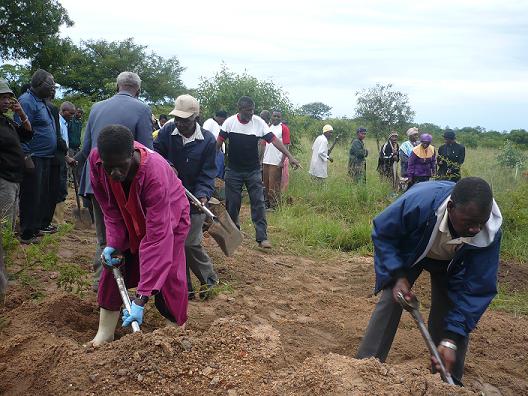
    Left with such wishes, family members and/or close friends of the deceased pull together to fulfil the wishes of the deceased. Making the wish a reality presents a number of challenges with the main ones being the logistics of repatriating the body and the associated costs. CNN Marketplace Africa recently aired a piece where Robyn Curnow covered what some Zimbabweans living in South Africa go through in the event of a death. It also covers the services a Zimbabwean entrepreneur is providing to try and ease the cost of burying a love one. Its gets you thinking about how prepared you are for such situations.

    Would you rather be buried at home or in the Diaspora?

  • Emirates Flights To Harare, What It Means For Air Zimbabwe & Other Airlines

    Emirates Flights To Harare, What It Means For Air Zimbabwe & Other Airlines

    Last month, Emirates announced that from 1 February 2012 they will start flying into Harare from Dubai via Zambia 5 times a week. EK713 will depart from Dubai every Monday, Tuesday, Wednesday, Friday and Sunday at 09:25am and arrive in Harare at 5:20pm with the return flight leaving Harare at 7:20pm. This is the first major airline after the withdrawal of services from other foreign airlines that will take to the Zimbabwean skies. This news will come as a welcome relief for the travelling public with the increase in choice they will bring.

    In years gone by, there have been reports of the government refusing to approve requests from various foreign carriers to service the nation. Some of these airlines once flew to Zimbabwe but for one reason or another, the powers that be did not accommodate their requests. With the entry of Emirates into the market, some questions come to mind.

    The first that comes to mind being, could this mean that the government may be a bit more receptive to other carriers looking to enter or re-enter Zimbabwe? Having airlines such British Airways (long-haul direct from London), Qantas, Lufthansa, Air France and KLM just to name a few flying to Zimbabwe again offering choice and bringing in much needed tourist dollars. The Tourists dollars will hopefully go towards rebuilding Zimbabwe.

    A second question that comes to mind is what it will mean for Air Zimbabwe and how the national airline will react? Over the past few months and even extending into years, Air Zimbabwe has been facing crisis after crisis such as debts running into the hundreds of millions as well as strike action by pilots and cabin crew. All of this as well as an aging fleet have impeded its service delivery and may be a cause for concern.

    Emirates is a well oiled machine and has been rated as one of the top ten airlines in the world (Skytrax). They fly a modern fleet of over 100 aircraft (with many more on order) to just about every part of the world at very competitive prices. Consumers may be more inclined to choose Emirates over Air Zimbabwe, which could spell even more trouble for them. But, this development may inadvertently force Air Zimbabwe to implement chances that get it on track to being a formidable competitor.

  • Medical Misadventure In Zimbabwe

    Medical Misadventure In Zimbabwe

    Statistics show that chronic diseases such as caner and diabetes are on the rise in developing nations. A number of these nations are still battling infectious diseases such as HIV. Having to deal with both infectious and chronic diseases puts even more pressure on health systems that are already struggling to cope. Zimbabwe’s brain drain of medical professionals has further compounded this situation due to the shortage of nurses, doctors and specialists.

    The increase in the prevalence of chronic diseases has lead to the need for more specialists such as oncologists for cancer management. In the case of diabetics, there may be a need for them to have access to a team of specialists that may include an endocrinologist, nutritionist, eye doctor and cardiologist. Not all of these specialists will be at the publics’ disposal and if they are, there is a limited choice as to whom someone can visit about a particular condition.

    This may lead to a predicament where lets say for example there is only one or two specialist in a particular field in the whole of Harare. This for a number of reasons is not a good situation for those seeking medical attention. Doctors don’t always get it right and patients may be in a situation where they are not showing any signs of progress. With the limited choice of medical care, patients become reliant on one person for their disease management. Under normal conditions, if someone is not showing signs of progress, it is always a good idea to get a second opinion. With not being able to do that and living with a condition that is progressively deteriorating, a point will eventually and unnecessarily be reached where nothing can be done.

    Just like everywhere else in the world, specialist visits come at a cost and you would hope that you are getting the best care possible. If after repeated visits and interventions and it is plain to see that a patient is not showing signs of progress you would hope the specialist would suggest other options. One feasible option is seeking medical attention outside of Zimbabwe with a good option being neighbouring South Africa.

    Some people in Zimbabwe have the means of making their way to South Africa to explore treatment options. Due to various circumstances such as the logistics of booking the necessary appointments, the prospect of travelling abroad seems like a very daunting task.

    Every life is worth living and you only have one life to live. Whether or not you or they (doctors) may not like to admit it, there is only so much treatment you can get in Zimbabwe. If you, a family member or a friend are in a situation where it seems as if all hope has been lost and treatment options abroad have not been explored, then do what it takes to make it happen. It may not be too late!

  • A Response To: “Applying For A Zimbabwean Passport Without An I.D. Card?”

    A Response To: “Applying For A Zimbabwean Passport Without An I.D. Card?”

    The following is a comment left by a reader in response to:

    Applying For A Zimbabwean Passport Without An I.D. Card?

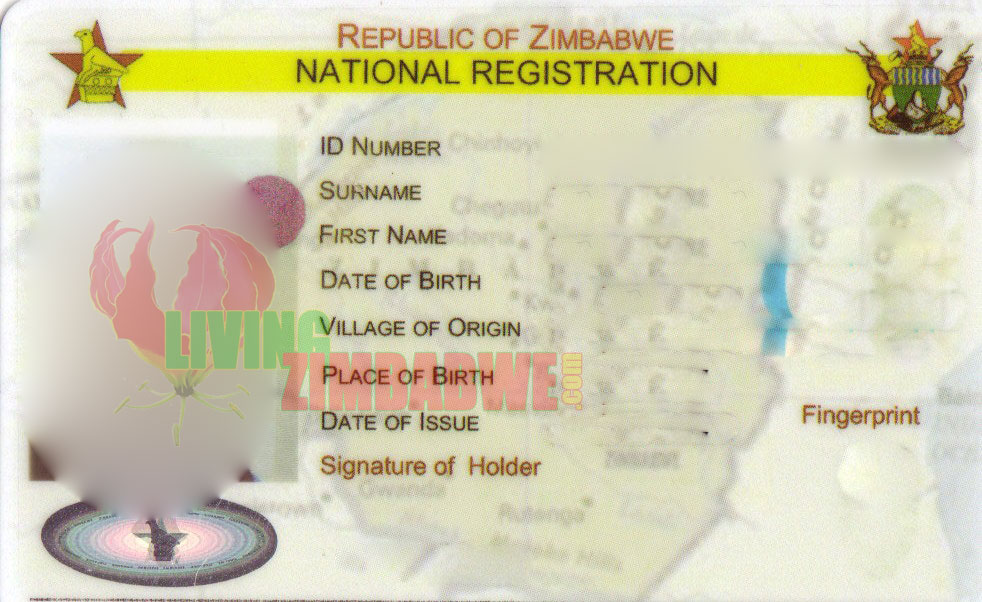
    I post this only to try and help anyone about to go through this same ordeal…..this is from our hands-on experience. This is advice only, maybe each experience is different. One other word – keep your cool in Makombe building – I saw some outbursts, and they ended up with back-of-the-queue results, just fyi.

    We live in the Middle East. We had to go back to Zim to renew my wife’s passport – she was originally born in Harare, of South African-born parents. We spent 3 weeks back in Zim in July 2011, dedicated only to sort her pp out.
    Took 10 long visits to Makombe Building at least. I will reserve comments on the state of the building or attitude of its employees. Suffice to say that the requirements stated above are basically correct from our experience , but the actual experience is not so basic, and we experienced it as follows:

    Long Birth Certificate – essential.

    National Identity Card (Driver’s Licence Not Accepted). They will accept the green paper instead of the metal ID but you should have a photo attached with the ID number in the original photo.

    For Women, Marriage Certificate/National Identity Card in Married Name/Divorce Order

    Two Passport Colour Photographs (Size 3.5 x 4.5cm) (this is like the last step)

    Citizenship Certificate (For Citizens by Registration)
    THIS TOOK THE LONGEST TIME TO GET IN THE WHOLE PROCESS – IF YOU DON’T HAVE IT, AND HAVE PARENTS OF FOREIGN CITIZENSHIP AT THE TIME OF YOUR BIRTH REGISTRATION (it shows your parents nationality on your long birth certificate, hence the reason why you need the long one…), THEN BE PREPARED FOR THE RESPONSE THAT IT WILL TAKE 6 MONTHS and maybe it will (it took 2 weeks for us, but then I was very resilient, persistent, but always showing respect etc), unless you open every door in Makombe building and happen to meet someone who can help compress the timelines…..). don’t give up! IF YOU ARE OF FOREIGN DESCENT, YOU NEED TO GET COPIES (non-certified is ok) OF BOTH, I MEAN BOTH, OF YOUR PARENTS BIRTH CERTIFICATES AND FOREIGN I.D.s (I questioned this at length, but no logic was evident – seems you have to PROVE that your parents are foreign, which is actually why you are having to go through this crap in the first place….). By the way, for a very quick Comm of Oaths service, there is a very pleasant chap in Borrowdale (opp. TM over the road, part of the Car sales place – take the back entrance) who does instant certification for 1 US$ per doc, or 4 US$ for the swearing in of the Renunciation document). Oh, and once you get your fingerprints done (right outside the office number 100 where you make the first citizenship application) you have to take the form to be signed by a Police Station – try Milton Park, it is the closest, pay for the US$ 10 option (URGENT), not the US$5 option, but be prepared to wait for the Police lady to stamp & sign the forms…..

    Old Passport or Emergency Travel Documents If Any….when we eventually collected the new passport, we HAD to show them the old one – then, the lady at ‘the window’ just put 2 lines through the first page and handed it back….

    Letter on Citizenship Status from the country you have lived in for 5 years and more
    WE DIDNT NEED THIS, BUT WE HAD TO RENOUNCE HER FOREIGN HERITAGE AT THE SOUTH AFRICAN EMBASSY AS PART OF THE RENUNCIATION PROCESS (Very quick, and free at the SA embassy, they give you back a letter in 15 mins, kudos to them) BUT, AS I SAID ABOVE, THE MISSION IS TO GET THE ZIM CIT CERTIFICATE FIRST. And make like 3 CERTIFIED copies of all your documents, because they will ask for them at some point….

    There is probably more detail, but just be prepared, have all your ZIM ID, Birth certs (long form), copy passports etc ready to roll. Oh, and for the ‘official’ 24 hour final passport processing, it costs US $ 318. But, it is not done in 24 hrs necessarily, could be a week or so.

    Good luck, it is a crazy process, and keep the faith.

  • Transitional Justice In Zimbabwe, Seeking Ways To Heal The Nation

    On Wed July 6 a workshop was convened at the Diakonia Centre in Central Durban by Zimbabwe Exiles Forum (ZEF) in partnership with other Zimbabwean civic groups which are based in South Africa. Keynote speakers were Gabriel Shumba (ZEF), Munjodzi Mutandiri (NCA), Janet Munakamwe (Southern Africa Women’s Institute for Migration Affairs~SAIMA), Sox Chikohwero (Zimbabwe Global Forum) and Patience Rusere (Media Consultant).

    The purpose of the workshop was to analyse how Transitional Justice can be applied in pre and post crisis Zimbabwe. Transitional Justices looks at the various avenues both judicial and quasi-judicial, which can used to address human rights abuses. In the case of Zimbabwe this entails strategies needed to bring closure and healing to victims of state sponsored violence and to ensure that perpetrators are held accountable for atrocities committed since 1980.

    This Workshop proved quite interesting because ordinary Zimbabweans who attended the event were given the opportunity to contribute and present their own perspectives on how Transitional Justice can work in Zimbabwe. The workshop was basically divided into 2 components, comprised of contributions by the main speakers representing Zimbabwe Exiles Forum, National Constitutional Assembly and SAIMA. These speakers expressed their views on how Transitional Justice can be applied in Zimbabwe.

    On the other hand, other participants were also given an opportunity to present their views on reforms needed to transform institutions like the police and justice system. Also discussions centred on how to promote truth, reconciliation, justice and gender equality in Zimbabwe.

    There was an impressive turnout by ordinary Zimbabweans, based in and around Durban, from all walks of life. This could be a sign that exiled Zimbabweans, particularly in SA, are now more actively interested in participating in the shaping of a new Zimbabwe.

    What came out from this workshop was a clear common understanding by everyone that Transitional Justice will work if applied in a holistic approach. This will ensure that national harmony, justice and sense of nationhood can return to our traumatised nation.

    Article submission by: Chamunorwa Nhau

  • Fire leaves Zimbabaweans Homeless in Durban, South Africa

    On Sat night 2 July, a fire outbreak damaged a building in Central Durban which housed Zimbabwean refugees. The fire destroyed most of their belongings including passports and other personal documentation. This building is one of the many commercial properties in Durban which have been converted to housing, comprised of small sized rooms, by unscrupulous businessmen to exploit desperate Zimbabweans. They are being charged exorbitant rentals in these buildings which are flouting municipal fire and health standards. These buildings are over crowded and have become health hazards due to poor maintenance and overcrowding.

    Most of the Zimbabweans who were victims of this fire are now being housed in homeless shelters in Durban.

    However, according to eye witness accounts at the scene the damage to property could have been minimal if the Fire Department personnel had acted more competently in putting out the fire. In addition, the Municipal Fire Department response to the scene was hours late and the residents helplessly watched as their possessions were consumed by the fire.

    Article submission by: Chamunorwa Nhau

  • Cassette Tapes Still Thriving in Zimbabwe

    Cassette Tapes Still Thriving in Zimbabwe

    A large majority of you have probably had a good laugh about how decades ago cassette tapes were a popular source of media that was used when buying, storing and of course “dubbing” music. If you went through this era then you probably also remember rewinding or forwarding tapes using an Eversharp 15M ball point pen and knowing that in order to get to a particular song, you had to turn it so many times clockwise or counter-clockwise. For some, having to pick and chose songs with a pen became a necessity when the fast-forward or rewind button on their trusty cassette player stopped working.

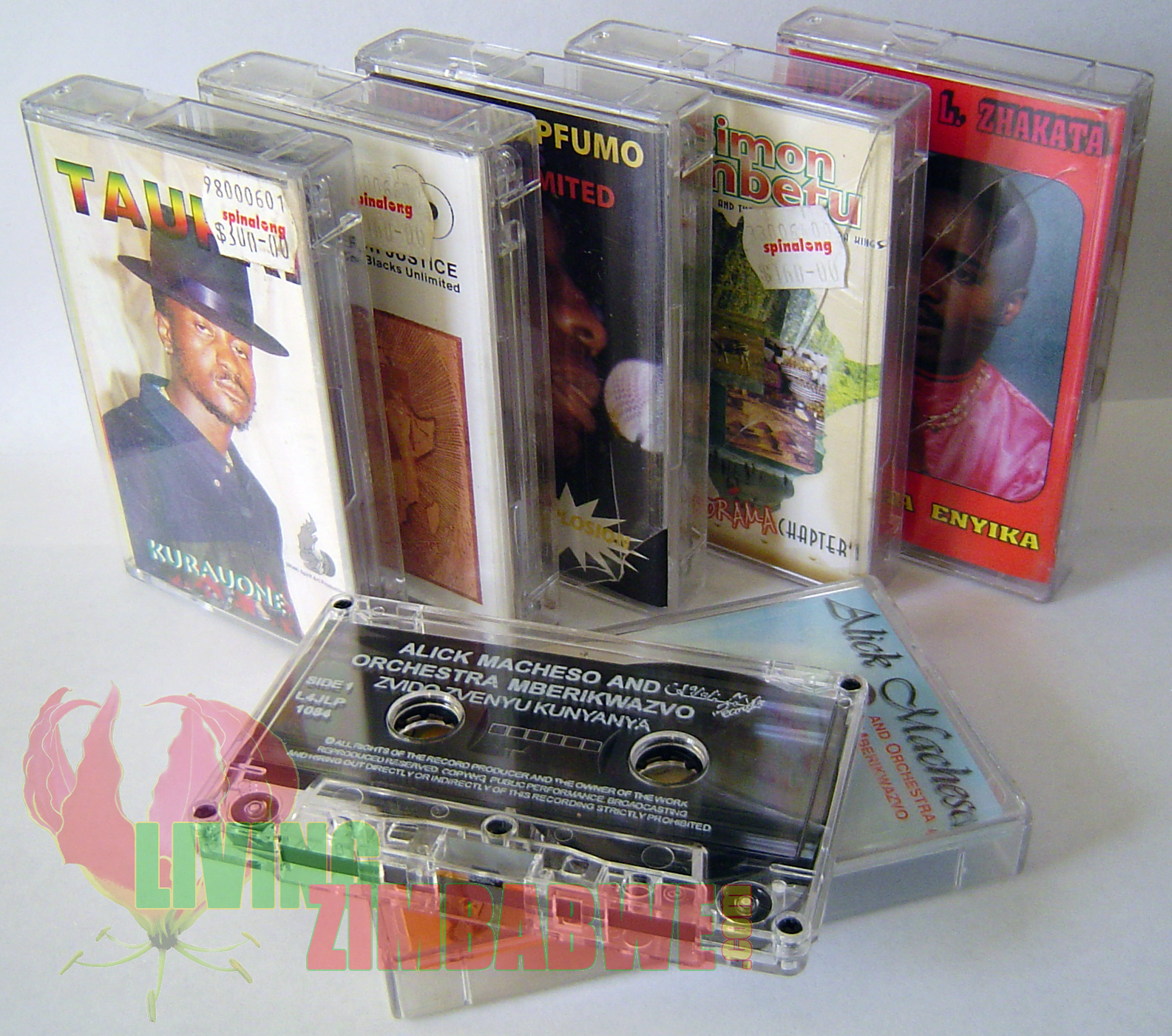
    Technology has taken a great leap forward and now people buy and store their music in digital formats such as mp3’s. If you are to roam around flea markets in Zimbabwe you will be sure to find someone sitting at their stall with a laptop ready to take requests of and make a copy of whatever music or movies you are after and only for a few dollars. This practise seems to be okay with the only material that you cannot be openly seen to be making and selling illegal copies of being anything by Zimbabwean artists. The Zimbabwean authorities do try to take a hard line against copyright infringements of material by local artists.

    To that end, there was a recent feature on CNN by Robyn Curnow about the resurgence of cassette tapes in Zimbabwe. She featured a cassette manufacturer, Diamond Studios that saw an opportunity and set up operations 3 years ago. Their current output is 10,000 tapes a month, which they ship to customers in not only Zimbabwe but Mozambique and Botswana as well. This has provided them with a more lucrative revenue stream than producing CD’s alone because of how quickly and easily they are pirated.

    The interesting bit is that going back to an old technology has been more beneficial for artists than CD’s. The reasons stated for this were that:

    • making pirate copies of tapes for profit is not as simple and easy as it is with discs
    • people in many areas of the country do not have a steady supply of electricity or any at all. This means that they have to run their radios on batteries and tapes are not as power hungry as CD’s so it makes sense to play them instead

    Even though cassettes tapes may be a dead technology in most of the world, it is still thriving in a few places and working to the advantage of many people. Manufacturers are making a living, musicians are getting paid their dues and consumers have their favourite music in a format that suits their needs.

  • How To Identify A Fake Zimbabwean Passport?

    How To Identify A Fake Zimbabwean Passport?

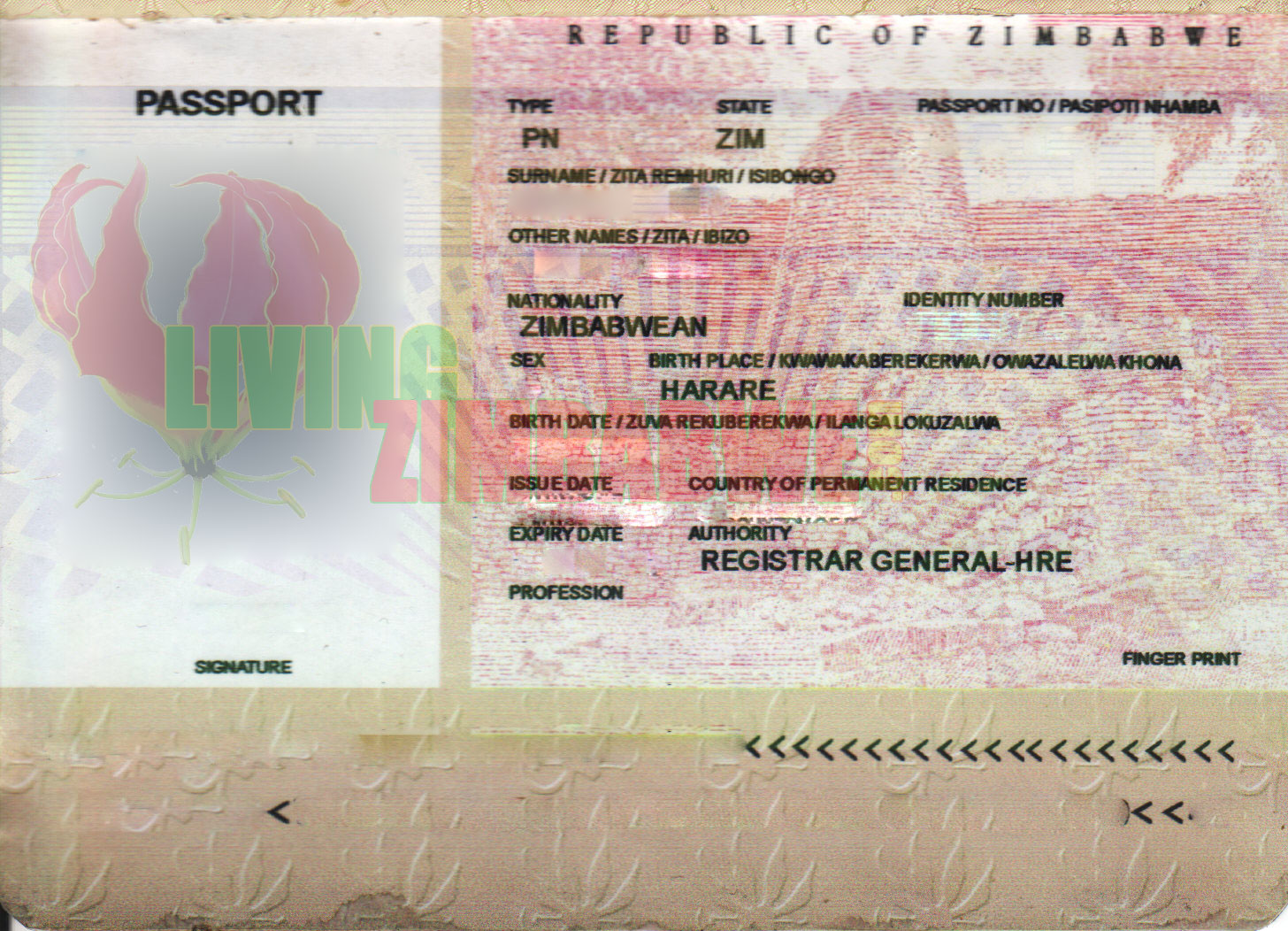
    We recently received an email from an individual concerned about the validity of Zimbabwean passports issued by the Registrar General’s Passport Office. As per the email below, a friend of the individual was arrested and sentenced for being in possession of a fraudulent passport:

    [quote]It appears that some passports being issued by the Zimbabwean passport office to Zimbabwean nationals are not valid, despite a proper application being made and everything done “above board” as far as the applicant is concerned. A friend recently tried to use their passport for the first time and was detained by the authorities as the passport had certain “fake” aspects to it. They were accused by the UK authorities of deliberately obtaining a false passport and, as they were unable to prove otherwise are now serving a prison sentence.

    My question is how can innocent passport applicants have their passports checked for validity prior to use in order to avoid such prosecutions? Also for people falsely accused of obtaining a false passport, is it possible to gather any evidence of their innocence, given that any corruption within the passport office seems not to be taken into account in such cases?[/quote]

    A number of people have fallen victim to passport counterfeiters working within the Registrar General’s Office and unknowingly travelled using this documentation. As can be seen from above, this can cause a few issues for the innocent travelling public. That being said, does anyone have answers to the questions asked in the email?

    1. How can people verify the authenticity of a Zimbabwean passport?
    2. How can individuals charged with unknowingly obtaining a false passport prove their innocence?

    If you know the answers to these questions, please post them in the comments section below.