Author: Living Zimbabwe

  • The Zimbabwe 2013 Presidential Election Results

    The Zimbabwe 2013 Presidential Election Results

    President Robert Gabriel Mugabe has been officially declared the winner of the 2013 harmonised elections and effectively giving him a seventh term in office.

    The official Zimbabwe Electoral Commission (ZEC) results are as follows:

    Election Results:

    Robert Mugabe: 2 110 434 votes – 61,09%
    Morgan Tsvangirai: 1 172 349 votes – 33,94%
    Welshman Ncube: 92 637 votes – 2,68%
    Dumiso Dabengwa: 25 416 votes – 0,74%
    Kisinoti Mukwazhi: 9 931 votes – 0,29%

    National Assembly Results:

    Eighth Parliament 210 parliament seats:

    ZANU-PF – 158 seats
    MDC-T – 51 seats
    MDC – zero seats
    Jonathan Samkange (Independent candidate) – 1 seat

  • Why Are You Telling Mistruths About Zimbabwe?

    Why Are You Telling Mistruths About Zimbabwe?

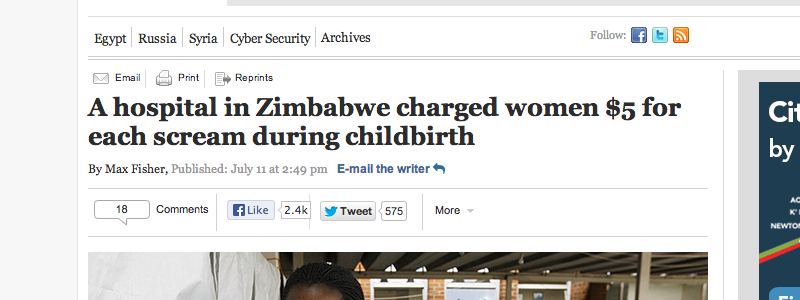
    Last week, a story was published by a reputable media outlet about women being charged $5 per scream during childbirth, a story for which the headline itself seems out of this world. The story went out social media and caused discontent as can be seen by the reactions on Twitter below:

    Can you imagine being a woman going through childbirth who after going through the associated pains and bringing a new life into the world is presented with a bill that includes extra charges. Labour and delivery cost are in themselves “a cost” and the addition of a “screaming charge” is just ridiculous.

    There are in this world influential people and organisations who when they say something, people will stand up and listen. On the flip side of the coin are, with all due respect, ignorant people who are easily influenced whom when they read such stories will believe everything they have to say and further aid in spreading them regardless of their authenticity. The sad thing about these kinds of stories is that the spread mistruths about Zimbabwe and increase negative sentiments about the country and even it’s people.

    A big question that can be and should be asked is why people and organisations would want to publish such stories? Only “they” will know the real reasons for their decisions to publish and without them, it’s anyones guess. That said, people who have Zimbabwe at heart have reacted with the following:

    [quote]Even if you hate ZANU PF you’ve gotta admit this story is LIES, LIES, LIES!!! Where does the western media get such phony stories???[/quote]

    can you blame them?

    Zimbabwe is at a point in time where it doesn’t need any more negative publicity than it has already received. We haven’t delved into verifying the legitimacy of the report and others like because efforts should be concentrated on building Zimbabwe. Yes, there are unpleasant truths to life in Zimbabwe but there are also pleasant truths.

    That said, we need to share these pleasant truths about life in Zimbabwe. If you have a story to share with the world, Living Zimbabwe has a platform that allows you to do just that. Be that person who tells the truth! Visit: https://www.livingzimbabwe.com/citizen-journalism for more information on how to make a submission.

  • The ZANU-PF & MDC-T 2013 Election Manifestos

    The ZANU-PF & MDC-T 2013 Election Manifestos

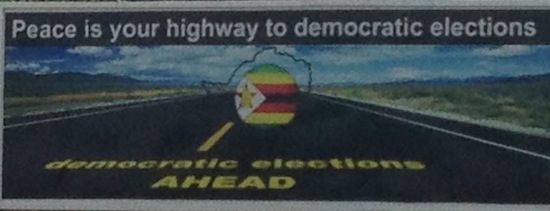
    Over the last few months, some political milestones have been reached in Zimbabwe with one of the more significant ones being the signing of a new Constitution. Along with the Constitution came the need for general elections that in recent weeks were set for 31 July 2013 by President Mugabe. MDC-T leader Prime Minister Morgan Tsvangirai has made unsuccessful attempts to have the elections postponed until a later date and appeals to the Constitutional Court (ConCourt) have ruled in Mugabe’s favour and concluded that the elections are to be held on the 31st.

    With that ruling, Zanu-PF and MDC-T have gone into full election mode with both parties choosing last weekend to launch their election manifestos with Zanu-PF launching theirs on the 5th of July and MDC-T on the 7th of July.

    The election manifestos serve to outline each party’s vision and what they have planned for Zimbabwe’s future. As you can imagine, the intentions stated will contain a number of measures that the general population would like to see being implemented. The thing about manifestos is that they are NOT legally binding. So, a party can state a raft of intentions that win them crucial votes, intentions of which when the winning party get’s into office does not deliver on.

    Every vote counts and will have an impact Zimbabwe’s future. Make sure that when you cast your vote, it is based on sound a decision that takes what you consider as important factors into consideration.

    To view the manifestos, visit the links below:

  • Grace, The Grace Mugabe Interview With Dali Tambo (VIDEO)

    Grace, The Grace Mugabe Interview With Dali Tambo (VIDEO)

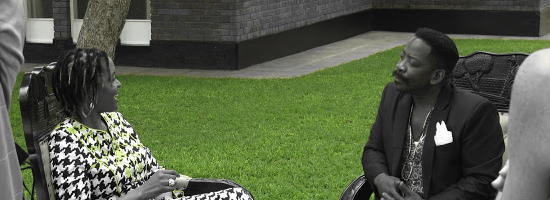
    Following on from his interview with President Mugabe (Chimurenga Man, The Robert Mugabe Interview With Dali Tambo (VIDEO)), Dali Tambo also sat down with Zimbabwe’s First Lady, Grace Mugabe.

    A few topics were covered during the interview which included how Grace and the president ended up together, how they had kids whilst Sally Mugabe was still alive and those media “rumours” about some of her habits such as extravagant shopping.

    She also spent a lot of time singing praises about her husband as well as emphasising the fact that she is a hard worker and not a lazy person as what some people may seem to think.

    The interview progressed to a family lunch which included a discussion on what kind of a person Robert Mugabe would like to see Bona marry. At the table, Bona and Bellarmine share why they love their mother and father and vice versa with the President and First Lady also being given the opportunity to exchange the same sentiments about each other.

    It is a somewhat interesting watch that may see you raising your eyebrows or shaking your head at certain points.

    Watch it and let us know your thoughts on the interview by leaving a comment below.

  • Chimurenga Man, The Robert Mugabe Interview With Dali Tambo (VIDEO)

    Chimurenga Man, The Robert Mugabe Interview With Dali Tambo (VIDEO)

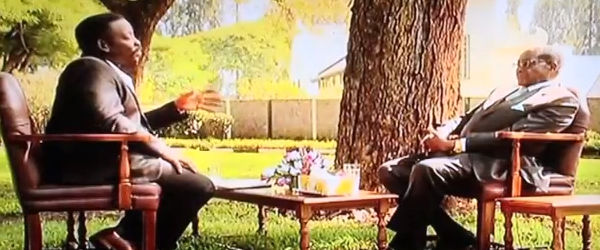
    On the 2nd of June 2013, an episode of People of the South aired on SABC3 where Dali Tambo interviewed President Robert Mugabe. It is one of those interviews that people in Zimbabwe and around the world would be interested in because interviews with Mugabe are a rarity and also that it was marketed as an occasion where viewers got to gain a deeper understanding of and got to see a side of Mugabe that has never been seen.

    The start of the interview (video below) paints Mugabe in the following light,
    “Robert Mugabe is to many the archetypal son of the soil, a strong man, an African gentleman, a controversial man, but above all else, a Chimurenga Man.”

    The interview has had mixed reviews with some people saying that Dali glorified Mugabe by only asking surface questions and not probing or asking the tough questions about the issues that Zimbabwe may be facing. Others look at it as being a good interview, one where has not become the victim of Western media.

    It is an interview that you should watch (if you havent already done so) and make your own assumptions about.

    The interview ends with Mugabe being asked what he would like to be remembered for most with his answer being:
    “There was once a man called Robert Mugabe who in the interests of his own people formed a struggle to liberate them and had ideas, ownership of resources for his own people, and…. the fact that the people should be united, to remain revolutionary, guard against colonial and imperial powers, that seek to undermine the authority…. of governments and what he desired right up to the end that his own people should be masters of their own destiny and that is all. I don’t desire to be know as anything greater than that…….”

    In your own opinion, was the interview good or was it a disappointment?

    Leave a comment with your thoughts.

  • The Plight Of A Diaspora Returnee Wife

    The Plight Of A Diaspora Returnee Wife

    Yes, there are a number of Diasporans who are a bit sceptical about returning home for one resason or another > Why Diasporans Are Not Returning Home. On the other hand, there are a those who have taken the step to return home permanently with those in this group having realised varying levels of success with their decision. It has either been one of the best decisions ever made or one filled with regret.

    For singletons, the task of purchasing a one way ticket to Zimbabwe is not as daunting as they probably don’t have that much ‘baggage’. However, some returnees are families and for them, having a solid plan in place of how they are going to sustain themselves is of utmost importance. This includes things such as a steady stream of income, appropriate accommodation and reliable transportation just to name a few things.

    Can you imagine leaving the comforts of London, Sydney, Dallas, Singapore or wherever. Places where you have an income, live in your own accommodation have a car or two and all the mod cons to taking up two rooms at your parents place? That’s what some families who move back home have to do to accommodate themselves in the interim. Living like this might be fine for a few days or weeks but it will more than likely reach a point when it will start to feel a little cramped and you are all in each others space!

    Living in this state of being is not ideal especially so for women who are independent and used to having a space that is ‘theirs’. As they continue to live with their parents, the women don’t have a place to call home. Yes, you could say they are home but they aren’t in that comfortable homely place that has their own feminine touch that is home.

    Another plight that diaspora returnee wives have to deal with is their husbands. Life in the diaspora is not easy and living in luxury comes at a cost. This then dictates that their men take a more active role around the house. This sees their husbands cleaning, cooking, doing laundry, helping out with the kids and so on.

    In Zimbabwe, domestic workers are an affordable luxury which frees up husbands to take care of their business and also to be ‘Zimbabwean men’. Them being immersed back into the Zimbabwean lifestyle sees some of them become different people.

    The wives of these husbands who have become someone else now see themselves having to follow the cultural and social expectations of a Zimbabwean wife. This sees them having to let go of certain liberties that they had grown accustomed to in the diaspora. For some it also means having to accept a third or more parties into their marriages as they are forced to accept the small house culture of Zimbabwe.

    The above is only an example of what happens to some women. It isn’t the be all and end all for diaspora returnee wives. Some go through worse and for others, the transition to living in Zimbabwe all over again is relatively smooth. Everyone has their own story to tell.

    Do you have anything to say on the pros and/or cons faced by Diasporans on the return home?

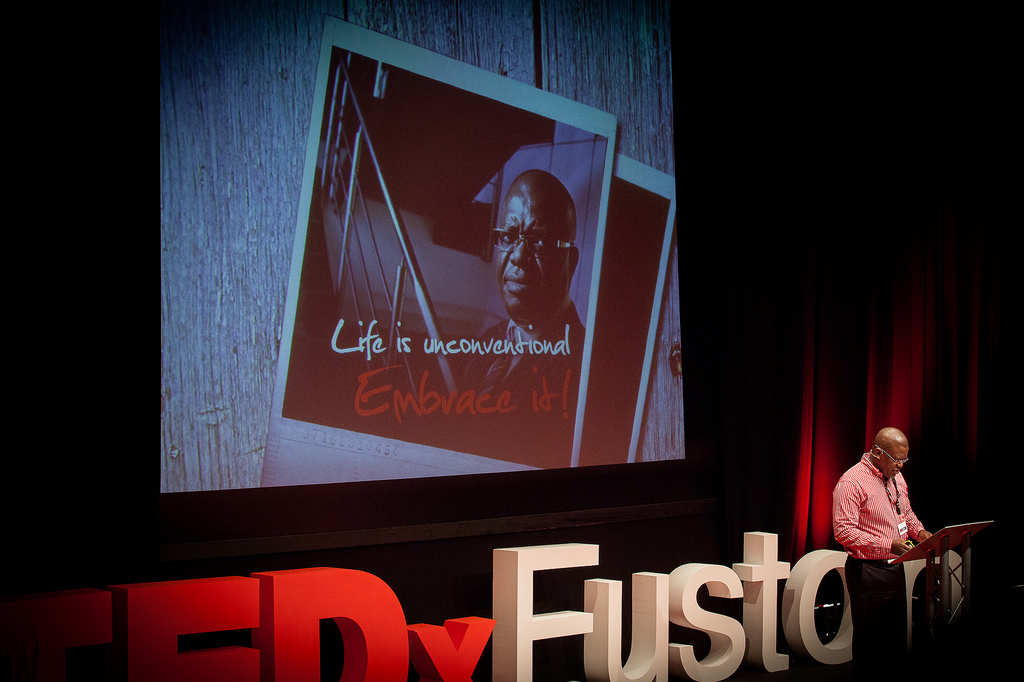
  • Trevor Ncube at TEDxEuston on: Life is Unconventional. Embrace it!

    Trevor Ncube at TEDxEuston on: Life is Unconventional. Embrace it!

    Would you have ever thought that the man at the helm of a media empire was dyslexic? Well, Trevor Ncube, the Chairman of Alpha Media Holdings (which owns NewsDay, The Zimbabwe Independent and The Standard) is just that! This is one of the many things he shared at TEDxEuston about himself, his up bringing and defining moments in his life that made him the person he is today.

    Trevor_Ncube_TEDxEuston_Life_is_Unconventional_Embrace_itDuring his TEDxEuston talk, he highlighted some key lessons that play a pivotal role in shaping people and societies. These lessons include:

    Words – what we say to other people can build or destroy them

    Teachers – they have a huge impact on who and what we become

    Comfort Zones – sometimes it takes being outside your comfort zone to reach your true potential

    Watch the video of his talk, be inspired and take whatever action you deem necessary!

  • What Zimbabwe’s Draft Constitution Has To Say About Citizenship

    What Zimbabwe’s Draft Constitution Has To Say About Citizenship

    There have been and probably are still a few sticking points in Zimbabwe’s Draft Constitution and one or them happens to be the issue of Citizenship. This topic may also be of interest to some in the Diaspora who in the recent past have taken up citizenship in their host nations or to be correct, “new homes”. It could be of interest for various reasons but the main one would be how it will affect their possible return home.

    Below is what the Draft Constitution has to say about Citizenship:

    Citizenship

    35  Zimbabwean citizenship

    (1) Persons are Zimbabwean citizens by birth, descent or registration.

    (2) All Zimbabwean citizens are equally entitled to the rights, privileges and benefits of citizenship and are equally subject to the duties and obligations of citizenship.

    (3) All Zimbabwean citizens are entitled to the following rights and benefits, in addition to any others granted to them by law—

    (a)  to the protection of the State wherever they may be;

    (b)  to passports and other travel documents;  and

    (c)  to birth certificates and other identity documents issued by the State.

    (4) Zimbabwean citizens have the following duties, in addition to any others imposed upon them by law—

    (a)  to be loyal to Zimbabwe;

    (b)  to observe this Constitution and to respect its ideals and institutions;

    (c)  to respect the national flag and the national anthem;  and

    (d)  to the best of their ability, to defend Zimbabwe and its sovereignty.

    36  Citizenship by birth

    (1) Persons are Zimbabwean citizens by birth if they were born in Zimbabwe and, when they were born—

    (a)  either their mother or their father was a Zimbabwean citizen;  or

    (b)  any of their grandparents was a Zimbabwean citizen by birth or descent.

    (2) Persons born outside Zimbabwe are Zimbabwean citizens by birth if, when they were born, either of their parents was a Zimbabwean citizen and—

    (a)  ordinarily resident in Zimbabwe;  or

    (b)  working outside Zimbabwe for the State or an international organisation.

    (3) A child found in Zimbabwe who is, or appears to be, less than fifteen years of age, and whose nationality and parents are not known, is presumed to be a Zimbabwean citizen by birth.

    37  Citizenship by descent

    (1) Persons born outside Zimbabwe are Zimbabwean citizens by descent if, when they were born—

    (a)  either of their parents or any of their grandparents was a Zimbabwean citizen by birth or descent;  or

    (b)  either of their parents was a Zimbabwean citizen by registration;

    and the birth is registered in Zimbabwe in accordance with the law relating to the registration of births.

    (2) Subsection (1) does not affect a person’s right to citizenship by birth under section 36.

    38  Citizenship by registration

    (1) Any person who has been married to a Zimbabwean citizen for at least five years, whether before or after the effective date, and who satisfies the conditions prescribed by an Act of Parliament, is entitled, on application, to be registered as a Zimbabwean citizen.

    (2) Any person who has been continuously and lawfully resident in Zimbabwe for at least ten years, whether before or after the effective date, and who satisfies the conditions prescribed by an Act of Parliament, is entitled, on application, to be registered as a Zimbabwean citizen.

    (3) A child who is not a Zimbabwean citizen, but is adopted by a Zimbabwean citizen, whether before or after the effective date, is entitled, on application, to be registered as a Zimbabwean citizen.

    39  Revocation of citizenship

    (1) Zimbabwean citizenship by registration may be revoked if—

    (a)  the person concerned acquired the citizenship by fraud, false representation or concealment of a material fact;  or

    (b)  during a war in which Zimbabwe was engaged, the person concerned unlawfully traded or communicated with an enemy or was engaged in or associated with any business that was knowingly carried on so as to assist an enemy in that war.

    (2) Zimbabwean citizenship by birth acquired under section 36 may be revoked if––

    (a)  the citizenship was acquired by fraud, false representation or concealment of a material fact by any person;  or

    (b)  the person’s nationality or parentage becomes known, and reveals that the person was a citizen of another country.

    (3) Zimbabwean citizenship must not be revoked under this section if the person would be rendered stateless.

    40  Retention of citizenship despite marriage or dissolution of marriage

    Zimbabwean citizenship is not lost through marriage or the dissolution of marriage.

    41  Citizenship and Immigration Board

    An Act of Parliament must provide for the establishment of a Citizenship and Immigration Board consisting of a chairperson and at least two other members, appointed by the President, to be responsible for—

    (a)  granting and revoking citizenship by registration;

    (b)  permitting persons, other than citizens, to reside and work in Zimbabwe, and fixing the terms and conditions under which they may so reside and work;  and

    (c)  exercising any other functions that may be conferred or imposed on the Board by or under an Act of Parliament.

    42  Powers of Parliament in regard to citizenship

    An Act of Parliament may make provision, consistent with this Chapter, for—

    (a)  procedures by which Zimbabwean citizenship by registration may be acquired;

    (b)  the voluntary renunciation of Zimbabwean citizenship;

    (c)  procedures for the revocation of Zimbabwean citizenship by registration;

    (d)  the restoration of Zimbabwean citizenship;

    (e)  the prohibition of dual citizenship in respect of citizens by descent or registration;  and

    (f)  generally giving effect to this Chapter.

    43  Continuation and restoration of previous citizenship

    (1) Every person who, immediately before the effective date, was a Zimbabwean citizen continues to be a Zimbabwean citizen after that date.

    (2) Every person who was born in Zimbabwe before the effective date is a Zimbabwean citizen by birth if—

    (a)  one or both of his or her parents was a citizen of a country which became a member of the Southern African Development Community established by the treaty signed at Windhoek in the Republic of Namibia on the 17th August, 1992;  and

    (b)  he or she was ordinarily resident in Zimbabwe on the effective date.
  • Why Are Diasporans Not Returning Home?

    Why Are Diasporans Not Returning Home?

    Just over a week ago, Power FM ran a segment where they were discussing Zimbabweans in the Diaspora and trying to understand the reasons for them not wanting to return home. The hosts came up with some reasons as to why they thought Diasporans were not returning home and they went on to invite listeners to air their opinions on the topic. Some of the listeners were themselves recent returnees and had valid points to put forward but in their case, the opposite of “why not return home” was true for them.

    The main themes from the discussion for people not wanting to return home were as follows (in no particular order of importance):

    • Reverse Culture Shock – some people have been away from Zimbabwe for such a long time and have become used to living wherever they are living. They feel as if they would not be able to adjust to life at home if they were to return.
    • Family – some have no family to return to and because of that don’t feel like they have any links with Zimbabwe and nothing to go back to.
    • Political – the political instability is a deterrent and there are many who may face or feel that they may face political persecution.
    • Difference of opinion within families – husbands and wives may have differing views were one partner would like nothing more than to return home whilst the other is of the opposite view. Without any sort of resolution, this leaves a number of families “stuck” with out decision and still in the Diaspora.
    • Employment – a high unemployment rate and a perceived lack of opportunity leaves Diasporans with the notion that there is no point in going back home if they are not going to be able to find a way of making a living.
    • Dual Citizenship – many Zimbabweans have been living in their new homes away from home for so long that they have become Citizens of that particular nation. With the current state of the Dual Citizenship debate, they feel that it is better to stay away from home until there is some sort of positive resolve on the debate.

    After listening to what listeners had to say about the topic of returning home, the conversation shifted to what could have been seen as an attack on people who felt that it is not yet time for them to move back. For example, something along the following lines was mentioned, “they were born in and grew up in Zimbabwe and one day got on a plane and moved to the UK, US, Australia or wherever they ended up. They were not used to life over there and had to adjust. Why cant they get to used to living in Zimbabwe again, it is after all their home?”

    Yes, this could be the basis of an argument but there (for the example above) is the issue of reverse culture shock which is very real and something that some people will have to deal with. For most of the other reasons listed above, they present real issues that the people facing them have to contend with and could bring about a certain degree of stress.

    One question is, was that sort of a rebuttal called for? There is bound to be a world of individuals who would have similar things to say about those who do not want to return home.

    The thing is, Zimbabweans who are not ready to return home at the moment and some who have sworn to never return have made that decision. Some of those reasons may be legitimate, some of them may seem ridiculous but, as already mentioned above, this is a decision that someone has made for their life or their families lives and it should be respected.

    Yes, we can offer our opinions on their decisions but these opinions should be put forward in a non-critical tone because no-one has the right to judge people and/or their decisions. If anything, opinions should be put forward in a way that opens the door to further discussion on ways of breaking down the barriers to returning home and making the idea a possible reality.

    What are your thoughts on the Zimbabwean Diaspora who are not yet ready to return home and is there anything that can be done to facilitate their return home?

    Leave your comments below!

  • Popcaan Set To Perform in Zimbabwe on New Year’s Eve

    Popcaan Set To Perform in Zimbabwe on New Year’s Eve

    Over the last day or so, there have been reports that rising Jamaican dancehall artist Popcaan will be making his way to Zimbabwe at the end of the year. This report was confirmed by Popcaan himself who sent out a tweet (below) stating that he is set to perform his first show in Africa on 31 December 2012 at the Harare International Conference Centre.


    Over the last couple of years, Popcaan has released tracks such as “Ravin”, “Party Shot”, “Only Man She Want” and “System”, all of which have caused a stir in the dancehall world and are seeing him rise to international stardom!

    Are you a Popcaan fan looking forward to seeing him perform?