Author: Living Zimbabwe

  • Grace without Mugabe?

    Grace without Mugabe?

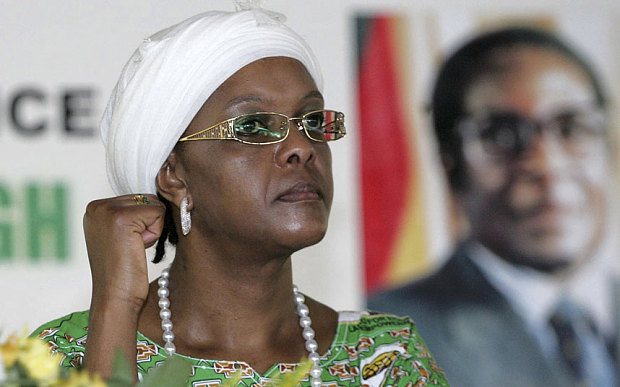
    Once upon a time, Grace Marufu found herself in a position where she was lucky enough to work as a secretary in the President’s office. This then secretary caught President Mugabe’s attention with the encounter progressing into a romantic relationship. The relationship developed even further as the two went on to have children and the couple eventually got married in 1996 and Grace officially became Mrs. Mugabe.

    Being the president’s wife, she has not managed to escape the media spotlight. But, over the years she has managed to get herself into the spotlight through actions of her own. As you can imagine, these moments have been somewhat unglamorous as they have included highlighting extravagant shopping, moments of attacking journalists and dodgy business deals being exposed.

    Amai Mugabe is back in spotlight as she was recently conferred with a PhD from the University of Zimbabwe and has also immersed herself in frontline politics as she was recently nominated to head the Zanu-PF Women’s League.

    Many women around the African continent who have made their way into the upper echelons of politics usually have a story of personal achievement behind them that has propelled them into leadership.

    Now, imagine a scenario where we take Amai Dr Grace Mugabe back to the time when she was a secretary in the president’s office. Imagine the President had not noticed her and she continued life as who she was. She would not have been a Mugabe and everything associated with it would not have been part of her life over the last two and bit decades.

    So now we have Grace stripped of any close association to President Mugabe and still married to her first husband.

    If all the layers are peeled back and you are to look at who she is, and all that she has done, what is it that would define who she is today? Would she be the Grace of today who has a PhD and also the woman heading the Zanu-PF Women’s League?

    Have a think about it for a moment…… If her life hadn’t taken the turn it did some twenty plus years ago, where would Grace be without Mugabe?

    Share your thoughts by leaving a comment below.

  • Will Chinamasa’s mid-term fiscal policy review help us or hurt us?

    Will Chinamasa’s mid-term fiscal policy review help us or hurt us?

    For the everyday consumer life in Zimbabwe has progressively become difficult. Basic commodities are readily available but they aren’t in easy reach. As the days and weeks pass by, the economic situation has made one commodity harder to come by. Zimbabwe is going through a liquidity crunch which has made the dollar a rare commodity.

    Without cash in hand, consumers are being careful about what they spend their money on and how much of it they spend. There are however economists out there who say that the liquidity crunch is largely an exaggeration created by companies that have accumulated debt and have failed to turn around their businesses. That they are essentially using a liquidity crunch as an excuse for their poor business models.

    But, can that be said in the case of for example a general practitioner who at one point had a steady flow of patients over the years and who has over the months noticed an 80 to 90% drop in the number of patients seeking treatment? More often than not the patients present themselves when their condition is at an advanced stage and when asked why they took so long to seek help, their response has mostly been due to lack of money. Even after they have eventually been seen by a GP, they may not follow a prescribed treatment course due to once again, a lack of funds to buy medication.

    In this scenario, the GP practise is not generating enough income to cover costs which includes paying staff. The same thing may also apply to the pharmacy where a patient would have bought medication in that they may see a drop in revenue. The reduction in the amount of cash flowing through the system has a cascading effect and negatively affects many people. Has this been the result of poor business models?

    The government has also been affected by the economic slowdown and this has led to the Minister of Finance, Patrick Chinamasa introducing various measures in a mid-term fiscal policy review. The measures include an increase in excise duty on petrol from 30 to 35 cents per litre and diesel from 25 to 30 cents per litre, a 25% customs duty on mobile phone imports and a 5 percent excise levy on airtime top-ups for data and voice calls just to name a few.

    Chinamasa may see these measures as being necessary to getting the government and economy back on track but, will they really achieve this goal?

    At some service stations, you can now expect to pay about $1.52/litre for petrol and $1.43/litre for diesel. With just this increase alone, you can more than likely expect the price of everything to go up. It will now be more costly to transport goods and this may lead to increases at the till in order to recoup costs.

    A number of the measures that have already been introduced and those still to be introduced are ones that will inevitable see the people of Zimbabwe having to shell out more money to get by from day to day.

    It is hard to see which of the policies (if any) will have an effect of stimulating the economy which in essence is what it needs. Not a lot seems to have been done to make basic goods and services more affordable for consumers or to increase their purchasing power.

    What are your thoughts on the mid term fiscal policy review? Do you think it will help Zimbabwe or only help to make a difficult situation even more difficult?

  • Robbed In Harare By Car Immobiliser Jammer Thieves

    Robbed In Harare By Car Immobiliser Jammer Thieves

    Most if not all of the cars of today come with the wonderful convenience of being able to unlock and lock the car with the push of a button. This feature also goes as far as immobilising and alarming a vehicle and in theory securing it.

    When this advancement became common place, those with sticky fingers probably found it to be a major annoyance because it made their trade a little more challenging. But, with the will to steal, thieves will eventually find a way to get their hands on what they want.

    For cars with immobilisers, modern day thieves have equipped themselves with devices that give them easy uninhibited access to vehicles after the owners have walked away from them.

    At the start of the week, one of our colleagues was the victim of a robbery that seems to have been orchestrated in such manner. X was on their way home from work and stopped at a supermarket for a few minutes to pick up some groceries. This was not an unusual occurrence but upon returning to their vehicle the unusual had happened. A few belongings that had been left in the car were missing, the doors were unlocked and there was no sign of a forced entry.

    Fortunately the car was not stolen but unfortunately a laptop and various documents were taken. Immobilisers are immobilisers are wonderful and convenient but they can give us a false sense of security. We have become accustomed to pushing a button whilst we walk away from our vehicles and expecting them to be locked and secure.

    As you can see from what happened to our colleague in some situations, this is no longer the case. This kind of theft can happen to anyone and it won’t even take the thieves more than a minute to get away with something of value. Yes, you may have insurance but can you imagine calling your insurer and trying to submit a claim on such an event? You more than likely won’t be covered for the loss.

    One thing that we should get away from is falling into a somewhat false sense of security and becoming complacent. To increase your chances of not becoming a victim of such a robbery, you could take the following steps:

    • Do a visual (you see it lock) and audible (your car beeps) check to see that your car is locked
    • Pull on the door handle to make sure the car is locked
    • Hide valuables (boot) even better, don’t leave any valuables in the car
    • Be aware of where you park you car and park where there are lots of people

    Have you been the victim of such a crime? Is there anything else that you can think of that people can do to reduce the chances of becoming a victim?

  • What’s Wrong With Kendall Jones Hunting in Zimbabwe?

    What’s Wrong With Kendall Jones Hunting in Zimbabwe?

    When you think of Africa and it’s wildlife, people dream of one day being able to experience it, many take it further and make it a reality by going on a safari and experiencing the wildlife up close and personal. For some though, Africa’s wildlife has them dreaming about visiting the continent for a hunting trip. Some hunters have made their way to Zimbabwe to indulge in their guilty pleasure and have left with more than they bargained for.

    High profile personalities such as Bob Parsons and Eric and Donald Trump have found themselves in a storm of controversy after their hunts in Zimbabwe. More recently, a teenage Texan hunter, Kendal Jones found herself in a similar storm after posting photos of her hunt on Facebook.

    Kendall-Jones-Lion-Hunt-Zimbabwe

    The photos of the hunt sparked a lot of outcry with social media users, animal rights activists and some public figures expressing their disapproval. The protest have come in all shapes and forms from her being called names, being threatened with rape and death, a petition (currently with 330,000+ signatures) to take down her Facebook page as well as a “Kill Kendall Jones” Facebook page which was recently removed by the social network. On the other side of the coin, a number of proponents have come to her defence and stood by her and her actions.

    Kendall’s justification for her actions are pretty much that what she did was done legally, was fair chase hunting and not canned hunting as what some people have said and that it contributed to conservation and communities within the areas of the hunts.

    When push comes to shove, she and everyone else who had something to say about her hunting are entitled to their own opinions. At the end of the day some thought does have to put in to thinking about who benefits from it all.

    As far as communities benefiting from the money spent by tourists who go hunting, that could be questionable. Tour operators, guides and maybe the government department that issues necessary permits would be the ones most likely to see the most benefit. As far as the people in the communities around the hunting area goes, it is difficult to see how they would realise any economic benefit.

    Yes, a number of species are on the brink of extinction and when it comes to hunting such animals, then there can't be any justification to it. Earlier in the year, the US suspended the import of elephant trophies from Zimbabwe which must mean that they recognised some species as being in danger and condone their killing (some look at this move as another way of adding sanctions on the country).

    But, you do have to ask yourself, why the big fuss about what she did? Was it because she posted images of her successful hunt? Do people really care about the few animals that were killed? Because, as all of this has been going on and as you are reading this, there is someone or someones in Zimbabwe’s savanna hunting!

    What are your thoughts?

  • Does a PayPal ‘Send Money’ Only Service Work for Zimbabwe?

    Does a PayPal ‘Send Money’ Only Service Work for Zimbabwe?

    Over the last few days there has been a lot of hype about the announcement that PayPal would be made available to the people of Zimbabwe. Residents can now sign up for personal or business accounts There has been some debate as to why PayPal was not available in Zimbabwe before this point and the simple answer to that question is sanctions. As you can see from the screenshot below (from 2010), PayPal services could not be accessed due to (users) being in a sanctioned country.

    PayPal-Sanctions-on-Zimbabwe

    The good news for those who really wanted to be able to use their services is that they can now do so without having to revert to weird and wonderful ways of circumventing the restrictions by using Payoneer cards and so on and so forth. The introduction of their services opens Zimbabwean consumers up to a world of online shopping. As a start, items can now be bought on eBay (PayPal’s parent company) with this functionality being extended to being able to pay for goods and services on a countless number of online stores and companies from around the world. The beauty of PayPal is the level of security it provides and that you can make payments to someone online without providing ’that’ particular website with your credit/debit card details.

    However, as far as Zimbabwe is concerned, there are some limitations with the first being the unbanked. If you don’t have a bank account then the chances of you having a credit or debit card are slim to none and this is something that you need in order to have a PayPal account. A considerable chunk of the population don’t transact in the informal sector which would exclude them in creating an account.

    The other side of the coin to providing an option for consumers to make payments is for merchants to be able to accept payments into their PayPal account. Businesses can open a business account which when you look at the signup screen says ‘for merchants who buy and sell online using their company name’. But, in the case of Zimbabwe, the ’sell online’ part of that statement will not apply.  There are currently restrictions in place that do not allow for companies to take advantage of PayPal’s payment solutions; something that we confirmed with PayPal:

    Despite the limitations for merchants, this can be seen as a step in the right direction in that international companies are now a little more open to setting up shop in Zimbabwe. But, as mentioned by a online commentator this move isn’t really in the best interest of Zimbabwean’s because it only serves to funnel money out of the country and doesn’t facilitate for payment inflows for local companies

    In your own opinion, does PayPal really work for Zimbabwe?

  • Lessons in Business From Zimbabwean Entrepreneur Strive Masiyiwa

    Lessons in Business From Zimbabwean Entrepreneur Strive Masiyiwa

    Zimbabwe is one of those places that might be and has been dismissed by some as a lost cause in terms of doing business. It has been described as a country that does not have a conducive environment in which to conduct business for a number of reasons. The International Finance Corporation ranks Zimbabwe at 170 out of 189 countries for it’s ease of doing business so as far as they are concerned, we are pretty much at the bottom.

    Whenever there is a discussion about business in Zimbabwe it is common place to have words and phrases such as corruption, scandal, bribery, mismanagement and misappropriation of funds included in the conversation. This paints a bleak picture that makes the prospect of conducting business in Zimbabwe as being quite a challenge and may even serve as a deterrent.

    That said, there are people who manage to engage in legitimate business activities and some go on to defy the odds and do so without giving in to corrupt practices to realise success. A prime example of someone who has managed to do just that is Strive Masiyiwa. Strive has made most of his money in telecoms and in 2013, Forbes estimated his net worth to be $600 million. Once again, he has managed to amass this wealth whilst saying no to corruption.

    How did he manage to become so successful? That is a question that many have probably asked and one that Strive is answering. His 240,000+ Facebook fans are treated with a regular dose of updates that include stories of how he managed to set up and fund his businesses. The updates also include tips on how to succeed and inspiration for aspiring and current entrepreneurs.

    As you read through and take stock of his updates which are in effect lessons in business, one thing that is clear is that his Christian faith has played and continues to play a pivotal role in his success.

    If you want to know more about how Strive Masiyiwa,

    1. got to where he is today
    2. learn a thing or two to help you realise success,
    follow him on Facebook

    Are there any other incorruptible Zimbabwean business people who you think are worth a mention and have something to share that could help other people realise their desired measure of success?

  • Money Laundering in Zimbabwe; Why The Dirty US Dollar Bills?

    Money Laundering in Zimbabwe; Why The Dirty US Dollar Bills?

    According to a recent report from an international news network, money laundering in Zimbabwe takes on a different meaning because it literally means laundering money with soap and water versus what the phrase means in the traditional sense. For those who have cash in hand, the chances of them being in possession of a clean and crisp US dollar note are not that high. What you are likely to find is a dirty, flimsy, tattered and smelly note.

    The “dirty money” has become the norm but you will find that on occasion you may come across someone not willing to accept your money when paying them for a product or service. This situation can make things difficult for consumers because who would want to end up with a bunch of notes that are not being accepted by anyone?

    In a “normal” economy, notes that have passed their “use by” date are replaced accordingly. In the case of US dollars being used outside of the United States, this would mean a trip back to the Federal Reserve to be destroyed and replaced with brand spanking new notes. But, our economy isn’t quite “normal” and citizens are apparently taking measures into their own hands and are cleaning the money as official channels aren’t doing this for them.

    Another reason for the state of the bills that are in circulation may be that a lot of people have lost faith in the formal banking sector. As Finance Minister Patrick Chinamasa has said, traders “were keeping their money under the pillow” and that it is a market that he intended to tap and bring the value back to the formal sector.

    With the current situation in the banking sector where some depositors have to queue for extended periods of time to make a withdrawal, can you blame people for not wanting to bank their money?

    With all of the above issues in mind, enter Zimbabwe’s mobile operators into the picture. Econet has been working hard at pushing the mobile money transfer product, EcoCash. Telecel has also joined the fray with a similar product offering to rival EcoCash. Given the current liquidity situation these products could be a God send because of the ability to transact electronically and negating the need to go to a bank. The success that these products realise all depends on public update of these offerings.

    As far as now and cash goes, if the situation does not improve, Zimbabwe will have yet another challenge to tackle. The Reserve Bank has added even more currencies to an already multi-currency economy for one reason or another. But, is adding more currencies to the mix the way to go in respect to addressing this issue? We could end up with more dirty notes of all sorts of different currencies and denominations that can’t be used anywhere else but in Zimbabwe.

    What end in sight do you see for Zimbabwe’s multi-currency economy that is filled with dirty money?

  • Telling The African Narrative Like Komla Dumor

    Telling The African Narrative Like Komla Dumor

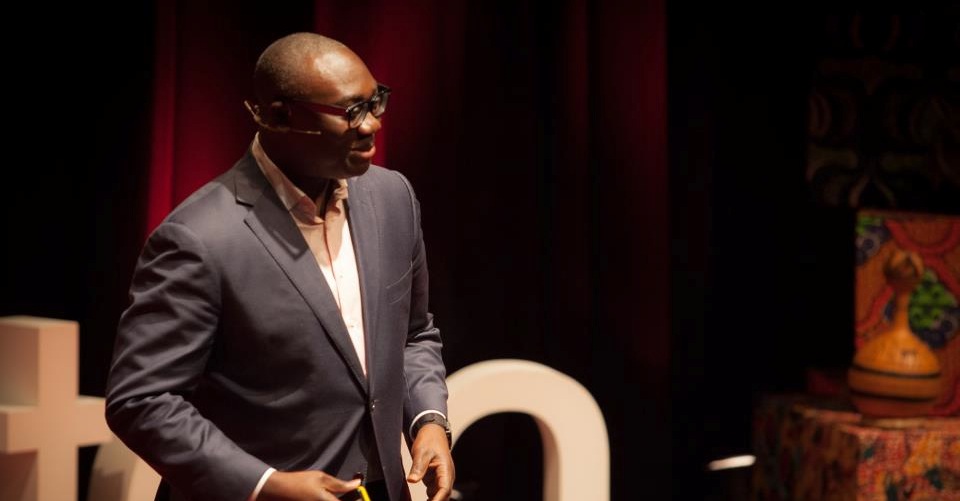
    When it came to telling the world stories about Africa, no-one did it as well as Komla Dumor. He was a person who believed that you needed to understand people and collaborate with them in order to tell Africa’s story. Having this kind of an attitude towards his journalism is one of the things that made him stand out. It also made shows such as BBC’s Focus on Africa a success which did a lot in raising the profile of Africa.

    Sadly, Komla suddenly passed away on the 18th of January, 2014. The news came as a shock and he will be missed by not only by family and friends but by people around the world who he reached through his work.

    In 2013 he spoke at TEDxEuston on telling the African story. This is one of the many things to remember him by and in this talk he also imparts words of wisdom for those who want to tell the African story or that of an African nation that they call home. His presentation draws you in with a mix of realness and humor as he gets across four points that he saw as being essential to telling the African story. They included not just telling one side of the story but having “balance” with a second point being the question of who an expert on Africa is, is it someone from Washington or London?

    He finished off his talk with a proverb that he leaves open for interpretation:

    [quote]The narrative will always glorify the hunter until the lion itself learns how to write[/quote]

    The talk is well worth a watch. Rest in Peace.

    If you have a story to tell, you can share it with the world right here on Living Zimbabwe. To Find out more and to make a contribution, visit Citizen Journalism by Living Zimbabwe.

  • Lessons For Zimbabwe & Africa From Tributes Made At Mandela’s Farewell

    Lessons For Zimbabwe & Africa From Tributes Made At Mandela’s Farewell

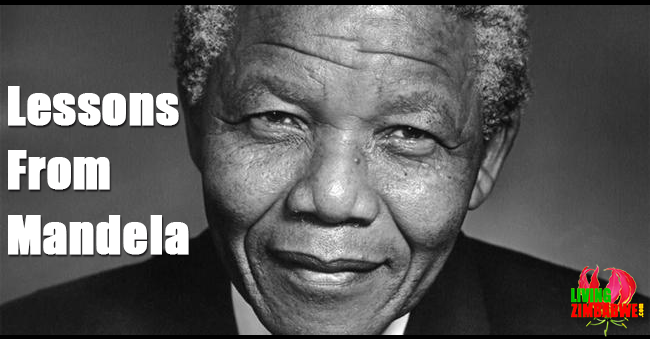
    On Sunday December 15, 2013, the iconic Nelson Rolihlahla Mandela was laid to rest in Qunu, the place that he called home.

    He took his last breath on Thursday 5 December and the 10 days leading up to his return to the soil has been marked with a number of ceremonies. This included a memorial service which was attended by the people of South Africa and about 90 current and former heads of state from around the world.

    There were moments throughout the 10 day period that were emotional with people being in a sometimes celebratory mood (celebrating the life that was), a mournful mood, comical such as the news of the sign language interpreter who’s interpreting didn’t mean a thing and a little political such as Zuma being booed and Mugabe being cheered by the crowds.

    A few of the world leaders who attended the memorial and funeral services made speeches to bid farewell to Mandela. The speeches highlighted interactions that the speakers had with Madiba or aspects of his life that inspired them to be who they are today. A lot of the speeches included lessons and wisdom that leaders and nations at large can take on board and apply as they work towards a better tomorrow.

    Below are extracts of some of the speeches made to honour Mandela:

    Barack Obama (President of the United States):

    [quote]The questions we face today – how to promote equality and justice; how to uphold freedom and human rights; how to end conflict and sectarian war – these things do not have easy answers. But there were no easy answers in front of that child born in World War I. Nelson Mandela reminds us that it always seems impossible until it is done. South Africa shows that is true. South Africa shows we can change, that we can choose a world defined not by our differences, but by our common hopes. We can choose a world defined not by conflict, but by peace and justice and opportunity.[/quote]

    [quote]And finally, Mandela understood the ties that bind the human spirit. There is a word in South Africa, Ubuntu, a word that captures Mandela’s greatest gift: his recognition that we are all bound together in ways that are invisible to the eye; that there is a oneness to humanity; that we achieve ourselves by sharing ourselves with others, and caring for those around us.[/quote]

    The full transcript of Barak Obama’s speech can be found here

    Joyce Banda (President of Malawi & SADC Chief):

    [quote]I learned that leadership is about falling in love with the people and the people falling in love with you. It is about serving the people with selflessness, with sacrifice and with the need to put the common good ahead of personal interests.[/quote]

    [quote]Tata Madiba taught us that even when the challenges of life seem insurmountable, with courage and determination, we can overcome the evils of our societies.[/quote]

    [quote]The ideals of political, social and economic emancipation that he stood for will inspire us forever as a Region.[/quote]

    This was one of the speeches that was both moving and inspirational hence the inclusion of the video below:

    The full transcript of Joyce Banda’s speech can be found here

    Ahmed Kathrada (close friend of Madiba, South African politician and former political prisoner and anti-apartheid activist)

    [quote]Madala, your abundant reserves of love, simplicity, honesty, service, humility, care, courage, foresight, patience, tolerance, equality and justice, continually served as a source of enormous strength to many millions of people in South Africa and the world. You symbolize today, and always will, qualities of collective leadership, reconciliation, unity and forgiveness. You strove daily to build a united, non-racial, non-sexist and democratic South Africa.[/quote]

    [quote]In this spirit, so exemplified in your life, it is up to the present and next generations to take up the cudgels where you have left off. It is up to them, through service to deepen our democracy; entrench and defend our Constitution; eradicate poverty; eliminate inequality; fight corruption, and serve always with compassion, respect, integrity and tolerance. Above all, they must build our nation and break down the barriers that still divide us.[/quote]

    The full transcript of Ahmed Kathrada’s speech can be found here

    Kenneth Kaunda (Former President of Zambia)

    The former Zambian president was not scheduled to speak at the funeral but he took the opportunity to make his way to the podium and bid his friend farewell. The speech was a times a little controversial with his use of the word “boer” as got certain points across.

    [quote]Who is Nelson Mandela, who is he, how do I see him?
    This man is a blessed child of the Lord God Almighty, he followed the commandments that God Almighty our creator has given to the human race; love God your creator with all you heart, all you soul, all your mind, all your strength.
    As to that one he has made his image like you, his commandment is love your neighbour as you love yourself, do unto others as you would have them do unto you.[/quote]

    Where there any other stand out moments from Mandela’s farewell that you felt included lessons that could help make this world a better place?

    To learn more about Nelson Mandela and what made him the man that he was, get your hands on his autobiography, Long Walk To Freedom
  • Should Mugabe Really Be Attending Mandela’s Memorial Service?

    Should Mugabe Really Be Attending Mandela’s Memorial Service?

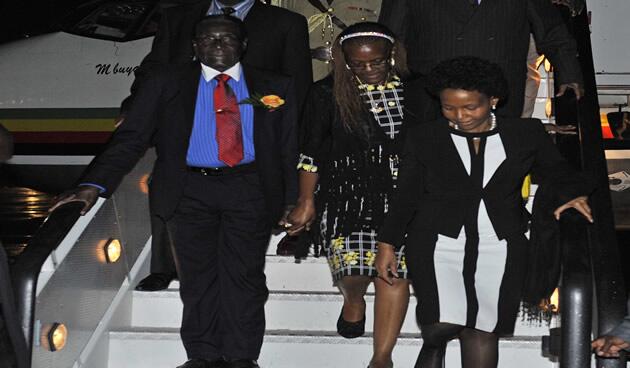
    Last night President Mugabe and his wife Grace joined a long list of world leaders who landed at the Waterkloof Air Force Base just outside Pretoria to attend Nelson Mandela’s memorial and funeral.

    Most if not all of the world leaders attending the funeral had great respect for and revered Madiba and felt the need to pay their last respects. The former and current world leaders attending include people who have clashed with and do not see eye to eye with Mugabe. This is something that presented an interesting logistical challenge for those managing the events.

    One of those people that Mugabe has clashed with is Mandela. It was only a few months ago in an interview with Dali Tambo that Mugabe said the following (the commentary starts approximately 24:30 mins into the video):

    [quote]”They [whites] will praise you only if you are doing things that please them. Mandela has gone a bit too far in doing good to the non-black communities, really in some cases at the expense of [blacks],

    ….. That is being too saintly, too good, too much of a saint.”

    ….. Naturally we will speak good of him [Mandela] but everyone knows he did not do enough for his people”[/quote]

    To add to that, upon hearing news about Mandela’s death it took Mugabe and/or the Zimbabwe Government a lot longer that the rest of the world to respond to the news and send a condolence message. On ZBC, the news was reported about 20 mins into the 8pm News Hour versus it it being the first piece report as it was around the world. Looking from the outside in, this would seem as if as far as Zimbabwe is concerned, the event was a non-event.

    Over the years, comments exchanged have gone both ways with Mandela expressing his disapproval on the way in which matters were being handled in Zimbabwe and going as far as stating that there was a failure of leadership. Mandela was also quoted as saying:

    [quote]”Before I was released from prison, he was the most popular African leader, but when I was released the media said this is the end of Mugabe from the point of view of popularity. In fact he himself didn’t want me to come out of jail,”[/quote]

    This statement is one that the media may or may not be twisting and are saying is the root of a jealousy that caused the dislike that Mugabe has for Mandela.

    The above is only a snippet of what both leaders have had to say about each other and as for some of the reasons why the rift existed, we can only speculate.

    But, Mugabe’s decision to travel to South Africa for the send off leaves you wondering WHY? Does it not?