Over the years, a number of countries world wide have been placing sanctions on Zimbabwe. These sanctions have been mainly targeted towards members of the Mugabe regime. Countries imposing sanctions include the United States, Britain, the EU, Australia and New Zealand just to name a few. Sanctions include travel bans, financial sanctions and a ban on trading with companies that are linked to the Zimbabwe government.
Now they are going a little further than just targeting people directly involved with the Zimbabwe government. Australia recently deported the children of top Zimbabwe Government officials who were studying there. The United States has just imposed new travel and financial sanctions and will also be deporting the children of Zanu-PF officials.
These sanctions may have made things a little harder for those on the lists but their lives are still go on as they continue to do what they do. Even the travel bans aren’t 100% effective. They are still able to travel to countries that don’t want them. If there is a UN summit or similar conference there isn’t a lot that can be to prevent them from attending. For example, there has been a big debate going on over the last few weeks about whether or not to allow Mugabe to attend the EU-Africa Summit in Spain this weekend (8th-9th December). British Prime Minister Gordon Brown plans to boycott the summit in protest of Mugabe’s attendance.
The effectiveness of these sanctions can be brought into question. Does imposing sanctions change anything in a nation? Have they been effective in Zimbabwe? Are they having an effect on the people they are meant for? What kind of an effect do they have on the people of Zimbabwe?

.jpg "Movement for Democratic Change (MDC Zimbabwe) Leaders – Morgan Tsvangirai and Arthur Mutambara")

 by George Orwell. I heard of the book a long time ago but never got around to reading it and I am glad that I finally have (thank-you …..). At the time of publication in 1945 it was an allegory of the Russian revolution but in recent times it has been compared to governments that have taken over from colonial powers only to become worse off than the so-called colonial oppressors. The characters in the book can be associated with real life characters. For this reason the book has stirred a lot of controversy and has even been banned in some countries. The book outlines a shift to totalitarianism and the effect it has on a population. It leads to a state where people start thinking as a group which affects individual judgement. That is the problem with the world we live in today. The world is ruled by a very small percentage of people who make decisions for the rest of us. No-one is standing up for what they believe in and are taking whatever comes their way. As a result they are suffering and will continue to do so until they speak up. The little that is said will count in making the world a better place.In the book it all started off with a dream of rebellion and freedom that a white boar Old Major shared with the animals on the farm just before his death. The cleverer animals on the farm, the pigs held secret meetings where they planned a rebellion against the enemy, man. At the forefront were two main pigs, Snowball and Napoleon who during the planning of the rebellion taught themselves to read and write and came up with seven commandments that the animals were to live by. Their plans came to fruition and animals drove Mr. Jones of his farm.
 Last week Jacob Zuma was elected as the new president of the African National Congress (ANC) ousting President Thabo Mbeki. This I find very interesting as he was recently acquitted of rape charges. I would not have thought that he would have that amount of support with his background. He could very well be the president of South Africa in 2009 when Mbeki has to step down.
+-+New+Zimbabwe.jpg) image courtesy of newzimbabwe.com
image courtesy of newzimbabwe.com 
 is available for purchase.
 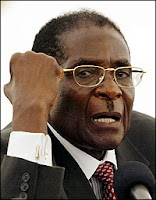 Born on the 21st of February 1924, Robert Gabriel Mugabe has ruled Zimbabwe for nearly three decades. He played a key role in Zimbabwe’s independence struggle and bringing an end to British colonial rule.
 Kim Jong-il, Fidel Castro and Hugo Chavez
 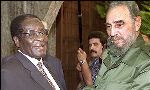 just to name a few. He has even managed to have his name included amongst the world’s worst dictators.
