Tag: Zimbabwe Dollar

  • How to use dirty Zimbabwean US Dollars outside Zimbabwe

    How to use dirty Zimbabwean US Dollars outside Zimbabwe

    Zimbabwe’s economy is definitely an interesting one with the multi-currency system, shortage of foreign currency and the trending away from Bond notes. With the multi-tiered pricing and recent shortages, one thing that has stood out is that cash is king and more in particular, US dollars.

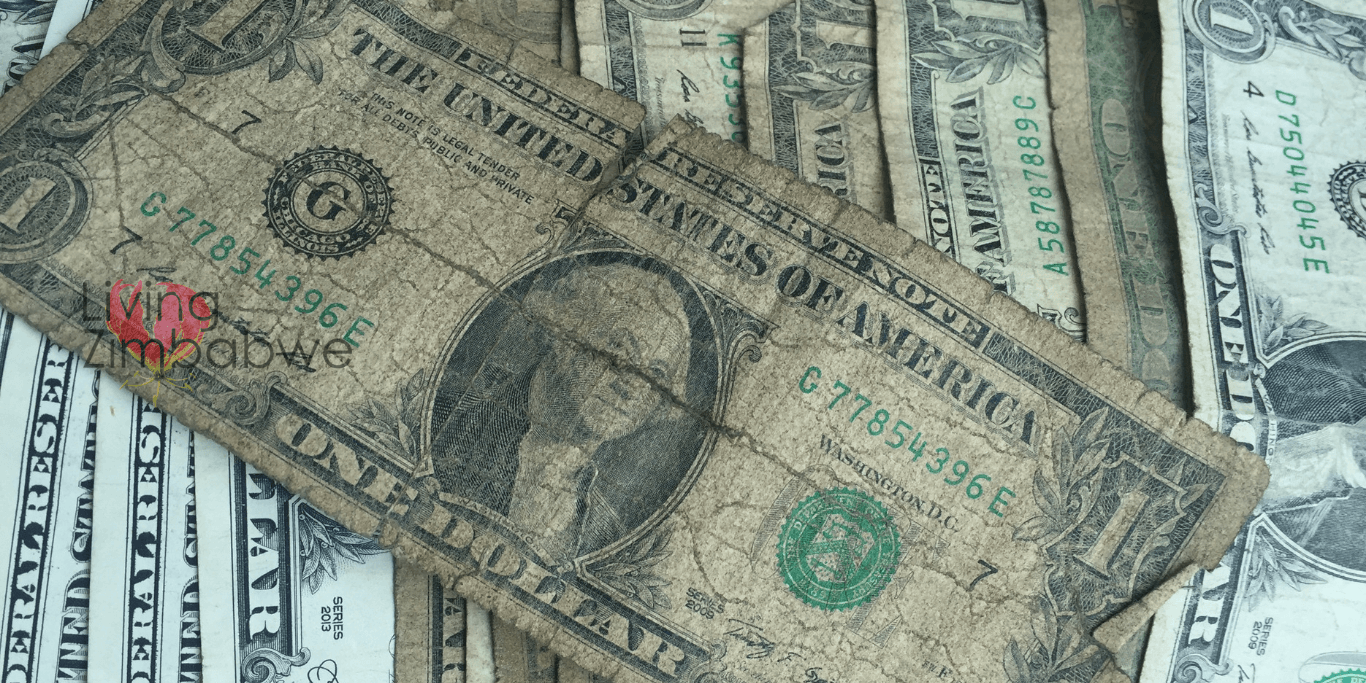
    It is no secret that a large percentage of the US dollar notes in circulation have seen better days. One does begin to wonder how some of the notes are accepted for payment? With the USD being a global currency, it is one that is accepted for trade worldwide. But, this is not quite the case with our dirty ‘Zimbabwean’ US dollar notes.

    Dirty-Zimbabwean-US-dollar-notes-Living-Zimbabwe

    Disclosure: This post contains affiliate links, which means we may receive a small commission, at no cost to you, if you make a purchase through a link.

    TechZim recently wrote an article about their experience of not being able to change some of their ‘Zimbabwean’ USD at various Bureau De Change outlets in South Africa. Other travellers have had similar stories to tell where they were not able to change their dirty money in other parts of the world be it at a bank or currency exchange outlet.

    People travelling out of the country need foreign currency to pay for food, accommodation, shopping sprees or whatever it is they have travelled for. For many, the only cash that they have at hand or access to is the dirty US dollars that have done their rounds. Not being able to change their currency or have it accepted as payment leaves them in a situation where their money is worthless outside of Zimbabwe.

    Once you reach this point, it may seem as if all is lost as far as the seemingly worthless money goes. But, this isn’t quite the case as there is a solution that will revive the value of your notes for use outside the country.

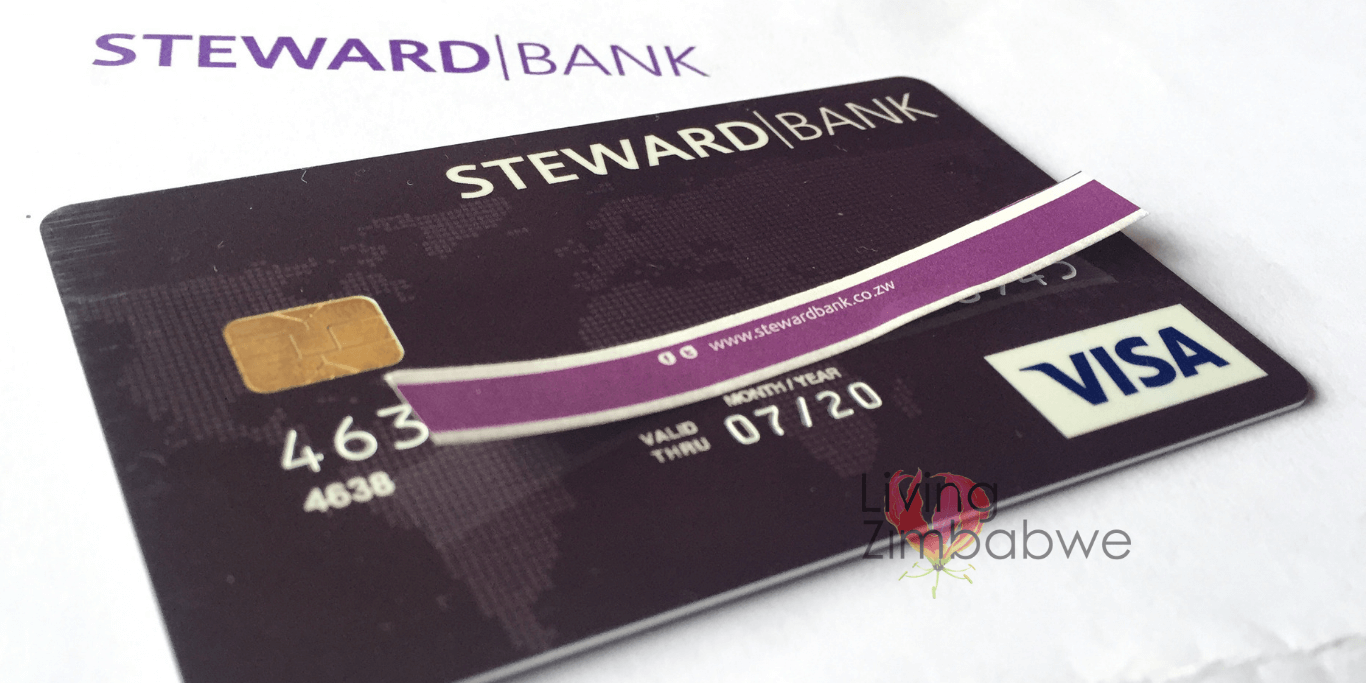
    Steward Bank Globetrotter Visa Card

    Steward-Bank Globetrotter-Visa-Card-Living-Zimbabwe

    A friend recently told us about how he manages to make use of his dirty money when travelling out of the country. His simple solution was the Steward Bank Globetrotter Visa Card.

    This pre-paid VISA card which is available to Steward Bank and non-Steward Bank customers is one that the cardholder funds in foreign currency. Applying for the card is simple and straightforward with all that’s needed being, a completed application form, copy of ID, proof of residence and a US$10 card issuance fee. To fund the card, deposits can be made into the card at a Steward Bank branch, Steward Bank agent or Econet Shop.

    Our friend produced a few US dollar banknotes (the ones pictured above), some of which we thought would not be accepted by the bank due to them being extremely tattered. But, to our surprises, they were accepted for deposit, no questions asked!

    With the money loaded onto the card, it was now in a form where it could be used anywhere in the world or online where Visa is accepted.

    Do you have any other ways of converting dirty US dollars into a useable form?

    Get (or send) money from the diaspora through WorldRemit – Pay ZERO fees on your first money transfer!

  • How to beat Zimbabwe’s Bond Notes

    How to beat Zimbabwe’s Bond Notes

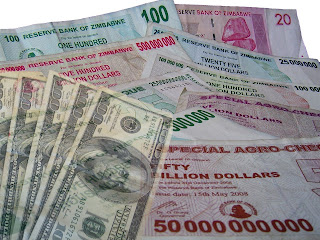
    Our economy has been through all sorts in the last few years. It’s has gone from a functional Zimbabwe dollar to a dysfunctional dollar that saw unprecedented levels of hyperinflation that caused all sorts of chaos. It got to a point where it didn’t make sense to transact in our own currency where trillion dollar notes were being exchanged for goods and services. This crisis eventually led to businesses and traders alike resorting to only accepting foreign currency with the government also conceding and adopting the multi currency economy we live in.

    The acceptance and use of multiple currencies eased a lot of pressure for many a Zimbabwean even though many may not of have respected the mighty US dollar for the value it holds. But, the adoption of all of these currencies has also brought about its own challenges such as really dirty money which is something we now just live with but now, it’s getting harder to get a hold of actual physical cash, dirty or not.

    Besides dirty money, the multi currency economy has brought about a cash crisis/liquidity crisis where citizens just don’t have cash in hand. You may have a bank account that says you have $xyx in it but getting that money may be easier said than done. People just don’t have the cash that they need to get on with their daily lives.

    That said, banks are now putting daily limits on withdrawals, travellers can only take certain amount of money out of the country and business looking to import products have to go through a tedious process in order to pay for their imports.

    The ongoing crisis has spurred the Reserve Bank of Zimbabwe (RBZ) to take action with that being them announcing the introduction of bond notes. We already have a few million dollars worth of bond coins floating around the country, coins that some people still won’t accept.

    The looming injection of bond notes into the economy has freaked out quite a few people. Why? They see it as the return of bearer cheques that saw us transacting in billions and trillions. The RBZ has picked up on public concern and have tried to allay fears. They have put out statements such as they will not replace the current multi currency and that more bond notes will not be printed at will. But, this is all just a wait and see.

    Whatever the case may be, hope is still there that we may one day (sooner rather than later) get back to having a stable economy.

    Some people are taking to hilarity maybe as a way of coping with what may come. One example was in the form of a WhatsApp forward that outlined practical steps to getting by in a bond note economy:

    10 practical steps to beating Bond Notes

    1. Find something that you can do that doesn’t require you to import but can be produced with local materials.

    Local-Materials-Surviving-Zimbabwe-Bond-Notes-LZ

    2. Find something that you can export.

    Export-Surviving-Zimbabwe-Bond-Notes-LZ

    3. Don’t sell your assets.

    Keep-Assets-Surviving-Zimbabwe-Bond-Notes-LZ

    4. If you have a kumusha, buy cattle now, especially if your home area hasn’t been hit by drought.

    Buy-Cattle-Surviving-Zimbabwe-Bond-Notes-LZ

    5. Downsize. If you have a car downsize to a smaller and more fuel efficient vehicle. If you are renting a house, downsize to a smaller one or change suburbs.

    Downsize-Surviving-Zimbabwe-Bond-Notes-LZ

    6. Don’t do things for prestige. Send your children to a school you can afford.

    Affordability-Surviving-Zimbabwe-Bond-Notes-LZ

    7. If you have space, grow vegetables and/or breed chickens (and zvihuta!).

    Grow-Vegetables-Breed-Zvihuta-Surviving-Zimbabwe-Bond-Notes-LZ

    8. If you are renting but have a stand elsewhere, move to your stand. Build something basic and live there. Forego luxury living.

    Forego-Luxury-Surviving-Zimbabwe-Bond-Notes-LZ

    9. If you are married don’t fight over money. Hapana hapana. Put your heads together and think of survival tactics instead of fighting and accusing each other. Not everyone can sell things or be a vendor.

    Dont-Fight-Survive-Surviving-Zimbabwe-Bond-Notes-LZ

    10. Be at peace! This is important. Stress levels will go up. They are already up! Don’t be a victim of things that are not in your control. Speak to others, pray with others and attend church even more. Hearing the word of God heals the broken hearted.

    Be-At-Peace-Surviving-Zimbabwe-Bond-Notes-LZ

    How do you plan on surviving the bond note economy?

  • Hwangwa on Zim: Tales of the Zimbabwean Dollar, Bad Memories For The Average Masses

    HARARE – By David Hwangwa

    The Reserve Bank of Zimbabwe governor, Dr. Gideon Gono once revealed that he had nightmares over the zeros he had slashed on the Zim dollar. Tales of the dreaded Zim dollar evoke several emotions amongst the people. The majority would not even want to hear even the slightest mention of the word whilst some of Harare’s dealers would jump with joy if it is to return in its weak state. The era of the Zim dollar in its last days, were the worst for the majority.

    Since its inception after independence, the Zim dollar was a stable currency that was even at par with most of the world’s strongest currencies, at one time being of more value than the US dollar, one of the currencies currently being used as legal tender in the country. It was not until the late 1990s that the dollar started to slide when the Zim government was just starting with their poor domestic and foreign policies.
    Fighting for regional dominance with South Africa, the Zim government entered our troops into the infamous DRC war despite being warned about its negative effects on the economy. Just to add to their poor policies, the government further gave out huge payments of ZW$50,000 each to the thousands of the veterans of the Second Chimurenga. This also had massive effects on the economy because we could not afford that at the time but once our government decides on a policy, they go ahead with it without considering the after effects of such moves. The Zim dollar started falling, foreign currency shortages were being reported and the sliding trend for Zimbabwe was just beginning. At the turn of the new millennium, such policies continued. The chaotic land redistribution, oppressive laws, Operation Murambatsvina, rigged elections and ofcourse continuous printing of the Zim dollar, all added to the further weakening of the currency.

    Whilst the economists can go over their books and come with various reasons and formulas why we should not resort to the Zim dollar just yet, the average man on the street will just hit you with a blank NO. They have so many reasons why that currency should never come back.

    In the last decade where the Zim dollar was the main currency, it cast a dark shadow over the general masses. How could it not be when the governor was printing money at will as if he was funding a mafia organisation? His new hobby was that of printing trillions, quadrillions and figures never heard of without even considering the plight of the masses.

    It was a period where nothing was available in the shops. To those who had supplies and who were selling them, the mode of payment was the scarce forex even though it had not yet been legally approved by the government.

    The most painful thing during the Zim dollar era was that of waiting in queues, even for things that were not even there. It was even more heartbreaking when that commodity you had been waiting for runs out whilst you were still in the line. We became so accustomed to waiting in lines that whenever you saw people standing in a queue you would immediately join them without even knowing what they were waiting for. One would almost be certain that whatever that thing was, you would probably need it. People would go to the shops as the whole family because things were rationed; 1 – 2 per person and a family of eight would probably require three people just to get enough supplies.

    The Zim dollar era resulted in the country becoming almost idle. Industries closed, multi-national companies relocated to neighbouring countries and most local businesses were just operating at a loss. The unemployment rate rose to levels never heard of. People reluctantly left the country they loved so much for menial jobs outside. People had no options but to degrade themselves so as to feed their own families.

    The government had no pity at all for the businesses during that time. With Gono printing his worthless Zim dollars at will, it meant that every time a new family of currencies was introduced, prices would rise as well. It was even painful seeing prices being increased whilst you were waiting by the till. To counter such practices, the government introduced the infamous price controls. This was the final nail in the coffin because this practice resulted in companies not producing anything because the price fixed by the government was just suicidal to their businesses. You could not blame the business people because you honestly cannot sell a product marked for example $5 and be told to sell it for a dollar. Anyone in his right senses would say no to that and it would be beneficial to that person to just stop producing that product. The biggest victims from this policy by the government were the masses because we got everything we want from the store and waking up one day being told that there is no bread, it is just an insult. At times, Zimbos we are just too tolerant.

    The big shefs in government were living large at the time yet the masses were paying the price for their incompetent policies. People had to purchase goods where they were limited. Substandard goods became the order of the day. New terms were being coined by the suffering masses to portray their everyday life. People were now living on economics Zero-Zero-One where the one referred to the only meal of the day. The one meal was even necessitated by two factors; one it was because in that day and age, people could only manage to scavenge one meal per day because things were so hard. The other factor was that even though some people might have had the means to have more meals per day, the stumbling block was that there was nothing in the shops to buy. We are talking of a time where if you visited a relative, you would expect to return to your place without even being offered anything to eat. Visiting people was almost a burden because you would just inconvenience your host.

    In the rural areas it was even worse. Visiting my grandmother I the village in December 2008 I almost cried. She had stacks of worthless Zim dollars that she was saving; dollars that were not even in circulation anymore. She told me that she was not even aware of what the new family of currencies was. The other factor was that she kept them because there was nothing to buy from the stores. It was even sad visiting people in the village. There was virtually no food to eat. The government had banned NGOs from operating in the country. They were the only ones that were giving people in the rural areas food supplies.

    Things were so drastic that people were boiling mangoes to eat. It might sound weird to the urban folk but that was the situation on the ground. The situation in the rural areas was a little different from that in the city. We went to ChaChaCha growth point in Shurugwi to buy my old lady some supplies for Christmas. In some of the shops there was maize meal from South Africa that was written “Not for Consumption by People under 12years and those over 65years.” I was shocked because that is generally the average ages you will find in the rural areas. The sad part was that people were buying that very produce. I asked myself, is it ignorance or the mere fact that people were taking advantage of the rural folk. Some overzealous entrepreneurs were just taking advantage of the rural folk.

    It was not only business people who were taking advantage of the masses. It started from the top. Gono and his cronies were printing gazillions of Zim dollars at will, fuelling the black market. It was hard waking up to go to work. You were never guaranteed that the price you paid for the kombi would be the same come 6 pm. No wonder the soldiers ran amock when shops were refusing the $10trillion notes. That was towards Christmas in 2008, government workers had been paid $30 trillion. Just those three notes that were not being accepted in shops. That was just taking our patience and tolerance to the limit. Not everyone had the means to forex then but the government never considered how the average man on the street was surviving. Yet you wonder why Zim remained at peace. Zimbos and their tolerance.

    Now we see the state media journalists and Dr Gono echoing the same sentiments from the December 2011 ZANU PF Conference about bringing back the Zim dollar. Yes a country needs its own currency but at the present moment Zimbabwe is better off without its own currency. I am not an economist but I know that we are not yet ready for a return of the Zim dollar. Our industries are still recovering and hardly working at full capacity. Bring the Zim dollar right now is just tantamount to disaster. Maybe the ghosts of the slashed zeros are haunting our learned governor that he is under pressure to bring back the dollar. We all know that the governor does not really care. He is one man who purchased a Mercedes Brabus when the country was the majority of the population was languishing in poverty.

    Well Dr. Gono and fellow Cdes from ZANU PF, we suffered so much under the Zim dollar we are not yet ready for the return of our fallen currency. Our economy is just starting to recover, can we please allow it to grow before the once mighty Zim dollar makes its inevitable return. Elections are just around the corner, now is not the time for the Zim dollar.

    David T. Hwangwa is writing in his own capacity. He can be contacted on dhwangwa@gmail.com

    This has been a submission by David Hwangwa. If you have something to share, you too can become a Citizen Journalist by submitting your story here: Citizen Journalism by Living Zimbabwe.
  • Zimbabwe State Lotteries – Safest In The World!

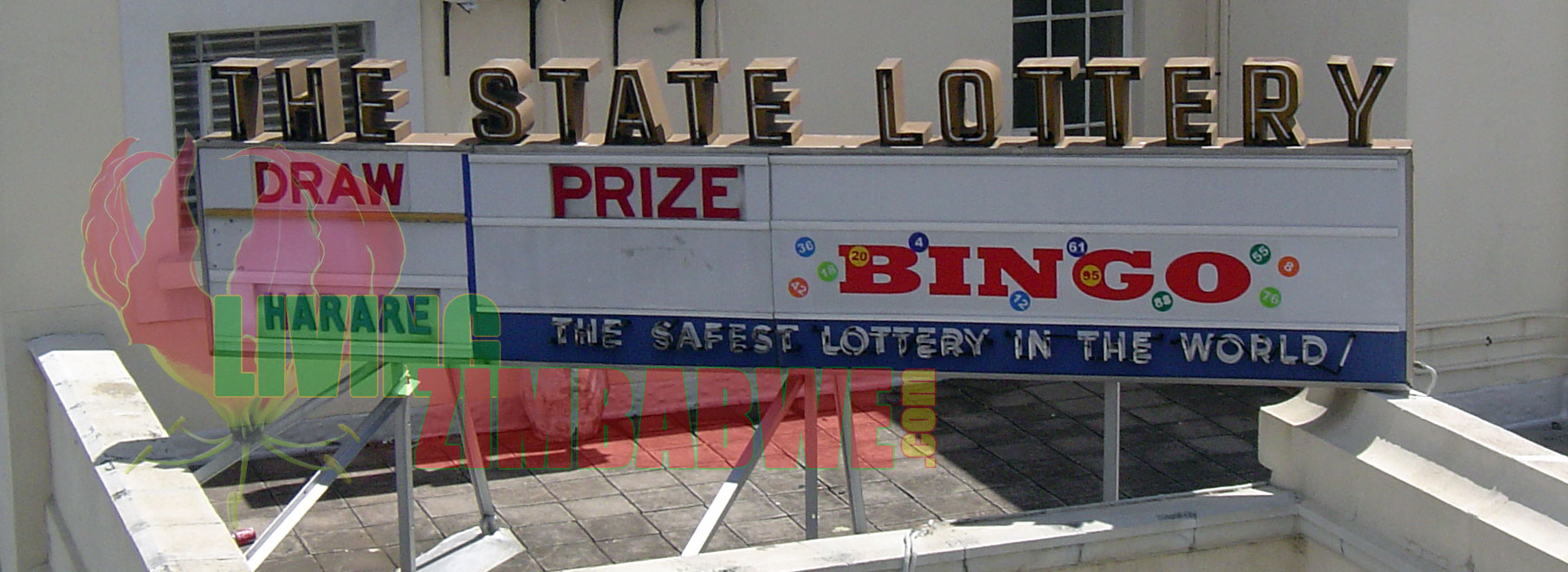
    Zimbabwe State Lotteries – Safest In The World!

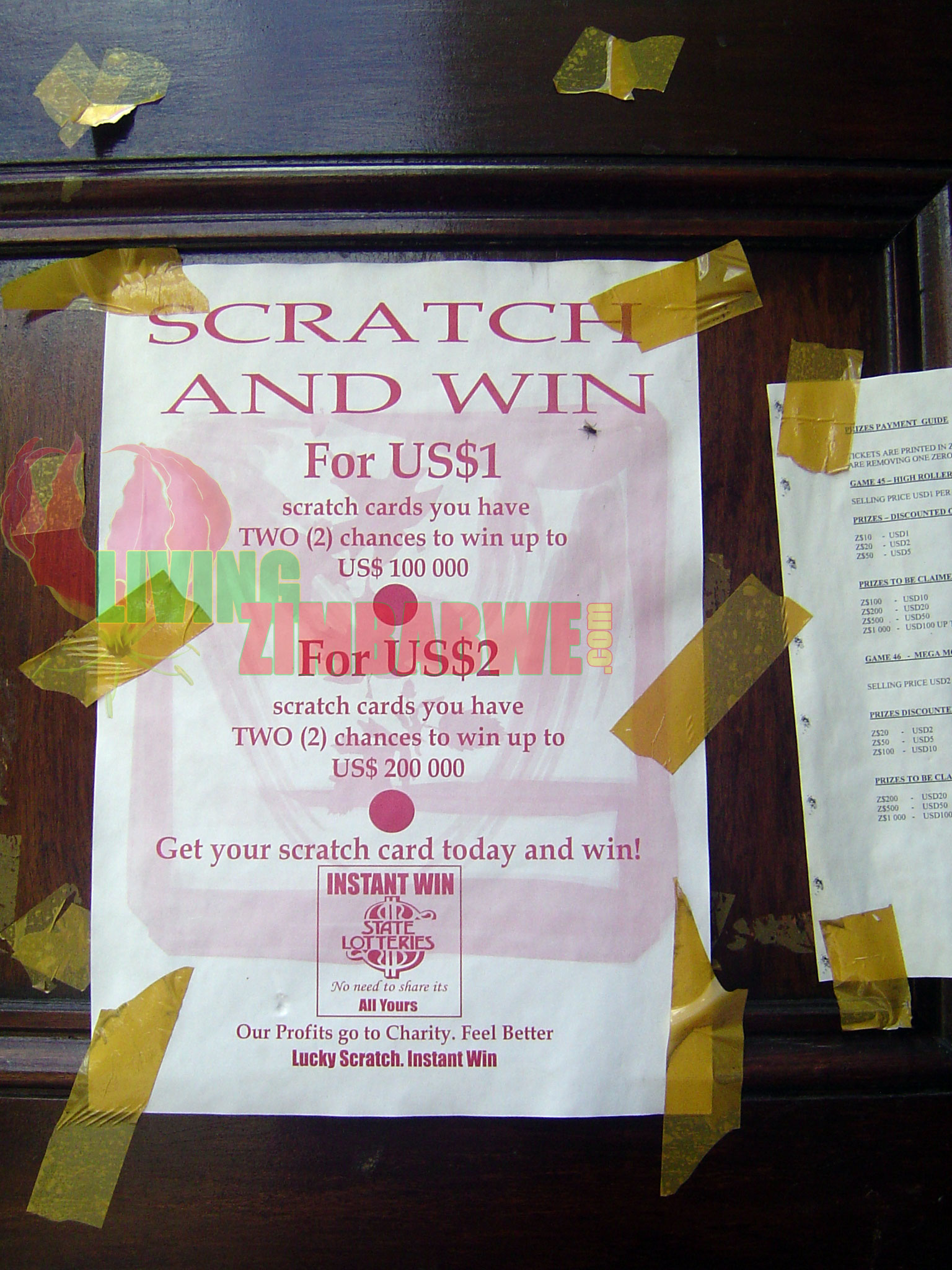
    During the 2009/2010 festive season, US$1 could have instantly made you US$100,000 richer. How? All you had to do was buy a scratch card from the State Lotteries and all going well you could have won that amount. Another popular game that was introduced was Bingo which people could play Monday to Saturday from 11am to 7pm.

    As with lotteries around the world, the chances of winning are very slim but the winnings are big. Just imagine someone in Zimbabwe going from a few dollars to being $100,000 richer? One thing that you can be rest assured about though is that the State Lottery in Zimbabwe is the Safest Lottery In The World!

  • Burning Money to Make Money

    US Dollars, the New Zimbabwe Dollar

    Zimbabwe’s economy might be in the doldrums but there are people there who are making a lot of money. Patrick M at Zimbablog wrote an article on ways of making money in Zimbabwe, “The 13 best ways to make money in Zimbabwe”. He outlines a few things that people have been doing to make themselves ridiculously rich. Some of the methods highlighted in his post include selling fuel, trading in forex and Zim dollars (believe it or not), selling food and alternatives to beating the frequent power cuts. That is not all people are doing to make money. The diamond craze that hit the country a couple of years or so ago is till very much alive despite the efforts of police to try and stop their illegal mining and dealing.

    The other day I caught wind of another way in which people are making money called ‘burning money’ where people take advantage of the very wide gap between the cheque rate and the cash rate of the US dollar against the Zimbabwe dollar. If you want to cash your US dollars you will get a much lower rate for it than if you were to go to the bank and exchange it for Zim dollars which are deposited into your account at a much higher rate. For example, if you cash US$50 it would be at a rate of lets say 30 000:1 and if you were to exchange it at a bank with the funds being deposited it would be at a rate of lets say 2,180,000,000:1.

    The most obvious choice would be to exchange the money using the bank transfer rate but the problem comes when you want to withdraw your billions of dollars from the bank. If you have contacts at the bank you withdraw the money and then go to parallel market to buy US dollars at a rate of lets say 40,000:1. If you do the math you can see that you end making a very good profit. For those that cant get that amount of money out of the bank, what they do is go to a company and buy some sort of goods such as cement or Econet’s pre-paid buddie top-up cards with a cheque and sell them on the streets for cash.

    The kinds of profits that people who ‘burn money’ make can be a bit mind boggling with the number of figures involved in the calculations but those who deal with them on a daily basis are used to it.

    One thing though is that with people managing to make huge amounts of money from their forex in both US and Zim dollar terms, a number of industries or should I say those that are left are struggling to survive. They are struggling to survive because everyone is out there trying to get their hands on some of that money and those that have the money are clearing out companies and selling their goods.

    Some may see this as being immoral and that the people who are out there carrying out such trades are further destroying the economy. The authorities may be out there trying to clamp down on such activities but as they close more and more loopholes and make it harder to carry out these trades, people are finding other ways of making ridiculous amounts of money. The way I see it, it’s just survival. It’s amazing how people can thrive in chaotic conditions.

  • Selling Zimbabwe Dollars Online Is Profitable

    Zimbabwe $100 Billion Dollar Note - $100,000,000,000At the start of 2007 ZW$10,000 notes were selling for about US$50 on Ebay and a number of people took advantage and sold the notes for more they were worth. With the introduction of the $100 Billion Dollar note ($100,000,000,000), selling notes for more than they are worth is happening again. As of today, there are 111 live auctions for the $100 Billion dollar note on Ebay with the highest bid for a single note being US$152.50 which is well above what one would get for it in Zimbabwe (screen shot below – click on image to enlarge). With the slashing of the zeros taking place the $100,000,000,000 will have a face value of $10 and just about worthless.

    Those who have been quick enough and smart enough have capitalized on the introduction of such notes and listed them on auction sites and sold them for very good profits. Right at this moment, the seller running the auction with a high bid of US$152.50 has 9 other auctions for single notes which if the auctions were to close would net him US$717.89 which is an amount you can’t complain about for $1,000,000,000,000 which at last weeks rates would have gotten you about US$2.

    If you have a few notes in your possession it may not be too late to get in on the action and take advantage of the situation. Even if you miss out on it this time around it is bound to happen again in the near future with the way Zimbabwe’s economy is running. Sign up to Ebay and try your luck. Take a look below:

    No items matching your keywords were found.
  • Zimbabwe’s Economy – Black Friday

    • US $1 is now worth ZW $2,000,000 on the black market.
    • Inflation is said to be around 15,000% (independent analysts put it much higher).
    • Is it all a result of Mugabe’s mismanagement and controversial policies?
    • Mugabe recently said that Zimbabwe’s economy would not collapse.
    • What marks the collapse of an economy?

    The economy has been spiralling downward for a decade now. Zimbabwe used to be the breadbasket of Africa but now it is in a situation where the average person really struggles to make ends meet. Even if they do manage to get their hands on a bit of money to buy basic commodities it can be a struggle trying to get their hands on them due to shortages. When will Zimbabweans see an end to such conditions?

  • The Zimbabwe Dollar – 1,000,000 to 1

    One US Dollar will get you One Million Zimbabwe Dollars. That is just ridiculous!! I checked the official bank rate about two to three weeks ago and it was ZW $30,000 to US$1. The official rate doesn’t really mean much for everyday people in Zimbabwe because you can’t get yourself any foreign currency at the bank and it doesn’t make sense to sell your forex to a bank when you can get more for your money on the street. People who do want to know where the bank rates stand are the black market dealers so that they can adjust their prices accordingly.

    I can remember the days in the early to mid nineties when you could get the US Dollar for well under ZW $10. It was so readily available and you could pick up your foreign currency from the bank on the day that you ordered it. As the years went by and the economic and political situation got a little shaky it became harder and harder to get your hands on forex. The situation has only gotten worse as time has gone by. I was in Zimbabwe at the beginning of the year when US $1 would get you about ZW $15,000 to ZW $20,000 depending on where you changed your money. I would not have thought that it would reach the levels it has reached. The instability in the economy has made a lot of people very rich and very quick!!

    One funny thing is that I kept quite a few notes, in particular the $10,000 bill that does not have a space between the first and second zero. I went on to sell a few of them on eBay! for between US$15-50. A few people are selling an array of Zimbabwe Dollar notes and getting a whole lot more from them than they would get in Zimbabwe.

    It is beyond me how the economic situation has reached the level it is currently at.