Tag: zimbabwe

  • Government and the Indigenous Church battling for control

    Government and the Indigenous Church battling for control

    Government vs. mapostori: the battle for followers

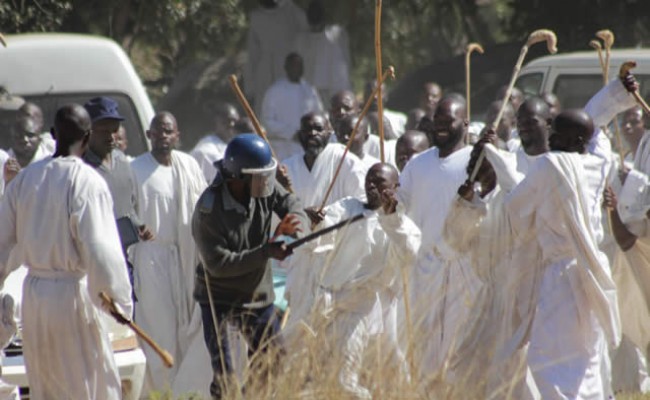
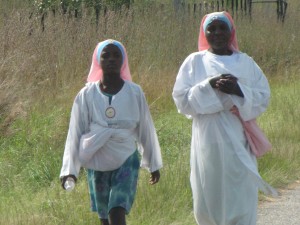
    The news that a sect of the white garment churches brutalised riot police officers, ZBC journalists and a ZANU PF ordained bishop of the mapostori has captivated many. What has caught the people’s attention is not the mapostori’s blatant disrespect for media personnel or law enforcement agents. Rather it is the way the men and women in white garments stood up to authority. People are marvelling at their courage and speculators have been quick to conclude that the white garments have become the new regalia for the opposition movement.

    Government to blame

    For years, the ZANU PF government has sided with mapostori overlooking their wrongs and praising them as indigenous churches. Despite the sects’ record of abusing women and children and their anti-education doctrine, government has supported them all the way. The sects enjoyed unfettered attention and airplay on radio and always had reserved seats at all national events like Heroes’ Day. The rest of the churches were seen as pursuing a regime change agenda.

    The battle for control

    For years, government has been desperately trying to assert its authority over the church. Their desperation was highlighted when intelligence agents carried out a covert mission to expose and disgrace the then Archbishop of Bulawayo Archdiocese, Pius Ncube. The plot was to silence him as Ncube was a fierce critic of government’s abuse of power and was vocal about Gukurahundi.

    Before the dust settled, government through disgraced ex-bishop Nolbert Kunonga grabbed the reigns of the Anglican Church using homosexuality as an excuse. For years, Anglicans were persecuted and banned from their churches and denied access to their Bernard Mizeki shrine until government realised the futility of its actions.

    Orthodox Church or state controlled doctrine

    Upon realising, they could not win the battle to control the western churches, government turned to the locals: mapostori. What government is seeking is to impose its bigoted political views as the central dogma of the sects. By sowing ideologies that border on racism and promote distrust of foreigners, they seek to establish a church that follows a toxic anti-Western doctrine. They are trying to create a church on the lines of the Russian Orthodox that derives power from government and legitimises government policies.

    Radicalisation and religious extremism

    The way the mapostori reacted to the police paints a gloomy picture of the future of religion in Zimbabwe. When one takes into cognisance, the fact that mapostori were complicit in the 2008 election violence that left more than 500 dead, it is not outlandish to believe that they are turning into religious extremists. Their views on women, children and western education and health are no different from the views of Nigeria’s Boko Haram and Somalia’s Al Shabaab. As they wake up to the reality that they have a significant population behind them, there is a possibility these sects will seek to expand their power and influence beyond their current boundaries. It is no surprise if decades from now Zimbabwe will be in Nigeria’s position facing religious extremists.

    The misguided ZANU PF thugs

    They are referred to as youths but I see nothing in them to celebrate as a youth. They are social misfits who offer themselves to be used as political pawns all for a sip of opaque beer ‘Chibuku or Ingwebu.’ In idiotic fashion, these vigilantes took to the streets in defence of the riot police. Its mind boggling that sane people will seek to defend the police from the people. What are they getting from the police? Whom are they representing: the people or the junta? Instead of demonstrating against corruption, high unemployment, collapsing education and health delivery systems, the brain dead saw it fit to waste their energy toy toying in solidarity with the police.

    All have sinned and none is pure

    The mapostori just like the spiritualists of this generation are taking advantage of people in desperation. They follow skewed doctrines that degrade women and children and glorify racism. Their views on western education and health are retrogressive. The mapostori are radicalising into religious extremists. However, this does not give the police or government the right to control the followers. The police are not a law unto themselves. They are mere enforcers and they must stick to that. As for the ZANU PF thugs, they stay out of the feud and stop escalating the situation. They are better if they go to Ngungunyana building and apply for farms so they can do something productive with their lives.

    Let the Human Rights Commission do the job. Give the commission the adequate resources and necessary legislative backing to investigate and prosecute human rights violators in a non-partisan manner.

    This has been a submission by Ittai Bryan.
    You can connect with Ittai via the following: http://ibmatteu.blogspot.com, http://twitter.com/ibmatteu, http://fb.com/ibmatteu.
    You too can become a Citizen Journalist by submitting your story here: Citizen Journalism by Living Zimbabwe
    The views expressed in the article are those of the author and not necessarily Living Zimbabwe.
  • Exposing Baba Jukwa: Our right to privacy

    Exposing Baba Jukwa: Our right to privacy

    Exposing Baba Jukwa: Our rights to privacy

    On several occasions, state media namely the herald and Sunday mail have published ‘leaked’ emails and information exchanges by prominent politicians and socialites in Zimbabwe. Several names like Eddie cross, Tendai Biti, Elizabeth Macheka and Obert Gutu have been victims of the leaks. Questions arise as to who leaks this information? How do they do it and for what reasons?

    We are aware of the US whistle-blower Edward Snowden, who leaked many NSA documents that show the US government, has been spying on citizens globally. It revealed the agency spied even on allies like German Chancellor Angela Merkel. It is not the US government alone that spies on citizens. Recently there were reports that Ethiopian government was acquiring spy technology (to spy on citizens).

    We have two possibilities: ether the state media fabricates these stories (propagandist machinations) or the information is true. If it is true, then the state media accessed the information from another state department. Whichever way it goes, the state knows who leaks the people’s information and how they do it.

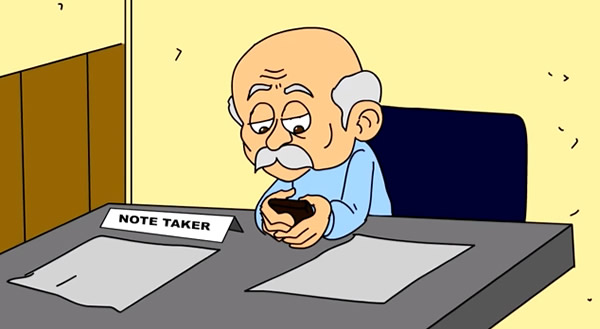
    Last week I attended a workshop that touched on digital security, which proved to be a revelation to the majority of us participants. As I was just digesting what I learnt from the workshop the media was awash with news that baba Jukwa had been caught. I have not much sympathy for Baba Jukwa especially now that he is no longer relevant as elections are over but what grabbed my attention is how they claim they caught him. They (whoever they are) are said to have successfully hacked into his/her email account. The news is spine chilling to someone who values his or her privacy. Those hackers purport that Baba Jukwa is Mxolisi Ncube a journalist with the Zimbabwean.

    Mxolisi Ncube denies the accusations and says he only interviewed the faceless Facebook character. He admits to have corresponded with the Baba Jukwa. Whether Mxolisi is the real baba Jukwa or he is being set up, it is not much of an issue compared to the methods used to try and expose the Baba Jukwa. I wonder how many accounts of ordinary citizens have been hacked so far. How much of our private information has government accessed illegally?

    In the movies, hacking seems a lot of fun and exciting but truth be told; it is an infringement on our basic human rights. Section 57 of the new constitution states that, “every person has the right to privacy…” and part (d) specifically provides for privacy of data or communication. What it means is that no one has the right to access your private and personal information without your consent. It is an infringement for one to browse through my phone (snooping) without my consent. It is our fundamental right yet someone is bragging that he/she successfully hacked Mxolisi Ncube’s emails. Their excuse for hacking is defending national security. We are the people. We are the nation. There is no way they can protect us by hacking into our accounts.

    However, part of the blame lies squarely on us. Many of us are reckless with how we share our personal information online. As I learnt at the workshop, a few things will help us be more secure online.

    1. Always think twice before you accept any friend requests, open strange emails, or download those viral files on apps like WhatsApp. Some of it is carrying spyware.
    2. Have different passwords for your different accounts and only you must know them. A strong password must contain symbols and numerals.
    3. Think before you click on those pop-up ads. Many of them will lead you to unsecure sites where you are asked to type in your personal information.
    4. Never give personal information online. Many of the sites relay the information to hackers.
    5. Always log out from all your open accounts and delete history and cookies after you use a device that is not yours or that is available for the public. Hackers and/or other criminals can use this history can use to enter into your accounts.

    So even if whether we are fans of baba Jukwa or not, the way he has been exposed must worry us. When ordinary citizen Mxolisi Ncube has his right to privacy infringed upon, we all must get vocal or the vices will not stop. After Mxolisi, it is you or I.

    This has been a submission by Ittai Bryan.
    You can connect with Ittai via the following: http://ibmatteu.blogspot.com.
    You too can become a Citizen Journalist by submitting your story here: Citizen Journalism by Living Zimbabwe
    The views expressed in the article are those of the author and not necessarily Living Zimbabwe.
  • Showing the True Face of Zimbabwe and Africa

    Showing the True Face of Zimbabwe and Africa

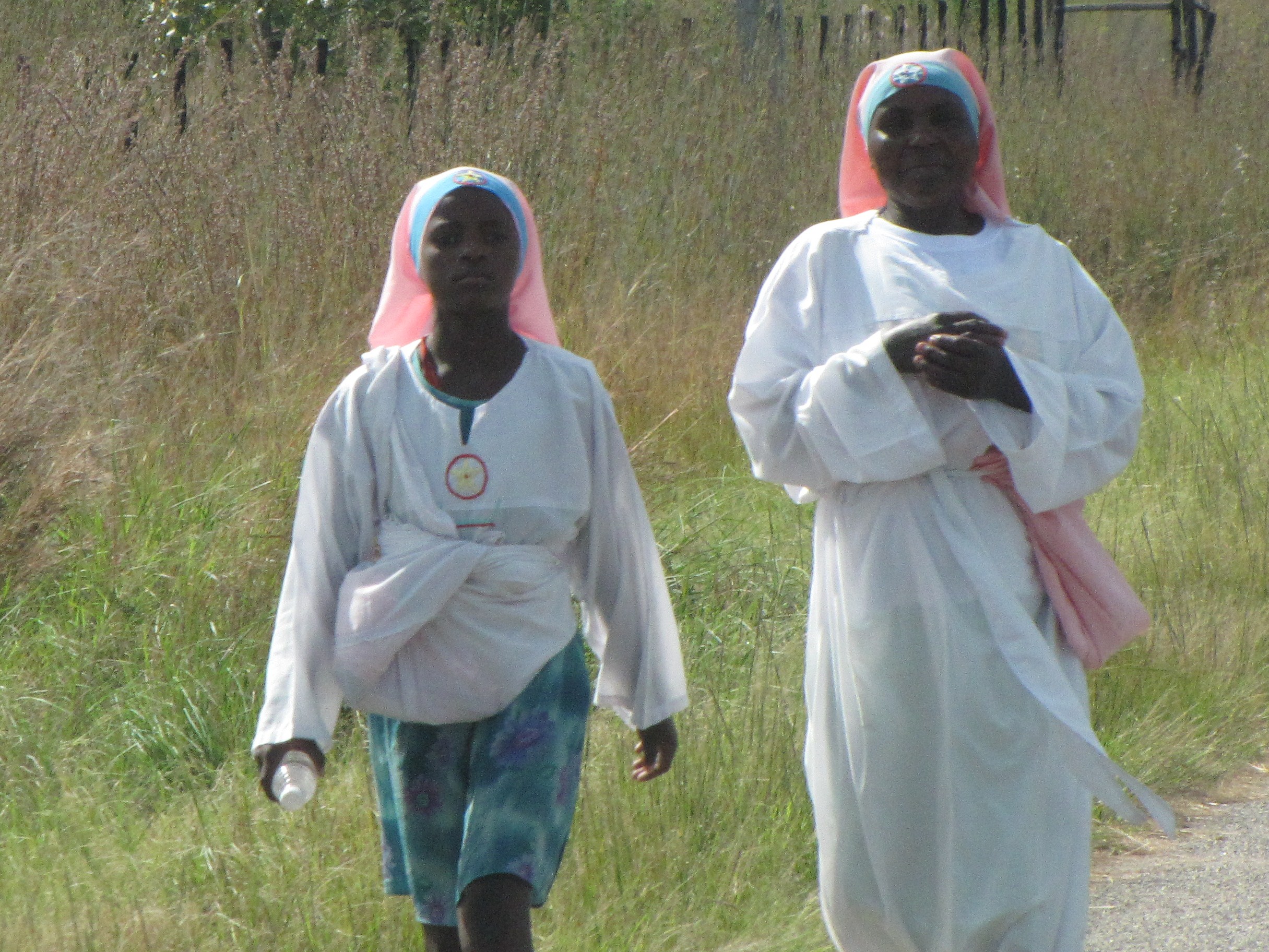
    I visited the continent of Africa for the first time in 1993, and like most Americans of my generation, I arrived with a mind filled with misconceptions. I’d grown up being bombarded by the distorted cinematic portrayals (most notably the Tarzan movies, which weren’t even filmed in Africa, but in Mexico), popular media focus on the continent’s problems, National Geographic magazine with its exotic animals and people, and a lack of content in the world history courses I’d taken up to that time. Africa, ‘the Dark Continent’, was terra incognita in my mind – a monolithic place of poverty and war. Even the so-called Africa Hands at the State Department where I worked at the time, tended to refer to ‘Africa’ as if it was somehow a single state rather than a diverse collection of cultures and people.

    My first African ‘home’ was Sierra Leone, where I lived for three years while I was assigned to the American Embassy in Freetown. The country was in the throes of a violent civil war and ruled by a military dictatorship. Despite these conditions, though, I quickly discovered that it was far from a total lost cause. In the first place, the country, as small as it was, was amazingly diverse. Sure, there was violence, hunger, disease, poverty, and corruption. But, there was also resilience, love, laughter, and a desire to live a better life. The terrain wasn’t the steaming jungles of the Tarzan films. There were mountains, plains, and forests. Driving through some of the villages in the northwest region of Sierra Leone reminded me of some of Georgia or Alabama’s back country roads.

    I’ve been an avid photographer since my teens, but I didn’t take my camera with me to Sierra Leone in 1993 – much to my regret. I would love to have been able to document my travels throughout the country. I got that chance decades later. In 2009, the State Department assigned me to Zimbabwe, another country in turmoil. There was no war, but disease, political violence, and economic instability affected most of the country’s population. I’d only been in southern Africa once before – I visited Johannesburg, South Africa in 1994 right after the end of apartheid – and only for a few days. So, I was unprepared for Zimbabwe. The briefings had led me to expect gun-wielding soldiers on every street corner and children with swollen bellies playing in sewage. The country had – and still has – its problems, but nothing like that. I found that you could walk the streets of Harare or Bulawayo and not even be aware of the political or human rights problems. They were still there, but existing alongside positive things as well – things that seldom found their way into the international media coverage of the country.

    I traveled the length and breadth of Zimbabwe during my three-year stay; always with my camera handy. I was determined to document the many faces of the country. Since other media were doing a good job of documenting the negative, though, I emphasized the other side of the coin. Smiling faces, fantastic landscapes, diverse wildlife – all showing Zimbabwe’s potential, if only its leadership would focus more on developing true economic security for the population. I’ve been a freelance writer and photographer for decades, and while I lived there, I did a number of articles on Zimbabwe’s tourism potential, but I wanted to do more. I wanted to show the world that Africa is not a ‘single’ place, but like the world’s other continents, a place of immense diversity. A place that has both good and bad, beauty and ugliness. I’ve done two photo-journals focusing on Zimbabwe: African Places: A Photographic Journey Through Zimbabwe and southern Africa, which I published in June 2012, a few months before I returned to the United States to retire from government service. My most recent, A Portrait of Africa, was published in January 2014, and while it includes photos from other areas (Senegal, Cameroon, South Africa, and Tanzania), as with the first book, the bulk of the photos were taken during my travels throughout Zimbabwe.

    It is my wish that those reading A Portrait of Africa, whether African or non-African, will come away with an enhanced appreciation of the diversity and potential of the continent that is the birthplace of humanity – that they will be able to see beyond the popular images to the reality that lies just beneath the skin. What I hope everyone reading this book will see is that there is still hope – hope for the African continent, hope for Zimbabwe, and hope for us all.

    IMG_0424

    This has been a submission by Charles Ray.
    You can connect with Charles via the following: http://charlesaray.blogspot.com, http://twitter.com/charlieray45, http://www.facebook.com/CharlieRay45.
    You too can become a Citizen Journalist by submitting your story here: Citizen Journalism by Living Zimbabwe
    The views expressed in the article are those of the author and not necessarily Living Zimbabwe.
  • The Frustration Of Applying For A Zimbabwean Passport From The UK

    The Frustration Of Applying For A Zimbabwean Passport From The UK

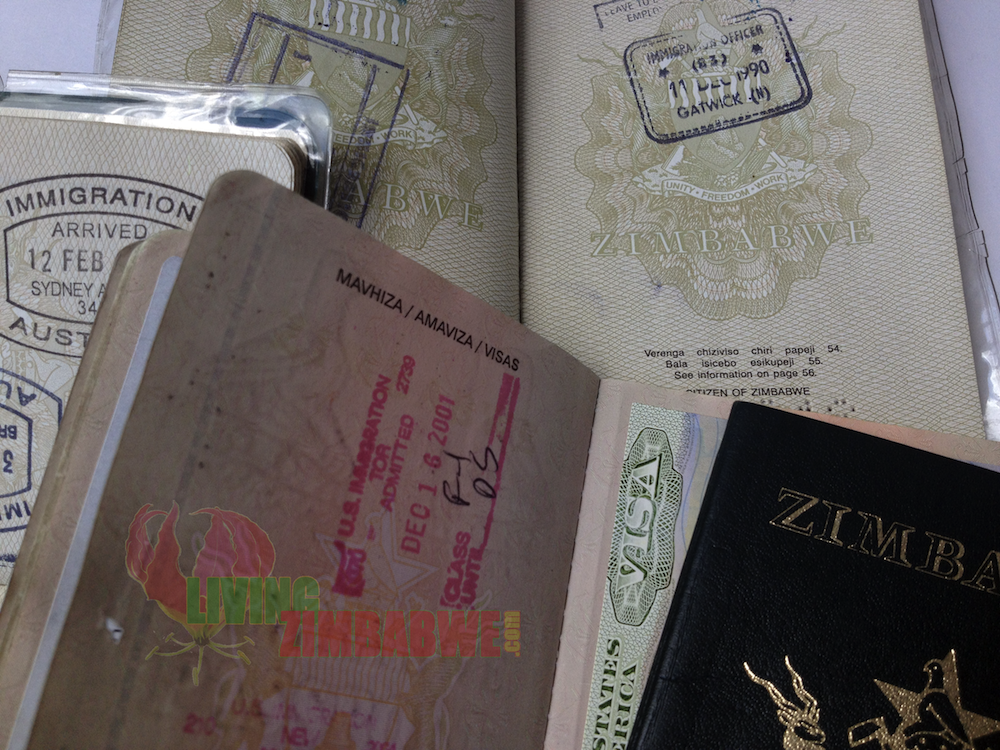
    I don’t get the Zimbabwean passport system! I am not usually one to comment on blogs but I am both dismayed and disgusted at the ridiculousness of the situation. I’m in the UK and I have lost my Zimbabwean passport, like most people on here. The consulate keep insisting I go back and get an ID card.

    Soooo let me get this right, I am expected to firstly pay for flights in excess of £1000, and let’s not forget accommodation as I have no links there so that will be whatever the daily changing rate is, not to mention food, water, and travel. God only knows how I am meant to get from A-B, and then the cost of both a new passport and the ID card and FINALLY fly back to England and hope and pray that border control will let me in because obviously my VISA won’t be stamped in my new passport! And even the Zim embassy cannot guarantee you will get back in they said it is a matter to take up with the Home Office Immigration (and we all know exactly how happy the current Government will be to lose a few immigrants).

    No, I am not playing the violin and I don’t want sympathy but I left Zimbabwe as a very young child I don’t know anyone there, and I cannot just ‘hey ho’ back to some unknown country for a little card and then face the possibility that the UK Home Office make it difficult for me to get back in.

    I have a little girl here and I cannot chance leaving her for who knows how long! I don’t really expect any advice from anyone here other than “go back” because truth be told that’s the only option we are given BUT I feel as a citizen I can vent (not that it will do me an ounce of good) but it is a stupid rule imposed by stupid people who really have not got the best interest of anyone other than themselves!

    We live in a time of economic crisis – who the heck can afford to make such an expensive trip plus all the costs? And what frustrates me further is having read other blogs some people have had their fingerprints done and passports issues in the UK so I think it’s a “help who we like” policy. The Consulate are unhelpful and when I called the man I spoke to blatantly gave me a false name. What a farce!

    I am seeking legal advice and Zimbabwe can keep its passport and absurd policies. I know there is another way round this because there always is another way and I just refuse to do it Zimbabwe’s way I would be happier to fork out £4000 into an immigration solicitors pocket and get my British passport than spend as little £1 on a country that clearly has no respect for her own people! I am sorry if that offends anyone but it’s the naked truth (in my eyes).

    Good luck to anyone else in a similar situation and I hope yours is a happier tale to tell of Zimbabwe and it’s frigged up system.

    This has been an anonymous submission by Frustrated Citizen.
    You too can become a Citizen Journalist by submitting your story here: Citizen Journalism by Living Zimbabwe
    The views expressed in the article are those of the author and not necessarily Living Zimbabwe.
    Zimbabwe-Passports-Diaspora

  • Widespread Human Rights Violations Threaten Elections in Zimbabwe

    FULL REPORT:

    PRESS STATEMENT

    With just weeks to go before a watershed election, a political atmosphere of intimidation and violence has taken hold in Zimbabwe. Rather than promoting an environment in which civic participation and political tolerance are encouraged, the government of Zimbabwe has engaged in a systematic crackdown on civil society and the human rights community, including arbitrary detention of activists and opposition supporters, and widespread violations against freedom of expression and access to information.

    These are the findings of a report released today by the Robert F. Kennedy Center for Justice and Human Rights (RFK Center) entitled, “A Promise in Peril: How Widespread Rights Violations Undermine Zimbabwe’s Elections.” The report comes one month before Zimbabwe’s July 31 election, and presents findings that were collected during an international delegation organized by the RFK Center in March 2013.

    “The routine intimidation, harassment, and arbitrary criminal prosecutions of human rights defenders, lawyers, and political activists in Zimbabwe threaten the rights of all citizens to participate freely in public affairs,” said Kerry Kennedy, President of the RFK Center. “With an election upcoming, the government must ensure an electoral environment that is consistent with international standards.”

    “These ongoing human rights violations set the stage for the type of violence and chaos that has marred past elections in Zimbabwe. State authorities have engaged in a pattern of suppression that specifically targets groups engaged in voter registration, education, and mobilization initiatives,” said Santiago A. Canton, Director of RFK Partners for Human Rights. “This behavior is unacceptable and represents clear breaches of domestic and international law.”

    In the report, the RFK Center urges the government of Zimbabwe—which is largely dominated by President Robert Mugabe and the Zimbabwe African National Union–Patriotic Front—to immediately cease the continued harassment, intimidation, and violence perpetrated against civic actors. The report also encourages the government to respect international legal conventions to which Zimbabwe is a party or state signatory, including the Universal Declaration of Human Rights, the International Covenant on Civil and Political Rights, the African Charter on Human and People’s Rights, and the Declaration of Principles of Freedom of Expression in Africa.

    This has been a submission by Jeffrey Smith.
    You can connect with Jeffrey Smith via the following:
    You too can become a Citizen Journalist by submitting your story here: Citizen Journalism by Living Zimbabwe
    The views expressed in the article are those of the author and not necessarily Living Zimbabwe.
  • My Late Father Would Vote Zanu (PF) Today

    My Late Father Would Vote Zanu (PF) Today

    “Kays” as they called him was son to a Gushungo who migrated from Serima and my gogo a Muturikwa whose parents possibly migrated from Mrehwa. He was born in 1945, across the river from Prime Minister’s home. Surprisingly that is as far as their similarities go because had he been alive, he would not vote for MDC-T today. This man who forever will be revered as a hero in my memory was disabled. It was not an inborn disability, but something happened to his right lower leg when he was young. Up to the day he died, he had not been able to discuss with me nor my siblings regards to what really happened. All I know is that it was a fire accident.

    Kays believed in the revolutionary movement’s focus on policies that improve lives of the common man. He would always urge Zanu (PF) to go back to roots to emphasise on such policies to lure lost votes. “It will be a walkover on these directionless boys” he argued with me on his deathbed at Parerinyatwa. He belonged to a generation who had wanted to participate in liberation struggle but failed because of various reasons. They mobilised students, recruits, provided clothes and other support. Such a class faced wrath of Smith regime accused of being lifeblood to the comrades and withholding information. These professionals played their part but never clamoured for recognition to date.

    Education

    After completing Standard 6 (Form 2) he trained as a teacher at Wadilove Mission (Marondera) in 1972 where he met my mother who was from Bumburwi. He stayed in the same profession till his end in 2009. Through correspondence he attained O levels , Grad CE and later BA Hons. As a primary school teacher working in rural areas, he knew that the only way societies can improve is through education. He worked hard through disability to send his children to get descent education. Free education policy of the 1990s produced a Zimbabwe which is rated to have above average literacy world over. Kays although an executive, believed that militants in ZIMTA led to the first teachers’ strike in 1990 and had no care for teachers or students welfare at all. Post 1990 period saw introduction of school fees and cases started appearing of children dropping out or being unable to write exams because of lack of funds. He always felt that IMF demands for government to slash social services bill (ESAP) was a way of West getting even with Mugabe.

    Health

    The fire accident deformed his right leg such that his toes turned towards the heel to form a round like foot developing into a very thin sheen up the leg. So to speak he stepped on the top of his foot. That leg became shorter. At times he used clutches until Jairos Jiri organised a special shoe for him. From Bata shops, he would buy a pair of size 11 but only use the left one. That special shoe could only be repaired but he could not buy a new one. Courtesy of Mugabe’s health policy, more disadvantaged people like him during years after independence could always be treated for free regardless of medical needs. UK has maintained a similar socialist health policy to date. The number of health clinics opened country wide, more medical professionals training, building of toilets in rural areas, access to clean water all pointed to a caring leader in Mugabe.

    The Land Question

    Just like many, he was frustrated that the Lancaster House Agreement put land redistribution on hold for 10 years. Worse still after that period, Mugabe was frustrated into being unable to fulfil pre-war time period promises to resettle masses from reserves as apportioned by Land Apportionment Act 1930. When farm invasions started in 2000, all Kays said was “Commercial Farmers’ Union have shot themselves in the foot.” CFU never thought farms could be taken away from them. White farmers believed in the Courts which continued to make decisions against land redistribution. To date land redistribution has continued and although chaotic, people’s lives have been changed.

    Legacy

    Zanu (PF) legacy is open to interpretation but Kays would always look beyond negatives. He believed that “honourable” is the best way regard Mugabe. A Politburo Member recently summarized Zanu (PF) legacy to me as “Land, Empowerment, Development creation, Sustained support for farmers and reform to mining sector” .Even after formation of GNU, the revolutionary party pulled indigenization policy which in theory seeks to put control of economy in the hands of locals. The mining sector has also been opened up to allow local ownership. I do not see MDC-T pulling out any of the landmark policies to convince voters. This is the reason why penetration to the rural areas has been sketchy for Harvest House arrogant overrated under-achievers.

    Vote Rigging

    Kays was appointed acting headmaster closer to his home in 1985 but by then he was already involved in running elections. He would later work as presiding officer in charge of polling centers Talk of Zanu (PF) vote rigging was doing rounds by 1990 elections. Edgar Tekere gave Mugabe a run for his cash and many expected a surprise. Results later indicated that “Two-Boy” Tekere actually lost dismally. I put it to him then about vote rigging and to the day he died, he maintained the answer he gave me 19 years before. He explained the system to me, how each candidate’s representatives verify boxes before they are sealed and sign to agree authenticity. The same happens when opening the boxes and counting the ballots. He believed that in the system run by Mudede, there is no way any rigging can happen. He reminded me that rigging could affect Mugabe as well and as such the system had to be water tight. I believed him and still can argue that it is possible Zanu (PF) has never rigged elections to this day.

    Enemy No. 1

    Landmark policies as he viewed them are a good enough weapon to win any elections. Zanu (PF) is presenting voters to MDCs on a platter, credit to enemy No1 -violence. There is no need for violence because in a “free and fair” conducted poll, Kays in his grave still argues that “Zvimba” can claim the gong. Use of force blinds folds people from looking at facts on the ground. By forcing people not to vote for other parties or for Zanu (PF), proponents of violence will be confessing to a weakness in policy. This frustrated Kays so much because he believed that Mugabe has over the years built a case to uplift generations in Zimbabwe. During 2008 elections people voted for anything other than Zanu (PF).They don’t even know their MPs’ names to date. This hatred is an offspring of violence. Kays was not sure if violence is official policy at Zanu (PF) but believed that strategists may as well accept that as much as countering MDCs, they have to plot against violence. It is a corroding the party from within and only Mugabe can stamp his foot on this. No matter how much people bleed, get houses burnt or bury the dead, days are gone that force will bring in votes.

    Die Hard

    By mid-2009 aged 64 he had not been admitted to hospital in 50 years but complained of shortness of breath, later turned out to be Pulmonary Embolism. His veins and arteries were developing blood clots caused by a violent form of Pancreatic Cancer. The deformed leg soon developed Gangrene. Six weeks later Vascular Surgeons in Harare recommended amputation of the affected leg but ended up cutting off both legs and the right arm. Gangrene had spread over all those parts. He never woke up from the operating table. 10 days before his death I implied to him that shortages in hospital supplies required for his treatment were as a result of his irresponsible vote for Zanu (PF). Even though knowing that with Stage 4 Cancer, his chances of survival were below 20%, at a moment when walls of his heart were weakening due to excessive use of Morphine, he reassured me that Mugabe had not yet finished the job he started. He refused to condemn the beloved party he regarded as saviour of the masses. He argued that GNU would allow Mugabe to focus on people again.

    True to that word, I think Mugabe is back. Just open your eyes to what Kays called “Landmark Policies” and you can witness people’s lives changing.

    R.I.P my idol because your institution par excellence may still be in the game.

    This has been a submission by kelvin Mupungu.
    You can connect with kelvin Mupungu via the following:  http://www.twitter.com/mtkelvin
    You too can become a Citizen Journalist by submitting your story here: Citizen Journalism by Living Zimbabwe
    The views expressed in the article are those of the author and not necessarily Living Zimbabwe.

  • Justice Is Blind

    Justice Is Blind

    My mind goes back to the year Zimbabweans last took it to the ballots, 2008. Arguably, the most storied year “my” people have had to endure.This writer’s idea of life hinges on two elements, enjoy or endure. After the first bout which saw a clear turn on the political tide, since independence, however, the result was said to be indecisive. A re-run was calendered 27 days after the last hour of the polls, and all hell broke loose.

    I remember remembering my history lessons on the French Revolution; Danton, Marat and Robespiere unleashed a “reign of terror” on their political opponents in 1793-1794, the sympathisers of the Bourbon monarch. I had thought these days were long gone or archived as “bygones” as they brought nothing but misery on the hoi polloi. Similarly, and sadly, 8 years after we graced the second millenium I was awed to see such primitive bickering for electorate’s favours in my own backyard-Zimbabwe.

    Innocent and defenceless citizens were massacred by their own neighbours or kinfolk if they were somehow alleged to be affiliated to the MDC, the opposition, which had proved to be a tougher contender to the revolutionary and geriatric incumbent.I expected the so-called “long arm of the law” to take its stand and bring those who had orcheastrated the “injustices” to book, but everyone acted as nothing had happened. Thats when I start questioning the justice system in my motherland, the place I call home.

    The debacle which ensured saw uncalculated risks being taken, compromises agreed to to form a government of national unity which ridiculously epitomised the fact that the biggest losers in a plebiscite is the electorate. As if it wasn’t enough Zimbabwe saw obsolete ministries like the one led by 3 ministers put in place, the Organ for National Healing and Reconciliation. I seriously thought my country’s leaders needed shots of whisky each for this madness. Expecting a mere sorry from a government official for my cattle stolen, body parts dismembered, kinfolks murdered, and property vandalised is not only ludicrous, but insane.

    As the shona say, “kugona ngozi kuiripa”. This writer thinks pertrators and orchestrators of this unjustifiable and primitive system which forces political coherence must pay. Please give democracy and justice a chance because at the moment it is blind.

    This has been a submission by James Chiwoko.
    You too can become a Citizen Journalist by submitting your story here: Citizen Journalism by Living Zimbabwe
    The views expressed in the article are those of the author and not necessarily Living Zimbabwe.
  • Four Young Zimbabweans Up For Prestigious International Honours

    Four Young Zimbabweans Up For Prestigious International Honours

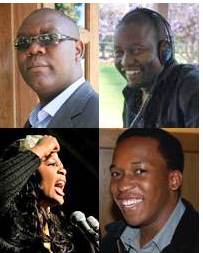
    Four young Zimbabweans from different facets of life are up for a prestigious international honour under the 2012 Junior Chamber International (JCI) Ten Outstanding Young Persons of the World Program (TOYP). Tendai Wenyika, a political activist and Deputy President of the Pan Africa Youth Organisation, humanitarian and Harvard student Dalumuzi Mhlanga, Journalist Brian Hungwe and Businessman-cum-musician Tawanda Mutyebere are amongst the final 20 contestants in the global program, which identifies and honours ten young people from across the globe in various categories.

    Announcing the achievement, 2012 JCI Zimbabwe National President Mr Spicer Munjeri, whose organisation identified the honourees at national level called upon the general public to support the young achievers through on line voting, which will partly contribute to the selection of the final 10.

    “In celebrating the thirtieth anniversary of the JCI TOYP program which started in 1983, JCI has this year opened up an opportunity for the general public to contribute to the selection of the final ten by voting through Facebook. As a nation, lets show support for these young people creating positive change by voting through this platform”, said Munjeri.

    Munjeri added that the to have 4 Zimbabweans amongst the 20 finalists is a huge vote of approval for the impressive work young Zimbabweans are doing, and deserved national support.

    “Their individual achievements deserve the recognition they have received”, he said

    Wenyika, who was nominated in the Political/Government of Legal Affairs Category, became the first female student to be elected President of a Students Representative Committee (SRC) at a Zimbabwean University. She went on to serve on the Zimbabwe Youth Council Board before getting involved with the Pan African Youth Union (PYU) where she oversees PYU programs across the entire South African region, fighting for active participation by young people in their countries. She has also taken part in several grassroots peace missions in many African countries and is an inspiration to young female politicians in the country and region.

    Mutyebere, nominated for Personal Improvement and/or Accomplishment, rose from being a humble baker at the age of 23, to become one of the country’s most recognised entrepreneurs, at the helm of the Slice fast food outlets that include the hugely popular Chicken Slice brand. Mutyebere’s business’ community involvement sets a strong example for both employees and business leaders that community action provides a sense of self-worth and unity within a corporate culture.

    Mhlanga was recognised for mobilizing youth to be socially responsible citizens who address community needs through leadership, internships and service through an organisation he founded in Bulawayo, Lead Us Today. While studying in Swaziland, Mhlanga had also formed Career Support Initiative which helped young people make informed early career choices through holding Career Fares.

    Brian Hungwe’s work as a Journalist has seen him travel around war-torn zones in Africa, covering instances of human rights violations, violence and thefts despite incurring backlash from African authorities and risking his life. He carries an inspiring commitment to his work, going beyond his professional boundaries and using values and morals to direct his path.

    Both Hungwe and Mhlanga were nominated in the Humanitarian and/Voluntary Leadership category.

    The JCI TOYP is an annual international program that selects 10 outstanding young people under 40 who live the JCI Mission in extraordinary ways. It highlights the accomplishments of these young active citizens in a variety of fields, inspiring young people across the world to be better and realize our full potential as active citizens. The honourees motivate their peers to seek excellence and serve others. Their stories of discovery, determination and ingenuity inspire young people to be better leaders and create better societies.

    Previous winners in the competition from Zimbabwe include Charlene Hewat (Environment Africa), Strive Masiyiwa (Econet), Advocate Sabelo Sibanda (School of African Awareness) and Betty Hazviperi Makoni (Girl Child Network).

    JCI is a membership-based non-profit organization of 200,000 young people ages 18 to 40 in 5,000 communities and more than 100 countries around the world. Its members share the belief that in order to create lasting positive change, they must improve themselves and the world around us. They seek targeted solutions to the unique problems in our communities to build a better world, creating global impact.

    Top20Honourees

    This has been a submission by Lloyd Ngwenya. You can connect with Lloyd Ngwenya via the following: , , http://www.facebook.com/xoduster. You too can become a Citizen Journalist by submitting your story here: Citizen Journalism by Living Zimbabwe.

  • Meet The Miss Black Africa UK 2012 Semi-Finalist: Elizabeth Mbofana

    Meet The Miss Black Africa UK 2012 Semi-Finalist: Elizabeth Mbofana

    My name is Elizabeth Mbofana, I was born in Zimbabwe. At the age of 4 I moved to the UK and have lived here all my life. I am 18 years of age and have joined a Beauty Pageant called Miss Black Africa, this pageant is about finding a lady that is committed to taking the role of being an ambassador for young Africans in the UK and also helping less privileged children. I would like to become Miss Black Africa as I have a passion for children and I am committed and willing to take that role of helping other children who are in need.

    I entered Miss Black Africa back in May in order to make a change to the less privileged and become a role model to our youth, we started as 643 girls and got down to 43 which made the semi-finals, in order to get in to the finals I need the public’s vote,

    For all the Zimbabweans out there I need your support!!

    How to Vote :

    Please Click on Link below then click on stars under my name Elizabeth. All Things are Possible with your Vote. Thank you in Advance, remember you can re-vote as many times as you like

    This has been a submission by Elizabeth Mbofana.
    You can connect with Elizabeth Mbofana via the following:
    You too can become a Citizen Journalist by submitting your story here: Citizen Journalism by Living Zimbabwe.

  • Zim Names (Part 3)

    Zim Names (Part 3)

    Caroline Hooper-Box, writing a few years ago for the Sunday Independent, tells the movingly tragic story of the tribulations of an immigrant painter at the hands of South African police and Home Affairs officials. No money for guessing which country the man, named Between Siziba, hails from. A decade and a half ago, the Woolworths Food Market in Sea Point, Cape Town had in its employ (in its meat section) a gentle, hardworking and friendly man, unfortunately now late, from up north. His name? Delicious Mafanya.

    Malawians too have been at it. As soon as the cellphone appeared there, talking names followed : Selefone Banda, Eyatime Sakala, Richaji Phiri, Netweki Mwale, Simikadi Mbewe, Henisfree Ngoma are some of the names reported in a widely distributed e-mail.

    But why are Zimbabweans so uniquely fond of these names? To be honest my queries drew blanks. A friend suggested that an African name must say something. Many, if not all, African nations have names that “speak”. In fact a typical African name reflects the hopes, wishes, fears, feelings and prevailing circumstances of the parents, family or community of the newborn. My own grandfather, Njini, was so named because he was born in 1897 when the first railway engine steamed into Matabeleland. I used to think my late great uncle Fleza’s name was a distortion of the name Frazer until my grandmother explained to me that he was born in 1918 in the height of the great influenza epidemic that swept the world that year.

    In Africa, speaking names are normally in the indigenous and first language of the family. They are common in Zimbabwe too. Rudo, Tererayi, Simbarashe, Kudakwashe and so on among the Shona. Thulani, Nkululeko, Thokozani among the Ndebele. Nothing different from any other African peoples. But what should we make of Zimbabweans’ penchant for direct translation to English?

    Is it the famed love for education? The love for English in particular. And loved it is. I recall the speaking of indigenous languages being a punishable offence at Mpumelelo, my township primary school in Bulawayo. Justification for a two hour slog in the school vegetable garden was provided by no more than a two word entry in a prefect’s notebook- “Ndebele speaking”!

    It is as if parents are competing to show off their knowledge of the Queen’s language. Why call the little girl Ntokozo when you know how to say Happiness? or Sicino when Last is only an English word away? Why Babusi, Baphathi or Vatongi when Rulers is there for the taking?? There is no problem really. Well , not until the love for English gallops a little too far ahead of the knowledge of it. And Thulani ends up in someone’s birth certificate as “Keepquiet” or even “Shutup”!!

    Babusi Sibanda. Mobile : +27721969188 E-mail: kwizeen@gmail.com
    Zimbabwean born, South African, freelance writer and columnist .
    Has had numerous articles published in a variety of publications in the last 25 years including The Chronicle (Bulawayo), The Sunday News (Bulawayo), Moto, Parade, The Cape Times, Food & Home, Rootz, Femina, African Decisions, Mercedes , Mail & Guardian and others.

    Member of SAFREA (Southern African Freelancers Association). Visit us at www.safrea.co.za

    This has been a submission by Babusi Sibanda.
    You can connect with Babusi Sibanda via the following: http://www.safrea.co.za, , .
    You too can become a Citizen Journalist by submitting your story here: Citizen Journalism by Living Zimbabwe.