Tag: Zanu PF

  • The Devil’s Advocate: What Price for Morality?

    The Devil’s Advocate: What Price for Morality?

    This piece was submitted on 15 December 2019 and was not published at the time due to a system error. Read it, leave a comment and share it with your tribe. The Living Zimbabwe Team.

    WR 29: THE DEVILS ADVOCATE: WHAT PRICE FOR MORALITY?

    Warmest greetings to you all despite the turbulent weather. In a week where we find ourselves in the midst of a fractious election, a particular topic has captured the imagination of a number of us, the ethics of a criminal defense attorney.

    Senior MDC member and [crucially] Masvingo Mayor Collen Maboke is representing Zanu PF youth accused of violently locking a Bikita engineer out of his office recently. The same Maboke who was ordered by President Chamisa to step down as the mayor of Masvingo on allegations that he had defied the party position in which he stood against MDC Alliance preferred candidate Godfrey Kurauone during the mayoral elections.

    Maboke was also accused of making a pact with Zanu PF councillors in the elections that saw the ruling party’s Wellington Mahwende coming in as a deputy mayor [The two have since buried the hatchet and Chamisa has since given Maboke the green light to take up his office at the Civic Centre].
    ZANU-PF has chided MDC politicians who are lawyers for taking up cases of ruling party officials accused of corruption.

    Zanu-PF political commissar Victor Matemadanda expressed concern over the development as it comes at a time when the Zimbabwe Anti-Corruption Commission (Zacc) recently arrested Tourism Minister Prisca Mupfumira over the criminal abuse office.

    “At the moment, every person who is accused of being corrupt in Zanu-PF is being represented by an MDC lawyer, not your ordinary lawyers, some who are MPs and one wonders what moral ground they have when they talk about corruption.’’

    “Are they really fighting corruption, or they just fight for money,” Matemadanda said.

    Zimbabweans have also expressed their concern over the representation of corrupt Zanu-PF officials by the opposition.

    Several members of the MDC, who are lawyers, are representing under-fire Zanu-PF officials – from the party’s vice national chairperson Job Sikhala, who has been retained as Walter Mzembi’s lead counsel, vice president Welshman Ncube who is representing former VP Phelekezela Mphoko. Mphoko is now suing Ncube for allegedly “neglecting” to transfer more than US$1.4m (R20.7m), part of an amount awarded to Mphoko and his son Siqokoqela after a protracted ownership battle for retailer Choppies Enterprises Ltd., and Tendai Biti who at one point represented former Reserve Bank governor Gideon Gono.

    Now, there is controversy about whether lawyers aligned to the MDC – which is a proponent of punishment for alleged Zanu-PF thieves – can mount a defence as to why the same alleged thieves should not go to jail.

    CASE FOR THE DEFENCE

    Defense lawyers are ethically bound to zealously represent all clients, those whom they think will be justly found guilty as well as those whom they think are factually innocent. A vigorous defence is necessary to protect the innocent and to ensure that judges and citizens—and not the police—have the ultimate power to decide who is guilty of a crime.

    A defendant may have done the act in question, but the client may have a valid defence that would exonerate him. For these reasons, among others, defence lawyers often do not ask their clients if they committed the crime. Instead, the lawyer uses the facts to put on the best defence possible and leaves the question of guilt to the judge or jury.

    The things you have to realize are (1) A person is innocent until proven guilty (usually beyond a reasonable doubt), (2) the government has unlimited resources at its disposal to prove a case, (3) prosecutors, judges, juries are all human beings, and not infallible and (4) there is a moral obligation to uphold the rights of all, especially the unpopular.

    The job of a lawyer is to ensure the government, from the arresting officer to the prosecutor, follow the rules that govern the criminal justice system. These rules are to protect the citizens from overreaching by the police and prosecutors. It’s a check against government power.

    “Whether the client is in fact guilty or not” is a common theme in anti-justice system arguments. First, your client is not guilty until proven otherwise. Second, just because someone thinks you’re guilty does not make them guilty, nor does it make them less deserving of their civil rights.

    You might think that shady-looking fellow “looks guilty” and fortunately, that’s not a reason to incarcerate someone. People can be mistaken, they can be wrong, they can have it “in” for your client, they can make errors along the way or they can be so blinded by vengeance, that they will want to punish a likely culprit, even if it’s not the correct person. As the accused’s lawyer, you have a moral obligation, both to your client and to the justice system, to ensure that none of that happens.

    ‘’It is the duty of a lawyer to accept any briefs in the Court in which he professes to practice provided the proper professional fee is offered unless there are special circumstances which justify his refusal.”
    ” A legal practitioner is obliged to accept the brief from the client….(he) is not only bound to accept the brief, he should put his best in discharging his responsibilities towards the cause. The rationale behind this rule is that legal practitioners should not pick and choose briefs they should handle in court. As officers of the court, they are not at liberty to select the cases to appear in since the primary duty of a legal practitioner appearing in a case in court is to assist the court in arriving at a just decision.

    The fact that a case is unpopular or that a client has a very bad criminal record or public record or that the legal practitioner believes that the accused person is guilty, may not justify his refusal to accept the client’s case. (This) …cab rank rule is mostly applied in criminal cases to prevent accused persons from being denied legal representation by lawyers owing to their bad record… “

    Below is an argument presented by my lecturer when l asked him this thorny question:

    ‘’Say you’re an A&E doctor. Into the A&E one night is wheeled a gang member who has just been shot in a gunfight and is bleeding out. The gang member himself is a bad man, and you hear he shot an innocent person in the gunfight himself. You may feel, morally, that he deserves punishment, deserves the gunshot, maybe even deserves to die.

    Do you let him die?

    Not if you’re an ethical doctor. You do your absolute bloody best to save the no-good’s life, because that’s your job. Judging him is up to the courts and to God. If you let him bleed out, no matter how bad he is, you have failed him, you’ve cheated him, and you’ve cheated yourself. You’ve even cheated the courts, because it was their right, not yours, to decide his punishment.’’

    There’s a reason that Maimonides’ Oath says, “May I never see in the patient anything but a fellow creature in pain.”

    Lawyers are the same way. We don’t have to like our clients. We can morally disapprove of them. We can even send them to another lawyer if our dislike of them is so intense that we can’t protect their interests adequately. But so long as we represent them, we do our absolute best, because that’s our moral obligation, just like the doctor with the gangster.

    Everyone deserves a fair hearing, even people accused of the most heinous crimes, and whether or not they actually committed those crimes. Even if they did commit them. So the ethics of defence lawyers, if you want, are the defence of liberty, of everybody’s right to due process, equal protection, and other technicalities, namely, the fundamental law of the land and the rules for a fair hearing involved in the rules of criminal procedure, evidence and the like.

    MORAL ARGUMENT

    For those in private litigation practice, no lawyer has to take the case of any client if they do not wish to. If the lawyer doesn’t believe in the client’s case, they shouldn’t take it on — in fact, doing so might run them at risk of violating one or more of our professions Rules of Professional Conduct, since it’s hard to provide someone with the best representation if you honestly believe them to be in the wrong in the matter.

    Disclosure of interest

    When lawyers are consulted about matters in which they have a personal interest, they must explain that interest to the client. This will let the client decide whether or not they want the lawyer to continue working for them.

    If the personal interest is significant and a lawyer’s advice could be affected by it, the solicitor must decline to work for the client and advise them to look for another solicitor.
    I would argue that corruption, embezzlement, murder, terrorism and wholesale violation of human rights, is of significant personal interest to all democrats in the MDC and in particular its leadership.

    Conflict of interest

    Equally, a lawyer cannot work for a client when there is a conflict between the interest of the client and the lawyer. This also applies to other organisations that lawyers work for. Where there is a conflict of interest, lawyers must inform all of the clients involved. Even where there is only a possible conflict of interest, lawyers should be very careful.

    There is an obvious and powerful argument that unjust advocacy is morally wrong: as a general rule, one should not knowingly pursue injustice.

    The ethical dilemmas facing a lawyer with a guilty client appear frequently in popular drama, where the ethical resolution is often supposed to be for the lawyer to betray his client by intentionally sabotaging the case.

    I propose a less extreme means of avoiding contributing to injustice: The lawyer should inform his client up front that he will refuse to advocate for a position that he, the lawyer, finds to be unjust. If the client wishes to retain the lawyer’s services after being informed of this condition, the lawyer then does no wrong by following through on the stated condition and indeed would do wrong by failing to follow through.

    Equating the bad acts of the accused with the lawyer representing them is a natural human impulse, especially when the crimes alleged are heinous and the defendants are unpopular.

    While we respect that every accused person has the right to legal representation of their choice, I would like us to be aware that people like Walter Mzembi are accused of corruption and it was Deputy Vice Chairperson Sikhala who took up the case.

    We once had Gono being a client of Vice President Biti and also of late Professor Ncube taking up Mphoko’s battles with the government.

    The masses out there are not so sophisticated that they see the difference between Biti the lawyer and Biti the politician. To them, they are seeing a top opposition leader defending a man accused of corruption, accused of murdering and maiming their relatives.

    The same people who you purport to fight as part of a system that has ruined their lives decimated their livelihoods and caused unimaginable suffering.

    The principle that one is innocent till proven guilty does not exist in the court of public opinion.”

    Have a wonderful weekend.

    By Tim Mutsekwa: Political Science and International Relations[University of Greenwich]
    Secretary for Party Business & Investments [MDC UK & Ireland]
    Twitter: @tsumekwa
    This has been a submission by Tim Mutsekwa.
    I am a honours graduate in Political Science and International Relations from the University of Greenwich[UK].l write a weekly piece called the WR [ Weekend Read] ,which is found on the MDC Southend Blog, as ”Weekend Read With Tim”, details l have supplied below. lt is also published on all relevant Whatsapp platforms and on the MDC London Facebook pages.l have been published in the online publication Nehanda Radio. link l provide below:
    https://nehandaradio.com/2019/11/28/tim-mutsekwa-mnangagwas-repression-a-case-for-a-peoples-revolt/ I am also the Secretary for Party Business and Investments [UK & Ireland] for the MDC.

    The views expressed in the article are those of the author and not necessarily Living Zimbabwe.

  • How some titles have lost meaning in Zimbabwe

    How some titles have lost meaning in Zimbabwe

    Zimbabweans regularly fall into a frenzy for titles (tiltle-phoria) where everyone within the upper echelons of power wants to put that title either as a suffix or prefix to their name. In the end everyone becomes an entrepreneur, farmer or quite recently the trending doctor or prophet.

    Here are several titles that has been overused and abused in Zimbabwe that they have almost lost meaning altogether.

    1. Prophet

    The ‘bloodshed’ profiters have made their names by mesmerising their followers with tricks. At one point, they refereed to themselves as pastors before elevating themselves to apostles. As their arrogance grew, they anointed themselves as bishops before they found another title: prophet. Nowadays they stand at street corners uttering words they claim to be prophetic. They are yet to contribute solutions to Zimbabwe’s challenges but enjoy scaring people with their ‘bloodshed’ prophecies.

    2. Entrepreneur

    With the economy in a comatose condition, and slipping back to the horrendous 2008 levels, people have been jolted into seeking other money making ventures to complement earnings. Thanks to ZimASSET, almost everyone is selling something. Everyone has become a hustler offering products/services that almost everyone is else selling. The entrepreneur has become but the airtime vendor (a direct casualty of the economic meltdown) who is struggling to put food on the table. Propagandists and spin-doctors seeking to justify ZimASSET have abused the word and distorted its meaning. In 2008 everyone was a billionaire but with little to show for it, in 2014 everyone is an ‘entrepreneur’ but with little to show for it.

    3. New farmer

    It is now almost 14 years after ‘land distribution’. At most, some of the resettled farmers are over 10 years on their plots yet they are still referred to as new. Although they feel and look new, these farmers are not new at all. A president who has been at the helm for ten years cannot be referred to as a new president. The ‘new’ farmer Waits for the beginning of the rainy season to descend on his plot accompanied by at most two labourers equipped with hoes, a few sacks of fertilizers and nothing more. The farm is more of a summer vacation for the dude to escape from the wife and family.

    4. Doctor

    Whether medical or academic honorary, the title has lost its meaning. The 80’s frenzy when everyone scrambled to be recognised as fundi seems to have returned. This time no longer do people have to study to attain the degree. Now it is about money and power. The title ‘Doctor’ is now about prestige rather than to contribute towards social good. Unsurprisingly, the list of PhD holders in government and public offices keeps rising but the list of solutions to the nation’s crisis keeps dwindling.

    5. Comrade

    Comrade is Portuguese friend but the title has been ‘reserved’ for and to mean only veterans of the liberation struggle. In that way, it has been used to alienate the rest of the society. However, there is a new crop of comrades (Young Turks) who have managed to smuggle themselves into the system with no other intention but to steal and plunder.

    The new “comrades” are but looters and opportunists have outwitted the old guard, sliding through the backdoor to get a chance to bite the national cake that has now become a preserve of the few. In the end, the comradeship that existed during the struggle has since been lost and the true comrades who carried the struggle have been forgotten and replaced by elite (black Smith regime).

    Its really a circus when one begins to be addressed as “doctor-comrade-amai” so and so or when they referred to as “doctor-prophet.”

    I therefore call upon those with the might to return to sanity and restore the dignity especially of our academic titles.

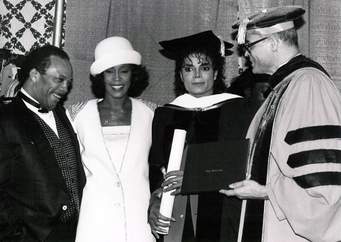
    Even Michael Jackson had a doctorate

    This has been a submission by Ittai Bryan.
    You can connect with Ittai Bryan via the following: http://ibmatteu.blogspot.com, http://twitter.com/ibmatteu, http://facebook.com/ibmatteu.
    You too can become a Citizen Journalist by submitting your story here: Citizen Journalism by Living Zimbabwe
    The views expressed in the article are those of the author and not necessarily Living Zimbabwe.

  • Government and the Indigenous Church battling for control

    Government and the Indigenous Church battling for control

    Government vs. mapostori: the battle for followers

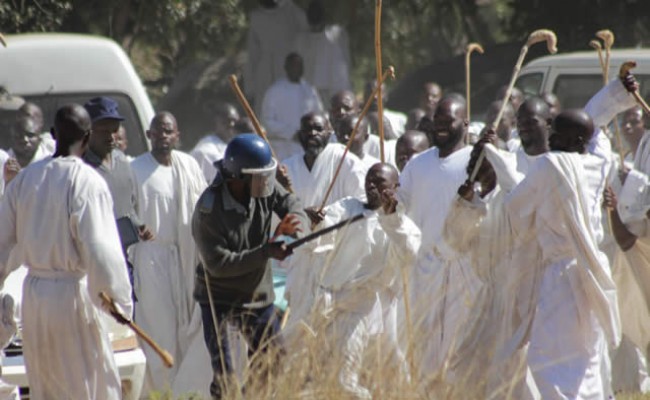
    The news that a sect of the white garment churches brutalised riot police officers, ZBC journalists and a ZANU PF ordained bishop of the mapostori has captivated many. What has caught the people’s attention is not the mapostori’s blatant disrespect for media personnel or law enforcement agents. Rather it is the way the men and women in white garments stood up to authority. People are marvelling at their courage and speculators have been quick to conclude that the white garments have become the new regalia for the opposition movement.

    Government to blame

    For years, the ZANU PF government has sided with mapostori overlooking their wrongs and praising them as indigenous churches. Despite the sects’ record of abusing women and children and their anti-education doctrine, government has supported them all the way. The sects enjoyed unfettered attention and airplay on radio and always had reserved seats at all national events like Heroes’ Day. The rest of the churches were seen as pursuing a regime change agenda.

    The battle for control

    For years, government has been desperately trying to assert its authority over the church. Their desperation was highlighted when intelligence agents carried out a covert mission to expose and disgrace the then Archbishop of Bulawayo Archdiocese, Pius Ncube. The plot was to silence him as Ncube was a fierce critic of government’s abuse of power and was vocal about Gukurahundi.

    Before the dust settled, government through disgraced ex-bishop Nolbert Kunonga grabbed the reigns of the Anglican Church using homosexuality as an excuse. For years, Anglicans were persecuted and banned from their churches and denied access to their Bernard Mizeki shrine until government realised the futility of its actions.

    Orthodox Church or state controlled doctrine

    Upon realising, they could not win the battle to control the western churches, government turned to the locals: mapostori. What government is seeking is to impose its bigoted political views as the central dogma of the sects. By sowing ideologies that border on racism and promote distrust of foreigners, they seek to establish a church that follows a toxic anti-Western doctrine. They are trying to create a church on the lines of the Russian Orthodox that derives power from government and legitimises government policies.

    Radicalisation and religious extremism

    The way the mapostori reacted to the police paints a gloomy picture of the future of religion in Zimbabwe. When one takes into cognisance, the fact that mapostori were complicit in the 2008 election violence that left more than 500 dead, it is not outlandish to believe that they are turning into religious extremists. Their views on women, children and western education and health are no different from the views of Nigeria’s Boko Haram and Somalia’s Al Shabaab. As they wake up to the reality that they have a significant population behind them, there is a possibility these sects will seek to expand their power and influence beyond their current boundaries. It is no surprise if decades from now Zimbabwe will be in Nigeria’s position facing religious extremists.

    The misguided ZANU PF thugs

    They are referred to as youths but I see nothing in them to celebrate as a youth. They are social misfits who offer themselves to be used as political pawns all for a sip of opaque beer ‘Chibuku or Ingwebu.’ In idiotic fashion, these vigilantes took to the streets in defence of the riot police. Its mind boggling that sane people will seek to defend the police from the people. What are they getting from the police? Whom are they representing: the people or the junta? Instead of demonstrating against corruption, high unemployment, collapsing education and health delivery systems, the brain dead saw it fit to waste their energy toy toying in solidarity with the police.

    All have sinned and none is pure

    The mapostori just like the spiritualists of this generation are taking advantage of people in desperation. They follow skewed doctrines that degrade women and children and glorify racism. Their views on western education and health are retrogressive. The mapostori are radicalising into religious extremists. However, this does not give the police or government the right to control the followers. The police are not a law unto themselves. They are mere enforcers and they must stick to that. As for the ZANU PF thugs, they stay out of the feud and stop escalating the situation. They are better if they go to Ngungunyana building and apply for farms so they can do something productive with their lives.

    Let the Human Rights Commission do the job. Give the commission the adequate resources and necessary legislative backing to investigate and prosecute human rights violators in a non-partisan manner.

    This has been a submission by Ittai Bryan.
    You can connect with Ittai via the following: http://ibmatteu.blogspot.com, http://twitter.com/ibmatteu, http://fb.com/ibmatteu.
    You too can become a Citizen Journalist by submitting your story here: Citizen Journalism by Living Zimbabwe
    The views expressed in the article are those of the author and not necessarily Living Zimbabwe.

  • Zimbabwe’s Stolen Election Conspiracy Theory Involving China, Nikuv, The CIA & Baba Jukwa

    Zimbabwe’s Stolen Election Conspiracy Theory Involving China, Nikuv, The CIA & Baba Jukwa

    Below is something akin to a conspiracy theory that we received. This content is doing the rounds on WhatsApp and social media. The theory gives a break down of how ZANU PF managed to defeat MDC in the elections and how the ruling party may have gotten themselves into a quandary. However true or false it is, it makes for some interesting and entertaining reading.

    (Note: We have decided to not edit it and rather post it in the form that we received it in)

    Let us know your thoughts by leaving a comment below:

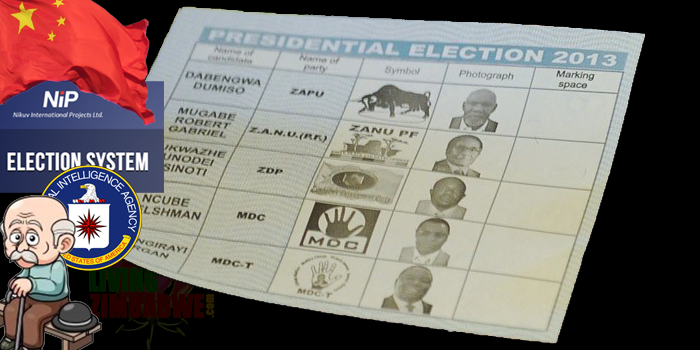
    this is hw Mdc ws beaten, Zanu created baba jukwa to hypnotize th nation,to divert
    pple frm where ey r going to steal th election, toking abt pens and intimidation,
    that’s not where th election ws stolen, not frm busing pple, it ws a diversion, th
    election ws stolen in th making of th BALLOT PAPER, two types of ballot papers
    were made, one frm China wc ws houzd at Morris Depot and th other one in Zim,
    ts one frm China hd Maths in it, if u look at closely facing th sun, it had a big X water mark, dat X ws linking RGM’ s head to MRT’s box and vice versa, dat water
    mark ws an electric device, if u make yo X in MRT’s box it links wth RGM’s head
    and appears in front of him after 4hours,that device deactivates afta 24hrs if th
    paper is used, hw u cn verify ts, there are Xs already in front of RGM s head jus
    waiting activation, they r strait like ey were drawn using a ruler. 4million of these
    papers were done that Maths while th 2million ws not tempered wth, so th distribution of these ballot papers ws strategic, Byo ws not tempered with as it ws
    going to b evn more suspicious, Baba Jukwa ws meant to divert yo attention to
    concentrate on none important issues. On Tuesday night RGM came out on TV
    speaking confidently dat thoz dat luz must surrender to thoz dat hv won, he also
    said if Hre votes for MRT he will hv a heart attack as he knew dat all things hv
    been done to make him win in Hre, 13million dollars was spent on ts project, 5guys frm Nikuv were behind ts project and were escorted to th airport on Wed b4
    th elections were over as they hd accomplished their mission From inside Nikuv
    source
    ZANU was fooled by Nikuv ane after rigging the elections Nikuv took all the evidence when they left Zim and handed it to their subsidiary company in SA to give to Mdc.Mugabe is in quandary,walked out of meeting angry with how he was tricked.Nikuv was working wth CIA to expose Mugabe ‘s rigging ways.Now he is astonished.The World knows,SADC knows hence 14 members have refused to indose t elections as fair.Next week is going t be interesting.ZANU’s plann was to rigg a certain section but they over did it to the extend tat they are shocked as well.Pray pray pray pray,the truth will be out soon.God is on Zimbabwe side.Mugabe is a lame President even if he is sworn in.

  • Technical Rigging By ZANU PF In The 2013 Zimbabwe Harmonised Elections?

    Technical Rigging By ZANU PF In The 2013 Zimbabwe Harmonised Elections?

    The official results of the 2013 Presidential Elections have been announced and President Mugabe’s Zanu-PF claimed a landslide victory.

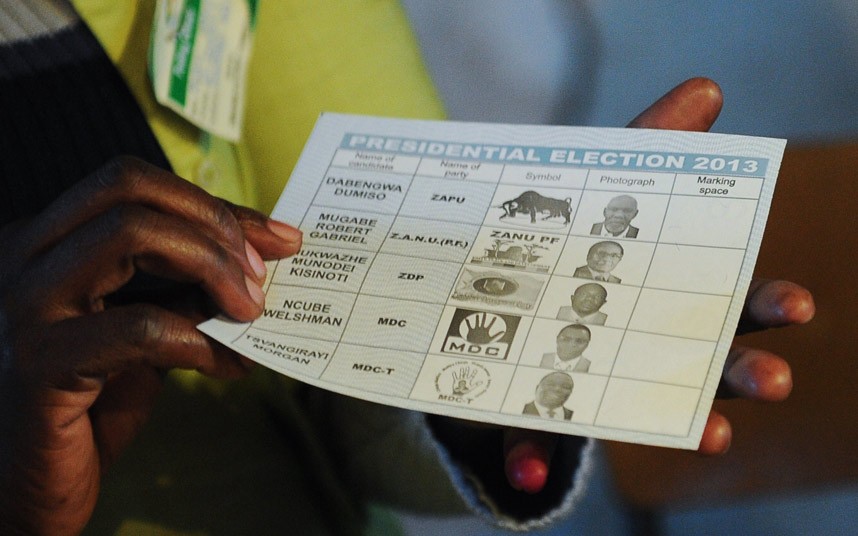
    To date, the election process has been peaceful which makes Morgan Tsvangirai’s loss even more difficult. Previous elections were marked with violence and in the face of defeat, Tsvangirai used these acts as a major trump card to cry foul. Suggestions of people being intimidated into voting for Zanu-PF where their vote would have otherwise gone to MDC would be aired in an attempt to nullify the elections.

    In 2013, citing violence and intimidation is something that cannot be used and this now leaves the opposition in a position where they have to find another avenue through which to proclaim the elections as a “sham”.

    At a press conference over the weekend, Tsvangirai stated the following:

    [quote]”The fraudulent and stolen election has plunged Zimbabwe into a constitutional, political and economic crisis,”[/quote]
    His concerns included stating the need for fresh elections:
    [quote]”…… once all remedies have been be exhausted, the people of Zimbabwe should be allowed fresh opportunity to freely, fairly elect a government of their choice. In this regard a credible free and fair, legitimate election must be held as soon as possible.”[/quote]

    (continued below)

    In order for their request for fresh elections to be actioned, MDC would have to prove that there were irregularities in the election process. That said, the likely option (since there was no violence) would be to go via the route of technical rigging by Zanu-PF.

    Well before the elections took place, there were reports of the ruling party enlisting Israelis to rig the elections and ensure a win for them. The company in question has a presence in not only Zimbabwe but also in other parts of Africa and provides a number of services to governments. One of their services is the provision of an election system that handles and manages voter’s registration and the election process.

    In the last day or so, a report surfaced where a spokesperson from a private South African based intelligence organisation alleged to have uncovered election fraud stated the following:

    “From our findings so far we are 99.9% convinced that the election was rigged via a ballot paper. A special watermarked ballot was used to give president Mugabe a resounding victory. The ballot had a water X against President Mugabe’s name such that if any ink is placed on the paper the substance on the paper will react and remove the ink and activate the watermarked X into print. If you look at some ballots you would see that Xs are very straight and Identical. These were mixed with ordinary ballot papers in a proportion that would favour Zanu-PF. Therefore I call for the opposition parties and the international community to stage an urgent probe into this scam”

    Who is to know which route the MDC will use to fight the election result? They may chose to go the Israeli firm route, the “water X” ballot paper route, both of the aforementioned or via a completely different channel. Which ever way they chose to go, they will need evidence if they are going to convince the powers that be that of the need for fresh elections.

    Finding that evidence, convincing the AU, SADC and whoever else needs to be convinced and getting to the point of fresh elections represents quite a challenge for MDC! Question is, do they have what it takes to make it happen?

    Whatever the case may be, the votes are in and as it stands, President Mugabe is victorious and is set to sit his seventh term in office.

  • Shock & Dismay At Zimbabwe Elections By A First Time Voter

    Shock & Dismay At Zimbabwe Elections By A First Time Voter

    I am a first time voter, 25 and a recent graduate. I studied Chemical Engineering and am a proud holder of a degree. But in this country i am just one of many, educated but cannot find a job in this broken system. My call to action was a Sunday Mail headline which claimed only 17% is unemployed. I mean that had me angry and I knew then I had to vote for change. The feeling was shared by almost everyone I knew. Enough was enough Zanu PF needed a break, the 89 year old leader needed to retire.

    Post result shock and disappointment is what I have at the moment. We all know who really won the election, we all know who rescued the economy. We are not dumb we know our country was headed in the right direction. We where robbed. Zanu PF are thieves who overdid it. And, they took a 2/3 majority so as to implement more oppressive statutes as they and ONLY they plunder the resources of Zimbabwe. There are no celebrations, only mourning. We are mourning the death of any hope we had of a better Zimbabwe.

    This has been a submission an anonymous contributor
    You too can become a Citizen Journalist by submitting your story here: Citizen Journalism by Living Zimbabwe
    The views expressed in the article are those of the author and not necessarily Living Zimbabwe.

  • The ZANU-PF & MDC-T 2013 Election Manifestos

    The ZANU-PF & MDC-T 2013 Election Manifestos

    Over the last few months, some political milestones have been reached in Zimbabwe with one of the more significant ones being the signing of a new Constitution. Along with the Constitution came the need for general elections that in recent weeks were set for 31 July 2013 by President Mugabe. MDC-T leader Prime Minister Morgan Tsvangirai has made unsuccessful attempts to have the elections postponed until a later date and appeals to the Constitutional Court (ConCourt) have ruled in Mugabe’s favour and concluded that the elections are to be held on the 31st.

    With that ruling, Zanu-PF and MDC-T have gone into full election mode with both parties choosing last weekend to launch their election manifestos with Zanu-PF launching theirs on the 5th of July and MDC-T on the 7th of July.

    The election manifestos serve to outline each party’s vision and what they have planned for Zimbabwe’s future. As you can imagine, the intentions stated will contain a number of measures that the general population would like to see being implemented. The thing about manifestos is that they are NOT legally binding. So, a party can state a raft of intentions that win them crucial votes, intentions of which when the winning party get’s into office does not deliver on.

    Every vote counts and will have an impact Zimbabwe’s future. Make sure that when you cast your vote, it is based on sound a decision that takes what you consider as important factors into consideration.

    To view the manifestos, visit the links below:

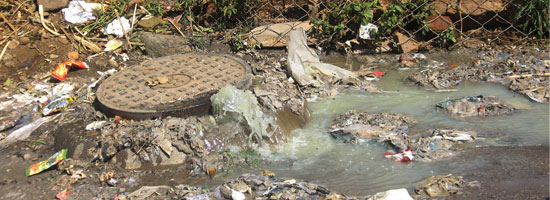
  • Are We Going Down The Drain… Again? Part 2

    Are We Going Down The Drain… Again? Part 2

    Following on from – Are We Going Down The Drain… Again? Part 1:

    Then there is another monstrosity in the form of the Zimbabwe National Road Agency, ZINARA. One is often reminded of another miscreation, the National Oil Corporation of Zimbabwe (NOCZIM) which, despite the glaring reality that we are yet to strike oil, that was shoved down our throats only for it to manifest one of the most devastating fuel shortages this country has ever experienced.

    NOCZIM proved to be a blatant funnelling of state resources into the pockets of a handful of clever dicks. To this day, the culprits are yet to see the four walls of a prison cell as is expected of miscreants of this kind. Shock turned to desperation as very prominent politicians were dispatched to the mountains to seek divine intervention of a traditional kind.

    If the images of shoeless leaders witnessing pure diesel gushing from a rock awash in the blogosphere are any accurate, then it explains why Zimbabwe is in the mess it is in. But that is not the point. Another elaborate siphon of state funds has entered the fray, ZINARA, and the fact that it has been in operation for close to four years is cause for concern. Just the acronym itself should send shivers of trepidation.

    Anyone who has driven on the roads in Zimbabwe will tell you that they are arguably the worst. Let me drop any comparison because that would open a Pandora’s box. In some parts of the country, the roads have simply vanished, reclaimed by the advancing bush.

    A giraffe is claimed to have disappeared into one notorious drumhole. It is stuff of crisis proportions if highways are fraught with gulleys and are evidently disintegrating by the day. That fatalities are the norm on our roads should to surprise anyone.

    It then begs the question: what the heck is ZINARA doing?

    Time there was when the mere existence of a ministry dealing with roads and transport was enough to keep our roads in pristine condition. It then boggles the mind why an entity created for the purpose decides that their first act is to acquire new headquarters and a shiny fleet of vehicles for their ‘hard working’ executives? What has this got to do with fixing the roads? Get your hands dirty first to earn your keep, I say.

    The toll fees that we are levied on the highways should be going into the coffers of ZINARA to help fix the roads. Before we can even smell the bitumen, there now is a proposal on the table to increase the tolls so that they are ‘in line with those in the region.’ OR WHAT? Tell us where the money already collected is!

    The only time the public knew anything about the revenues from toll gates was when some more clever dicks employed the Zimbabwe Revenue Authority, ZIMRA, originally tasked with collecting the toll fees were caught with their hands in the till. They had managed to spirit away more than a million dollars by the time they were caught. A MILLION DOLLARS! How selfish can one get!

    Then we read in the press that ZINARA is blacklisting a number of local authorities for the abuse of something called called the Road Fund. Where is the accountability or transparency in all this? Why is it that all we hear does not directly translate into good roads that we are be paying for through levies and toll fees?

    Talking about toll fees, tell us, has the role of the Zimbabwe Republic Police, ZRP’s national traffic cops been amended to include the mandatory collection of another set of toll fees? Is it true that traffic police have each been given a daily target to collect from motorists? If that is the case, then one can explain why Zimbabwe arguably has the highest number of road blocks on the continent per kilometre of road, easily surpassing those of Mobutu Sese Seko’s era.

    That does not include those irritating bike cops who run the danger of being run over themselves. Never mind the fact that they are so blatantly corrupt, in a manner of speaking. How long shall they kill our economy while we stand aside and look? Surely?

    This has been a submission by Lenox Mhlanga. If you have something to share, you too can become a Citizen Journalist by submitting your story here: Citizen Journalism by Living Zimbabwe.

    Image courtesy of Sokwanele

  • Are We Going Down The Drain… Again? Part 1

    There are some of us who have entered 2012 with a sense of trepidation. They believe this is the year when a decadent earth will collapse into itself. I predicted the same for Zanu PF, but the earth? My bible says no one knows the day or the hour when the Son of Man will come. Meaning, make a living while the sun still shines.

    Don’t listen to those who are creating a multi-billion dollar industry out of scaring people. There even is a movie entitled “2012” that portrays the destruction of the world as we know it. It relives mankind’s worst fears…earthquakes, floods, fires, the works. But then I ask, what’s new? We already have fair share of death and destruction… most of it man made. We have seen it all.

    Mankind has become suicidal. We now swear by the motto “Live for today fas if there is no tomorrow.” Guess what? – to borrow Reserve Bank head honcho Gideon Gono’s favourite cliché – there is a tomorrow we all can look forward to. You might be flat broke today, yet tomorrow could be different. Just like the fingers on your hand, not all days are the same.The key is to have a deliberately positive attitude.

    There are a lot of things that we will never understand. If we knew all of life’s secrets, we would hasten the end of the world as we know it selfish beings that we are. We are so destructively selfish that we do not care about the consequences of our actions as long as we believe we are not on the receiving end.

    Take the fact that God has endowed Zimbabwe with unfathomable mineral wealth and a people who are supposed to be intelligent because, come to think of it, we run the world. Minerals that would easily take the country out of the rut it is in if the revenue found its way into the fiscus and not into someone venerated pocket.

    Yet the nation is robbed blind in broad daylight by people whose preoccupation is to ensure that we marvel at how rich they are. We watch them with awe as they claim that they were not born poor.

    There is nothing more treacherous than to personalise state resources with impunity and continue to perpetuate a crisis in order to pull wool over our eyes. We are in trouble as a country because there are those whose very existence is dependent on the status quo remaining as it is. They thrive on chaos.

    There are things happening that defy logic. Air Zimbabwe, a pale shadow of its former self, is kept gasping in the Intensive Care even when a basic grasp of elementary economics tells us that it should be shut down. It has gone way below the status of a chicken bus operation. The only consolation perhaps is that they don’t allow one to enter the cabin with chickens and goats like used to happen on some airlines in West Africa.

    Not that I don’t like goats and chickens. But there are depths that we cannot surely plumb if we claim to be more educated and intelligent than the next village idiot. We are tempted to believe that we are a country that celebrates mediocrity.

    Reports of the aircraft that transported the president to the African Union summit filling up with smoke before take-off should have sent alarm bells ringing in close security circles. If it were in Idi Amin’s time, those responsible would have been fed to the crocodiles.

    Worse still, the fact that engineers had to be lured from their lairs for a few pieces of silver to repair the plane reads like something out of a very dark comedy. I know of prominent people who have vowed never to fly Air Zimbabwe again even at gunpoint.

    It remains a mystery why none of their planes have ever dropped out of the sky. Is it because of the fact that it takes 120 people to service one Air Zimbabwe plane? I bet that some of those duties would be to blow cockroaches from the aircraft’s avionics if need be. Aren’t we just embarrassed that the South African Taxi Association has managed to, or is about to launch an airline of their own?

    This has been a submission by Lenox Mhlanga. If you have something to share, you too can become a Citizen Journalist by submitting your story here: Citizen Journalism by Living Zimbabwe.

  • Wikileaks United States Embassy Harare Cable on Zimbabwe

    Some of you will know that Wikileaks recently released a number of confidential US embassy cables. As you can imagine, a number of them contained information or sentiments that the United States government may have rather not had the world know about. The US Embassy in Harare was not immune with a 2007 cable being released on what the then ambassador, Christopher Dell had to say about Zimbabwe.

    The full text of the cable (courtesy of Wikileaks) is as follows:

    Source Embassy Harare

    Classification CONFIDENTIAL

    C O N F I D E N T I A L SECTION 01 OF 04 HARARE 000638

    SIPDIS

    SIPDIS

    DEPARTMENT FOR P, AF, AND AF/S FOR MOZENA AND HILL,

    NSC FOR SENIOR AFRICA DIRECTOR B.

    PITTMAN AND B. LEO; USAID FOR M. COPSON AND E. LOKEN

    E.O. 12958: DECL: 07/12/2017

    TAGS: PGOV, PREL, ZI

    SUBJECT: The End is Nigh

    Classified By: Ambassador Christopher W. Dell under Section 1.4b/d

    1. (C) Having said my piece repeatedly over the last three years,

    I won’t offer a lengthy prescription for our Zimbabwe

    policy. My views can be stated very simply as stay the

    course and prepare for change. Our policy is working and it’s

    helping to drive change here. What is required is simply the grit,

    determination and focus to see this through. Then, when the changes

    finally come we must be ready to move quickly to help consolidate

    the new dispensation.

    THE SITUATION

    2. (C) Robert Mugabe has survived for so long because he is more

    clever and more ruthless than any other politician in

    Zimbabwe. To give the devil his due, he is a brilliant

    tactician and has long thrived on his ability to abruptly

    change the rules of the game, radicalize the political

    dynamic and force everyone else to react to his agenda.

    However, he is fundamentally hampered by several factors:

    his ego and belief in his own infallibility; his obsessive

    focus on the past as a justification for everything in the

    present and future; his deep ignorance on economic issues

    (coupled with the belief that his 18 doctorates give him

    the authority to suspend the laws of economics, including

    supply and demand); and his essentially short-term,

    tactical style.

    3. (C) While his tactical skills have kept him in power for 27

    years, over the last seven this has only been achieved by a

    series of populist, but destructive and ultimately

    self-defeating moves. In reaction to losing the 2000

    referendum on the constitution, a vengeful Mugabe unleashed

    his “Green Bombers” to commit land reform and in the

    process he destroyed Zimbabwe’s agricultural sector, once the

    bedrock of the economy. While thousands of white farmers

    saw their properties seized, hundreds of thousands of black

    Zimbabweans lost their livelihoods and were reduced to utter

    poverty. In 2005, having been forced to steal victory by

    manipulating the results of an election he lost, Mugabe

    lashed out again, punishing the urban populace by launching

    Operation Murambatsvina. The result was wholesale

    destruction of the informal sector, on which as much as

    70-80 percent of urban dwellers had depended, and the

    uprooting of 700,000 Zimbabweans. The current inflationary

    cycle really began with Murambatsvina, as rents and prices

    grew in response to a decrease in supply.

    4. (C) And now, faced with the hyperinflationary consequences

    of his ruinous fiscal policies and growing reliance on the

    printing press to keep his government running, Mugabe has

    launched Operation Slash Prices. This has once again given

    him a very temporary boost in popularity (especially among

    the police, who have led the looting of retail outlets and

    now seem well positioned to take a leading role in the

    black market economy) at the cost of terrible damage to the

    country and people. Many small grocery and shop owners,

    traders, etc., will be wiped out; the shelves are

    increasingly bare; hunger, fear, and tension are growing;

    fuel has disappeared. When the shelves are still empty

    this time next week, the popular appeal of the price roll

    back will evaporate and the government simply doesn’t have

    the resources to replace the entire private commercial

    sector and keep Zimbabweans fed. It may attempt to do so

    by printing more money, adding even more inflationary

    pressure on a system already reeling from the GOZ’s

    quasi-fiscal lunacy combined with the price impact of

    pervasive shortages. The increasingly worthless Zim dollar

    is likely to collapse as a unit of trade in the near

    future, depriving the GOZ of its last economic tool other

    than sheer thuggery and theft of others’ assets.

    5. (C) With all this in view, I’m convinced the end is not

    HARARE 00000638 002 OF 004

    far off for the Mugabe regime. Of course, my predecessors

    and many other observers have all said the same thing, and

    yet Mugabe is still with us. I think this time could prove

    different, however, because for the first time the

    president is under intensifying pressure simultaneously on

    the economic, political and international fronts. In the

    past, he could always play one of these off against the

    other, using economic moves to counter political pressure

    or playing the old colonial/race/imperialist themes to buy

    himself breathing room regionally and internationally. But

    he is running out of options and in the swirling gases of

    the new Zimbabwean constellation that is starting to form,

    the economic, political and international pressures are

    concentrating on Mugabe himself. Our ZANU-PF contacts are

    virtually unanimous in saying reform is desperately needed,

    but won’t happen while the Old Man is there, and therefore

    he must go (finding the courage to make that happen is

    another matter, however, but even that may be coming closer).

    This is not some sudden awakening on the road to

    Damascus, but a reflection of the pain even party insiders

    increasingly feel over the economic meltdown. We also get

    regular, albeit anecdotal, reports of angry and

    increasingly open mutterings against Mugabe even in ZANU-PF’s

    traditional rural bastions. Beginning in March, the

    other SADC leaders finally recognized (in the wake of the

    terrible beatings of March 11 and the international outcry

    that followed–another self-inflicted wound for Mugabe)

    that Zimbabwe is a problem they need to address. Thabo

    Mbeki appears committed to a successful mediation and is

    reportedly increasingly irritated with Mugabe’s efforts to

    manipulate him or blow him off altogether. If Mugabe

    judges that he still commands all he surveys by virtue of

    being the elder statesman on the scene, he may be

    committing yet another serious blunder. Finally, one does

    well to recall that the only serious civil disturbances

    here in a decade came in 1998 over bread shortages, showing

    that even the famously passive Shona people have their

    limits. The terror and oppression of the

    intervening years have cowed people, but it’s anyone’s guess

    whether their fear or their anger will win out in the end.

    WHAT WILL THE END LOOK LIKE?

    6. (C) This is the big, unanswerable question. One thing

    at least is certain, Mugabe will not wake up one morning a

    changed man, resolved to set right all he has wrought. He

    will not go quietly nor without a fight. He will cling to

    power at all costs and the costs be damned, he deserves to

    rule by virtue of the liberation struggle and land reform and

    the people of Zimbabwe have let him down by failing to

    appreciate this, thus he needn’t worry about their

    well-being. The only scenario in which he might agree to

    go with a modicum of good grace is one in which he

    concludes that the only way to end his days a free man is

    by leaving State House. I judge that he is still a long

    way from this conclusion and will fight on for now.

    7. (C) The optimal outcome, of course, and the only one that

    doesn’t bring with it a huge risk of violence and conflict, is

    a genuinely free and fair election, under international

    supervision. The Mbeki mediation offers the best, albeit

    very slim, hope of getting there. However, as Pretoria

    grows more and more worried about the chaos to its north

    and President Mbeki’s patience with Mugabe’s antics wears

    thin, the prospects for serious South African engagement

    may be growing. Thus, this effort deserves all the support

    and backing we can muster. Less attractive is the idea of

    a South African-brokered transitional arrangement or

    government of national unity. Mbeki has always favored

    stability and in his mind this means a ZANU-PF-led GNU, with

    perhaps a few MDC additions. This solution is more likely

    to prolong than resolve the crisis and we must guard

    against letting Pretoria dictate an outcome which

    HARARE 00000638 003 OF 004

    perpetuates the status quo at the expense of real change

    and reform.

    8. (C) The other scenarios are all less attractive: a popular

    uprising would inevitably entail a bloodbath, even if it

    were ultimately successful; Mugabe’s sudden, unexpected

    death would set off a stampede for power among ZANU-PF

    heavy weights; a palace coup, whether initiated within

    ZANU-PF or from the military – in which Mugabe is removed,

    killed, exiled or otherwise disposed of, could well devolve

    into open conflict between the contending successors. Similarly,

    some form of “constitutional coup” i.e., a change at the top

    engineered within the framework of ZANU-PF’s “legitimate”

    structures could well prove to be merely the opening bell

    in a prolonged power struggle. None of the players is

    likely to go quietly into the night without giving everything

    they have, including calling on

    their supporters in the security services. Moreover, experience

    elsewhere would suggest that whoever comes out on top

    initially will struggle, and more than likely fail, to halt

    the economic collapse. Thus, there is a good prospect of

    not one but a series of rapid-fire “transitions,” until

    some new, stable dispensation is reached.

    9. (C) The final, and probably worst, possibility is that Mugabe

    concludes he can settle for ruling over a rump Zimbabwe,

    maintaining control over Harare and the Mashona heartland,

    the critical forces of the National Reserve Force and CIO

    and a few key assets–gold, diamonds, platinum and Air

    Zimbabwe to fund the good times. Under this scenario the

    rest of the country, in one of the comrade’s favorite

    phrases, could “go hang,” leaving it to the international

    community to stave off the worst humanitarian consequences.

    WHAT OF THE OPPOSITION?

    10. (C) Zimbabwe’s opposition is far from ideal and I leave

    convinced that had we had different partners we could have

    achieved more already. But you have to play the hand you’re dealt.

    With that in mind, the current leadership has little executive

    experience and will require massive hand holding and assistance

    should they ever come to power.

    11. (C) Morgan Tsvangarai is a brave, committed man and, by and

    large, a democrat. He is also the only player on the scene

    right now with real star quality and the ability to rally

    the masses. But Tsvangarai is also a flawed figure, not

    readily open to advice, indecisive and with questionable

    judgment in selecting those around him. He is the indispensable

    element for opposition success, but possibly an albatross around

    t heir necks once in power. In short, he is a kind of Lech Walesa

    character: Zimbabwe needs him, but should not rely on his executive

    abilities to lead the country’s recovery. Arthur Mutambara is young

    and ambitious, attracted to radical, anti-western rhetoric and

    smart as a whip. But, in many respects he’s a light-weight

    who has spent too much time reading U.S. campaign messaging

    manuals and too little thinking about the real issues. Welshman

    Ncube has proven to be a deeply divisive

    and destructive player in the opposition ranks and the

    sooner he is pushed off the stage, the better. But he is

    useful to many, including the regime and South Africa, so

    is probably a cross to be borne for some time yet. The

    prospects for healing the rift within the MDC seem dim,

    which is a totally unnecessary self-inflicted wound on

    their part this time. With few exceptions–Tendayi Biti,

    Nelson Chamisa–the talent is thin below the top ranks.

    The great saving grace of the opposition is likely to be

    found in the diaspora. Most of Zimbabwe’s best

    professionals, entrepreneurs, businessmen and women, etc.,

    have fled the country. They are the opposition’s natural

    allies and it is encouraging to see signs, particularly in

    South Africa and the UK, that these people are talking,

    HARARE 00000638 004 OF 004

    sharing ideas, developing plans and thinking together about

    future recovery.

    12. (C) Unfortunately, among the MDC’s flaws is its inability to

    work more effectively with the rest of civil society. The

    blame for this can be shared on both sides (many civil

    society groups, like the NCA, are single-issue focused and

    take the overall dynamic in unhelpful directions; others,

    like WOZA, insist on going it alone as a matter of

    principle), but ultimately it falls to the MDC as the

    largest and the only true political party, to show the

    way. Once again, however, these are natural allies and

    they have more reason to work together than fight against each

    other.

    STAYING THE COURSE, PREPARING FOR CHANGE

    13. (C) If I am right and change is in the offing, we need to

    step up our preparations. The work done over the last year on

    transition planning has been extremely useful, both for

    stimulating a fresh look at our own assumptions and plans

    and for forging a common approach among the traditional

    donor community. But the process has lagged since the

    meetings in March in London and should be re-energized. It is

    encouraging in this respect that USAID Washington has

    engaged the Mission here in discussing how we would use

    additional resources in response to a genuinely

    reform-minded government . I hope this will continue and

    the good work done so far will survive the usual

    bloodletting of the budget process.

    1. (C) The official media has had a field day recently whooping

    that “Dell leaves Zimbabwe a failed man”. That’s not quite

    how it looks from here. I believe that the firm

    U.S. stance, the willingness to speak out and stand up,

    have contributed to the accelerating pace of change.

    Mugabe and his henchman are like bullies everywhere: if

    they can intimidate you they will. But they’re not used to

    someone standing up to them and fighting back. It catches them

    off guard and that’s when they make mistakes. The howls of protest

    over critical statements from Washington or negative coverage

    on CNN are the clearest proof of how this hurts them. Ditto

    the squeals over “illegal sanctions.” In addition, the regime

    has become so used to calling the shots and dictating the

    pace that the merest stumble panics them. Many local

    observers have noted that Mugabe is panicked and

    desperate about hyperinflation at the moment, and hence he’s

    making mistakes. Possibly fatal mistakes. We need to

    keep the pressure on in order to keep Mugabe off his game

    and on his back foot, relying on his own shortcomings to do

    him in. Equally important is an active U.S. leadership

    role in the international community. The UK is ham-strung

    by its colonial past and domestic politics, thus, letting them

    set the pace alone merely limits our effectiveness. The EU is

    divided between the hard north and its soft southern

    underbelly. The Africans are only now beginning to find

    their voice. Rock solid partners like Australia don’t

    pack enough punch to step out front and the UN is a

    non-player. Thus it falls to the U.S., once again, to take

    the lead, to say and do the hard things and to set the agenda.

    Hundreds, maybe thousands, of ordinary Zimbabweans of all

    kinds have told me that our clear, forthright stance has

    given them hope and the courage to hang on. By this regime’s

    standards, acting in the interests of the people may indeed be

    considered a failure. But I believe that the opposite is true,

    and that we can be justifiably proud that in Zimbabwe we have

    helped advance the President’s freedom Agenda. The people of

    this country know it and recognize it and that is the true

    touchstone of our success here.