Tag: Tourism

  • #CecilTheLion: how did Zimbabwe take advantage?

    #CecilTheLion: how did Zimbabwe take advantage?

    Whether you are a fan of lions or not, whether you like hunting or not, whether you are into conservation or not, whether you love or hate Zimbabwe, a discussion that you more than likely came across or maybe got involved in yourself was that of Cecil The Lion.

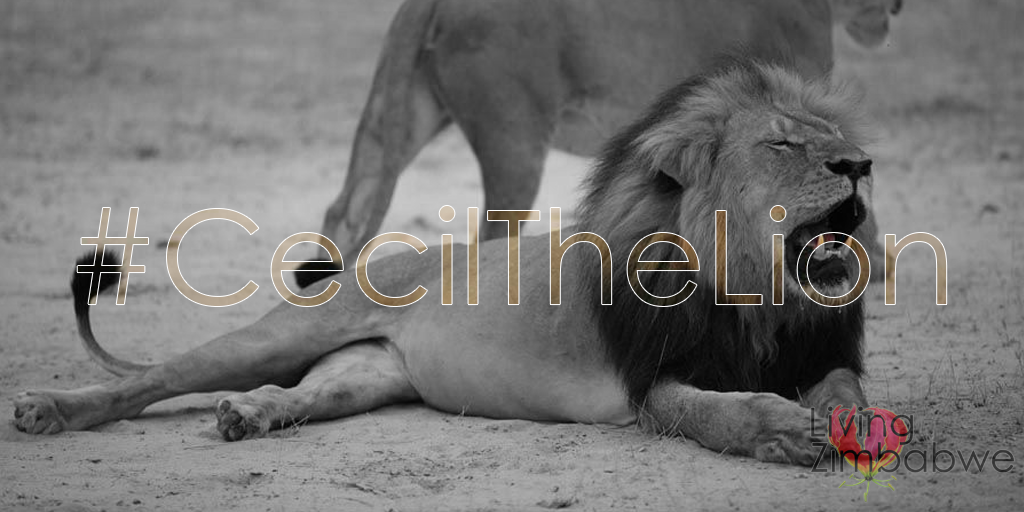
    If you don’t already know, Cecil was according to many, a much-loved lion that once roamed the plains of Hwange National Park. He was in an unfortunate turn of events hunted by American dentist, Walter Palmer. When news of the killing came to light it caused a huge uproar from a countless number of people and organisations across the world and it also became the story of the moment on many of the major new networks.

    That amount of coverage on the death of Cecil made it one of the top stories of 2015. Towards the end of last year, Parsely, a leading digital analytics solution provider, released data on the top stories of the year and how people discovered them namely via search (e.g. Google & Yahoo) or social (Facebook & Twitter). According to their numbers, Cecil was one of the top stories and it had a search to social traffic ratio of 73% meaning that it gained a lot of traction via social media.
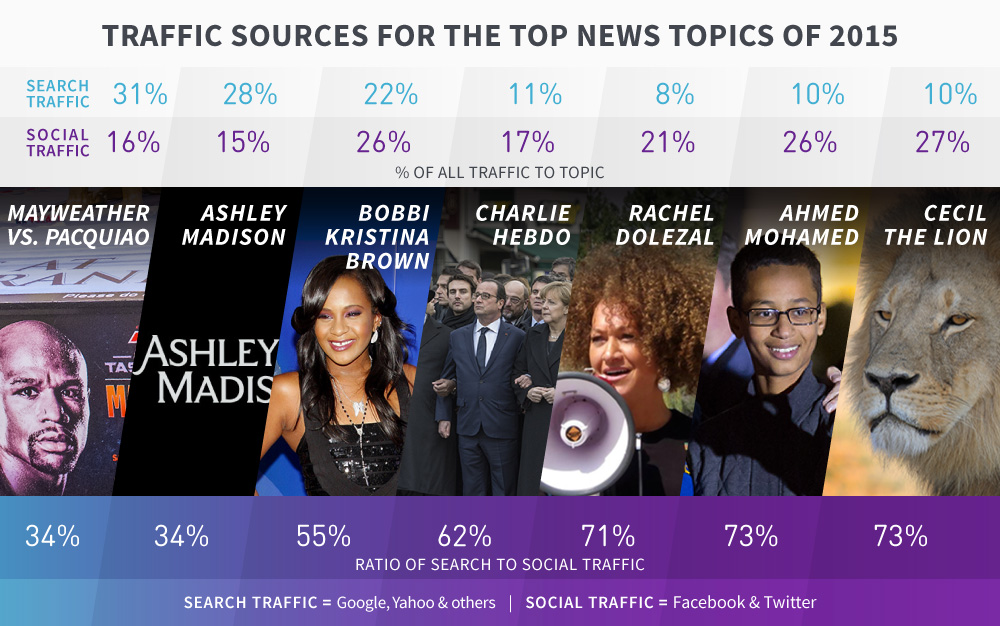
    traffic-sources-top-news-2015-Parse.ly

    Google also released data on the most popular searches throughout 2015. One of the spikes on the timeline in August 2015 was Cecil. This shows that purely from a search perspective it was a popular topic.

    In the heat of the debate, people had wide and varying opinions on how they felt about the incident. For those directly involved such as the hunter, the guides and the authorities, there was some finger pointing and he said she said. At the end of the day, there really wasn’t a solid end result bar arresting a couple of local operators and tightening restrictions on hunting. In hind sight, the whole saga may have been a wasted opportunity with what it could have brought.

    Whilst all of this was going on, what could have happened is that someone could have taken a step back, analysed the situation and seen how to use it to our advantage.

    Some research shows that even though hunting (which in itself is a form of tourism – as controversial as it may be) brings in a considerable amount of revenue. However, it is not the number one tourism revenue generator. Ecotourism comes out on top with the revenue generated from it far surpassing that of hunting.

    Till he met his demise, Cecil had been studied in great detail by WildCRU. With this direct link to lion conservation efforts, maybe a story around a ‘conservation’ or ‘ecotourism’ theme could have been crafted to shed a positive light on tourism in Zimbabwe.

    With hunting, conservation, tourism and other associated activities already in the spotlight, maybe an organisation, a group of individuals, tour operators, a government department or a joint effort between some of the aforementioned for that matter could have drawn up a marketing strategy. This marketing strategy could have been aimed at getting out a message to say that yes, a lion had met its unfortunate demise; that this is not what we are all about; outlining what we are about and what is on offer as far as ecotourism goes and maybe even enticing potential ecotourists with discounted travel packages.

    The above is not the be all and end all of what could have been done to spin the incident around and use it for positive gain. There are always lessons to be learnt from such events. Part of that would involve taking some time to sit back and understand what went wrong and what can be done to fix it and to end up with a favourable outcome for all.

    There is a lot of negativity out there in the world and at the end of the day, it is up to us to choose how we respond to it. That response could be a negative one which could only make things worse or we could choose to address the situation and work towards a positive outcome. Let this be the year that you turn negatives into positives.
  • What’s Wrong With Kendall Jones Hunting in Zimbabwe?

    What’s Wrong With Kendall Jones Hunting in Zimbabwe?

    When you think of Africa and it’s wildlife, people dream of one day being able to experience it, many take it further and make it a reality by going on a safari and experiencing the wildlife up close and personal. For some though, Africa’s wildlife has them dreaming about visiting the continent for a hunting trip. Some hunters have made their way to Zimbabwe to indulge in their guilty pleasure and have left with more than they bargained for.

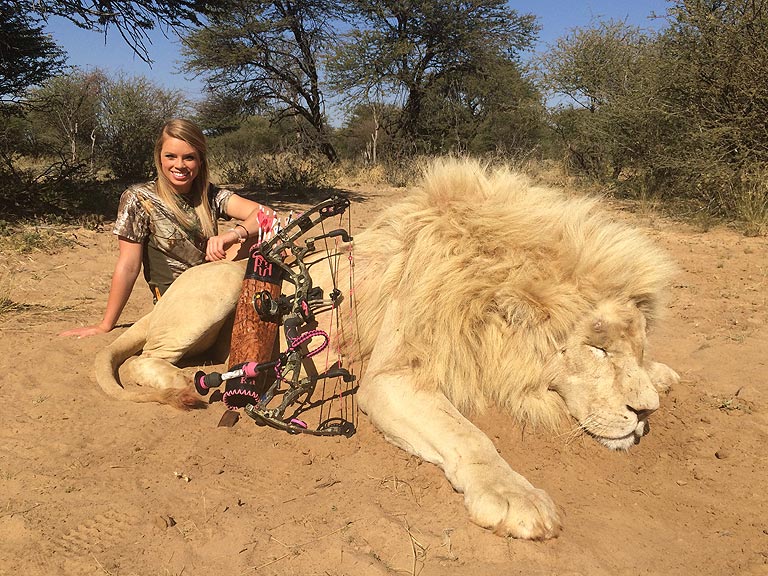
    High profile personalities such as Bob Parsons and Eric and Donald Trump have found themselves in a storm of controversy after their hunts in Zimbabwe. More recently, a teenage Texan hunter, Kendal Jones found herself in a similar storm after posting photos of her hunt on Facebook.

    Kendall-Jones-Lion-Hunt-Zimbabwe

    The photos of the hunt sparked a lot of outcry with social media users, animal rights activists and some public figures expressing their disapproval. The protest have come in all shapes and forms from her being called names, being threatened with rape and death, a petition (currently with 330,000+ signatures) to take down her Facebook page as well as a “Kill Kendall Jones” Facebook page which was recently removed by the social network. On the other side of the coin, a number of proponents have come to her defence and stood by her and her actions.

    Kendall’s justification for her actions are pretty much that what she did was done legally, was fair chase hunting and not canned hunting as what some people have said and that it contributed to conservation and communities within the areas of the hunts.

    When push comes to shove, she and everyone else who had something to say about her hunting are entitled to their own opinions. At the end of the day some thought does have to put in to thinking about who benefits from it all.

    As far as communities benefiting from the money spent by tourists who go hunting, that could be questionable. Tour operators, guides and maybe the government department that issues necessary permits would be the ones most likely to see the most benefit. As far as the people in the communities around the hunting area goes, it is difficult to see how they would realise any economic benefit.

    Yes, a number of species are on the brink of extinction and when it comes to hunting such animals, then there can't be any justification to it. Earlier in the year, the US suspended the import of elephant trophies from Zimbabwe which must mean that they recognised some species as being in danger and condone their killing (some look at this move as another way of adding sanctions on the country).

    But, you do have to ask yourself, why the big fuss about what she did? Was it because she posted images of her successful hunt? Do people really care about the few animals that were killed? Because, as all of this has been going on and as you are reading this, there is someone or someones in Zimbabwe’s savanna hunting!

    What are your thoughts?

  • Living and Learning in Zimbabwe: The Power of a Smile

    Living and Learning in Zimbabwe: The Power of a Smile

    I spent from June – December of 2013 living, learning, and working in Nkayi, Zimbabwe as a World Vision Canada Intern. I was asked by Living Zimbabwe to write a piece with some helpful hints for people traveling to Zimbabwe. I have tried my best to avoid the typical travel advice of “boil your water” and “ladies should wear skirts” and “don’t walk around outside in the dark alone”, because while those are great tips, they don’t mean anything. I’ve tried to make my advice meaningful; something that maybe you won’t read in the Lonely Planet book or hear from your Travel Health Clinic.

    1. Actually visit with the locals. I’m not talking about going, greeting them, and taking some pictures of their living spaces. Pictures are important, and absolutely, take them. But talk, and even more importantly, listen, to the locals. You can learn a lot from reading newspapers and browsing websites, but you can learn even more from listening to stories of people who live very different lives than most of us in North America do.
    2. Visit rural areas. Bulawayo and Harare are beautiful, and they have stories to tell… but sometimes the cities have somewhat of a North American feel to them. The rural areas are where you really get the feeling of what is means to be in Zimbabwe.
    3. Take part in some of the parts of daily Zimbabwean life. Carry water on your head so that you can begin to understand how a Zimbabwean women spends anywhere from 15 minutes to 2 hours of her day, and take a bucket shower so that you can appreciate the excessive amount of water that we have in North America, and use a blair-latrine so that you can be thankful that we have that money to put towards luxurious items such as flush-toilets.
    4. Learn to cook sadza (or if you’re like me and you can’t cook, at least watch in amazement as a Zimbabwean woman cooks it). I asked a coworker one evening how to make it, and she couldn’t tell me exactly; she didn’t know the measurements. It is an art of “some more mielie-meal”, “a little more water”, “a liiiittttle more mielie-meal”, and eventually, “a pinch of salt”.
    5. Watch football (soccer). I don’t mean on the television from inside your room, or even a “big-ticket” game at the outdoor pitch in one of the big cities. I mean put on a hat, and go watch locals play. If some of these kids had the same resources that David Beckham did, they would be better than Beckham was at his peak.
    6. Need a tour guide? Ask a local! Sure, Victoria Falls has boards of information everywhere, but like turning a book into a movie, sometimes really important and/or interesting pieces get left out. The locals will know all sorts of information, and probably be honored that you would ask them to guide you.
    7. Get in there! In North America, we are sometimes very shy about dancing with strangers because we don’t want to look “silly”, or we won’t try speaking another language because we will be laughed at. I looked silly, and I was laughed at… but it is a part of the experience!
    8. Accept all gifts. Zimbabweans understand that life is about relationships, and stronger than their desire to feed their own family tomorrow, is their desire to be hospitable and engage in fellowship with new friends today.
    9. Take time to feel. There is something about the sunset and the stars during the evening, after a day of hearing about the hardships one minute, but seeing the dancing and laughing the next.
    10. Be prepared to change. Zimbabwe changed my views on faith, materialism, the power of a smile, and so much more. I promise it will do the same for you.

    This has been a submission by Sherrie-Lee R. Chiarot. You can connect with Sherrie-Lee via the following: , https://twitter.com/sleerose, . You too can become a Citizen Journalist by submitting your story here: Citizen Journalism by Living Zimbabwe The views expressed in the article are those of the author and not necessarily Living Zimbabwe.

  • Poachers, Conservation, Clive Stockil & Tourism in Zimbabwe

    Poachers, Conservation, Clive Stockil & Tourism in Zimbabwe

    Zimbabwe is a country full of natural wonders that have drawn people from all over the world. Some of these wonders include the Victoria Falls and the wildlife which offer visitors to the numerous game reserves an unparalleled safari experience.

    Over the years, tourism has slumped due to various challenges that the country has faced but, recent statistics have shown a slight rise in visitor numbers. Some of the wildlife that attracts tourists also attracts attention of a different and more sinister kind. Populations in certain parts of the world have an insatiable appetite for certain animal parts such as elephant tusks and rhino horns. The existence of a thriving illegal market has seen an increase in poaching activities not only in Zimbabwe but across Sub-Saharan Africa as well.

    A recent example of such activities was the senseless killing of more than 80 elephants where poachers poisoned watering holes with cyanide. This goes to show that poachers will do anything to get their hands on something that only makes up a small part of the entire animal, some of which are endangered. Killing the animals is the easiest and most convenient way for poachers to get what they want. At the rate that they are going, it could soon reach a point where we are talking about how there used to be a magnificent animal called an elephant that used to……..(the rest of the story is up to you).

    However, all is not lost because poaching is being seen as becoming more and more of a concern with various governments and other groups now waging an aggressive war against poachers. Some of the anti-poaching frontline personnel go through quasi military training to prepare them for their task of protecting wildlife. In some regions it goes to the extent of the military being roped in to tackle poaching. You may ask why the need for such manpower? It has been alleged that some of the groups labelled as terrorist fund some of their activities via poaching. That said, taking the life of a person trying to stop them would not be of consequence.

    Conservation also plays a big role in ensuring the continued survival of the various threatened species. The world’s human population is growing and as it does, human demands sometimes take over habitats that have been home to these animals. There are people out there who have dedicated their lives to preserving biodiversity and ecosystems to ensure harmony between animals and people who may live in the vicinity of certain habitats.

    One such person is Clive Stockil, a pioneer in conservation who’s career spans over four decades. One of his achievements includes setting up the country’s largest private game reserve which is located in Zimbabwe’s Save Valley. The reserve is home to 143 rhinos, a number reached from an initial population of 20 rhinos when he started in the early nineties.

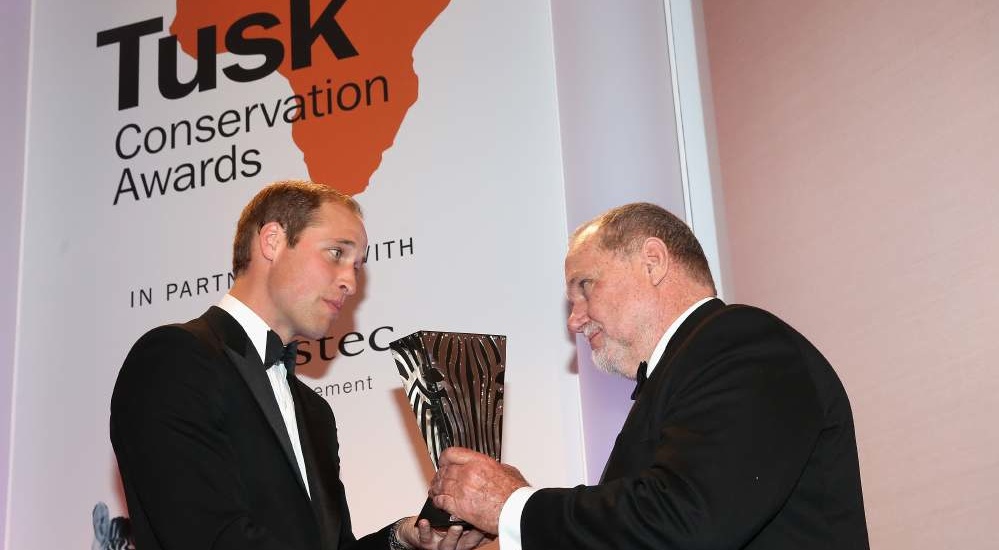
    Clive’s efforts in conservation were recently recgonised when he was awarded the lifetime Prince William Award for Conservation in Africa. His efforts (and those of other like minded people) are very commendable because not only do they keep threatened species alive, they also give people a livelihood.

    Without people stopping poachers and people managing conservation, there would be little or no wildlife, the wilderness that plays home to wildlife would cease to exist. Tourism is a key avenue through which conservationists like Clive raise funds to enable them to carry out the work that they do.

    Not all of us can go out there to fight poachers or become conservation champions but we can make a contribution to these efforts by doing something as simple as visiting one the country's eco-tourism reserves.

    Do you care enough to play a part in ensuring that Zimbabwe's threatened animals and environments are still around for decades to come?

    (Saviour Kasukuwere, Minister of Environment, Water and Climate congratulating Clive Stockil)

  • KLM To Resume Flights To Harare In October

    KLM To Resume Flights To Harare In October

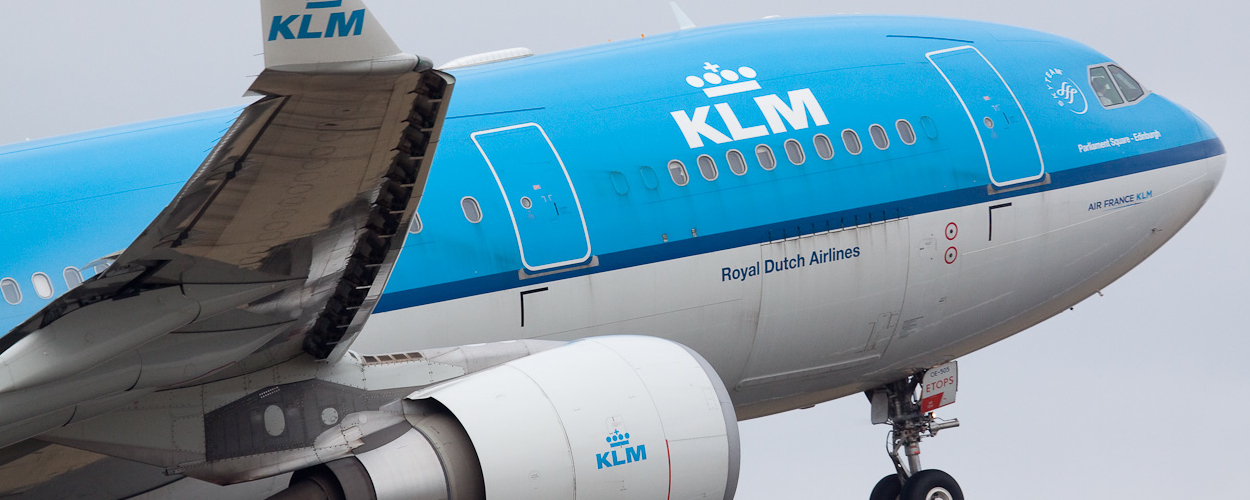
    Five months after Emirates started flying into Harare, another major international airline has confirmed its plans to start flights to Zimbabwe. Two days ago, KLM officially announced that it will start operating a service to Harare on 29 October 2012. It will operate a three weekly service from Amsterdam Airport Schipol to Harare International with an Airbus A330-200. KLM flight KL523 will depart from Amsterdam on Mondays, Thursdays and Saturdays at 10.20 hrs and arrive in Harare at 21.25 hrs on the same day. The return flight, also KL523, will depart from Harare at 22.30 hrs on the same day with a brief stopover in Lusaka and continue on to Amsterdam to arrive at 10.20 hrs the following morning.

    KLM stopped servicing Zimbabwe more thank a decade ago due to the political turmoil. Its return may be sign of increasing confidence in Zimbabwe and what it has to offer. From an operational perspective, the Harare service could be a very viable route seeing as tourist numbers are on the rise. The resumption of KLM flights to Zimbabwe could also aid in the nations economic recovery. From a local perspective, the increase in competition presents the traveling public with more flight options and hopefully more competitive ticket prices.

    With the introduction of services from another international carrier and Air Zimbabwe not currently flying internationally, it leaves one wondering if the national carrier will have a space left on international destinations once they get their act together.

  • First Bob Parsons Now Donald & Eric Trump In Zimbabwe Hunting Controversy?

    First Bob Parsons Now Donald & Eric Trump In Zimbabwe Hunting Controversy?

    About a year ago, Bob Parsons (former Go Daddy CEO) found himself in a storm of controversy after posting footage (below) of his elephant hunt in Zimbabwe. As you can imagine, there was a lot of public outcry. PETA were very vocal about it and took action against the killing. They closed their Go Daddy account and encouraged the public to follow suit. This action subsequently led to thousands of people disassociating themselves with Go Daddy and transferring their domains to other providers.

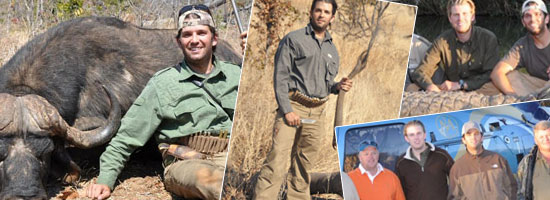
    This time, Donald Trump Jr. and Eric Trump (Donald Trump’s sons) have managed to get themselves caught up in something similar. Photos of them sporting trophies from a hunting trip they took to Zimbabwe last year have recently surfaced. The photos have lead to criticism from PETA and other animal rights groups. Just like in the case of Bob Parsons, the hunt has had a negative impact on Trump entities. The biggest blow has been sponsors pulling out of the popular TV series “The Apprentice”.

    Apart from defending his sons’ actions, Donald Trump Senior has said a lot about the issue. On the other hand, Donald Jr. has been hard at work defending his actions. A common theme with him and Bob in the process of defending their actions is that of seeing themselves as heroes. The act of donating the meat from their kills to villagers is what has made them feel as if they have earned hero status. Some people argue that it would have been better to have donated the thousands they paid for the hunt to the villagers instead of killing animals.

    Some of the arguments used by Donald Jr. do however raise an eyebrow. One example is that of a tweet he sent out in response to one from another twitter user:

    To say “with out hunters $ there wouldn’t be much left of africa” is somewhat shortsighted. Isn’t Africa very resource rich? Yes, there may be a few issues with the equitable distribution of wealth but that doesn’t mean that Africa would be a lost cause without hunters. Whatever the motivations are for public figures going on these hunting trips, does the controversy and protest generated by animal rights activists have a positive impact towards their cause? Hunting is something that mankind has engaged in for centuries. In this day in age, it is an activity that when carried out in a controlled manner adds to the tourist dollars generated by African countries. Truth be told, even if public figures aren’t taking themselves off on hunting adventures, there are plenty of other keen hunters who have the resources to be able to take themselves on such trips. For Donald Jr. and Eric, this may have been a PR stunt gone wrong but in the case of the company (Hunting Legends) that took them on the trip, it may have been a blessing in disguise. A recent tweet by Hunting Legends, points towards an increase in business for them:


    This boost in business may have been a result of the publicity they got from the controversy and if that was the case, then the efforts of anti hunting activists have been a waste. It has served to whet the appetites of more hunters and fueled their want to hunt in Africa.


    Link to Bob Parsons > Problem Elephant Controversy Video

  • Emirates Flights To Harare, What It Means For Air Zimbabwe & Other Airlines

    Emirates Flights To Harare, What It Means For Air Zimbabwe & Other Airlines

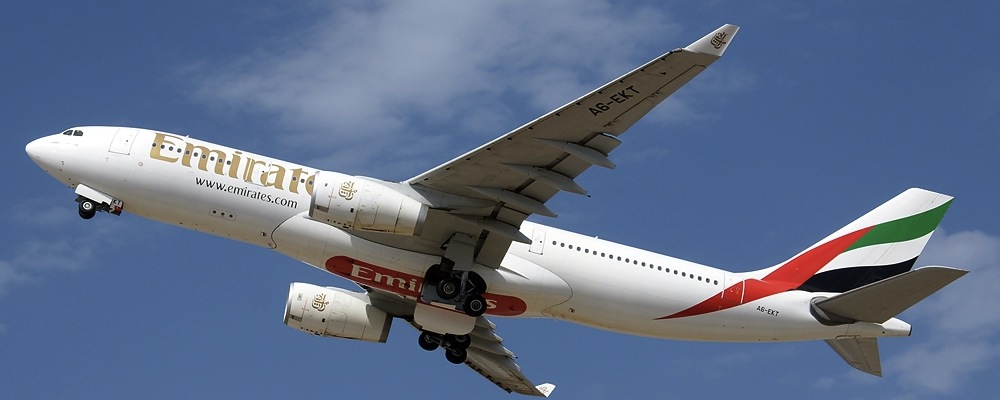
    Last month, Emirates announced that from 1 February 2012 they will start flying into Harare from Dubai via Zambia 5 times a week. EK713 will depart from Dubai every Monday, Tuesday, Wednesday, Friday and Sunday at 09:25am and arrive in Harare at 5:20pm with the return flight leaving Harare at 7:20pm. This is the first major airline after the withdrawal of services from other foreign airlines that will take to the Zimbabwean skies. This news will come as a welcome relief for the travelling public with the increase in choice they will bring.

    In years gone by, there have been reports of the government refusing to approve requests from various foreign carriers to service the nation. Some of these airlines once flew to Zimbabwe but for one reason or another, the powers that be did not accommodate their requests. With the entry of Emirates into the market, some questions come to mind.

    The first that comes to mind being, could this mean that the government may be a bit more receptive to other carriers looking to enter or re-enter Zimbabwe? Having airlines such British Airways (long-haul direct from London), Qantas, Lufthansa, Air France and KLM just to name a few flying to Zimbabwe again offering choice and bringing in much needed tourist dollars. The Tourists dollars will hopefully go towards rebuilding Zimbabwe.

    A second question that comes to mind is what it will mean for Air Zimbabwe and how the national airline will react? Over the past few months and even extending into years, Air Zimbabwe has been facing crisis after crisis such as debts running into the hundreds of millions as well as strike action by pilots and cabin crew. All of this as well as an aging fleet have impeded its service delivery and may be a cause for concern.

    Emirates is a well oiled machine and has been rated as one of the top ten airlines in the world (Skytrax). They fly a modern fleet of over 100 aircraft (with many more on order) to just about every part of the world at very competitive prices. Consumers may be more inclined to choose Emirates over Air Zimbabwe, which could spell even more trouble for them. But, this development may inadvertently force Air Zimbabwe to implement chances that get it on track to being a formidable competitor.

  • Air Zimbabwe Boeing 767-200ER & 737-200 at Harare International Airport

    Air Zimbabwe Boeing 767-200ER & 737-200 at Harare International Airport

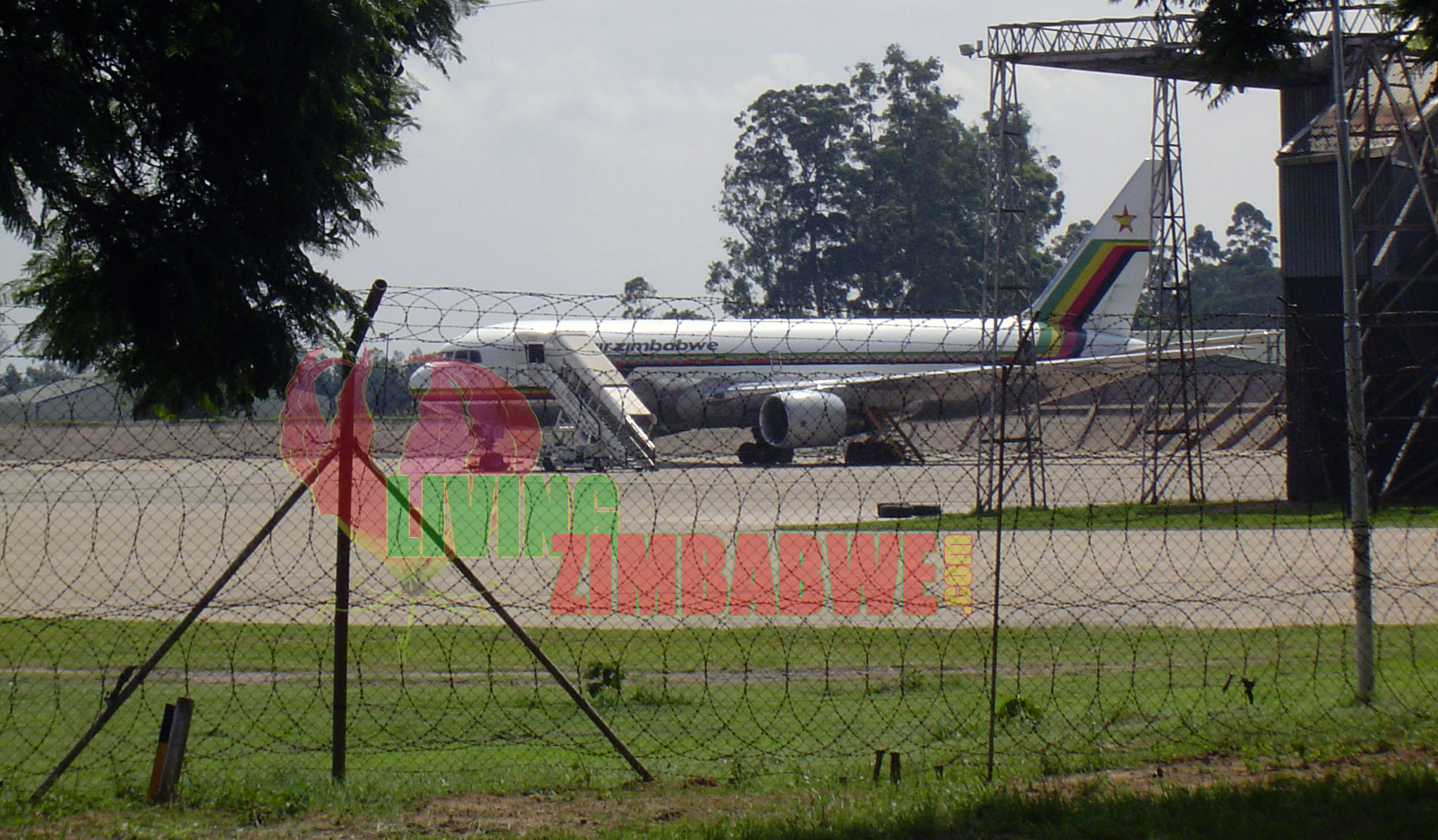
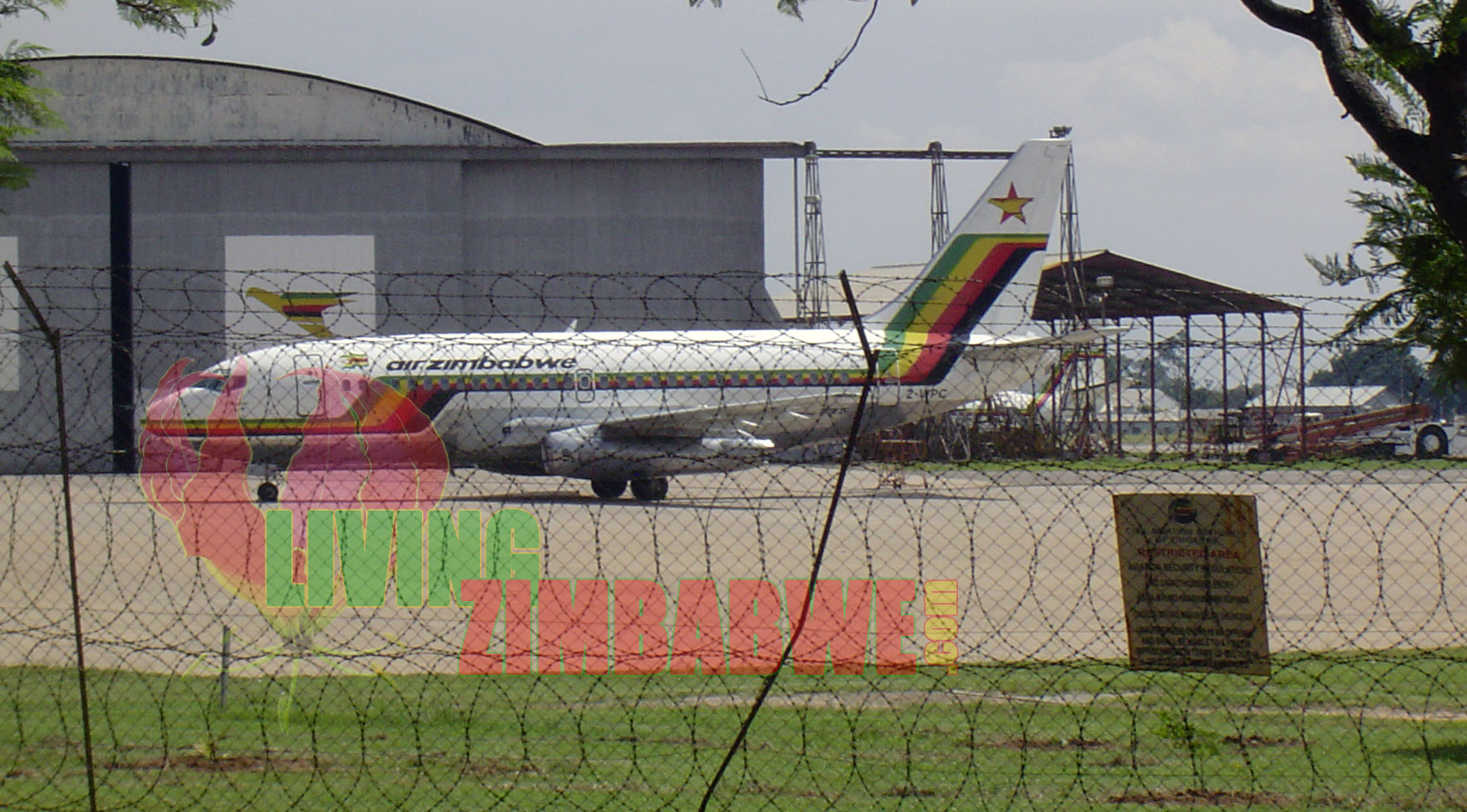
    Here are two Air Zimbabwe aircraft in the maintenance area at Harare International Airport. As with just about everything else in Zimbabwe, the national airline was not immune to events in Zimbabwe. It is plagued by a number of problems ranging from mismanagement to not being able to pay off huge debts. How they manage to keep in the skies is a mystery.

    Air Zimbabwe 737-200

    Air Zimbabwe 767-200ER

  • Landing at Harare International Airport

    For those of you who have not been to Zimbabwe for a while, here is footage of what you can expect to see when landing at Harare International Airport in mid November. The footage was taken from a South African Airways Boeing 737-800 flight from O.R. Tambo International Airport, Johannesburg.

  • Zimbabwe Listed as One of the Most Dangerous Destinations?

    Zimbabwe Police Brutality - This is NOT what Zimbabwe is about. I was reading through Forbes last week and came across an interesting article: World’s Most Dangerous Destinations. I was curious to see if Zimbabwe was listed amongst the likes of Iraq and Afghanistan and that it was. Forbes gathered the information from iJet, a company that specializes in assessing global threats. Zimbabwe was ranked five meaning – Control Risks: High security risk, insignificant terrorism risk and medium travel risk.

    I disagree with it because on a whole Zimbabwe is not a dangerous place and her citizens do not live in fear of losing their lives. Yes, Zimbabwe is experiencing a few problems at the moment but Zimbabweans are more worried about getting by than going out and causing chaos. Most of the violence that has taken place has been perpetrated by people with strong political affiliations. When situations have turned violent, these events have been isolated and died down pretty quickly.

    I don’t like seeing Zimbabwe being included on the list of the world’s most dangerous destinations. Even if it is only ranked as a ‘Control Risk’, being branded as a dangerous destination is enough to further tarnish the image of a nation. If someone was to see a country they intend on traveling to on such a list it would be a big deterrent for them visiting regardless of what kind of a risk it is said to pose.

    Various nations worldwide have warned their citizens against traveling to Zimbabwe, a step which I see as being a little extreme. A few tourists still do visit Zimbabwe and come out unscathed with pleasurable memories and hopefully a different perspective of life. On the whole Zimbabweans are peaceful people and Zimbabwe does not deserve to be branded as a dangerous destination.