Tag: Sanctions

  • Does a PayPal ‘Send Money’ Only Service Work for Zimbabwe?

    Does a PayPal ‘Send Money’ Only Service Work for Zimbabwe?

    Over the last few days there has been a lot of hype about the announcement that PayPal would be made available to the people of Zimbabwe. Residents can now sign up for personal or business accounts There has been some debate as to why PayPal was not available in Zimbabwe before this point and the simple answer to that question is sanctions. As you can see from the screenshot below (from 2010), PayPal services could not be accessed due to (users) being in a sanctioned country.
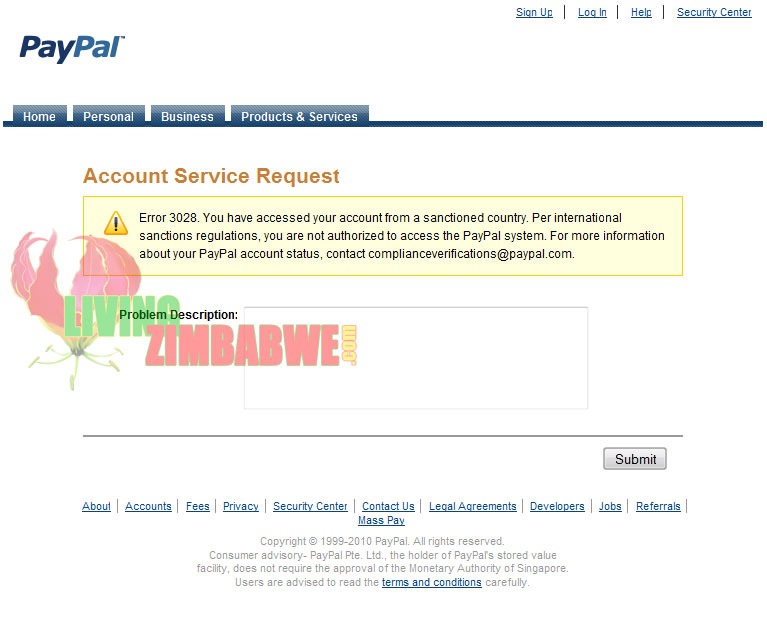
    PayPal-Sanctions-on-Zimbabwe

    The good news for those who really wanted to be able to use their services is that they can now do so without having to revert to weird and wonderful ways of circumventing the restrictions by using Payoneer cards and so on and so forth. The introduction of their services opens Zimbabwean consumers up to a world of online shopping. As a start, items can now be bought on eBay (PayPal’s parent company) with this functionality being extended to being able to pay for goods and services on a countless number of online stores and companies from around the world. The beauty of PayPal is the level of security it provides and that you can make payments to someone online without providing ’that’ particular website with your credit/debit card details.

    However, as far as Zimbabwe is concerned, there are some limitations with the first being the unbanked. If you don’t have a bank account then the chances of you having a credit or debit card are slim to none and this is something that you need in order to have a PayPal account. A considerable chunk of the population don’t transact in the informal sector which would exclude them in creating an account.

    The other side of the coin to providing an option for consumers to make payments is for merchants to be able to accept payments into their PayPal account. Businesses can open a business account which when you look at the signup screen says ‘for merchants who buy and sell online using their company name’. But, in the case of Zimbabwe, the ’sell online’ part of that statement will not apply.  There are currently restrictions in place that do not allow for companies to take advantage of PayPal’s payment solutions; something that we confirmed with PayPal:

    Despite the limitations for merchants, this can be seen as a step in the right direction in that international companies are now a little more open to setting up shop in Zimbabwe. But, as mentioned by a online commentator this move isn’t really in the best interest of Zimbabwean’s because it only serves to funnel money out of the country and doesn’t facilitate for payment inflows for local companies

    In your own opinion, does PayPal really work for Zimbabwe?
  • Emirates Flights To Harare, What It Means For Air Zimbabwe & Other Airlines

    Emirates Flights To Harare, What It Means For Air Zimbabwe & Other Airlines

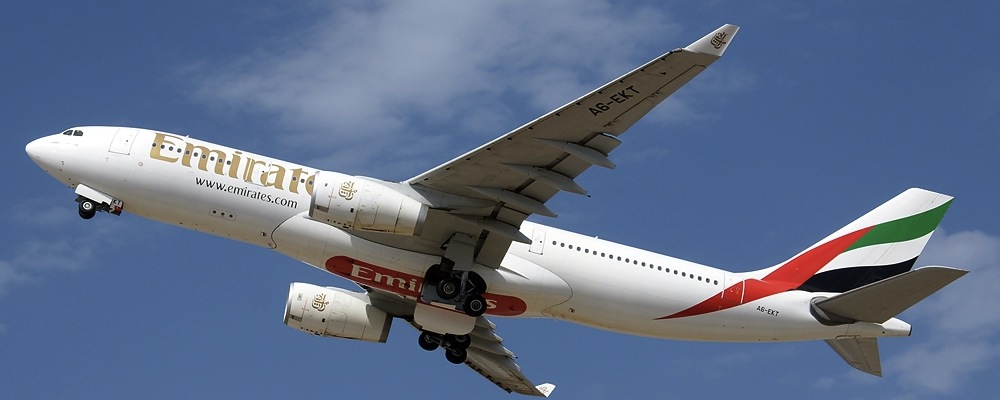
    Last month, Emirates announced that from 1 February 2012 they will start flying into Harare from Dubai via Zambia 5 times a week. EK713 will depart from Dubai every Monday, Tuesday, Wednesday, Friday and Sunday at 09:25am and arrive in Harare at 5:20pm with the return flight leaving Harare at 7:20pm. This is the first major airline after the withdrawal of services from other foreign airlines that will take to the Zimbabwean skies. This news will come as a welcome relief for the travelling public with the increase in choice they will bring.

    In years gone by, there have been reports of the government refusing to approve requests from various foreign carriers to service the nation. Some of these airlines once flew to Zimbabwe but for one reason or another, the powers that be did not accommodate their requests. With the entry of Emirates into the market, some questions come to mind.

    The first that comes to mind being, could this mean that the government may be a bit more receptive to other carriers looking to enter or re-enter Zimbabwe? Having airlines such British Airways (long-haul direct from London), Qantas, Lufthansa, Air France and KLM just to name a few flying to Zimbabwe again offering choice and bringing in much needed tourist dollars. The Tourists dollars will hopefully go towards rebuilding Zimbabwe.

    A second question that comes to mind is what it will mean for Air Zimbabwe and how the national airline will react? Over the past few months and even extending into years, Air Zimbabwe has been facing crisis after crisis such as debts running into the hundreds of millions as well as strike action by pilots and cabin crew. All of this as well as an aging fleet have impeded its service delivery and may be a cause for concern.

    Emirates is a well oiled machine and has been rated as one of the top ten airlines in the world (Skytrax). They fly a modern fleet of over 100 aircraft (with many more on order) to just about every part of the world at very competitive prices. Consumers may be more inclined to choose Emirates over Air Zimbabwe, which could spell even more trouble for them. But, this development may inadvertently force Air Zimbabwe to implement chances that get it on track to being a formidable competitor.

  • The So Called Targeted Sanctions on Zimbabwe

    The So Called Targeted Sanctions on Zimbabwe

    Whilst in Zimbabwe on a visit, I tried to access my PayPal account and was unsuccessful. All I got after entering in my details was the following message:

    Error 3028: You have accessed your account from a sanctioned country. Per international sanctions regulations, you are not authorized to access the PayPal system, For more information about your PayPal account status, contact complianceverification@paypal.com

    I do not have any political affiliations in Zimbabwe but here I find myself being affected by the TARGETED sanctions. My understanding was that the sanctions were targeted towards certain individuals and that they would not have an effect on the general population. My little experience obviously goes to show that this is not the case.

    A week or two after my arrival there was a newspaper article about a university student who tried to get her hands on demonstration software from ETAP Enterprises Solutions. Getting a hold of the demo disc entailed entering her address into a form which she did do. She was later told that they would not be able to provide her with the disc due to trade sanctions against Zimbabwe.

    I am not on the sanctions list and the student mentioned above may not be either. That experience has been an inconvenience and I am sure that there are a lot more Zimbabweans with no political associations who have experienced similar. It has also made me think about what kind of effect it has had on individuals, businesses and institutions that have been denied access to products and services that they would have otherwise have had the right to access. My guess is that they would have had a major negative that would have led to them finding a roundabout way of getting something or going without it completely and having to deal with it.

    If you take a look at some of the individuals on the sanctions list, they are living very opulently. Many a people in Zimbabwe may have been able to better their lives and those of others had there been no sanctions. It just makes me wonder whether there is a point to the sanctions and whether or not they have really worked?

  • Increasing Calls For Mugabe To Go!

    Rice, Bush, Tutu, Odinga, Brown and Sentamu are amongst the growing number of world figures speaking up against Mugabe and saying that it is time for him to step down. Whether or not the increasing number of calls for him to step down will have an effect is yet to be seen.

    As far as Mugabe is concerned, he has and is doing all he can to keep Zimbabwe alive. He is just going to continue blaming all of Zimbabwe’s problems on sanctions imposed by the West. Zimbabwe’s information minister Sikhanyiso Ndlovu was quoted as having said the following to reporters earlier in the week:

    “I don’t have kind words for all heads of state who have made utterances against Zimbabwe, one by one and I hope this is the last time they open their dirty mouths on Zimbabwe”

    “After squeezing and strangling the country with sanctions and contaminating it with cholera and anthrax, the West is seeking to use the window of opportunity provided by the disaster to justify military intervention”

    With that being the case, what are the chances of Mugabe listening to ultimatums from the West?

  • Sanctions Against Zimbabwe

    Over the years, a number of countries world wide have been placing sanctions on Zimbabwe. These sanctions have been mainly targeted towards members of the Mugabe regime. Countries imposing sanctions include the United States, Britain, the EU, Australia and New Zealand just to name a few. Sanctions include travel bans, financial sanctions and a ban on trading with companies that are linked to the Zimbabwe government.

    Now they are going a little further than just targeting people directly involved with the Zimbabwe government. Australia recently deported the children of top Zimbabwe Government officials who were studying there. The United States has just imposed new travel and financial sanctions and will also be deporting the children of Zanu-PF officials.

    These sanctions may have made things a little harder for those on the lists but their lives are still go on as they continue to do what they do. Even the travel bans aren’t 100% effective. They are still able to travel to countries that don’t want them. If there is a UN summit or similar conference there isn’t a lot that can be to prevent them from attending. For example, there has been a big debate going on over the last few weeks about whether or not to allow Mugabe to attend the EU-Africa Summit in Spain this weekend (8th-9th December). British Prime Minister Gordon Brown plans to boycott the summit in protest of Mugabe’s attendance.

    The effectiveness of these sanctions can be brought into question. Does imposing sanctions change anything in a nation? Have they been effective in Zimbabwe? Are they having an effect on the people they are meant for? What kind of an effect do they have on the people of Zimbabwe?