Tag: Movement For Democratic Change (MDC)

  • The Devil’s Advocate: What Price for Morality?

    The Devil’s Advocate: What Price for Morality?

    This piece was submitted on 15 December 2019 and was not published at the time due to a system error. Read it, leave a comment and share it with your tribe. The Living Zimbabwe Team.

    WR 29: THE DEVILS ADVOCATE: WHAT PRICE FOR MORALITY?

    Warmest greetings to you all despite the turbulent weather. In a week where we find ourselves in the midst of a fractious election, a particular topic has captured the imagination of a number of us, the ethics of a criminal defense attorney.

    Senior MDC member and [crucially] Masvingo Mayor Collen Maboke is representing Zanu PF youth accused of violently locking a Bikita engineer out of his office recently. The same Maboke who was ordered by President Chamisa to step down as the mayor of Masvingo on allegations that he had defied the party position in which he stood against MDC Alliance preferred candidate Godfrey Kurauone during the mayoral elections.

    Maboke was also accused of making a pact with Zanu PF councillors in the elections that saw the ruling party’s Wellington Mahwende coming in as a deputy mayor [The two have since buried the hatchet and Chamisa has since given Maboke the green light to take up his office at the Civic Centre].
    ZANU-PF has chided MDC politicians who are lawyers for taking up cases of ruling party officials accused of corruption.

    Zanu-PF political commissar Victor Matemadanda expressed concern over the development as it comes at a time when the Zimbabwe Anti-Corruption Commission (Zacc) recently arrested Tourism Minister Prisca Mupfumira over the criminal abuse office.

    “At the moment, every person who is accused of being corrupt in Zanu-PF is being represented by an MDC lawyer, not your ordinary lawyers, some who are MPs and one wonders what moral ground they have when they talk about corruption.’’

    “Are they really fighting corruption, or they just fight for money,” Matemadanda said.

    Zimbabweans have also expressed their concern over the representation of corrupt Zanu-PF officials by the opposition.

    Several members of the MDC, who are lawyers, are representing under-fire Zanu-PF officials – from the party’s vice national chairperson Job Sikhala, who has been retained as Walter Mzembi’s lead counsel, vice president Welshman Ncube who is representing former VP Phelekezela Mphoko. Mphoko is now suing Ncube for allegedly “neglecting” to transfer more than US$1.4m (R20.7m), part of an amount awarded to Mphoko and his son Siqokoqela after a protracted ownership battle for retailer Choppies Enterprises Ltd., and Tendai Biti who at one point represented former Reserve Bank governor Gideon Gono.

    Now, there is controversy about whether lawyers aligned to the MDC – which is a proponent of punishment for alleged Zanu-PF thieves – can mount a defence as to why the same alleged thieves should not go to jail.

    CASE FOR THE DEFENCE

    Defense lawyers are ethically bound to zealously represent all clients, those whom they think will be justly found guilty as well as those whom they think are factually innocent. A vigorous defence is necessary to protect the innocent and to ensure that judges and citizens—and not the police—have the ultimate power to decide who is guilty of a crime.

    A defendant may have done the act in question, but the client may have a valid defence that would exonerate him. For these reasons, among others, defence lawyers often do not ask their clients if they committed the crime. Instead, the lawyer uses the facts to put on the best defence possible and leaves the question of guilt to the judge or jury.

    The things you have to realize are (1) A person is innocent until proven guilty (usually beyond a reasonable doubt), (2) the government has unlimited resources at its disposal to prove a case, (3) prosecutors, judges, juries are all human beings, and not infallible and (4) there is a moral obligation to uphold the rights of all, especially the unpopular.

    The job of a lawyer is to ensure the government, from the arresting officer to the prosecutor, follow the rules that govern the criminal justice system. These rules are to protect the citizens from overreaching by the police and prosecutors. It’s a check against government power.

    “Whether the client is in fact guilty or not” is a common theme in anti-justice system arguments. First, your client is not guilty until proven otherwise. Second, just because someone thinks you’re guilty does not make them guilty, nor does it make them less deserving of their civil rights.

    You might think that shady-looking fellow “looks guilty” and fortunately, that’s not a reason to incarcerate someone. People can be mistaken, they can be wrong, they can have it “in” for your client, they can make errors along the way or they can be so blinded by vengeance, that they will want to punish a likely culprit, even if it’s not the correct person. As the accused’s lawyer, you have a moral obligation, both to your client and to the justice system, to ensure that none of that happens.

    ‘’It is the duty of a lawyer to accept any briefs in the Court in which he professes to practice provided the proper professional fee is offered unless there are special circumstances which justify his refusal.”
    ” A legal practitioner is obliged to accept the brief from the client….(he) is not only bound to accept the brief, he should put his best in discharging his responsibilities towards the cause. The rationale behind this rule is that legal practitioners should not pick and choose briefs they should handle in court. As officers of the court, they are not at liberty to select the cases to appear in since the primary duty of a legal practitioner appearing in a case in court is to assist the court in arriving at a just decision.

    The fact that a case is unpopular or that a client has a very bad criminal record or public record or that the legal practitioner believes that the accused person is guilty, may not justify his refusal to accept the client’s case. (This) …cab rank rule is mostly applied in criminal cases to prevent accused persons from being denied legal representation by lawyers owing to their bad record… “

    Below is an argument presented by my lecturer when l asked him this thorny question:

    ‘’Say you’re an A&E doctor. Into the A&E one night is wheeled a gang member who has just been shot in a gunfight and is bleeding out. The gang member himself is a bad man, and you hear he shot an innocent person in the gunfight himself. You may feel, morally, that he deserves punishment, deserves the gunshot, maybe even deserves to die.

    Do you let him die?

    Not if you’re an ethical doctor. You do your absolute bloody best to save the no-good’s life, because that’s your job. Judging him is up to the courts and to God. If you let him bleed out, no matter how bad he is, you have failed him, you’ve cheated him, and you’ve cheated yourself. You’ve even cheated the courts, because it was their right, not yours, to decide his punishment.’’

    There’s a reason that Maimonides’ Oath says, “May I never see in the patient anything but a fellow creature in pain.”

    Lawyers are the same way. We don’t have to like our clients. We can morally disapprove of them. We can even send them to another lawyer if our dislike of them is so intense that we can’t protect their interests adequately. But so long as we represent them, we do our absolute best, because that’s our moral obligation, just like the doctor with the gangster.

    Everyone deserves a fair hearing, even people accused of the most heinous crimes, and whether or not they actually committed those crimes. Even if they did commit them. So the ethics of defence lawyers, if you want, are the defence of liberty, of everybody’s right to due process, equal protection, and other technicalities, namely, the fundamental law of the land and the rules for a fair hearing involved in the rules of criminal procedure, evidence and the like.

    MORAL ARGUMENT

    For those in private litigation practice, no lawyer has to take the case of any client if they do not wish to. If the lawyer doesn’t believe in the client’s case, they shouldn’t take it on — in fact, doing so might run them at risk of violating one or more of our professions Rules of Professional Conduct, since it’s hard to provide someone with the best representation if you honestly believe them to be in the wrong in the matter.

    Disclosure of interest

    When lawyers are consulted about matters in which they have a personal interest, they must explain that interest to the client. This will let the client decide whether or not they want the lawyer to continue working for them.

    If the personal interest is significant and a lawyer’s advice could be affected by it, the solicitor must decline to work for the client and advise them to look for another solicitor.
    I would argue that corruption, embezzlement, murder, terrorism and wholesale violation of human rights, is of significant personal interest to all democrats in the MDC and in particular its leadership.

    Conflict of interest

    Equally, a lawyer cannot work for a client when there is a conflict between the interest of the client and the lawyer. This also applies to other organisations that lawyers work for. Where there is a conflict of interest, lawyers must inform all of the clients involved. Even where there is only a possible conflict of interest, lawyers should be very careful.

    There is an obvious and powerful argument that unjust advocacy is morally wrong: as a general rule, one should not knowingly pursue injustice.

    The ethical dilemmas facing a lawyer with a guilty client appear frequently in popular drama, where the ethical resolution is often supposed to be for the lawyer to betray his client by intentionally sabotaging the case.

    I propose a less extreme means of avoiding contributing to injustice: The lawyer should inform his client up front that he will refuse to advocate for a position that he, the lawyer, finds to be unjust. If the client wishes to retain the lawyer’s services after being informed of this condition, the lawyer then does no wrong by following through on the stated condition and indeed would do wrong by failing to follow through.

    Equating the bad acts of the accused with the lawyer representing them is a natural human impulse, especially when the crimes alleged are heinous and the defendants are unpopular.

    While we respect that every accused person has the right to legal representation of their choice, I would like us to be aware that people like Walter Mzembi are accused of corruption and it was Deputy Vice Chairperson Sikhala who took up the case.

    We once had Gono being a client of Vice President Biti and also of late Professor Ncube taking up Mphoko’s battles with the government.

    The masses out there are not so sophisticated that they see the difference between Biti the lawyer and Biti the politician. To them, they are seeing a top opposition leader defending a man accused of corruption, accused of murdering and maiming their relatives.

    The same people who you purport to fight as part of a system that has ruined their lives decimated their livelihoods and caused unimaginable suffering.

    The principle that one is innocent till proven guilty does not exist in the court of public opinion.”

    Have a wonderful weekend.

    By Tim Mutsekwa: Political Science and International Relations[University of Greenwich]
    Secretary for Party Business & Investments [MDC UK & Ireland]
    Twitter: @tsumekwa

    This has been a submission by Tim Mutsekwa.
    I am a honours graduate in Political Science and International Relations from the University of Greenwich[UK].l write a weekly piece called the WR [ Weekend Read] ,which is found on the MDC Southend Blog, as ”Weekend Read With Tim”, details l have supplied below. lt is also published on all relevant Whatsapp platforms and on the MDC London Facebook pages.l have been published in the online publication Nehanda Radio. link l provide below:
    https://nehandaradio.com/2019/11/28/tim-mutsekwa-mnangagwas-repression-a-case-for-a-peoples-revolt/ I am also the Secretary for Party Business and Investments [UK & Ireland] for the MDC.

    The views expressed in the article are those of the author and not necessarily Living Zimbabwe.

  • MDC Zimbabwe peaceful demonstration (14 April 2016) in pictures

    MDC Zimbabwe peaceful demonstration (14 April 2016) in pictures

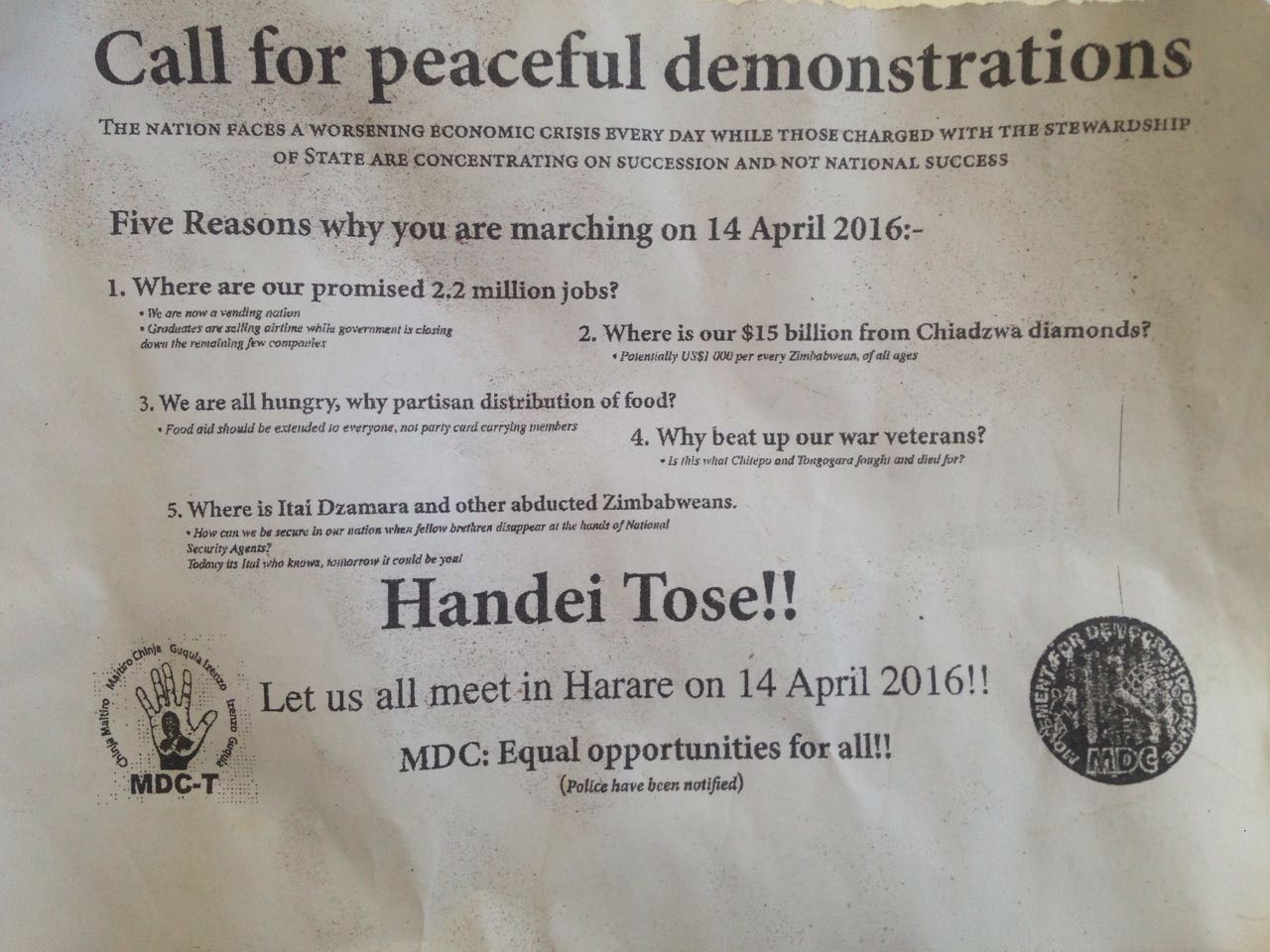
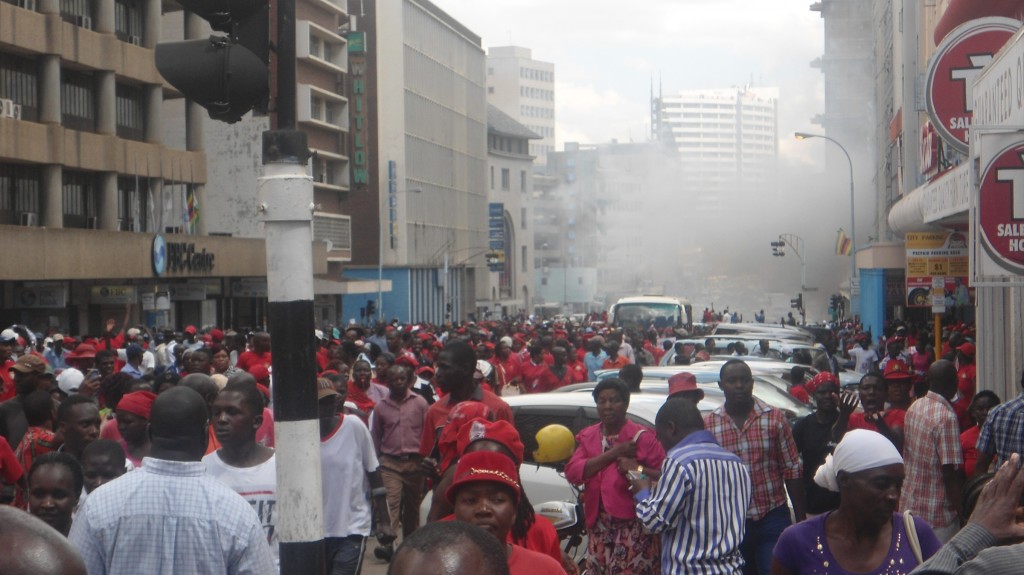
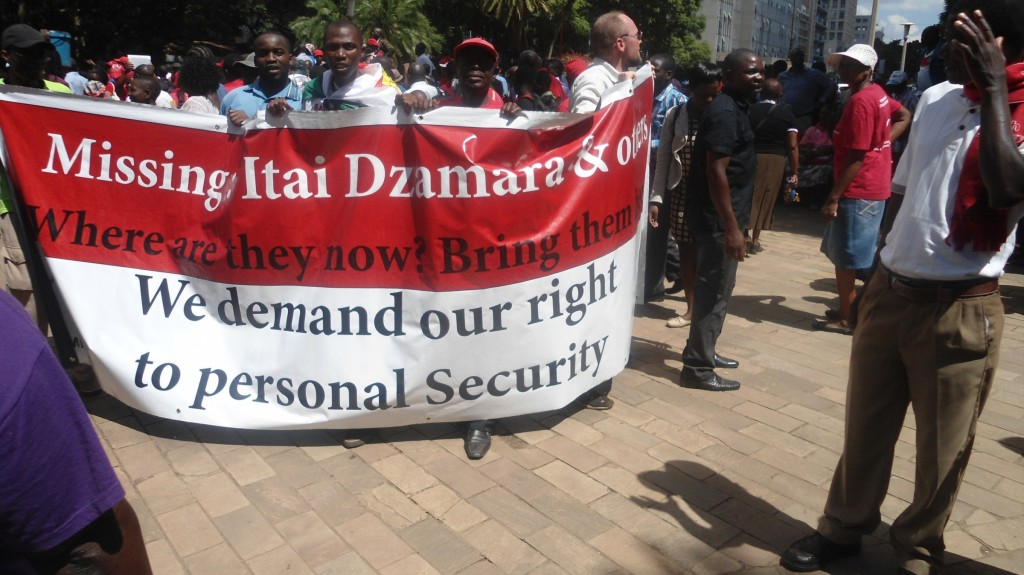
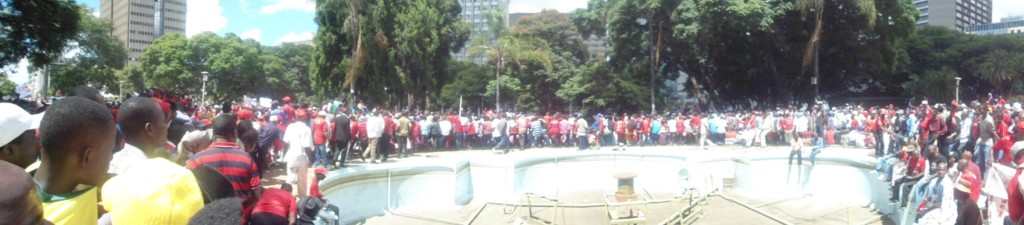
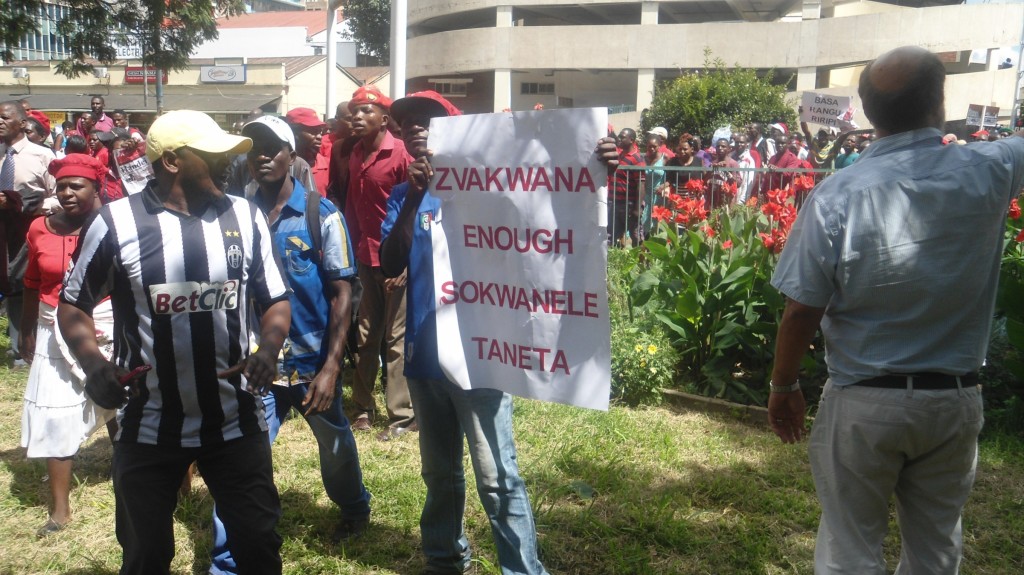
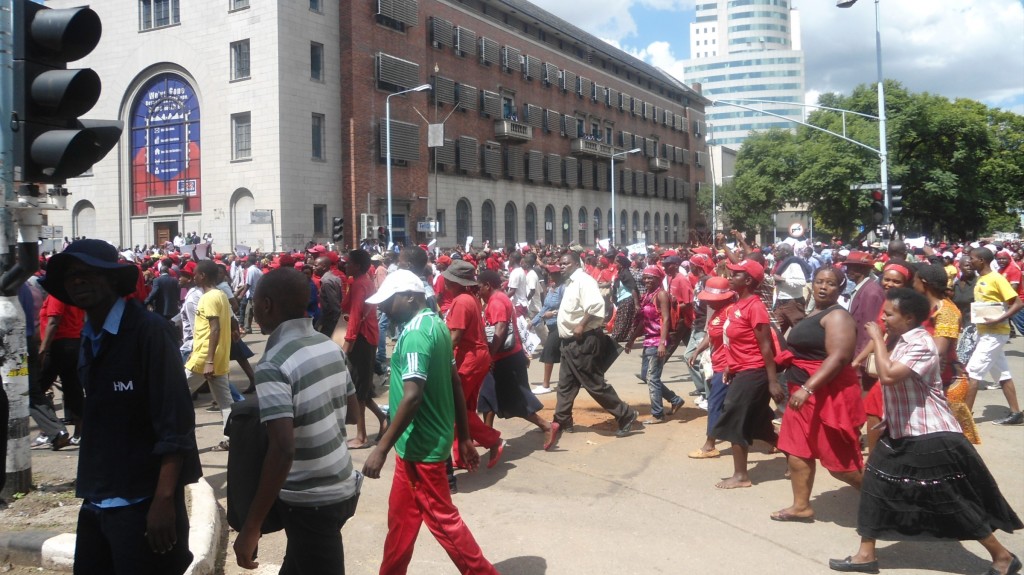
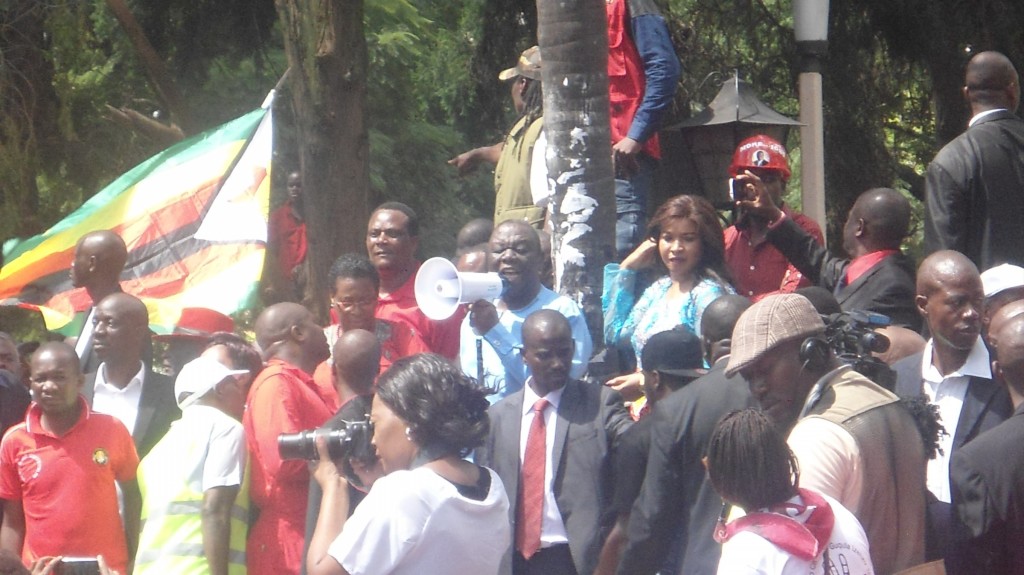
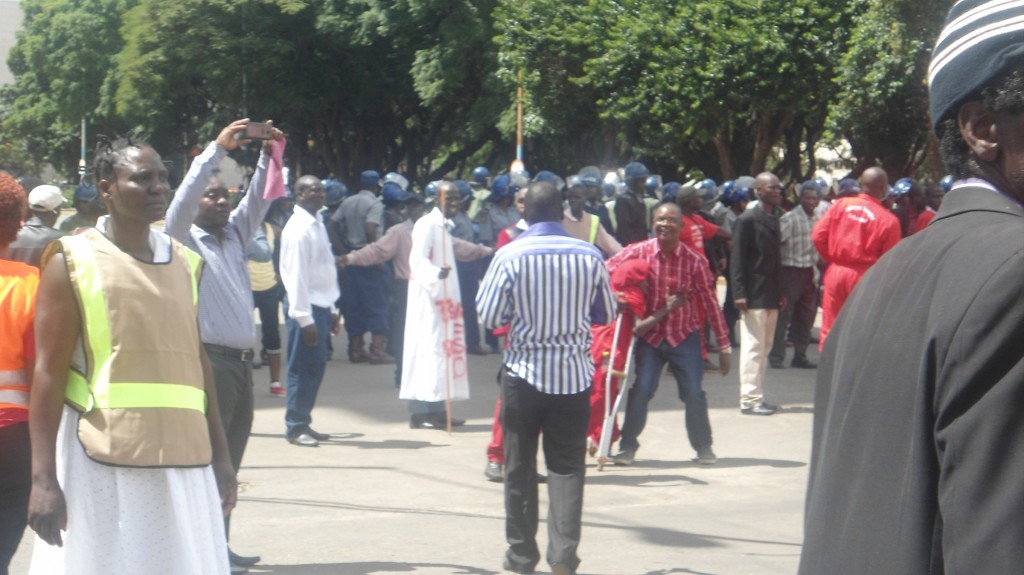
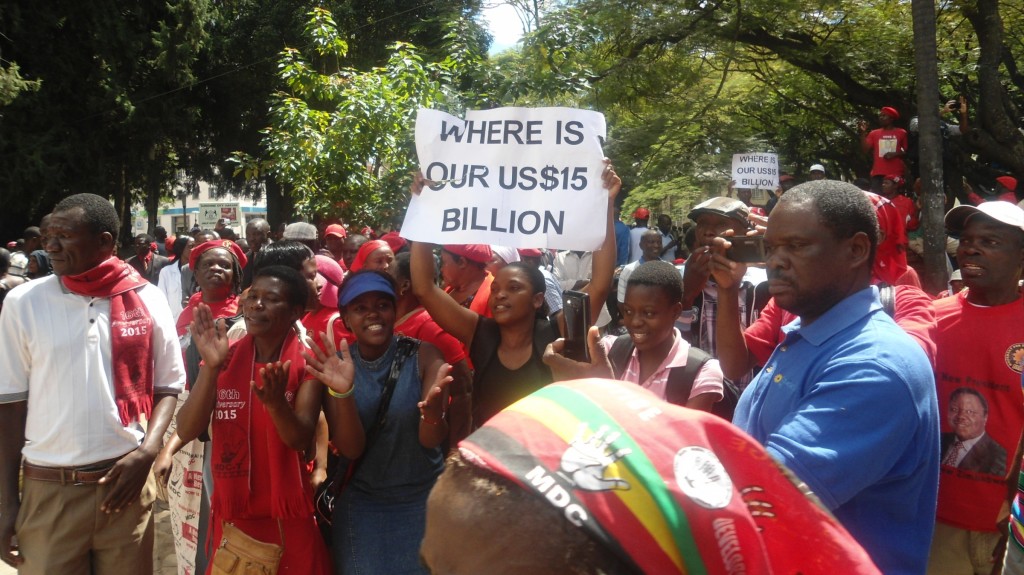
    The Movement for Democratic Change held a demonstration in the city centre of Harare today in protest of unemployment, corruption, lack of rule of law and the economic meltdown currently dogging the country.

    The leader of MDC former Prime Minister Morgan Tsvangirai addressed the protesters at Africa Unity Square where he implored the youths of Zimbabwe to safe guard their future and to stand up for their rights as enshrined in the constitution and “take them and not wait to have them given to them”.

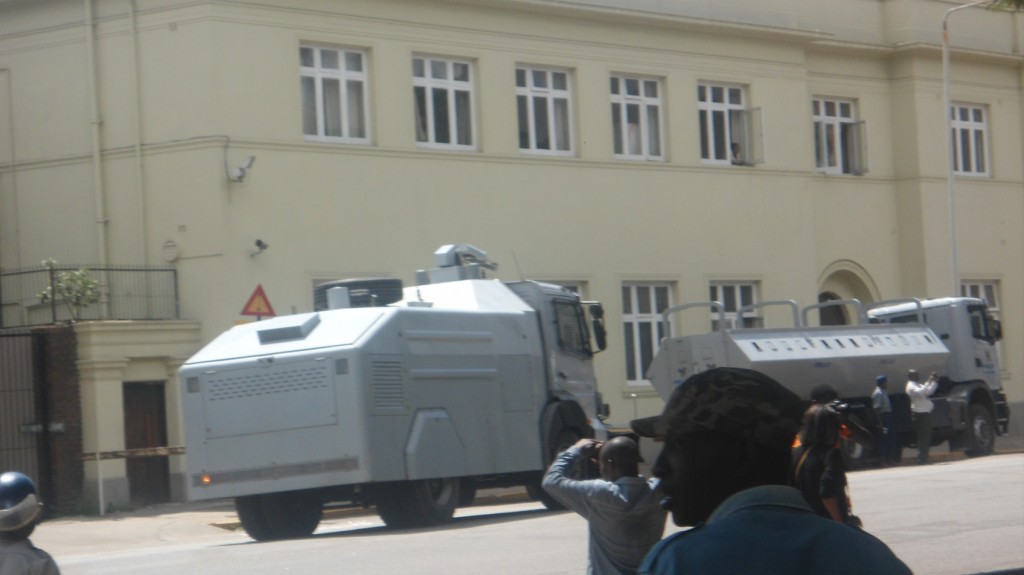
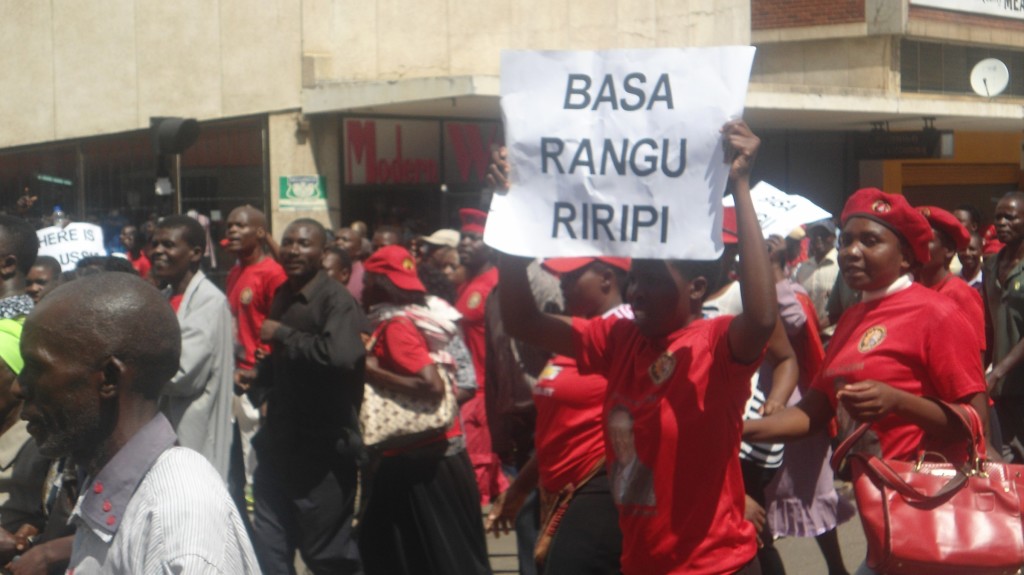
    He lamented the rampant corruption in the country and called for the return of the missing 15billion dollars from diamond sales which mysteriously disappeared in the government coffers. The protesters could be seen brandishing placards written “basa rangu riripi” as they were asking for the 2.2million jobs they were promised by the Zanu PF government, according to Mr. Tsvangirai “instead of 2million jobs, Zanu has created 2million beggars”. The Zimbabwe Republic Police were present to keep the peace and there was one isolated incident where tear gas was deployed, but the protest was relatively peaceful.

    This has been a submission by Kevin Ngwazane.
    You too can become a Citizen Journalist by submitting your story here: Citizen Journalism by Living Zimbabwe
    The views expressed in the article are those of the author and not necessarily Living Zimbabwe.

  • Tsvangirai’s First Real Post Election Defeat Interview

    Tsvangirai’s First Real Post Election Defeat Interview

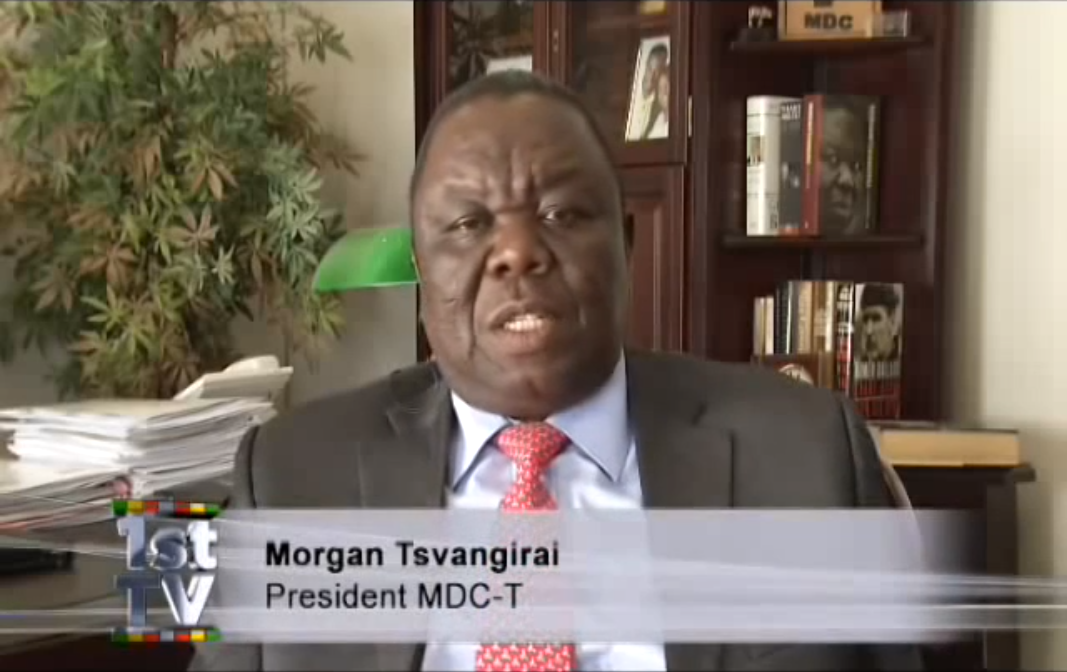
    The 2013 harmonised elections in Zimbabwe once again brought about a disappointing result for MDC-T as they failed to secure a win. Since the results were announced, the President of MDC-T, Morgan Tsvangirai has not been very vocal about the events that took place before, during and after 31 July, 2013.

    However, there have been a number of supporters and critics who have had a lot to say about him and the Movement for Democratic Change. This has included commentary from pundits that the party did not do much over the years to prepare themselves for the elections; that they haven’t done anything different to what they have done in the past to try and defeat Mugabe and Zanu-PF; that this event has marked the beginning of the end for Tsvangirai; that SADC/AU is not to blame; and the list goes on.

    He recently sat down for an interview with Violet Gonda on 1st TV where they discussed a number of issues surrounding the elections and the way forward for MDC-T. Even though what Tsvangirai has to say may seem a bit vague and confusing at times, it gives a bit more insight into his thoughts about the elections, his current frame of mind, possible actions that they may take and the way forward for the party.

    Watch it and let us know what your thoughts are (by leaving a comment below) on the future of Tsvangirai and MDC-T.

  • Wikileaks United States Embassy Harare Cable on Zimbabwe

    Some of you will know that Wikileaks recently released a number of confidential US embassy cables. As you can imagine, a number of them contained information or sentiments that the United States government may have rather not had the world know about. The US Embassy in Harare was not immune with a 2007 cable being released on what the then ambassador, Christopher Dell had to say about Zimbabwe.

    The full text of the cable (courtesy of Wikileaks) is as follows:

    Source Embassy Harare

    Classification CONFIDENTIAL

    C O N F I D E N T I A L SECTION 01 OF 04 HARARE 000638

    SIPDIS

    SIPDIS

    DEPARTMENT FOR P, AF, AND AF/S FOR MOZENA AND HILL,

    NSC FOR SENIOR AFRICA DIRECTOR B.

    PITTMAN AND B. LEO; USAID FOR M. COPSON AND E. LOKEN

    E.O. 12958: DECL: 07/12/2017

    TAGS: PGOV, PREL, ZI

    SUBJECT: The End is Nigh

    Classified By: Ambassador Christopher W. Dell under Section 1.4b/d

    1. (C) Having said my piece repeatedly over the last three years,

    I won’t offer a lengthy prescription for our Zimbabwe

    policy. My views can be stated very simply as stay the

    course and prepare for change. Our policy is working and it’s

    helping to drive change here. What is required is simply the grit,

    determination and focus to see this through. Then, when the changes

    finally come we must be ready to move quickly to help consolidate

    the new dispensation.

    THE SITUATION

    2. (C) Robert Mugabe has survived for so long because he is more

    clever and more ruthless than any other politician in

    Zimbabwe. To give the devil his due, he is a brilliant

    tactician and has long thrived on his ability to abruptly

    change the rules of the game, radicalize the political

    dynamic and force everyone else to react to his agenda.

    However, he is fundamentally hampered by several factors:

    his ego and belief in his own infallibility; his obsessive

    focus on the past as a justification for everything in the

    present and future; his deep ignorance on economic issues

    (coupled with the belief that his 18 doctorates give him

    the authority to suspend the laws of economics, including

    supply and demand); and his essentially short-term,

    tactical style.

    3. (C) While his tactical skills have kept him in power for 27

    years, over the last seven this has only been achieved by a

    series of populist, but destructive and ultimately

    self-defeating moves. In reaction to losing the 2000

    referendum on the constitution, a vengeful Mugabe unleashed

    his “Green Bombers” to commit land reform and in the

    process he destroyed Zimbabwe’s agricultural sector, once the

    bedrock of the economy. While thousands of white farmers

    saw their properties seized, hundreds of thousands of black

    Zimbabweans lost their livelihoods and were reduced to utter

    poverty. In 2005, having been forced to steal victory by

    manipulating the results of an election he lost, Mugabe

    lashed out again, punishing the urban populace by launching

    Operation Murambatsvina. The result was wholesale

    destruction of the informal sector, on which as much as

    70-80 percent of urban dwellers had depended, and the

    uprooting of 700,000 Zimbabweans. The current inflationary

    cycle really began with Murambatsvina, as rents and prices

    grew in response to a decrease in supply.

    4. (C) And now, faced with the hyperinflationary consequences

    of his ruinous fiscal policies and growing reliance on the

    printing press to keep his government running, Mugabe has

    launched Operation Slash Prices. This has once again given

    him a very temporary boost in popularity (especially among

    the police, who have led the looting of retail outlets and

    now seem well positioned to take a leading role in the

    black market economy) at the cost of terrible damage to the

    country and people. Many small grocery and shop owners,

    traders, etc., will be wiped out; the shelves are

    increasingly bare; hunger, fear, and tension are growing;

    fuel has disappeared. When the shelves are still empty

    this time next week, the popular appeal of the price roll

    back will evaporate and the government simply doesn’t have

    the resources to replace the entire private commercial

    sector and keep Zimbabweans fed. It may attempt to do so

    by printing more money, adding even more inflationary

    pressure on a system already reeling from the GOZ’s

    quasi-fiscal lunacy combined with the price impact of

    pervasive shortages. The increasingly worthless Zim dollar

    is likely to collapse as a unit of trade in the near

    future, depriving the GOZ of its last economic tool other

    than sheer thuggery and theft of others’ assets.

    5. (C) With all this in view, I’m convinced the end is not

    HARARE 00000638 002 OF 004

    far off for the Mugabe regime. Of course, my predecessors

    and many other observers have all said the same thing, and

    yet Mugabe is still with us. I think this time could prove

    different, however, because for the first time the

    president is under intensifying pressure simultaneously on

    the economic, political and international fronts. In the

    past, he could always play one of these off against the

    other, using economic moves to counter political pressure

    or playing the old colonial/race/imperialist themes to buy

    himself breathing room regionally and internationally. But

    he is running out of options and in the swirling gases of

    the new Zimbabwean constellation that is starting to form,

    the economic, political and international pressures are

    concentrating on Mugabe himself. Our ZANU-PF contacts are

    virtually unanimous in saying reform is desperately needed,

    but won’t happen while the Old Man is there, and therefore

    he must go (finding the courage to make that happen is

    another matter, however, but even that may be coming closer).

    This is not some sudden awakening on the road to

    Damascus, but a reflection of the pain even party insiders

    increasingly feel over the economic meltdown. We also get

    regular, albeit anecdotal, reports of angry and

    increasingly open mutterings against Mugabe even in ZANU-PF’s

    traditional rural bastions. Beginning in March, the

    other SADC leaders finally recognized (in the wake of the

    terrible beatings of March 11 and the international outcry

    that followed–another self-inflicted wound for Mugabe)

    that Zimbabwe is a problem they need to address. Thabo

    Mbeki appears committed to a successful mediation and is

    reportedly increasingly irritated with Mugabe’s efforts to

    manipulate him or blow him off altogether. If Mugabe

    judges that he still commands all he surveys by virtue of

    being the elder statesman on the scene, he may be

    committing yet another serious blunder. Finally, one does

    well to recall that the only serious civil disturbances

    here in a decade came in 1998 over bread shortages, showing

    that even the famously passive Shona people have their

    limits. The terror and oppression of the

    intervening years have cowed people, but it’s anyone’s guess

    whether their fear or their anger will win out in the end.

    WHAT WILL THE END LOOK LIKE?

    6. (C) This is the big, unanswerable question. One thing

    at least is certain, Mugabe will not wake up one morning a

    changed man, resolved to set right all he has wrought. He

    will not go quietly nor without a fight. He will cling to

    power at all costs and the costs be damned, he deserves to

    rule by virtue of the liberation struggle and land reform and

    the people of Zimbabwe have let him down by failing to

    appreciate this, thus he needn’t worry about their

    well-being. The only scenario in which he might agree to

    go with a modicum of good grace is one in which he

    concludes that the only way to end his days a free man is

    by leaving State House. I judge that he is still a long

    way from this conclusion and will fight on for now.

    7. (C) The optimal outcome, of course, and the only one that

    doesn’t bring with it a huge risk of violence and conflict, is

    a genuinely free and fair election, under international

    supervision. The Mbeki mediation offers the best, albeit

    very slim, hope of getting there. However, as Pretoria

    grows more and more worried about the chaos to its north

    and President Mbeki’s patience with Mugabe’s antics wears

    thin, the prospects for serious South African engagement

    may be growing. Thus, this effort deserves all the support

    and backing we can muster. Less attractive is the idea of

    a South African-brokered transitional arrangement or

    government of national unity. Mbeki has always favored

    stability and in his mind this means a ZANU-PF-led GNU, with

    perhaps a few MDC additions. This solution is more likely

    to prolong than resolve the crisis and we must guard

    against letting Pretoria dictate an outcome which

    HARARE 00000638 003 OF 004

    perpetuates the status quo at the expense of real change

    and reform.

    8. (C) The other scenarios are all less attractive: a popular

    uprising would inevitably entail a bloodbath, even if it

    were ultimately successful; Mugabe’s sudden, unexpected

    death would set off a stampede for power among ZANU-PF

    heavy weights; a palace coup, whether initiated within

    ZANU-PF or from the military – in which Mugabe is removed,

    killed, exiled or otherwise disposed of, could well devolve

    into open conflict between the contending successors. Similarly,

    some form of “constitutional coup” i.e., a change at the top

    engineered within the framework of ZANU-PF’s “legitimate”

    structures could well prove to be merely the opening bell

    in a prolonged power struggle. None of the players is

    likely to go quietly into the night without giving everything

    they have, including calling on

    their supporters in the security services. Moreover, experience

    elsewhere would suggest that whoever comes out on top

    initially will struggle, and more than likely fail, to halt

    the economic collapse. Thus, there is a good prospect of

    not one but a series of rapid-fire “transitions,” until

    some new, stable dispensation is reached.

    9. (C) The final, and probably worst, possibility is that Mugabe

    concludes he can settle for ruling over a rump Zimbabwe,

    maintaining control over Harare and the Mashona heartland,

    the critical forces of the National Reserve Force and CIO

    and a few key assets–gold, diamonds, platinum and Air

    Zimbabwe to fund the good times. Under this scenario the

    rest of the country, in one of the comrade’s favorite

    phrases, could “go hang,” leaving it to the international

    community to stave off the worst humanitarian consequences.

    WHAT OF THE OPPOSITION?

    10. (C) Zimbabwe’s opposition is far from ideal and I leave

    convinced that had we had different partners we could have

    achieved more already. But you have to play the hand you’re dealt.

    With that in mind, the current leadership has little executive

    experience and will require massive hand holding and assistance

    should they ever come to power.

    11. (C) Morgan Tsvangarai is a brave, committed man and, by and

    large, a democrat. He is also the only player on the scene

    right now with real star quality and the ability to rally

    the masses. But Tsvangarai is also a flawed figure, not

    readily open to advice, indecisive and with questionable

    judgment in selecting those around him. He is the indispensable

    element for opposition success, but possibly an albatross around

    t heir necks once in power. In short, he is a kind of Lech Walesa

    character: Zimbabwe needs him, but should not rely on his executive

    abilities to lead the country’s recovery. Arthur Mutambara is young

    and ambitious, attracted to radical, anti-western rhetoric and

    smart as a whip. But, in many respects he’s a light-weight

    who has spent too much time reading U.S. campaign messaging

    manuals and too little thinking about the real issues. Welshman

    Ncube has proven to be a deeply divisive

    and destructive player in the opposition ranks and the

    sooner he is pushed off the stage, the better. But he is

    useful to many, including the regime and South Africa, so

    is probably a cross to be borne for some time yet. The

    prospects for healing the rift within the MDC seem dim,

    which is a totally unnecessary self-inflicted wound on

    their part this time. With few exceptions–Tendayi Biti,

    Nelson Chamisa–the talent is thin below the top ranks.

    The great saving grace of the opposition is likely to be

    found in the diaspora. Most of Zimbabwe’s best

    professionals, entrepreneurs, businessmen and women, etc.,

    have fled the country. They are the opposition’s natural

    allies and it is encouraging to see signs, particularly in

    South Africa and the UK, that these people are talking,

    HARARE 00000638 004 OF 004

    sharing ideas, developing plans and thinking together about

    future recovery.

    12. (C) Unfortunately, among the MDC’s flaws is its inability to

    work more effectively with the rest of civil society. The

    blame for this can be shared on both sides (many civil

    society groups, like the NCA, are single-issue focused and

    take the overall dynamic in unhelpful directions; others,

    like WOZA, insist on going it alone as a matter of

    principle), but ultimately it falls to the MDC as the

    largest and the only true political party, to show the

    way. Once again, however, these are natural allies and

    they have more reason to work together than fight against each

    other.

    STAYING THE COURSE, PREPARING FOR CHANGE

    13. (C) If I am right and change is in the offing, we need to

    step up our preparations. The work done over the last year on

    transition planning has been extremely useful, both for

    stimulating a fresh look at our own assumptions and plans

    and for forging a common approach among the traditional

    donor community. But the process has lagged since the

    meetings in March in London and should be re-energized. It is

    encouraging in this respect that USAID Washington has

    engaged the Mission here in discussing how we would use

    additional resources in response to a genuinely

    reform-minded government . I hope this will continue and

    the good work done so far will survive the usual

    bloodletting of the budget process.

    1. (C) The official media has had a field day recently whooping

    that “Dell leaves Zimbabwe a failed man”. That’s not quite

    how it looks from here. I believe that the firm

    U.S. stance, the willingness to speak out and stand up,

    have contributed to the accelerating pace of change.

    Mugabe and his henchman are like bullies everywhere: if

    they can intimidate you they will. But they’re not used to

    someone standing up to them and fighting back. It catches them

    off guard and that’s when they make mistakes. The howls of protest

    over critical statements from Washington or negative coverage

    on CNN are the clearest proof of how this hurts them. Ditto

    the squeals over “illegal sanctions.” In addition, the regime

    has become so used to calling the shots and dictating the

    pace that the merest stumble panics them. Many local

    observers have noted that Mugabe is panicked and

    desperate about hyperinflation at the moment, and hence he’s

    making mistakes. Possibly fatal mistakes. We need to

    keep the pressure on in order to keep Mugabe off his game

    and on his back foot, relying on his own shortcomings to do

    him in. Equally important is an active U.S. leadership

    role in the international community. The UK is ham-strung

    by its colonial past and domestic politics, thus, letting them

    set the pace alone merely limits our effectiveness. The EU is

    divided between the hard north and its soft southern

    underbelly. The Africans are only now beginning to find

    their voice. Rock solid partners like Australia don’t

    pack enough punch to step out front and the UN is a

    non-player. Thus it falls to the U.S., once again, to take

    the lead, to say and do the hard things and to set the agenda.

    Hundreds, maybe thousands, of ordinary Zimbabweans of all

    kinds have told me that our clear, forthright stance has

    given them hope and the courage to hang on. By this regime’s

    standards, acting in the interests of the people may indeed be

    considered a failure. But I believe that the opposite is true,

    and that we can be justifiably proud that in Zimbabwe we have

    helped advance the President’s freedom Agenda. The people of

    this country know it and recognize it and that is the true

    touchstone of our success here.

  • A Violent Response: New Documentary Film by Hopewell Chin’ono

    The award winning Journalist and Filmmaker Hopewell Chin’ono is at it again. He has put together another documentary film called A Violent Response. The documentary covers some of the actions carried out by the government after the March 2008 elections. Here is the trailer of the film which is due to be released in December:

  • Heather Bennett Says It All

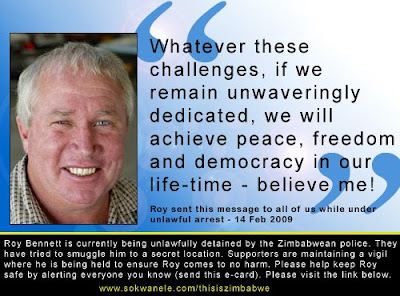
    MDC Treasurer, Roy Bennett returned to Zimbabwe on the 30th of January after living in exile in South Africa since 2006. He flew Zimbabwe to support MDC decision to join forces with Mugabe’s Zanu PF and also after assurance from Morgan Tsvangirai that everything would be okay if he returned. He was however arrested on February the 13th at Charles Prince Airport whilst on his way back to South Africa. He was first charged with treason but they have since changed to attempt to commit terrorism, banditry and sabotage and now he being charged under Section 61 of the colonial, Apartheid type law, Public Order and Security Act (POSA) – conspiring to acquire arms with a view to disrupting essential services.

    He is being held at the Mutare police station and he is no stranger to prison. In 2004 he spent eight months in prison after a scuffle with the then Justice Minister Patrick Chinamasa who called his ancestors ‘murderers and thieves’. A short while after his release from prison the secret police were after him again with all sorts of accusations which is when he decided it would be best to slip out of the country.

    Heather Bennett, Roy’s wife spoke to SW Radio Africa about her husbands arrest and there were a couple of things she said that struck a cord viz;

    “If Morgan Tsvangirai has no power to protect his top leadership, the rest of the country is in big trouble because nothing is going to change.”

    “If they get away with this Morgan Tsvangirai may as well not even be there because they will walk all over him. And unless he shows the leadership now it is going to be a waste of time having an inclusive government anyway.”

    This is the start of power sharing and it just goes to show who is in control. Roy Bennett’s arrest is something that is unwarranted and those holding him know it too – just look at how they can’t decide on what to charge him with. Going back to Zimbabwe at the time he did may not have been a good idea and why he decided to is anyone’s guess. Nonetheless, what Mrs. Bennett had to say about the GNU was straight to the point and a fact that cannot be ignored. If Tsvangirai cannot protect Roy Bennett, what is the point of him being Prime Minister?

    Listen to Heather Bennett’s interview on SW Radio Africa here

    Roy Bennett – Movement For Democratic Change Treasurer

  • Tsvangirai Now Sleeping With the Devil

    Its official, Morgan Richard Tsvangirai is sleeping with the devil. February 11, 2009 was the day that he was officially sworn in as Prime Minister of Zimbabwe by his long time rival Robert Gabriel Mugabe. This event is supposed to pave the way for a unity government but is it really going to be a unity government? Mugabe and Tsvangirai are hard nuts to crack and both have different ideologies on the way the country should be run.

    The chance of Mugabe being a willing and co-operative partner in a unity government is something that one can only believe when it happens. As crazy as he is, he is a smart man who has managed to outwit his opponents and brainwash entire organisations such as SADC who seem to see no reason to remove him from power.
    He has a strong personal connection with Zimbabwe but his misdirected passion has resulted in an almost failed state. Regardless of all of that, he still declares Zimbabwe as being his. With that being his frame of thought, what are the chances of him really sharing power with MDC?

    Tsvangirai on the other hand, however unhappy he may have been with the way the whole agreement was to be played out still went ahead with it. With the way events have unfolded in the past few months it seems as if Morgan was forced into the agreement if he wanted to play any sort of meaningful role in Zimbabwean politics. He was given ultimatums by Mugabe and SADC that basically said take what you are being offered or have nothing at all. MDC is now part of the unity government and they have made many promises to the people of Zimbabwe. Now we all wait and see if they will live up to them.

    Click here to read the full text of The Inauguration Speech of the Prime Minister of Zimbabwe, His Excellency, Morgan Tsvangirai

  • The Mugabe, Tsvangirai and SADC Circus

    The Mugabe, Tsvangirai and SADC Circus

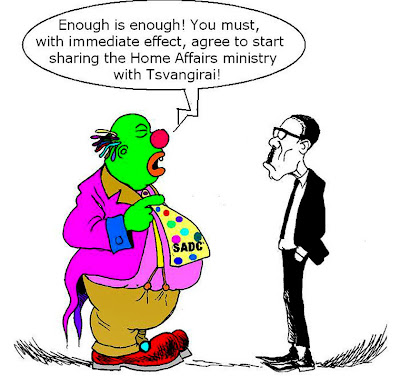
    The cartoon (courtesy of newzimbabwe.com) describes the one word that comes to mind when I think of Mugabe, Tsvangirai, Mbeki and SADC, ‘CIRCUS!’ The only difference with my mental image is that I see Mugabe as the ringmaster. The ringmaster is the most visible performer in a circus and guides everyone through the show in a dramatic manner. Mugabe seems to be the one calling all the shots and laying out how the sharing of power will be played out. SADC are bunch of clowns who are just there to do their job and Tsvangirai is there as a performer who wants to be the ringmaster. With that being the case he rebels against how Mugabe wants the show to be played out with the end result being the show not being played out at all.

    Almost two months after signing the power sharing agreement there is no power sharing and still no government. The main things that have taken place that are causing dispute include Mugabe taking control of ministries that Tsvangirai feels he should be in control of. SADC has once again been called upon to reach some kind of resolve but no nothing comes of the hours and hours of discussion. If anything, SADC seems to be leaning more towards being in favour of what Mugabe decides upon. How they show any sort of support for Mugabe is a mystery. What is it that he has that SADC cannot confront him with the honest truth about his actions and what he really needs to do?

    This is all that SADC had to say about Zimbabwe at the Extra-Ordinary Summit of the SADC Heads of State and Government in South Africa on November 9, 2008 (extract from the summit text):

    10. The Extra Ordinary Summit considered the political and security situation in Zimbabwe and observed that no government has been formed subsequent to the holding of the elections and the signing of the Global Political Agreement. As a result, the country is unable to effectively address the challenges facing the people of Zimbabwe .

    11. In view of the above, Summit decided that:

    (i) the Inclusive Government be formed forthwith in Zimbabwe ;

    (ii) the Ministry of Home Affairs be co-managed between the ZANU-PF and MDC-T;

    (iii) the efficacy of the arrangement referred to in paragraph 2 above, be reviewed after six (6) months by the Parties with the assistance of the guarantors, SADC, AU and the Facilitator.

    (iv) to give effect to these decisions and the provisions of the Global Political Agreement, the Parties must, without any further delay, introduce the Constitution of Zimbabwe Amendment Number 19.

    12. The Extra-Ordinary Summit appreciated the efforts of His Excellency Thabo Mbeki, Former President of the Republic of South Africa and the Facilitator of the Political Dialogue on Zimbabwe in finding an amicable solution to challenges facing the Republic of Zimbabwe and encouraged him to continue with his mediation efforts.

    13. The Extra-Ordinary Summit will continuously remain seized with the ongoing political situation in the Democratic Republic of Congo and the Republic of Zimbabwe.

    What they proposed is basically the same thing that they have been asking Mugabe and Tsvangirai to do over and over again over the months. The same things keep getting repeated and all parties are caught in a vicious cycle that they clearly cannot get out of.

    Solidarity Peace Trust Zimbabwe Hunger Alert – 10 October, 2008Zimbabwe is hanging on a thread and sees a unity government as the one thing that will bring it out of its crisis. Foreign donor agencies have clearly stated that Aid will not be delivered to Zimbabwe until a new Government is formed. As Mugabe, Tsvangirai, Mbeki and SADC leaders continue to go back and forth and hold talks for hours and hours the people of Zimbabwe who have run out of options and don’t know what to do to survive wait to die. It is estimated that at the beginning of next year, 5.1 million Zimbabweans (45% of the population) will need food assistance. In October Solidarity Peace Trust put out a Hunger Alert report that follows the plight of two children; one with kwashiorkor and the other marasmus (click on the photo of the child with kwashiorkor to read the report). With all of that being the case, a World Food Programme appeal for funds to feed Zimbabweans just went completely unfunded. As a leader, just seeing a picture of a child like that should be more than enough to prompt you to do something about it.
    Zimbabwe wants a change, Zimbabwe needs a change. Where is our Obama?

  • ZANU-PF & MDC Power Sharing Deal: Thoughts, Video, Text

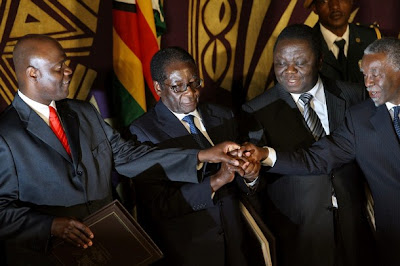
    Robert Mugabe, Morgan Tsvangirai, Arthur Mutambara, Mbeki After Signing the Power Sharing Agreement, 15 September 2008

    15 September 2008 was the day that President Robert Gabriel Mugabe, Morgan Tsvangirai and Arthur Mutambara signed the historic power sharing agreement that leaves Mugabe as President, Tsvangirai as Prime Minister and Mutambara as Deputy Prime Minister. This was something that I did not think would happen because of what Mugabe has had to say about MDC and the number of times an agreement has tried to be reached but failed. For the first time in 28 years Mugabe will not have a complete hold on power. Amongst other things, the agreement leaves President Mugabe in charge of the armed forces and he will continue to chair cabinet. Prime Minister Tsvangirai will be in charge of the police and will lead the new council of ministers.

    In a way the signing of the agreement was history repeating itself as Mugabe went through the same thing on April 18 1980 when he became Prime Minister of Zimbabwe. During his speech, Tsvangirai quoted Mugabe’s speech from 1980 and said, “Let us turn our swords into ploughshares. If you were my enemy yesterday, today we are bound by the same patriotic duty and destiny.” Quoting that up left me feeling more unsure about having Tsvangirai in the position he now sits in. His speech may have gotten louder cheers than Mugabe’s but what he had to say did not seem like something that was from within and something that he meant. It seemed like something that was put together to please whoever was willing to pay serious attention to it or that person who has lost all hope and needed to hear someone say “I will make things better.” Is he going to be the person to rebuild the infrastructure and bring in international support?

    Mugabe’s speech was entertaining and I enjoyed it more than Tsvangirai’s even though he is a man gone mad. He went up to the podium with no notes and spoke his mind. He stated that there were parts of the agreement that he does not like and that the formation of a unity government would not be smooth sailing. Staying true to form, Mugabe took the opportunity to attack the British and American’s and blamed the problems of today on our former colonial power.

    During Mugabe’s speech the camera focused on Tsvangirai now and then and it looked as if he deliberately had his hand over his face with closed eyes as if to show that he could care less about what his new political partner had to say. The other leaders on stage such as Thabo Mbeki and King Mswati looked like they were paying attention to what Mugabe had to say. Tsvangirai’s posture and mannerisms showed a lack of etiquette, the kind of behaviour I would expect from a rebellious boy.

    One thing that Mugabe brought up that caught my attention was ‘democracy’ where he said: “Democracy in Africa. Its a difficult proposition, because always the opposition will want much more than what it deserves. The opposition will want to be ruling party and it will devise ways and means of getting there. Including violence. I’m not just refering to the system as we see it in Africa.” He later said that he was committed to the agreement but I find that hard to believe because of his stance on democracy. With that frame of mind how can someone be confident that the union will be fruitful?

    As far as Mutamabara goes, I was not too impressed by his speech. He sounded unsure of himself and what he had to say. I will leave it at that.

    Power is addictive and once someone gets a taste of it they want more and more. For most if not all this leads to a shift in their purpose and the reason why they wanted to be in the position they are in. All politicians are liars and they will say what they need to in order to be elected. It is up to us to choose whoever we think will work towards our best interests. Mugabe has failed the nation and needs to go but I do not see Tsvangirai as the one will bring the nation back to its former glory and I am not at all optimistic about this agreement. Tsvangirai mentioned that he was praying to God for wisdom, I am praying to God and continue to have faith that Zimbabwe will be delivered from the abyss soon.

    I am lost for words………………….


    Here are some documents that may be of interest:

    Agreement Between Zanu-PF and MDC – 15 September 2008

  • Video of Mugabe Being Booed and Heckled in Parliament

    The opening of parliament went ahead as planned on the 26th of this month but it was not as smooth as Mugabe may have hoped. Members of the Movement for Democratic Change took the opportunity to boo and heckle Mugabe as he was addressing parliament. During the speech Mugabe had an irritated and disbelieving look on his face but continued as if nothing was happening. At a dinner later in the day he told dignitaries that the MP’s behaviour was “barbaric and nonsensical”. Watch the video……………


    Mugabe jeered and heckled
    by CNN_International

    Receive regular updates from Living Zimbabwe via email. Enter your email address:

    Delivered by FeedBurner