Tag: Diaspora

  • The diasporan with a new hope of returning to Zimbabwe

    The diasporan with a new hope of returning to Zimbabwe

    The festive season has come and gone and with it, brought about an influx of diasporans returning home on holiday. For some, the visit was a long time coming and for others, it was part of a frequent commute home to visit family and friends.

    Many of the visitors enjoyed their visit and throughout their time in Zimbabwe, they bombarded their Facebook friends and Twitter and Instagram followers with update after update. The updates included tales and photos of everything they were doing, all the wonderful people they were coming across and just good things are, just to name a few.

    Most if not all of the diasporans have departed to get back to their lives in whatever part of the world they are now in. The rhetoric about their love for their short stay at home has continued but for some, it has changed to something else. What they saw and experienced when on the ground in Zimbabwe has given them a point of view different to what they were being feed by family, friends and the media.

    As far as they are now concerned, Zimbabwe is ripe and they see opportunity for them to actually consider leaving the Diaspora to return home to make a life for themselves. For these people, they saw opportunities for business that they could set up after seeing possible gaps in the market for various products and services. For others, they saw opportunities to partner with established businesses to enhance product and/or service offerings.

    Is this the case or were they being blinded by the ‘hepi hepi’ spending of the silly season and the cushion of spending money that they had spent months saving up for? Could the fantastical and sometimes reckless spending by the haves and some who are really have nots have given them false impressions of things being just fine?

    The reality for those that are here is that things are tough! Yes, there are the select few who have managed to find a vein of money that has afforded them a very comfortable living. But, for the majority, people have had to become hardened to the conditions and do whatever it takes to try and make ends meet.

    Zimbabwe is a difficult place at the moment and not everyone has the capacity to drink away $1,000+ in a few hours. The pressing issues are trying to cover food, accommodation, transportation costs, school fees, medical expenses and so on.
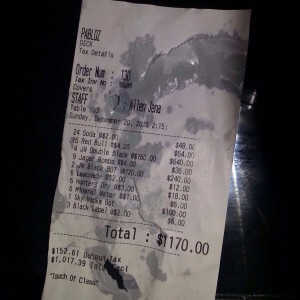
    Pabloz-Bar-Harare-Drink-Receipt

    Yes, many of those who have fantasies of returning would be coming back with a wealth of skill and know-how in a number of areas and what they have to offer could be applied to the Zimbabwean context. Yes, things operate a little differently to the way that they do abroad. This is not to say that what they have acquired can’t be applied, may just need to be adapted so that it works well in Zimbabwe.

    Question is, should they be encouraged to return if for some of those who are considering it, their decisions are based on what might have been a false portrayal by others?

    This has been an interesting discussion point with varying opinions. We could write more but we’d love to hear your opinion. Share your thoughts by commenting below or if you have a lot more to say than just a comment, you could share your thoughts in an article/post (see here for details).
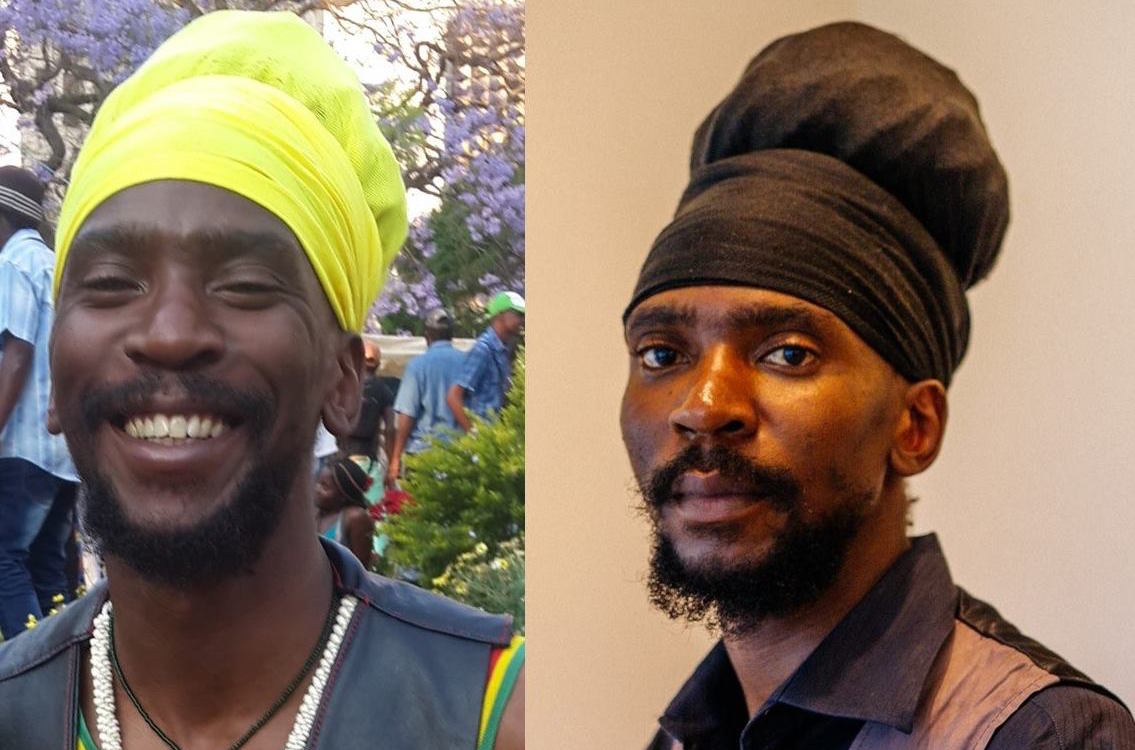
  • Ina de system by Rassie Ai

    Ina de system by Rassie Ai

    Ina de system scrupulously examines the experiences of a Zimbabwean migrant worker in the diaspora, his/her experiences on a social and community level as well the hardships faced due to perceptions of the host communities.

    Ina de system – Lyrics

    “Check it well this is Rassie Ai, I’m speaking to all the foreign guy,

    all migrant worker and all illegal guy. Lord!

    Ina de system, system, I won’t be a victim no way,

    Another system victim, the system a hackle me whoa

    The system a hackle me hey

    The system a hackle me whoa hey

    Mi lord de system a treachery, everyday you see it pon de new a bare tragedy

    Tek wey your vehicle home and money, nah smile at all because it doh funny

    No money, no visa, no work permit, a who you a guy turn to Lord?

    No friend, no bredren, no close family, only Jah you can turn to.

    Ina de system, system, I won’t be a victim no way,

    Another system victim, the system a hackle me whoa

    The system a hackle me hey

    The system a hackle me Lord God whoa

    Can’t buy a ticket fi a bus, and certain boy a road mi can’t trust

    Just choo dem check fi wah, mi status, fi mi immigration so mi get nervous

    One bag a question dem a ask us, “who you are, where you from, now get ina de bus”

    Have wi dung a detention dawn til dusk, worse than prisoner dem a treat us

    Who you a guy turn to ina your darkest Iyawa whoa Lord?

    Who a guy talk to, you better call on Jah Jah Lord God whoa

    Ina de system, system, I won’t be a victim no way,

    Another system victim, the system a hackle me whoa

    The system a hackle me Lord,

    The system a hackle me whoa see it ya

    Mi lord de system a treachery, everyday you see it pon de new a bare tragedy

    Tek wey your vehicle home and money, nah smile at all because it don’t funny

    No money, no visa, no work permit, a who you a guh turn to Lord?

    No friend, no bredren, no close family, only Jah you can turn to.

    The system a hackle me, pin down and shackle me Lord God whoa

    Choke and throttle me, a war and a battle me lord whoa

    I’m angry with hypocritical system lord God whoa

    Ina de system, system, I won’t be a victim no way,

    Another victim of the system, the system a hackle me whoa

    The system a hackle me hey,

    The system a hackle me hey whoa Lord, whoa Lord

    No money no visa no work permit

    And certain boy a road mi can’t trust”

    This has been a submission by Takura Donald Makoni aka Rassie Ai.
    You can connect with Rassie Ai via the following: https://twitter.com/DonaldMakoni, https://www.facebook.com/galleriakwamurongoarts.
    You too can become a Citizen Journalist by submitting your story here: Citizen Journalism by Living Zimbabwe
    The views expressed in the article are those of the author and not necessarily Living Zimbabwe.

  • The Frustration Of Applying For A Zimbabwean Passport From The UK

    The Frustration Of Applying For A Zimbabwean Passport From The UK

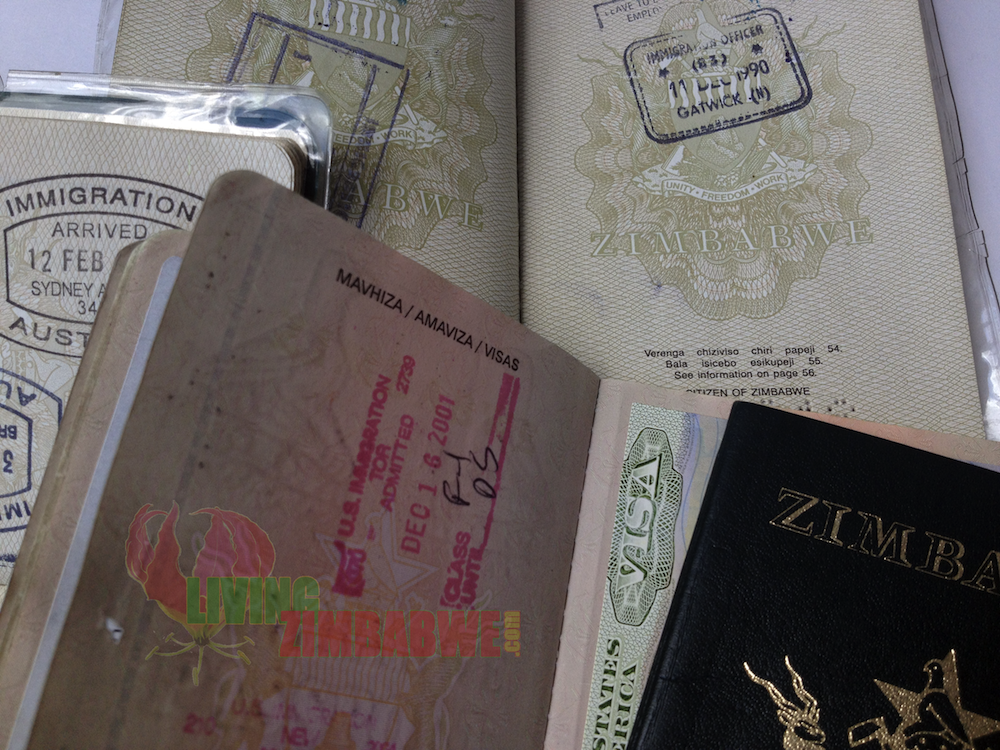
    I don’t get the Zimbabwean passport system! I am not usually one to comment on blogs but I am both dismayed and disgusted at the ridiculousness of the situation. I’m in the UK and I have lost my Zimbabwean passport, like most people on here. The consulate keep insisting I go back and get an ID card.

    Soooo let me get this right, I am expected to firstly pay for flights in excess of £1000, and let’s not forget accommodation as I have no links there so that will be whatever the daily changing rate is, not to mention food, water, and travel. God only knows how I am meant to get from A-B, and then the cost of both a new passport and the ID card and FINALLY fly back to England and hope and pray that border control will let me in because obviously my VISA won’t be stamped in my new passport! And even the Zim embassy cannot guarantee you will get back in they said it is a matter to take up with the Home Office Immigration (and we all know exactly how happy the current Government will be to lose a few immigrants).

    No, I am not playing the violin and I don’t want sympathy but I left Zimbabwe as a very young child I don’t know anyone there, and I cannot just ‘hey ho’ back to some unknown country for a little card and then face the possibility that the UK Home Office make it difficult for me to get back in.

    I have a little girl here and I cannot chance leaving her for who knows how long! I don’t really expect any advice from anyone here other than “go back” because truth be told that’s the only option we are given BUT I feel as a citizen I can vent (not that it will do me an ounce of good) but it is a stupid rule imposed by stupid people who really have not got the best interest of anyone other than themselves!

    We live in a time of economic crisis – who the heck can afford to make such an expensive trip plus all the costs? And what frustrates me further is having read other blogs some people have had their fingerprints done and passports issues in the UK so I think it’s a “help who we like” policy. The Consulate are unhelpful and when I called the man I spoke to blatantly gave me a false name. What a farce!

    I am seeking legal advice and Zimbabwe can keep its passport and absurd policies. I know there is another way round this because there always is another way and I just refuse to do it Zimbabwe’s way I would be happier to fork out £4000 into an immigration solicitors pocket and get my British passport than spend as little £1 on a country that clearly has no respect for her own people! I am sorry if that offends anyone but it’s the naked truth (in my eyes).

    Good luck to anyone else in a similar situation and I hope yours is a happier tale to tell of Zimbabwe and it’s frigged up system.

    This has been an anonymous submission by Frustrated Citizen.
    You too can become a Citizen Journalist by submitting your story here: Citizen Journalism by Living Zimbabwe
    The views expressed in the article are those of the author and not necessarily Living Zimbabwe.

    Zimbabwe-Passports-Diaspora

  • Can Zimbabwean Diasporans Take A Page Out of Barkue Tubman’s Book?

    Can Zimbabwean Diasporans Take A Page Out of Barkue Tubman’s Book?

    Barkue Tubman was recently featured on CNN African Voices where they highlighted her story of how she left Liberia because of turmoil and after an extended period of time away, returned home to help with it’s redevelopment. The thing that was striking about her story is that it is akin to the lives of many Zimbabweans in the diaspora. Some of these diasporans have made a choice to return home and others are still out there contemplating a move back home.

    Whatever the case may be, in the time spent away from home, people further their education or gain new skills. These acquisitions enable these people to build lives for themselves with some going on to be very successful. More often than not, the things that these people know are very applicable in a Zimbabwean context. Whenever they visit home or talk to people about business opportunities, it can sometimes become apparent that there are gaps in the market that they are able to fill. Some of these gaps may be for services that would be of benefit to a community, city or the nation as well the person who has chosen to fill that gap.

    With that idea in place and down on paper, comes the task of trying to get it off the ground. But, with Zimbabwe being Zimbabwe and Africa being Africa, getting the idea off the ground can prove to be a bit a challenge, a challenge much greater than what would have been faced in the country that this person had been calling home.

    Some may face a raft of road blocks which could include but are not limited to, getting the necessary registration and/or licenses, capital, officials who have not been paid accordingly hampering progress and the list goes on.

    Barkue’s story follows a similar path where she moved to the United States, got an education and had a very successful career in the entertainment industry. On a visit to Liberia, she saw a gap in the entertainment industry that she could fill. She put together a business plan and worked on making it a reality but things didn’t quite turn out the way that she had hoped (you can watch the footage of how and why below). However, she did manage to find opportunities where she could use her skills and it paid off tremendously for her.

    There are a number of Zimbabweans who do want to return home and work for themselves but have a fear that things will not work out as planned. Zimbabwe may have a mix and match of similar and different challenges as far as starting a business goes but, could Barkue’s story serve as one of inspiration? Does it go to show that even if the odds are stacked against you in something you have set your mind on, that we should remain open to and perceptive to other (unrealised) opportunities?

    Should diasporans dispel fears of returning home to either start businesses or become a part of established businesses and contribute to rebuilding the nation?

  • The Plight Of A Diaspora Returnee Wife

    The Plight Of A Diaspora Returnee Wife

    Yes, there are a number of Diasporans who are a bit sceptical about returning home for one resason or another > Why Diasporans Are Not Returning Home. On the other hand, there are a those who have taken the step to return home permanently with those in this group having realised varying levels of success with their decision. It has either been one of the best decisions ever made or one filled with regret.

    For singletons, the task of purchasing a one way ticket to Zimbabwe is not as daunting as they probably don’t have that much ‘baggage’. However, some returnees are families and for them, having a solid plan in place of how they are going to sustain themselves is of utmost importance. This includes things such as a steady stream of income, appropriate accommodation and reliable transportation just to name a few things.

    Can you imagine leaving the comforts of London, Sydney, Dallas, Singapore or wherever. Places where you have an income, live in your own accommodation have a car or two and all the mod cons to taking up two rooms at your parents place? That’s what some families who move back home have to do to accommodate themselves in the interim. Living like this might be fine for a few days or weeks but it will more than likely reach a point when it will start to feel a little cramped and you are all in each others space!

    Living in this state of being is not ideal especially so for women who are independent and used to having a space that is ‘theirs’. As they continue to live with their parents, the women don’t have a place to call home. Yes, you could say they are home but they aren’t in that comfortable homely place that has their own feminine touch that is home.

    Another plight that diaspora returnee wives have to deal with is their husbands. Life in the diaspora is not easy and living in luxury comes at a cost. This then dictates that their men take a more active role around the house. This sees their husbands cleaning, cooking, doing laundry, helping out with the kids and so on.

    In Zimbabwe, domestic workers are an affordable luxury which frees up husbands to take care of their business and also to be ‘Zimbabwean men’. Them being immersed back into the Zimbabwean lifestyle sees some of them become different people.

    The wives of these husbands who have become someone else now see themselves having to follow the cultural and social expectations of a Zimbabwean wife. This sees them having to let go of certain liberties that they had grown accustomed to in the diaspora. For some it also means having to accept a third or more parties into their marriages as they are forced to accept the small house culture of Zimbabwe.

    The above is only an example of what happens to some women. It isn’t the be all and end all for diaspora returnee wives. Some go through worse and for others, the transition to living in Zimbabwe all over again is relatively smooth. Everyone has their own story to tell.

    Do you have anything to say on the pros and/or cons faced by Diasporans on the return home?

  • Why Are Diasporans Not Returning Home?

    Why Are Diasporans Not Returning Home?

    Just over a week ago, Power FM ran a segment where they were discussing Zimbabweans in the Diaspora and trying to understand the reasons for them not wanting to return home. The hosts came up with some reasons as to why they thought Diasporans were not returning home and they went on to invite listeners to air their opinions on the topic. Some of the listeners were themselves recent returnees and had valid points to put forward but in their case, the opposite of “why not return home” was true for them.

    The main themes from the discussion for people not wanting to return home were as follows (in no particular order of importance):

    • Reverse Culture Shock – some people have been away from Zimbabwe for such a long time and have become used to living wherever they are living. They feel as if they would not be able to adjust to life at home if they were to return.
    • Family – some have no family to return to and because of that don’t feel like they have any links with Zimbabwe and nothing to go back to.
    • Political – the political instability is a deterrent and there are many who may face or feel that they may face political persecution.
    • Difference of opinion within families – husbands and wives may have differing views were one partner would like nothing more than to return home whilst the other is of the opposite view. Without any sort of resolution, this leaves a number of families “stuck” with out decision and still in the Diaspora.
    • Employment – a high unemployment rate and a perceived lack of opportunity leaves Diasporans with the notion that there is no point in going back home if they are not going to be able to find a way of making a living.
    • Dual Citizenship – many Zimbabweans have been living in their new homes away from home for so long that they have become Citizens of that particular nation. With the current state of the Dual Citizenship debate, they feel that it is better to stay away from home until there is some sort of positive resolve on the debate.

    After listening to what listeners had to say about the topic of returning home, the conversation shifted to what could have been seen as an attack on people who felt that it is not yet time for them to move back. For example, something along the following lines was mentioned, “they were born in and grew up in Zimbabwe and one day got on a plane and moved to the UK, US, Australia or wherever they ended up. They were not used to life over there and had to adjust. Why cant they get to used to living in Zimbabwe again, it is after all their home?”

    Yes, this could be the basis of an argument but there (for the example above) is the issue of reverse culture shock which is very real and something that some people will have to deal with. For most of the other reasons listed above, they present real issues that the people facing them have to contend with and could bring about a certain degree of stress.

    One question is, was that sort of a rebuttal called for? There is bound to be a world of individuals who would have similar things to say about those who do not want to return home.

    The thing is, Zimbabweans who are not ready to return home at the moment and some who have sworn to never return have made that decision. Some of those reasons may be legitimate, some of them may seem ridiculous but, as already mentioned above, this is a decision that someone has made for their life or their families lives and it should be respected.

    Yes, we can offer our opinions on their decisions but these opinions should be put forward in a non-critical tone because no-one has the right to judge people and/or their decisions. If anything, opinions should be put forward in a way that opens the door to further discussion on ways of breaking down the barriers to returning home and making the idea a possible reality.

    What are your thoughts on the Zimbabwean Diaspora who are not yet ready to return home and is there anything that can be done to facilitate their return home?

    Leave your comments below!

  • In America by NoViolet Bulawayo & The Cost Of Living In The Diaspora

    In America by NoViolet Bulawayo & The Cost Of Living In The Diaspora

    A few weeks ago, Zimbabwean author NoViolet Bulawayo made an appearance on Rendezvous With Zeinad Badawi. During her appearance she read an extract from a story that she wrote “In America”. The story is about the immigrant experience and the costs that some people pay for leaving home and not being able to return.

    [quote] And when our parents reminded us over the phone that it had been a long, long time, and that they were getting old and needed to see us, needed to meet their grandchildren, we said, we are coming mama, siyabuya baba, we are coming gogo, tirikuuya sekuru. We did not want to tell them we still had no papers. And when they grew restless and cursed

    America for being the greedy monster that swallowed their children, swallowed the sons and daughters of other lands and refused to spit them out, we said, we are coming very soon, we are coming next year. And next year came and we said, next year. When next year came we said, next year for sure. And when next year for sure came we said, next year for real. And when next year for real came we said, we are coming, you’ll see, just wait. And our parents waited and they saw, saw that we did not come.

    They died waiting, clutching pictures of us leaning against the Lady Liberty in their dried hands, graves of lost sons and daughters in their hearts, old eyes glued to the sky for fulamatshinaz (diaspora planes) to bring forth lost sons and daughters. [/quote]

    The story tells a tale about the struggles of getting to America and upon getting there, people forgetting about the dreams that they went there to pursue. This left work as the next option and due to visa restrictions, it meant working illegal and with the passage of time, the expiration of visas and people becoming illegal immigrants and all the while working menial to support family back home.

    It carries on telling the story of becoming stuck in the diaspora and longing for Mother Africa. Children being born  and raised in a way that is completely different to how they are raised at home. The passage of time also brings with it the passing of loved ones (parents) and facing the harsh reality of not being able to properly say goodbye. It then leads on to their own inevitable aging and their children putting them in nursing homes to be taken care of by strangers which is soon followed by death, an unceremonious burial and a spirit left in limbo.

    Being stuck in the diaspora and not having the papers to return back home is a story echoed by many Zimbabweans. “In America” gets you thinking about the costs of living in the diaspora and leaves you wonder if it is worth it?

    The article was published in Callaloo, an African Diaspora literary journal and can be found in it’s entirety here.

  • Chief Forcing Me To Pay US$150 Plus a Goat For Claiming For My Asset

    Chief Forcing Me To Pay US$150 Plus a Goat For Claiming For My Asset

    One of our readers recently reached out to us with a problem he was/is facing. He wanted to share it with the world to see if anyone could offer him possible solutions. He sent through his story but we were not sure if it was a joke or something that really took place. We decided to give him the benefit of the doubt and publish (note: this has been published unedited) his story to let you be the judge (and maybe provide him with a possible solution):

    I’m a 21yrs boy I stay in Johannesburg South Africa. On October 15, 2011 when I went home I felt in love with Michelle Pfumandiwe, 17. She forced me to go & see my family like she was planning to be with me in life, we did the same to her family. She was from poor family. When I was ready to go back to work she asked for my expensive cell phone blackberry bold, she asked for some clothes for to wear I did gave her, she asked for some money for her family to survive with love I did everything & we promise each to be together for ever. A week, I came back to work Lesly Chipere my rural friend came over my back to my girlfriend & quickly get married to her. My mum called me & knew me that Michelle was married to Lesly. I felt hurt, I try I call her Lesly received my call, as I asked Lesly what was going on he couldn’t tell me.

    After a month I called her again, in friendly way I asked Lesly to ask his girlfriend to go & return what is belongs to me to my mum. Dec sam year I loose my job, bad lucky was following my back, two day after I loose my job I get arrest as a suspect, I asked myself why all these bad thing there are just for me. Mid Dec I called my mum & she told me that Michelle called her & told her she must tell me to stop calling her because if I continue calling her she gonna make me disappear in this world, in shona akaramba achindifonera ndomunyudza mukamushaya.

    January 2012 I went home, I called her aunt asking to meet her and she agreed. I went to her home where we were promised to meet each other. I told her my story she help me with nothing, I called her husband & he told me to come & negotiate, I went to his home I saw him wearing my ‘G-Unit’ T-shirt, using my phone. Without argument he took me to chief”s caught where I got assaulted, chief’s regimen put me handcuffs & they say I’m an MDC supporter so I must go & ask Tsvangirai to help me, they say I must pay us$150 plus a got for underrate someone’s family, they didn’t allow me to explain.

    This has been a submission by Melous Hlatshwayo. If you have something to share, you too can become a Citizen Journalist by submitting your story here: Citizen Journalism by Living Zimbabwe.

  • Reflections From The Diaspora December 2011

    Reflections From The Diaspora December 2011

    Another Christmas has arrived and I’m compelled to reflect on how the past decade of political and economic meltdown has impacted on Zimbabweans. As I look to the future its had to predict what the future holds for us .The continued political uncertainty in the country coupled with the clouded socio~political environment in South Africa has created increasing insecurities amongst Zimbabwean immigrants. Although I may risk sounding overly pessimistic,but the facts at hand do validate this argument.

    However, most Zimbabweans will take time out from their misery and will be in a nostalgic festive mood during this christmas period. As I write this thousands of my country men and women are embarking on their traditional journey from SA to Zimbabwe to celebrate Christmas. This phenomenon is an iconic display of Zimbabweans ability to look past present difficulties and have another merry Christmas. All this happens despite decade long economic and social reversals which have left our country in the depths of mediocrity in all economic indicators. Our once proud nation is now a subject of international ridicule and alienated from the world economy.

    Thus, do we have any real cause to celebrate as a country and people?What has become of our sense of pride and nationhood? We have become a people who are so indifferent to the plight of each other such that we can afford to indulge in self interests over national concerns.

    The economic crisis has been disastrous to the majority but it has created opportunities to some who will stop at nothing to ensure that the prevailing situation is prolonged.

    Therefore it has become very apparent that the problems of Zimbabwe are much more than just the politicians but also ordinary people are complicity to the tragedy which befell our country. As a people we have failed to look past self interests. We are unable to foster solidarity and commitment to restore our national dignity and international respectability .There is need for a fundamental shift in our national psyche and mindset so that we can be able to unite and reclaim our place in the world of nations.

    This is my on reflection on 2011.

    Article submission by: Chamunorwa Nhau

  • The Cost of A Zimbabwean Dying In The Diaspora

    The Cost of A Zimbabwean Dying In The Diaspora

    A Zimbabwean mother living in the Diaspora lost her son a few days ago. This was a particularly difficult time for her because her husband is still in Zimbabwe putting together the necessary documentation to allow him to join his family. This lady does not have a very strong support network where she resides which means, she has no-one of significance to turn to and has to wait for her husband to make the two to three day journey to be by her side.

    One fact of life that all of us will one-day face is our death. For some, that day comes after a long and hopefully prosperous life. For others, it comes at an unexpected time such as the example above where parents are burying their child.

    Many Zimbabweans living in the Diaspora say they would eventually want to return home at some point to live out the rest of their lives. This for some also holds true in death; some people explicitly state that in the event of their death, they want to be laid to rest at home in African soil.

    Left with such wishes, family members and/or close friends of the deceased pull together to fulfil the wishes of the deceased. Making the wish a reality presents a number of challenges with the main ones being the logistics of repatriating the body and the associated costs. CNN Marketplace Africa recently aired a piece where Robyn Curnow covered what some Zimbabweans living in South Africa go through in the event of a death. It also covers the services a Zimbabwean entrepreneur is providing to try and ease the cost of burying a love one. Its gets you thinking about how prepared you are for such situations.

    Would you rather be buried at home or in the Diaspora?