Tag: Air Zimbabwe

  • The UAE & Zimbabwe Open Skies Agreement

    The UAE & Zimbabwe Open Skies Agreement

    On 3 October 2012, The United Arab Emirates (represented by Mr. Omar Bin Ghaleb, Deputy Director General of the UAE General Civil Aviation Authority (GCAA)) signed an air services Memorandum of Understanding (MoU) and Air Services Agreement (ASA) with the Government of Zimbabwe (represented by Mr. Munesushe Munodawafa, Secretary for Transport, Communications and Infrastructural Development).

    The agreements which are effectively ‘open skies’ agreements allow for full route access, capacity, number of frequencies and types of aircraft in either a passenger or cargo capacity between the two countries. Also present at the event were various interested parties which included representatives from Emirates, Etihad and RAK Airways. Given that Air Zimbabwe’s international operations are currently grounded, the aforementioned (with Emirates in particular) would be particularly interested in the agreements going through since they face no competition on the route and stand to profit from it.

    As already mentioned, the route will facilitate for increases in freight and passenger services between the two nations and will make trade much easier. But, you can’t help wonder why the push to secure such trading links with Zimbabwe and other Sub-Saharan countries?

    Middle Eastern countries like the UAE have been increasing their investments in Africa and have also been eyeing and buying land in various African nations to ensure a steady supply of food for it’s people. Having open skies agreements with Zimbabwe and other African nations further cements their foothold in Africa with investments that may not necessarily benefit Africans.

    The question is, where will this coupled with Chinese investment leave us in years to come?

  • Can Air Zimbabwe Fly Back Into The Black Like Air Pacific?

    Can Air Zimbabwe Fly Back Into The Black Like Air Pacific?

    Fiji, a former British Colony, a nation that was expelled from the Commonwealth and one that has various sanctions placed upon it, is a small island nation in the South Pacific ocean. It is ruled by what many seem to deem a dictatorial government lead by Commander of the Fijian Military Forces Frank Bainimarama. Does it’s recent history sound somewhat familiar?

    A number of airlines connect Fiji to a few of it’s neighbouring island’s and countries further afield with one of the service providers being Air Pacific, the national carrier. Like a number of airlines around the world who have found the aviation industry a challenge to make a profit in, Air Pacific saw itself slip into the red. But, this year they managed to slip back into the black and recorded an operating profit of $11.5 million versus an operation loss of $2.6 million the previous financial year. This bottom line result was attributed in part to an increase in the tourist numbers.

    As far as ownership goes, Air Pacific is owned by the government but now wholly! The government holds a 51% stake, Qantas 46.3% with the remaining 2.7% being held by other entities. Despite recent attempts by the government to exert greater control over the airline, it is still operating as normal.

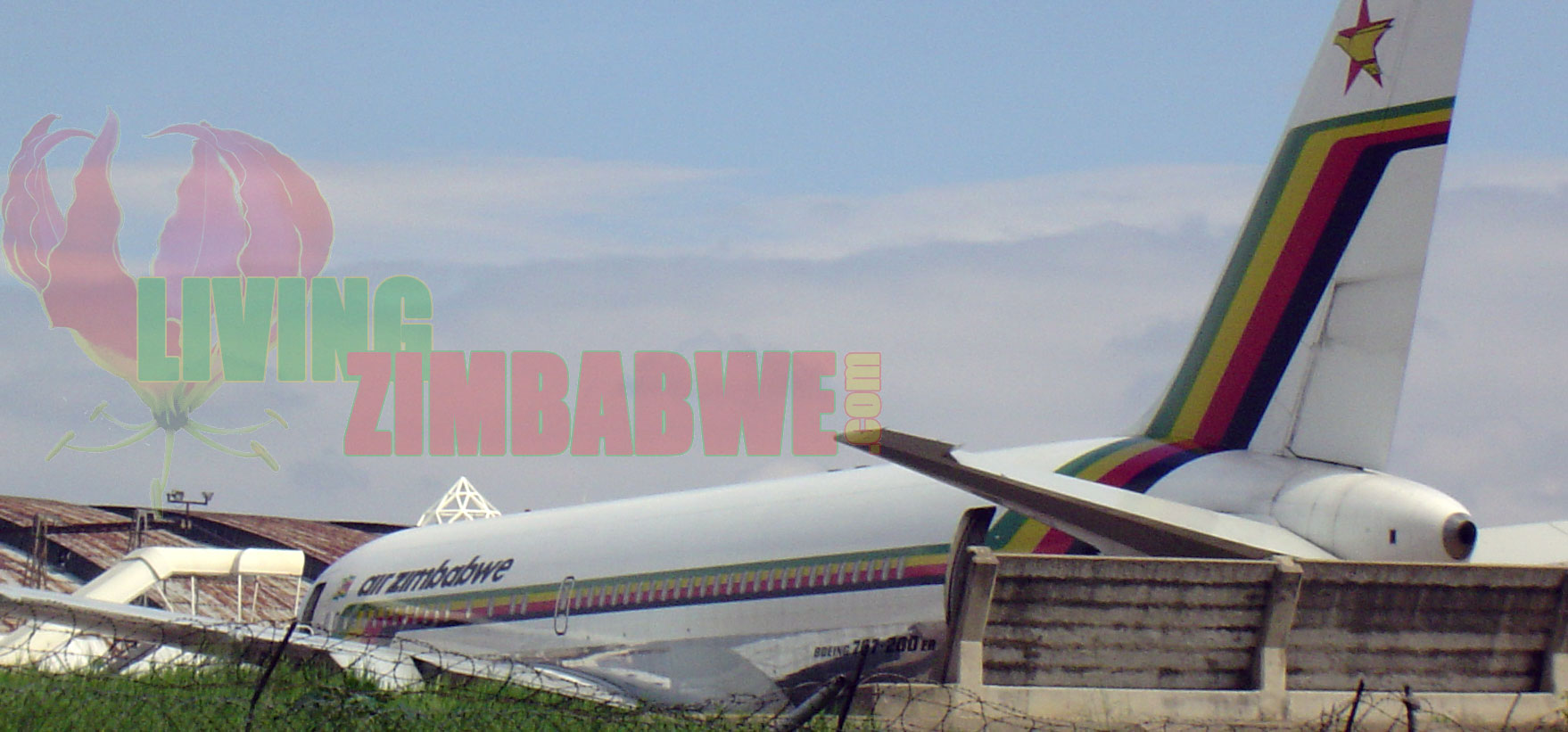
    Looking at Air Zimbabwe which is wholly owned by the government, the national carrier is in a serious state of distress and owes millions to various creditors and unpaid staff. At present, Air Zimbabwe is being threatened with losing it’s membership from The International Air Transport Association (IATA) over the renewal of its Operational Safety Audit. If this does happen, it means that the airline will not able to fly to international airports and airspace. But, this may be something that might not be a major concern seeing as they are currently only flying domestically.

    If the government deems it important enough for the country to not lose it’s national carrier and provides it with the minimum it requires in order to get back into full operation what then? The way in which they have been operating over the years has obviously not been working. Privatisation is something that has been spoken about in the past but something that the government does not seem keen on. That said, could them implementing a model such as Air Pacific’s work in transforming Air Zim into a viable airline? The Fijian government is one that likes to be in control but as far as the running of their national airline goes, they are only a majority shareholder. To add to that, it’s operations are overseen by a CEO who has no political affiliations and is not influenced by politics.

    Tourists numbers to Zimbabwe are reportedly on the rise which means that Air Zimbabwe will not be flying empty planes if they get back into full operation. As they continue to not fly international and try to figure out how to stay alive, other airlines are taking advantage of the huge gap they have left in the market. In recent months, South African Airways increased flight frequency into Harare and Emirates which recently started operating a 5 day/week service into Harare announced that they will soon start daily flights into the city. This goes to show that there isn’t a lack of travelers to and from Zimbabwe.

    With the passage of time, regional and international carriers will continue to increase their market share and squeeze the national airline out of a space that they should be dominating. Air Zim may need to quickly learn a lesson on ownership and operation from an airline such as Air Pacific and get themselves to where they should be before it’s too late.

    Is it already too late?

  • Are We Going Down The Drain… Again? Part 2

    Are We Going Down The Drain… Again? Part 2

    Following on from – Are We Going Down The Drain… Again? Part 1:

    Then there is another monstrosity in the form of the Zimbabwe National Road Agency, ZINARA. One is often reminded of another miscreation, the National Oil Corporation of Zimbabwe (NOCZIM) which, despite the glaring reality that we are yet to strike oil, that was shoved down our throats only for it to manifest one of the most devastating fuel shortages this country has ever experienced.

    NOCZIM proved to be a blatant funnelling of state resources into the pockets of a handful of clever dicks. To this day, the culprits are yet to see the four walls of a prison cell as is expected of miscreants of this kind. Shock turned to desperation as very prominent politicians were dispatched to the mountains to seek divine intervention of a traditional kind.

    If the images of shoeless leaders witnessing pure diesel gushing from a rock awash in the blogosphere are any accurate, then it explains why Zimbabwe is in the mess it is in. But that is not the point. Another elaborate siphon of state funds has entered the fray, ZINARA, and the fact that it has been in operation for close to four years is cause for concern. Just the acronym itself should send shivers of trepidation.

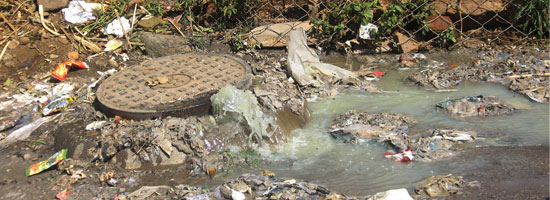
    Anyone who has driven on the roads in Zimbabwe will tell you that they are arguably the worst. Let me drop any comparison because that would open a Pandora’s box. In some parts of the country, the roads have simply vanished, reclaimed by the advancing bush.

    A giraffe is claimed to have disappeared into one notorious drumhole. It is stuff of crisis proportions if highways are fraught with gulleys and are evidently disintegrating by the day. That fatalities are the norm on our roads should to surprise anyone.

    It then begs the question: what the heck is ZINARA doing?

    Time there was when the mere existence of a ministry dealing with roads and transport was enough to keep our roads in pristine condition. It then boggles the mind why an entity created for the purpose decides that their first act is to acquire new headquarters and a shiny fleet of vehicles for their ‘hard working’ executives? What has this got to do with fixing the roads? Get your hands dirty first to earn your keep, I say.

    The toll fees that we are levied on the highways should be going into the coffers of ZINARA to help fix the roads. Before we can even smell the bitumen, there now is a proposal on the table to increase the tolls so that they are ‘in line with those in the region.’ OR WHAT? Tell us where the money already collected is!

    The only time the public knew anything about the revenues from toll gates was when some more clever dicks employed the Zimbabwe Revenue Authority, ZIMRA, originally tasked with collecting the toll fees were caught with their hands in the till. They had managed to spirit away more than a million dollars by the time they were caught. A MILLION DOLLARS! How selfish can one get!

    Then we read in the press that ZINARA is blacklisting a number of local authorities for the abuse of something called called the Road Fund. Where is the accountability or transparency in all this? Why is it that all we hear does not directly translate into good roads that we are be paying for through levies and toll fees?

    Talking about toll fees, tell us, has the role of the Zimbabwe Republic Police, ZRP’s national traffic cops been amended to include the mandatory collection of another set of toll fees? Is it true that traffic police have each been given a daily target to collect from motorists? If that is the case, then one can explain why Zimbabwe arguably has the highest number of road blocks on the continent per kilometre of road, easily surpassing those of Mobutu Sese Seko’s era.

    That does not include those irritating bike cops who run the danger of being run over themselves. Never mind the fact that they are so blatantly corrupt, in a manner of speaking. How long shall they kill our economy while we stand aside and look? Surely?

    This has been a submission by Lenox Mhlanga. If you have something to share, you too can become a Citizen Journalist by submitting your story here: Citizen Journalism by Living Zimbabwe.

    Image courtesy of Sokwanele

  • Are We Going Down The Drain… Again? Part 1

    There are some of us who have entered 2012 with a sense of trepidation. They believe this is the year when a decadent earth will collapse into itself. I predicted the same for Zanu PF, but the earth? My bible says no one knows the day or the hour when the Son of Man will come. Meaning, make a living while the sun still shines.

    Don’t listen to those who are creating a multi-billion dollar industry out of scaring people. There even is a movie entitled “2012” that portrays the destruction of the world as we know it. It relives mankind’s worst fears…earthquakes, floods, fires, the works. But then I ask, what’s new? We already have fair share of death and destruction… most of it man made. We have seen it all.

    Mankind has become suicidal. We now swear by the motto “Live for today fas if there is no tomorrow.” Guess what? – to borrow Reserve Bank head honcho Gideon Gono’s favourite cliché – there is a tomorrow we all can look forward to. You might be flat broke today, yet tomorrow could be different. Just like the fingers on your hand, not all days are the same.The key is to have a deliberately positive attitude.

    There are a lot of things that we will never understand. If we knew all of life’s secrets, we would hasten the end of the world as we know it selfish beings that we are. We are so destructively selfish that we do not care about the consequences of our actions as long as we believe we are not on the receiving end.

    Take the fact that God has endowed Zimbabwe with unfathomable mineral wealth and a people who are supposed to be intelligent because, come to think of it, we run the world. Minerals that would easily take the country out of the rut it is in if the revenue found its way into the fiscus and not into someone venerated pocket.

    Yet the nation is robbed blind in broad daylight by people whose preoccupation is to ensure that we marvel at how rich they are. We watch them with awe as they claim that they were not born poor.

    There is nothing more treacherous than to personalise state resources with impunity and continue to perpetuate a crisis in order to pull wool over our eyes. We are in trouble as a country because there are those whose very existence is dependent on the status quo remaining as it is. They thrive on chaos.

    There are things happening that defy logic. Air Zimbabwe, a pale shadow of its former self, is kept gasping in the Intensive Care even when a basic grasp of elementary economics tells us that it should be shut down. It has gone way below the status of a chicken bus operation. The only consolation perhaps is that they don’t allow one to enter the cabin with chickens and goats like used to happen on some airlines in West Africa.

    Not that I don’t like goats and chickens. But there are depths that we cannot surely plumb if we claim to be more educated and intelligent than the next village idiot. We are tempted to believe that we are a country that celebrates mediocrity.

    Reports of the aircraft that transported the president to the African Union summit filling up with smoke before take-off should have sent alarm bells ringing in close security circles. If it were in Idi Amin’s time, those responsible would have been fed to the crocodiles.

    Worse still, the fact that engineers had to be lured from their lairs for a few pieces of silver to repair the plane reads like something out of a very dark comedy. I know of prominent people who have vowed never to fly Air Zimbabwe again even at gunpoint.

    It remains a mystery why none of their planes have ever dropped out of the sky. Is it because of the fact that it takes 120 people to service one Air Zimbabwe plane? I bet that some of those duties would be to blow cockroaches from the aircraft’s avionics if need be. Aren’t we just embarrassed that the South African Taxi Association has managed to, or is about to launch an airline of their own?

    This has been a submission by Lenox Mhlanga. If you have something to share, you too can become a Citizen Journalist by submitting your story here: Citizen Journalism by Living Zimbabwe.

  • Should Air Zimbabwe Be Privatised?

    Should Air Zimbabwe Be Privatised?

    Air Zimbabwe like many other parastatals has been in a downward spiral for the last few years. It has been plagued with all sorts of issues with the majority being of a financial nature. Its pilots are striking at the moment over unpaid wages and this is causing a lot of turmoil. In response to the strike action, the airline fired its pilots after they refused to return to work by a given date.

    By doing a bit of analysis it seems as if a major problem is that the airline is a government entity. Because of being a parastatal it succumbs to a lot of political interference. That being said, some of the decisions being made may not be in the best interests of the business as a whole. Without naming names, some decisions seems to be made to suite the personal interests of a select few.

    Air Zimbabwe is managed by individuals who don’t seem to have what it takes to review the airline and turn it into a profitable business. The reasons for that may be that they were put in those positions not because they were the right people for the job but because of their affiliations. Another thing that they may be more concerned about is filling their pockets with as much money as they can before they move on. Some of the statements that their executives make just don’t make sense. In the last few hours news has come out that Air Zimbabwe has reportedly purchased 2 Airbus A340 aircraft for $400 million. This is what the chairman Jonathan Kadzura had to say about the supposed purchase, “I have also heard about it (new planes), but to be frank, I am not aware of it.” This and other confused statements leave you in a position where you can’t trust of have much faith in its management.

    One of the best things that could be done for the airline would be to privatise it. Making such a move could bring in much needed investment which would not only carry the airline forward but also help it get out of debt. Such a move could also bring about a complete change of management and much needed corporate restructuring.

    The major stumbling block in a move towards privatisation seems to be the government itself who just don’t want to let go of it and other failing parastatals. The reasons for this could range from wanting to keep a grip on anything and everything to greed to monopolisation and the list goes on. If they haven’t already done so they need to realise that there are some things that they are not good at and continue to fail it and in the interest of economic recovery should let go of.

    If the downward spiral is not brought under control soon Air Zimbabwe is going to crash and burn and leave Zimbabwe with no national airline.